2026 Trend Analysis: The High Jewelry Necklace Lei Evolution
Discover how the necklace lei evolved into a 2026 high jewelry staple. Explore materials, styling techniques, and luxury floral drape trends.

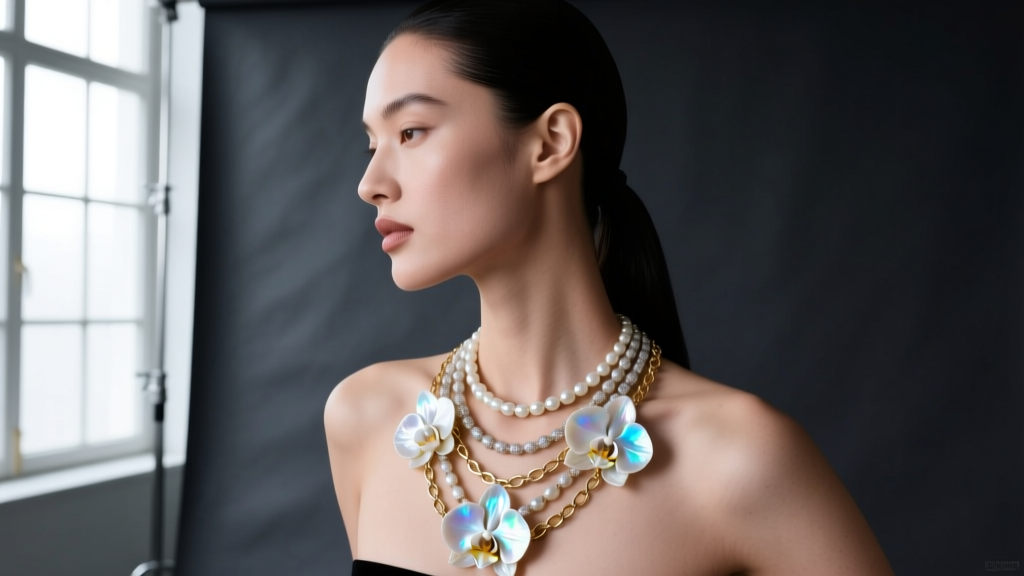
The Reinvention of the Necklace Lei in 2026
For decades, the term 'lei' in Western jewelry markets conjured images of mass-produced, plastic-beaded airport souvenirs or fragile, perishable floral garlands. However, the 2026 high jewelry landscape has completely redefined the necklace lei. Moving far beyond its tourist-trap associations, the modern necklace lei has emerged as a maximalist, architecturally complex silhouette that dominates luxury runways and red carpets. Drawing inspiration from traditional Polynesian and Hawaiian garlands—which historically signified status, welcome, and spiritual connection—the contemporary iteration translates this voluminous drape into precious metals, rare gemstones, and masterfully carved organics.
According to Encyclopedia Britannica's historical archives on the Polynesian lei, the original adornments were meticulously crafted from feathers, shells, and flora to denote royalty and honor. Today's elite jewelers are honoring this legacy of meticulous craftsmanship by engineering multi-strand masterpieces that require hundreds of hours of bench time. The 2026 necklace lei is not merely a necklace; it is a wearable sculpture that demands an understanding of weight distribution, organic material care, and advanced clasp engineering.
Material Science: From Shells to High Karat Gold
The luxury necklace lei relies on a delicate balance of organic textures and high-polish metals. Designers are moving away from uniform, machine-cut beads, favoring instead the raw, asymmetrical beauty of natural elements.
- Carved Mother-of-Pearl (MOP): High-end artisans are hand-carving MOP into intricate plumeria, orchid, and monstera motifs. The nacreous layer must be at least 3mm thick to withstand the carving process without cracking, yielding a luminous, iridescent finish that catches light from multiple angles.
- Electroplated Flora: A staple of Hawaiian luxury jewelry, real orchids and ferns are painted with a conductive copper solution and submerged in an 18k gold electrolyte bath for up to 12 hours. This builds a 50-micron thick gold shell that perfectly preserves the microscopic veins of the original plant.
- Baroque and Keshi Pearls: Rather than perfectly round Akoya pearls, 2026 designs heavily feature AAA-grade baroque and keshi freshwater pearls. Their irregular shapes mimic the organic, untamed feel of a traditional floral lei while providing a high-luster, gem-quality foundation.
- Coral Alternatives: Due to strict CITES regulations protecting precious oceanic coral, top-tier houses are now utilizing dyed howlite, carved agate, and sustainably harvested bamboo coral to achieve the iconic deep reds and pinks of vintage lei designs without ecological harm.
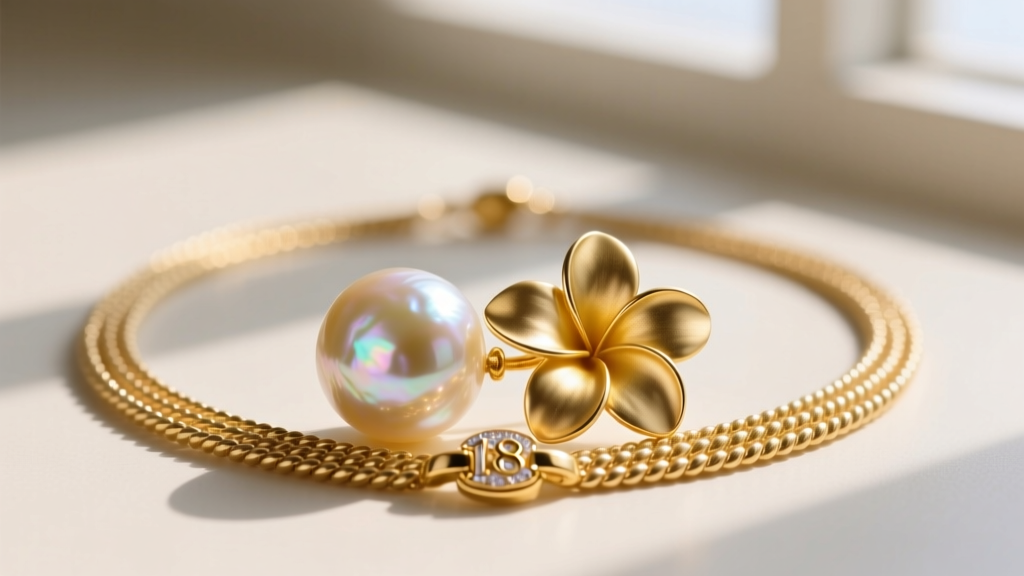
The Anatomy of a Luxury Drape: Sizing and Strands
What separates a standard multi-strand necklace from a true necklace lei is the sheer volume, strand count, and the way it cascades over the clavicle. A traditional necklace might feature two or three strands, but a luxury lei often incorporates five to twelve distinct strands, requiring specialized spacer bars to prevent tangling and ensure a uniform drape.
| Strand Count | Typical Length | Average Weight | Best Use Case |
|---|---|---|---|
| 3 - 4 Strands | 16 - 18 inches | 45g - 65g | Daytime wear, office-appropriate maximalism |
| 5 - 7 Strands | 20 - 24 inches | 90g - 140g | Evening wear, cocktail attire, deep V-necks |
| 8 - 12+ Strands | 24 - 30 inches | 160g - 250g+ | Editorial, runway, high-carat red carpet events |
Engineering the Clasp and Threading
When a necklace lei exceeds 100 grams, traditional jewelry findings become a liability. A standard lobster clasp will bend under the kinetic stress of a heavy, multi-strand drape. In 2026, luxury lei necklaces utilize reinforced double-tongue box clasps equipped with figure-eight safety catches, or neodymium magnetic clasps encased in 18k gold with a 200lb pull-force rating.
Furthermore, traditional silk threading is entirely unsuitable for heavy stone or gold-dipped flora, as it stretches and degrades over time. Modern master jewelers thread high-end lei necklaces using multi-strand braided UHMWPE (Ultra-High-Molecular-Weight Polyethylene) thread. This synthetic fiber offers zero stretch and a break strength of over 50 lbs per strand, ensuring the heavy organic elements remain securely suspended.
Styling the Maximalist Silhouette
The necklace lei is an unapologetically bold statement piece. Styling it requires a strategic approach to necklines and layering to ensure the jewelry remains the focal point without overwhelming the wearer's frame.
Neckline Pairings
- The Deep V-Neck: The ideal canvas for a 22-inch, 5-strand pearl and gold lei. The V-shape mirrors the natural cascade of the necklace, drawing the eye downward and elongating the neck.
- Off-the-Shoulder / Bustier: A shorter, 16-inch choker-style lei with dense floral carvings sits perfectly against the exposed skin of an off-the-shoulder gown, mimicking the traditional placement of a ceremonial garland.
- Avoid High Collars and Turtlenecks: The friction from heavy fabrics will scratch porous organic materials like MOP and pearls, and the visual competition will make the outfit look cluttered.
"The modern necklace lei is about embracing volume with intention. It is not just about wearing more beads; it is about wearing a piece of sculpture that interacts with the body's natural architecture." — 2026 High Jewelry Trend Report, Paris
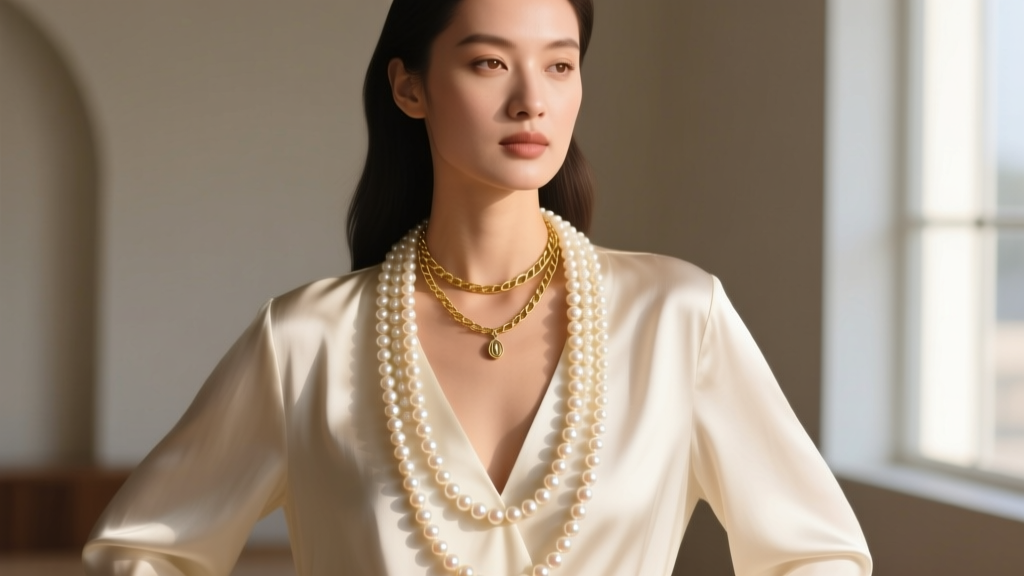
Investment Pieces vs. Fashion Replicas
As the trend peaks, the market is flooded with varying tiers of quality. Understanding the pricing and construction differences is vital for serious collectors and trend-conscious buyers alike.
- Fashion Tier ($150 - $500): Typically features gold-plated brass, resin or glass beads mimicking pearls, and acrylic floral elements. The clasps are usually standard lobster claws, and the threading is basic nylon. These are suitable for seasonal trend participation but hold no resale value.
- Bridge / Artisan Tier ($1,200 - $4,500): The sweet spot for luxury buyers. Features solid 14k or 18k gold components, genuine AAA freshwater pearls, and authentic carved MOP. Brands specializing in Hawaiian luxury, such as Maui Divers, excel in this tier, offering authentic gold-dipped flora and robust construction.
- High Jewelry Tier ($15,000 - $100,000+): Bespoke pieces featuring South Sea pearls, carved opals, tsavorite garnets, and platinum or 22k gold settings. These are one-of-a-kind investment pieces that often require custom-fitted clasps and specialized insurance riders.
Care and Maintenance for Organic Lei Elements
Because the luxury necklace lei heavily incorporates organic materials, it requires a strict, specialized care regimen. Porous stones and nacreous shells are highly susceptible to chemical damage and dehydration.
- The 'Last On, First Off' Rule: Always put your necklace lei on after applying perfumes, hairsprays, and lotions. The alcohol and volatile organic compounds (VOCs) in cosmetics can strip the luster from pearls and degrade the polish on carved MOP.
- Post-Wear Wiping: After wearing, gently wipe the organic elements with a slightly damp, lint-free microfiber cloth to remove skin oils and environmental pollutants. Never use ultrasonic cleaners or steamers, as the high-frequency vibrations can shatter carved flora and the heat can crack pearls.
- Flat Storage is Mandatory: Never hang a multi-strand necklace lei on a jewelry hook. The sheer weight of the piece will cause the threading to stretch permanently over time, leading to unsightly gaps between the beads. Store the piece flat in a lined jewelry box with a silica gel packet to control humidity.
For deep cleaning and restringing, always consult a certified gemologist. According to the Gemological Institute of America (GIA), organic gems require specific pH-neutral cleaning agents that are rarely found in commercial jewelry dips. A professional will also inspect the UHMWPE threading for micro-abrasions and replace the spacer bar grommets, which can wear down from metal-on-metal friction.
Final Verdict: A Lasting Legacy in Modern Form
The 2026 resurgence of the necklace lei is more than a fleeting maximalist trend; it is a profound appreciation for cultural artistry translated through the lens of high jewelry. By combining the historical reverence of the Polynesian garland with cutting-edge bench engineering and rare organic materials, the modern necklace lei offers a masterclass in voluminous, wearable art. Whether you opt for a subtle three-strand pearl drape or an editorial 12-strand gold-dipped orchid masterpiece, investing in this silhouette guarantees a piece that is as structurally impressive as it is culturally resonant.


