Music Necklace Materials: Titanium, Silver & Gold Compared
Discover the best metals for your music necklace. We compare titanium, sterling silver, and gold properties, durability, and pricing.

The Engineering Behind Music Necklaces
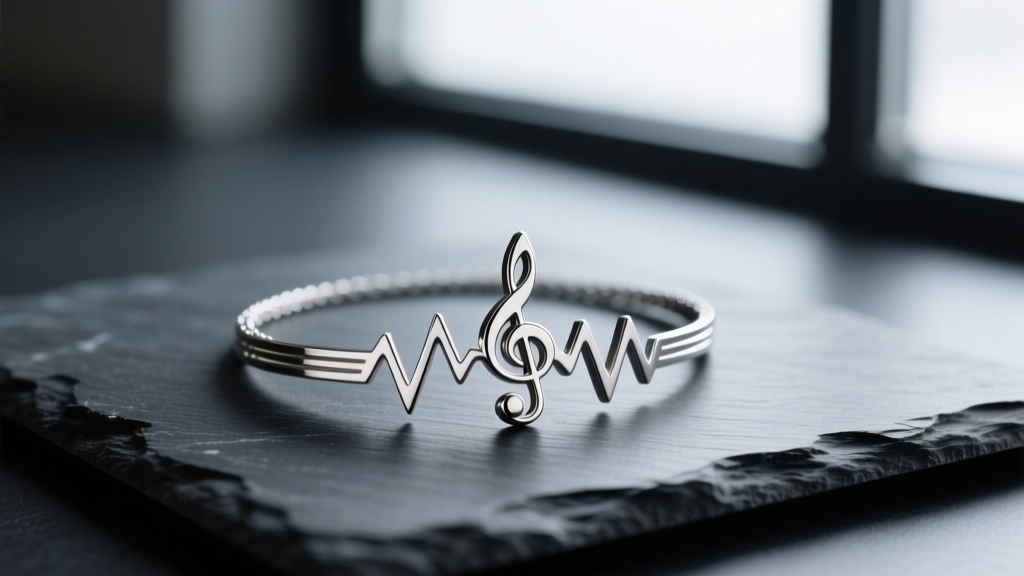
A music necklace is more than a simple accessory; it is a deeply personal artifact. Whether it features a functional music box locket, a classic treble clef, or a modern sound wave pendant generated from a voice recording, the metallurgical requirements are surprisingly complex. As of 2026, spectrogram-to-CAM software allows for microscopic precision when translating audio files into physical jewelry. However, the success of these intricate designs relies entirely on the material properties of the chosen metal.
Sound wave pendants, for instance, require CNC laser cutting or precise 3D wax printing for casting. If a metal has high thermal conductivity or a low melting point, the intense heat of laser cutting can warp the microscopic peaks and valleys of the audio wave, blurring the visual representation. Similarly, functional music box lockets require metals that can withstand the mechanical stress of winding keys and internal brass pins. Choosing the right alloy is the difference between a generational heirloom and a warped, tarnished trinket. Below, we break down the exact material properties, failure modes, and pricing for the three most popular metals used in music necklaces.
Material Deep Dive: Properties & Failure Modes
Grade 5 Titanium (Ti-6Al-4V) for Sound Waves
When jewelers discuss titanium, they are usually referring to either Grade 2 (commercially pure) or Grade 5 (Ti-6Al-4V, an aerospace alloy). For music necklaces—specifically laser-cut sound waves—Grade 5 is the undisputed champion. According to metallurgical data cited by Ganoksin, Grade 5 titanium boasts a Vickers hardness of approximately 349 HV, compared to just 145 HV for Grade 2. This extreme rigidity ensures that the razor-thin prongs of a sound wave pendant will not bend or snap under daily wear.
Furthermore, titanium is highly biocompatible and completely immune to oxidation, meaning it will never tarnish or turn the skin green. A unique property of titanium is its ability to be anodized; by applying specific voltages, jewelers can alter the thickness of the oxide layer to produce vibrant blues, purples, and golds without using chemical dyes or plating. The primary failure mode for titanium music necklaces is galling at the clasp threading, as titanium creates high friction against itself. Pricing for a custom Grade 5 titanium sound wave necklace typically ranges from $80 to $180.
925 Sterling Silver & Rhodium Plating
Sterling silver (92.5% pure silver, 7.5% copper) remains the most popular choice for cast music necklaces, such as intricate treble clefs or bass clef pendants. The copper content provides the necessary tensile strength for casting, but it also introduces the metal's greatest vulnerability: oxidation. When exposed to sulfur compounds in the air, the copper reacts to form silver sulfide, resulting in black tarnish.
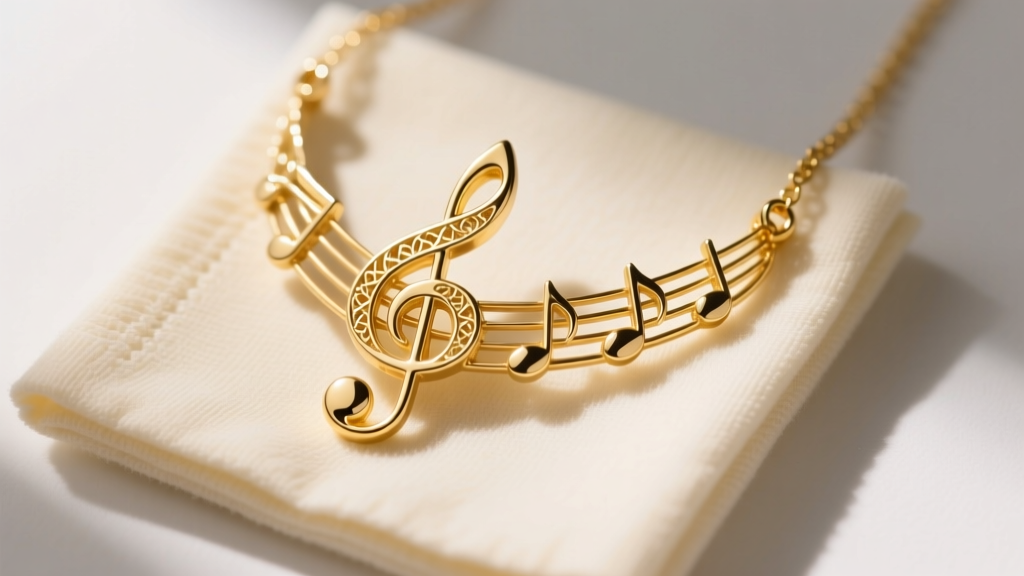
To combat this, high-end silver music necklaces are often plated with rhodium, a precious metal from the platinum group. A standard rhodium plating thickness is between 0.1 and 0.5 microns. While this provides a brilliant, tarnish-resistant white finish, it will eventually wear off on high-friction areas. Additionally, when casting highly detailed musical notes, jewelers must use vacuum casting techniques with high-detail investment powder to prevent porosity and loss of detail in the silver. A well-crafted 925 sterling silver music pendant on a matching chain generally costs between $60 and $150.
14K vs 18K Solid Gold
Gold is the traditional standard for luxury music necklaces, but the karat weight drastically alters its structural integrity. Pure 24K gold is far too soft for jewelry. 18K gold (75% pure gold) offers a rich, warm color but has a lower yield strength, making it susceptible to bending if the music necklace features sharp, protruding elements like the peak of a sound wave or the delicate loop of a treble clef.
For structural durability, 14K gold (58.5% pure gold) is vastly superior. The GIA notes that the alloy metals mixed into 14K gold—typically a blend of silver, copper, and zinc—significantly increase the metal's tensile strength and scratch resistance. 14K yellow gold maintains a beautiful hue while providing the rigidity needed to protect delicate cast details. For white gold music necklaces, remember that 14K white gold is alloyed with nickel or palladium and requires periodic rhodium plating to maintain its bright white appearance. Pricing for solid gold music necklaces starts around $350 for lightweight 14K pieces and can easily exceed $1,200 for heavy, 18K functional music box lockets.
Comparative Data Matrix
| Material | Vickers Hardness (HV) | Tensile Strength | Best Application | Avg. Price Range |
|---|---|---|---|---|
| Grade 5 Titanium | ~349 HV | ~950 MPa | Laser-cut sound waves, hypoallergenic needs | $80 - $180 |
| 925 Sterling Silver | ~65 HV | ~280 MPa | Cast treble clefs, budget-friendly gifts | $60 - $150 |
| 14K Solid Gold | ~135 HV | ~550 MPa | Heirloom lockets, durable daily wear | $350 - $800 |
| 18K Solid Gold | ~115 HV | ~480 MPa | Luxury pendants, rich color priority | $600 - $1,500+ |
Chain Pairings: Matching the Pendant Metallurgy
The pendant is only half of the music necklace equation. Pairing a heavy functional music box locket with a delicate chain is a recipe for catastrophic failure. The chain must match both the aesthetic and the physical weight of the pendant.
Gauge Sizes and Clasp Mechanics
For lightweight, laser-cut titanium or silver sound wave pendants (typically weighing 3 to 8 grams), a 1.0mm to 1.2mm box chain or snake chain is ideal. These chains offer a sleek, modern look that doesn't distract from the intricate audio wave. However, snake chains are notorious for kinking if bent, so they must be stored flat.
For heavier cast gold treble clefs or functional music box lockets (weighing 15 to 30+ grams), you must upgrade the gauge. A 2.0mm to 3.0mm wheat chain or rope chain provides the necessary tensile strength. Wheat chains are particularly excellent for music necklaces because their woven, interlocking links are highly resistant to pulling and snapping. Furthermore, always opt for a lobster claw clasp rather than a spring ring clasp. Spring rings contain tiny internal springs that frequently fail under the dynamic weight of a swinging music box pendant, whereas lobster claws offer a secure, mechanical lock.
Maintenance & Tarnish Troubleshooting
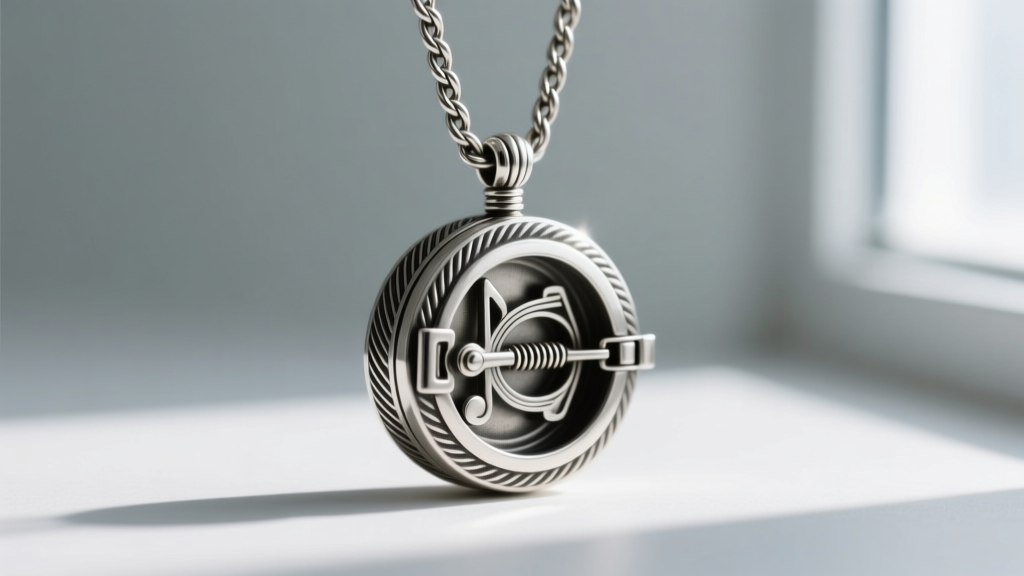
Maintaining a music necklace requires specific protocols depending on its construction. For solid metal pendants like sound waves or treble clefs, a standard ultrasonic jewelry cleaner is highly effective at removing sebum and lotions from the deep grooves of the design. However, you must exercise extreme caution with functional music box lockets.
Expert Warning: Never place a functional, wind-up music box locket in an ultrasonic cleaner or submerge it in liquid silver dip. The high-frequency vibrations will dislodge the microscopic brass pins on the internal cylinder, and moisture will rust the steel mainspring, permanently destroying the musical mechanism. Always clean functional lockets using a dry, microfiber jewelry polishing cloth and a soft-bristled horsehair brush for the crevices.
For sterling silver music necklaces that have developed heavy black tarnish in the recessed areas of a bass clef, use a specialized silver polishing cloth impregnated with anti-tarnish compounds. Avoid liquid dips, as they can strip the rhodium plating and leave the porous silver vulnerable to rapid re-oxidation.
Final Verdict for Audiophiles and Musicians
Selecting the perfect metal for your music necklace ultimately depends on the specific design and your lifestyle. If you are commissioning a custom sound wave pendant from a voice memo or a favorite song, Grade 5 Titanium is the superior choice. Its immense hardness ensures the microscopic peaks of the audio file remain razor-sharp, and its anodizing potential allows for unique, personalized colorways without the risk of plating wear.
If you prefer the timeless, romantic aesthetic of a cast treble clef or a functional wind-up music box locket, 14K solid gold offers the best balance of luxurious color and structural durability. While sterling silver remains an excellent, accessible entry point for music lovers, it requires a commitment to regular maintenance to keep the intricate grooves free of oxidation. By matching the metallurgical properties of the metal to the engineering requirements of the musical design, you ensure that your wearable melody will resonate for a lifetime.


