Expert Care and Cleaning Guide for Your Olivia Necklace
Discover expert cleaning and maintenance tips for your Olivia necklace. Learn how to protect delicate chains, clean pendants, and prevent tarnish.

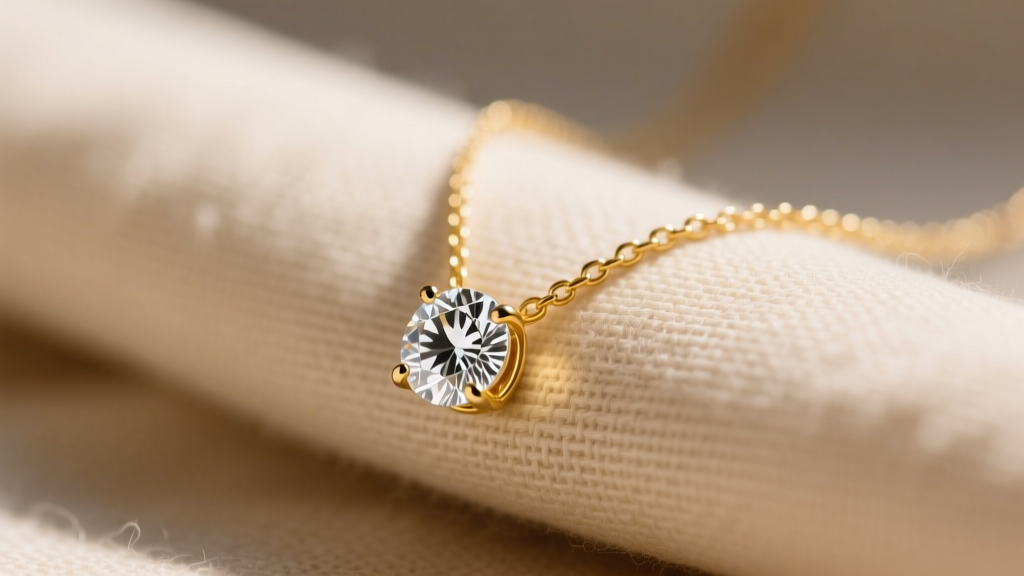
The Olivia necklace has cemented its place as a cornerstone of modern jewelry wardrobes. Characterized by an ultra-delicate cable or box chain and a striking central pendant—often featuring a solitaire diamond, moissanite, or a luminous gemstone—this style offers unmatched elegance. However, the very daintiness that makes the Olivia style so visually appealing also makes it uniquely vulnerable to everyday wear, environmental pollutants, and improper storage. To ensure your piece retains its brilliance and structural integrity, you must adopt a meticulous, informed approach to maintenance.
Understanding the Anatomy and Vulnerabilities of the Olivia Style
Before diving into cleaning protocols, it is crucial to understand the metallurgy and engineering of your necklace. Most authentic Olivia-style necklaces utilize a chain gauge ranging from 0.9mm to 1.2mm. While 14k gold (58.5% pure gold alloyed with copper, silver, or zinc) offers a good balance of durability and color, the thin profile of the chain means it has low tensile strength compared to heavier ropes or Cuban links.
Furthermore, the pendant is typically secured by either a four-prong basket setting or a bezel. Prong settings, while maximizing light return for diamonds, are prone to catching on knitwear and silk. Over time, this micro-snagging can lift the prongs, risking gemstone loss. Recognizing these structural realities is the first step in transitioning from passive wearing to active preservation.
Preventative Maintenance: The 'Last On, First Off' Rule
The most effective way to maintain your Olivia necklace is to minimize its exposure to destructive agents. Jewelry professionals universally recommend the "Last On, First Off" rule. Your necklace should be the final item you put on when dressing and the first item you remove when undressing.
Chemical Exposure and Stress Corrosion
Cosmetics, perfumes, and hairsprays contain volatile organic compounds and alcohols that can degrade the rhodium plating on white gold variants and leave a microscopic film on gemstones. More dangerously, exposure to chlorine—whether in a swimming pool or a hot tub—can cause stress corrosion cracking in karat gold alloys. The chlorine attacks the copper and zinc alloys at the solder points (like the jump rings connecting the clasp), leading to sudden, catastrophic chain failure.
Step-by-Step Cleaning Protocols by Material
Dirt, sebum, and dead skin cells can accumulate under the pendant gallery and between the chain links, reducing a diamond's light return by up to 40%. According to the Gemological Institute of America (GIA), regular, gentle cleaning is essential for maintaining optical performance.
Protocol for Diamonds, Moissanite, and Solid Gold
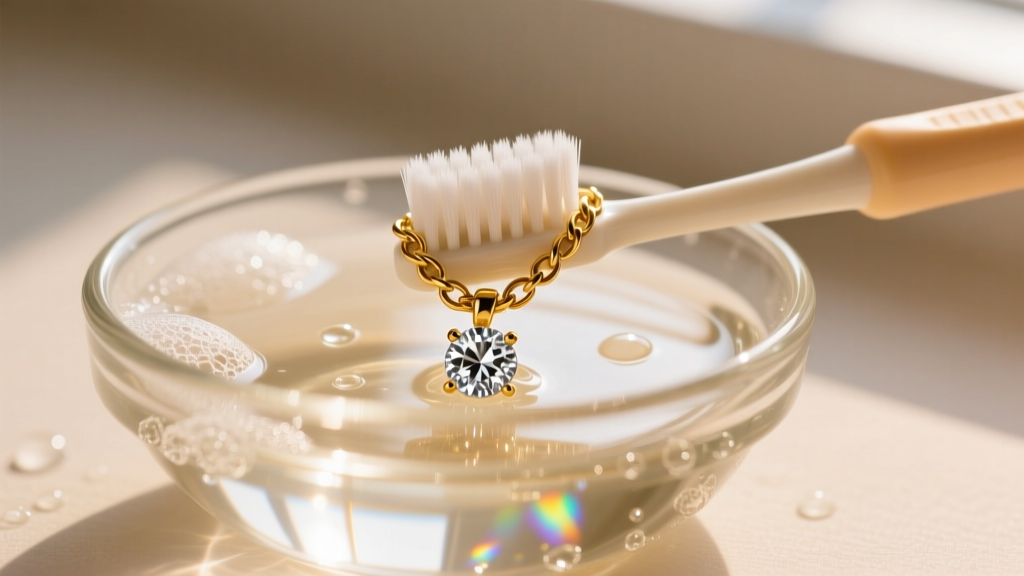
- Prepare the Solution: Fill a small glass bowl with warm (not hot) water and add three drops of a mild, grease-cutting dish soap like Dawn. Avoid harsh detergents with added moisturizers or bleaching agents.
- Soak: Submerge the Olivia necklace for 15 to 20 minutes. This softens hardened sebum and cosmetic residue trapped in the chain links and under the diamond's pavilion.
- Agitate Gently: Using a brand-new, extra-soft baby toothbrush, gently sweep the bristles over the chain and the back of the pendant setting. Brush in the direction of the chain links to avoid pulling them apart.
- Rinse and Dry: Rinse thoroughly under lukewarm running water (ensure the drain is plugged!). Pat dry with a lint-free microfiber cloth. Do not use paper towels, as their wood pulp fibers can cause micro-scratches on high-polish gold.
Protocol for Porous Gemstones (Pearls, Opals, Turquoise)
If your Olivia pendant features an organic or porous gemstone, never submerge it in water and absolutely avoid ultrasonic cleaners. Ultrasonic vibrations can shatter opals and strip the nacre from pearls. Instead, wipe the gemstone with a slightly damp, soft cotton cloth, and use a dry, soft brush to clean the metal chain, carefully avoiding the stone.
Troubleshooting Common Chain and Clasp Issues
Due to their delicate nature, Olivia necklaces require specific troubleshooting when things go wrong. Attempting DIY repairs on a 1.0mm chain often results in irreversible damage. Below is a breakdown of common issues, their risk profiles, and professional repair expectations.
| Chain Gauge / Type | Vulnerability Profile | Common Failure Point | Average Professional Repair Cost |
|---|---|---|---|
| 0.8mm Micro Cable | High (Prone to kinking and stretching) | Jump ring separation at the clasp | $45 - $65 (Laser welding required) |
| 1.0mm Standard Cable | Medium (Snagging can pull links oval) | Mid-chain link fracture from tension | $35 - $50 (Laser or micro-torch) |
| 1.2mm Box Chain | Low-Medium (Resists tangling, but stiff) | Lobster clasp internal spring rust/failure | $25 - $40 (Full clasp replacement) |
Note: Always insist on laser welding for chain repairs under 1.2mm. Traditional torch soldering requires removing multiple links to prevent the heat from melting the surrounding gold, which alters the chain's length and drape.
Proper Storage Techniques to Prevent Oxidation and Tangling
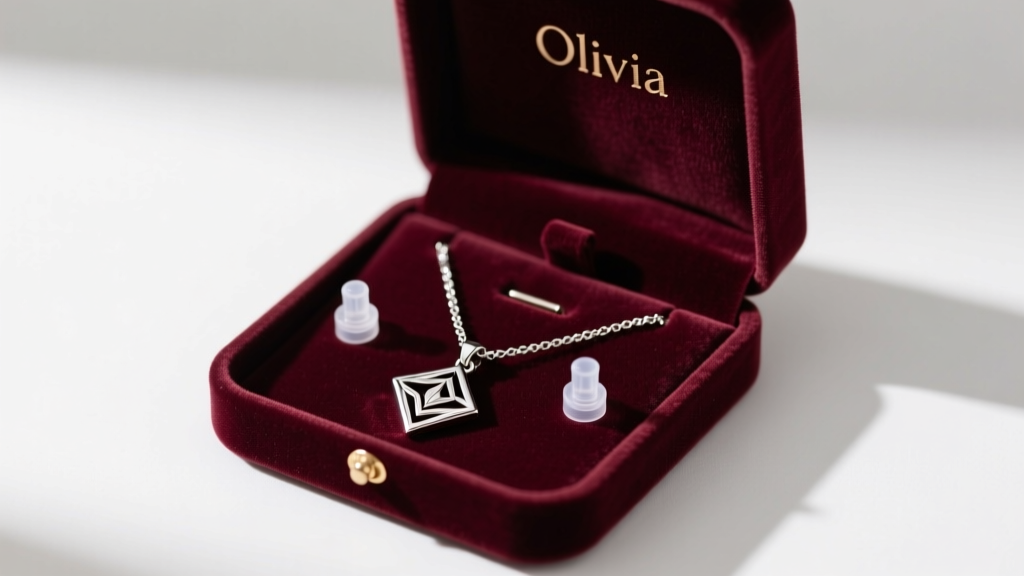
How you store your Olivia necklace is just as critical as how you clean it. The number one cause of premature chain breakage is micro-tangling. When a delicate chain becomes tangled, the links are subjected to extreme localized stress. Forcing a knot out can stretch the links beyond their yield point, causing metal fatigue and eventual snapping.
Advanced Storage Hacks
- The Silicone Stopper Method: To prevent the pendant prongs from catching on the chain during storage, slide a small, clear silicone earring back over one of the prongs. This creates a soft barrier that stops the chain from snagging.
- The Straw Trick for Travel: When packing for a trip, unclasp the necklace, thread one end through a clean plastic or silicone straw, and re-clasp it. The rigid straw prevents the chain from coiling and tangling in your luggage.
- Anti-Tarnish Environments: Store the necklace in a sealed polyethylene bag with a 3M anti-tarnish strip. As noted by Jewelers of America, limiting exposure to ambient humidity and airborne sulfur compounds is the most effective way to prevent sterling silver or low-karat gold alloys from oxidizing.
Expert Insight: "Never store multiple delicate necklaces in the same compartment. The friction between different chains, especially if one has a diamond pendant and the other is plain gold, will result in the diamond scratching the gold links. Always give your Olivia necklace its own dedicated, fabric-lined slot."
Establishing a Long-Term Care Routine
Maintaining the pristine condition of your Olivia necklace does not require hours of labor; it simply demands consistency and awareness. By committing to a gentle bi-weekly cleaning routine, removing the piece before exposure to harsh chemicals or physical exertion, and storing it using anti-tangle methods, you will significantly extend the lifespan of the chain and the brilliance of the pendant. Treat your delicate jewelry with the technical respect it requires, and it will remain a flawless staple in your collection for decades to come.


