How to Tell If a Pearl Necklace Is Real: Expert Testing Guide
Learn how to tell if a pearl necklace is real using expert material tests. Discover differences between natural, cultured, and fake pearls.

The Anatomy of a Pearl: Nacre, Bead, and Iridescence
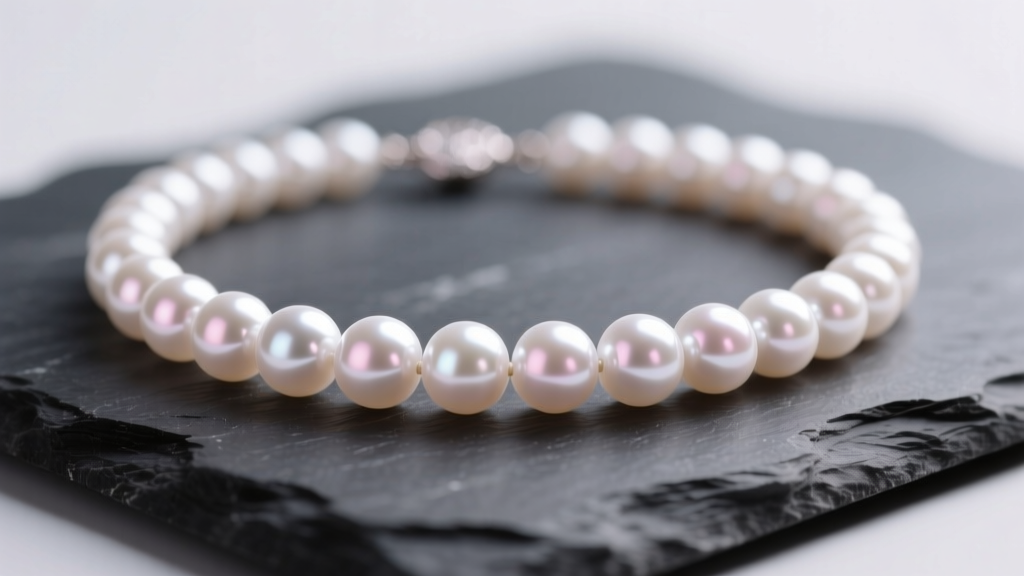
Before diving into the physical tests required to verify authenticity, it is crucial to understand what you are actually looking for. A genuine pearl—whether natural or cultured—is a biological gemstone created by a mollusk. The defining material is nacre, a composite substance consisting of microscopic hexagonal platelets of aragonite (a form of calcium carbonate) bound together by conchiolin, an organic protein. This overlapping, shingle-like structure is what creates a pearl's unique optical properties, including its luster and orient (the play of color across the surface).
Imitation pearls, on the other hand, are entirely synthetic or manufactured from organic bases like shell, glass, or plastic. They are coated with pearlescent paints, synthetic guanine crystals (essence d'orient derived from fish scales), or crushed shell powders. Understanding how to tell if a pearl necklace is real requires analyzing the physical and optical discrepancies between crystalline aragonite and manufactured coatings. According to the Gemological Institute of America (GIA), the structural integrity of nacre is the primary indicator of both authenticity and long-term value.
5 Definitive Tests: How to Tell If a Pearl Necklace Is Real
1. The Tooth Test (Friction Analysis)
The most famous and accessible at-home method is the tooth test. Gently rub the pearl against the biting edge of your front tooth. A genuine pearl will feel distinctly gritty, sandy, or textured. This friction is caused by the microscopic, overlapping aragonite platelets on the surface. Imitation pearls, whether glass or plastic coated in pearlescent paint, will feel perfectly smooth or slightly waxy because the synthetic coating lacks crystalline structures. Note: Never use excessive pressure, as nacre can scratch, and always wipe the pearl with a soft cloth afterward to remove oral oils.
2. Temperature and Thermal Conductivity
Real pearls are excellent thermal conductors. When you first pick up a genuine pearl necklace, the beads should feel noticeably cool to the touch, taking a few seconds to warm up to your body temperature. Glass imitations also feel cool initially but warm up much faster. Plastic imitations, however, will feel room-temperature or slightly warm immediately upon touching them, lacking the dense thermal mass of calcium carbonate.
3. Weight and Specific Gravity
Genuine pearls have a specific gravity ranging from 2.60 to 2.85. This gives them a satisfying, dense heft. Solid glass imitation pearls are often significantly heavier (specific gravity of 2.80 to 3.20) and feel unnaturally dense for their size. Conversely, plastic-core imitations are remarkably light (specific gravity of 1.05 to 1.40) and feel hollow or cheap when held in the palm. A standard 7mm Akoya pearl necklace should weigh approximately 35 to 40 grams; a plastic imitation of the same size will weigh less than 15 grams.
4. Magnification and the Drill Hole Inspection
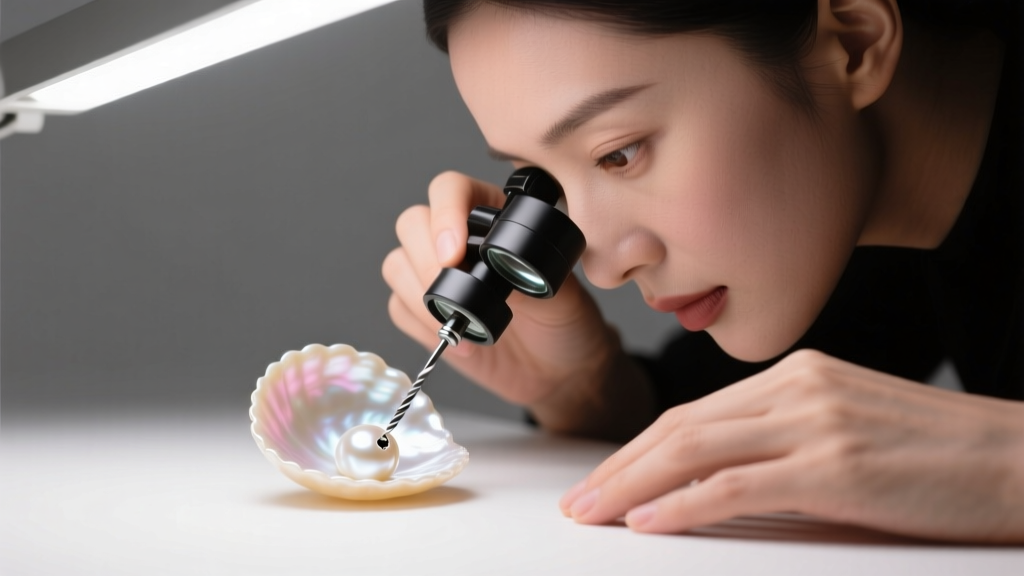
Using a 10x jeweler's loupe, examine the drill hole of the pearls. This is often where imitations reveal their true nature. On a real pearl, the drill hole will be sharp, clean, and perfectly cylindrical, with the nacre layers visible as concentric rings. On an imitation pearl, you will often see chipped or peeling paint around the hole, rounded edges, or a distinct, hard line where the synthetic coating ends and the glass or plastic core begins. Furthermore, the surface topography of a real pearl under magnification will look like a labyrinth of overlapping scales, whereas a fake will look like a smooth, painted surface with occasional bubbles or brush strokes.
5. The Pearl-on-Pearl Rub Test
Gently rub two pearls from the necklace against each other. Genuine pearls will produce a slight friction and may even generate a tiny amount of fine, white pearl powder (which can be easily wiped away). Imitation pearls will glide past each other smoothly without any resistance or powder generation.
Material Comparison: Natural vs. Cultured vs. Imitation
To accurately assess a necklace, you must understand the material differences across the market. The table below breaks down the core properties, manufacturing methods, and pricing realities of the primary pearl categories.
| Category | Core Material | Nacre Thickness | Specific Gravity | Avg. Strand Price (USD) |
|---|---|---|---|---|
| Natural Pearl | Solid Nacre | 100% Nacre | 2.60 - 2.85 | $10,000 - $500,000+ |
| Cultured (Akoya) | Bead Nucleus | 0.15mm - 0.50mm | 2.60 - 2.80 | $300 - $10,000 |
| Cultured (Tahitian) | Bead Nucleus | 0.80mm - 4.00mm | 2.60 - 2.85 | $500 - $30,000 |
| Cultured (South Sea) | Bead Nucleus | 2.00mm - 6.00mm | 2.60 - 2.85 | $1,000 - $100,000+ |
| Freshwater Cultured | Tissue Graft | 100% Nacre (Solid) | 2.60 - 2.75 | $50 - $5,000 |
| Majorica (Imitation) | Glass Core | 0mm (Guanine Coating) | 2.80 - 3.10 | $100 - $300 |
| Shell Pearl (Imitation) | Crushed Shell | 0mm (Resin/Paint) | 2.70 - 2.90 | $20 - $150 |
It is important to note that freshwater cultured pearls are typically solid nacre, as they are nucleated with tissue rather than a round shell bead. This makes them incredibly durable, though their luster is generally softer than the mirror-like reflection of saltwater Akoya pearls.
Advanced Gemological Verification
When dealing with high-value estate jewelry or investment-grade strands, at-home tests are insufficient. Professional gemologists utilize non-destructive advanced imaging to determine authenticity and nucleation methods.
X-Ray Radiography and Micro-CT Scanning
According to the GIA's pearl identification protocols, X-ray radiography is the gold standard for verifying a pearl's internal structure. A natural pearl will show concentric growth rings all the way to the center, resembling an onion. A bead-nucleated cultured pearl will reveal a distinct, solid, round center with a thin outer layer of nacre. Imitation pearls will simply show a solid, uniform core of glass or plastic with no organic growth structures.
Ultraviolet (UV) Fluorescence
Under long-wave UV light, natural and cultured pearls exhibit varying degrees of fluorescence based on their origin and the porphyrins present in the conchiolin. Freshwater pearls typically show a strong, chalky blue-white fluorescence, while saltwater pearls usually exhibit a weaker, tan or yellowish glow. Most plastic imitations will either show no fluorescence or a bizarre, uniform synthetic glow, though some high-end glass imitations are engineered to mimic natural UV reactions.
Common Failure Modes in Imitation Pearls
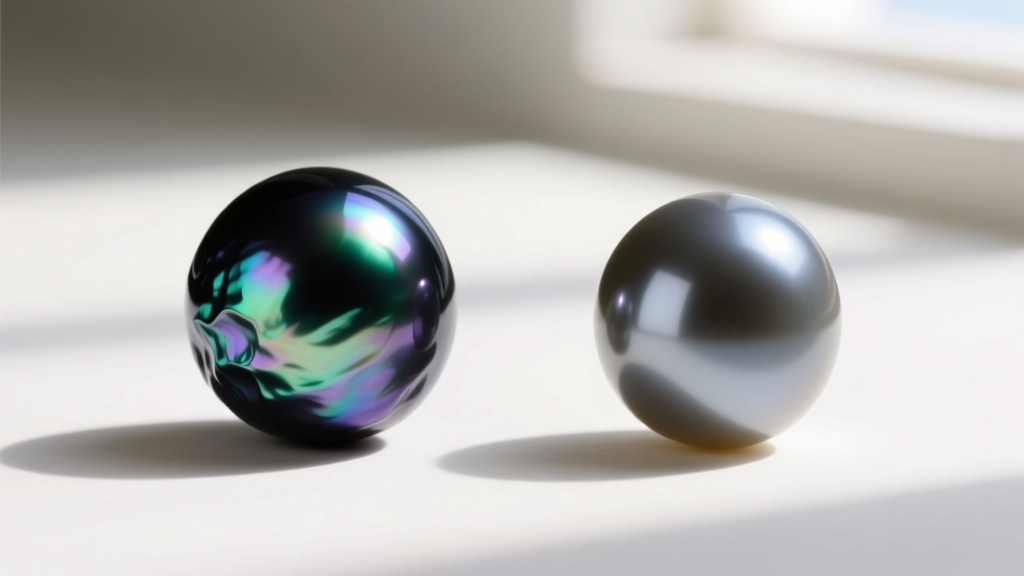
One of the most definitive ways to identify an older imitation pearl necklace is by observing its failure modes. Synthetic coatings do not possess the structural integrity of crystalline aragonite and will degrade over time.
- Peeling and Flaking: Coated glass and shell pearls frequently suffer from coating delamination. You will see flakes of pearlescent paint peeling away, especially near the clasp where the pearls experience the most friction.
- Yellowing and UV Degradation: Plastic-core imitations and those coated with synthetic resins will yellow and become brittle when exposed to prolonged UV light and environmental pollutants. Genuine pearls can dry out and crack if neglected, but they do not yellow in the same uniform, synthetic manner.
- Drill Hole Chipping: Because imitation coatings are essentially paint, the friction of the stringing wire or silk thread will eventually chip the coating away from the inside of the drill hole, leaving a jagged, unpainted rim.
Pricing Benchmarks and Market Realities
Understanding market pricing is a critical defense against fraud. If a vendor is offering a 9mm, perfectly round, mirror-luster white pearl necklace for $250, it is almost certainly an imitation. Genuine 9mm round white pearls are either South Sea or high-grade freshwater pearls, which command significantly higher prices due to the years of cultivation and high rejection rates during harvesting.
Furthermore, be highly suspicious of necklaces where every single pearl is mathematically identical in size, shape, and color. Genuine pearls are organic products; even the highest-grade AAA strands will exhibit microscopic variations in diameter (usually within a 0.2mm tolerance) and subtle shifts in overtone. Imitation pearls, manufactured by machines, are often flawlessly uniform—a dead giveaway of their synthetic origin.
Conclusion: Protecting Your Investment
Knowing how to tell if a pearl necklace is real requires a combination of tactile testing, visual inspection, and an understanding of material properties. While the tooth test and drill hole inspection are excellent first lines of defense, any high-value purchase should always be accompanied by a certification from a reputable gemological laboratory. By understanding the intricate biology of nacre and the physical limitations of synthetic coatings, you can confidently navigate the market and build a jewelry collection of genuine, enduring quality.


