Define Necklace Anatomy: A Beginner's Guide to Jewelry Parts
Learn how to define necklace anatomy, from chain types and clasp findings to standard lengths and metal grades in this beginner-friendly jewelry guide.

The Core Definition: What Separates a Necklace from Other Adornments?
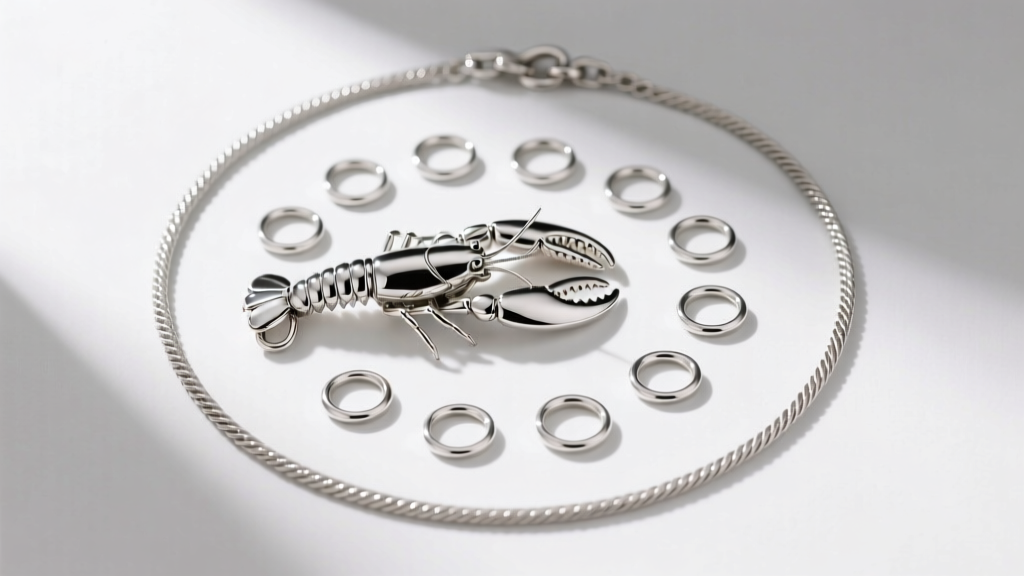
When jewelry historians and gemologists define necklace artifacts from antiquity, they draw a strict line between flexible draped adornments and rigid metal collars. To truly define necklace anatomy for the modern wearer, we must look beyond the simple dictionary description of "an ornamental chain worn around the neck." A true necklace is an engineered piece of wearable art that relies on tension, gravity, and precise metallurgical findings to function correctly. Unlike a rigid torc or a tight, structured choker, a standard necklace is designed to drape dynamically, moving with the wearer's body while distributing the weight of pendants and gemstones evenly across the cervical spine.
Understanding this structural definition is the first step in building a high-quality jewelry collection. Whether you are shopping for everyday staples or investment pieces, knowing how to deconstruct the components will save you from purchasing fragile, poorly constructed items that fail within months.
Anatomy of a Necklace: Deconstructing the Components
To accurately define necklace quality, you must examine the three primary structural zones: the chain, the findings, and the counterweights.
The Chain: Structural Backbone
The chain dictates both the aesthetic and the tensile strength of the piece. Here are the four most common chain types and their specific failure modes:
- Cable Chain: Composed of uniform round or oval links. It is the most traditional style but is prone to snapping if the soldering points on individual links are weak. Best for lightweight pendants under 5 grams.
- Curb Chain: Features flattened, interlocking links that lay flush against the skin. Highly durable and resistant to kinking, making it ideal for heavier pendants and everyday wear.
- Box Chain: Made of square links connected to form a smooth, continuous tube. While incredibly strong and excellent for heavy gemstone pendants, box chains can kink permanently if bent at a sharp angle.
- Rope Chain: Twisted links that mimic the appearance of a woven rope. The complex geometry creates brilliant light reflection, but the tight twists can trap lotions and skin oils, requiring regular ultrasonic cleaning.
Findings: Clasps and Jump Rings
Findings are the mechanical hardware that secure the necklace. The most common beginner mistake is ignoring the clasp type. Spring ring clasps (the small circular ones with a tiny lever) are inexpensive but suffer from a high failure rate due to weak internal springs and poor leverage. For any necklace supporting a pendant heavier than 10 grams, a lobster claw clasp is mandatory. Lobster claws feature a wider, more robust internal spring and a larger surface area for the jump ring to rest against, drastically reducing the risk of accidental unhooking.
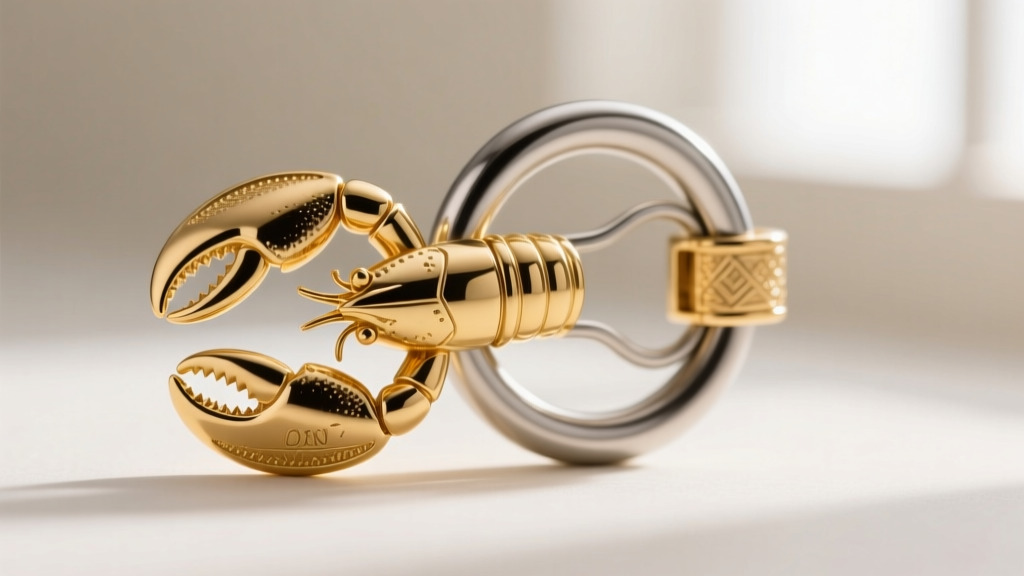
Equally important is the jump ring—the small circular wire that connects the clasp to the chain. Always look for soldered jump rings on the chain ends. An unsoldered jump ring (a simple circle with a slit) will eventually pull apart under the lateral tension of a swinging pendant. An 18-gauge (1.0mm thickness) soldered jump ring is the industry standard for durable, mid-weight necklaces.
Standard Lengths and How They Define Necklace Silhouettes
Jewelers define necklace categories by precise length measurements, which dictate where the piece falls on the décolletage and how it pairs with various necklines. Use the following data table as a definitive sizing framework:
| Category | Length (Inches) | Length (cm) | Best Neckline Pairing | Visual Effect |
|---|---|---|---|---|
| Collar | 12 - 13" | 30 - 33 cm | Open neck, V-neck, off-shoulder | Sits tightly above the collarbone; bold and structural. |
| Choker | 14 - 16" | 35 - 40 cm | Scoop neck, boat neck | Rests on the base of the neck; highlights the jawline. |
| Princess | 17 - 19" | 43 - 48 cm | Crew neck, turtleneck (longer end) | Falls just below the collarbone; the most versatile standard. |
| Matinee | 20 - 24" | 50 - 60 cm | Business attire, deep V-neck | Rests on the upper chest; draws the eye downward. |
| Opera | 28 - 36" | 71 - 91 cm | High necklines, evening wear | Falls below the bust; can be doubled for a layered look. |
| Rope/Lariat | 37"+ | 94+ cm | Minimalist tops, wrap dresses | Highly versatile; often knotted or wrapped multiple times. |
Material Grades: Defining Quality in Everyday Metals
When you define necklace value, the metal grade is the primary multiplier. The market is flooded with misleading terminology, so understanding the legal definitions of metal platings is crucial for avoiding overpriced costume jewelry.
- Sterling Silver (925): Must contain exactly 92.5% pure silver and 7.5% alloy (usually copper) for structural integrity. Always look for the "925" stamp. Note that sterling silver will oxidize and tarnish when exposed to sulfur in the air, requiring occasional polishing with a treated cloth.
- Gold Vermeil: According to GIA and FTC guidelines, true vermeil must have a sterling silver base (never brass or copper) and be plated with a minimum of 2.5 microns of 10k gold or higher. Anything less than 2.5 microns is simply "gold plated" and will wear through to the base metal within months of daily wear.
- Gold Filled: A mechanical bonding process where a thick layer of gold (at least 1/20th of the total weight of the item) is heat-bonded to a brass core. Gold filled chains are vastly superior to plated chains and can last decades without flaking, making them the best choice for budget-conscious buyers seeking longevity.
Common Beginner Mistakes and Troubleshooting
The Floating Clasp Dilemma
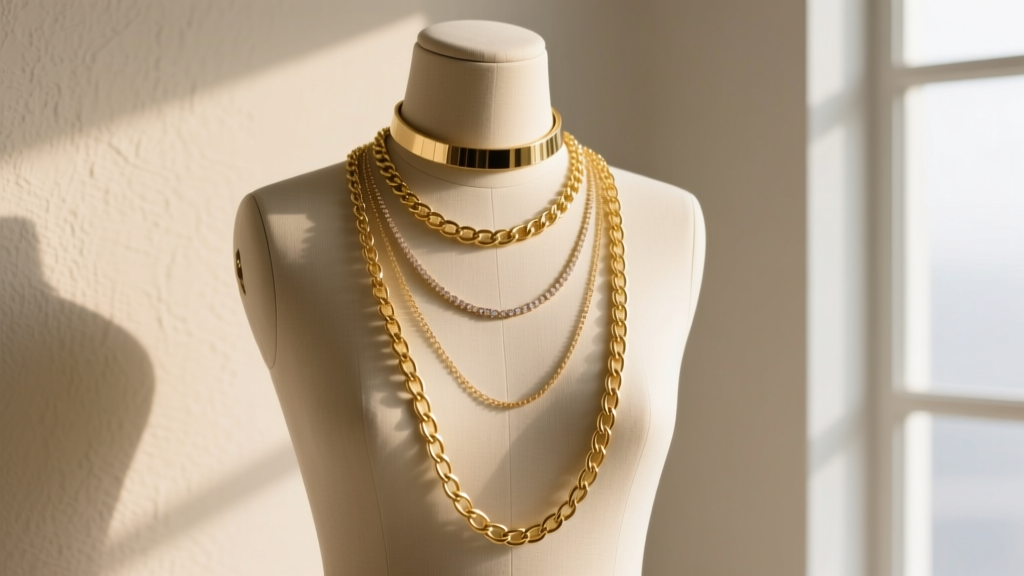
One of the most frustrating issues for beginners is a necklace clasp that constantly slides from the back of the neck to the front, resting awkwardly next to the pendant. This is not a defect in the chain; it is a physics issue related to center of gravity. If your pendant is significantly heavier than the chain, or if the clasp lacks a counterweight, gravity will pull the heaviest point to the lowest part of the curve (the front of your chest). The Fix: Look for necklaces that feature a small metal tag or a decorative bead soldered directly opposite the clasp. This counterweight anchors the back of the neck, keeping the clasp hidden.
Jump Ring Pull-Apart and Chain Kinking
If your pendant frequently slips off the chain, inspect the jump ring holding it. Mass-market jewelry often uses thin, 22-gauge unsoldered jump rings that pull open under the pendulum motion of walking. Take your necklace to a local bench jeweler and ask them to swap it for a thicker, 18-gauge soldered jump ring—a repair that typically costs less than $15 but permanently secures your stone. Additionally, never sleep in fine chains; the lateral pressure of your body weight against a mattress will permanently kink box and snake chains, compromising their structural integrity.
Final Thoughts on Building Your Collection
Learning to define necklace construction transforms you from a passive consumer into an informed collector. By prioritizing soldered findings, appropriate clasp mechanics, and legally compliant metal grades like true vermeil or gold-filled, you ensure that your jewelry withstands the rigors of daily wear. Start with a versatile 18-inch princess cable chain in sterling silver or gold-filled, and build your collection outward from that structurally sound foundation.


