How to Choose an Authentic Indian Agate Necklace
Discover how to evaluate, grade, and buy an authentic Indian agate necklace. Learn about stone quality, pricing, and setting styles in our expert guide.

The Geological DNA of Indian Agate
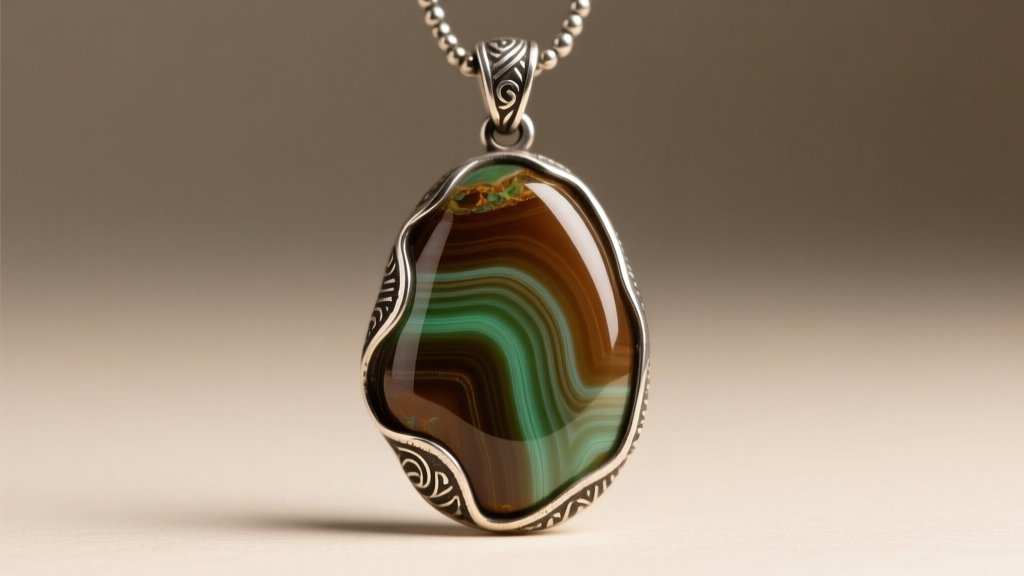
When shopping for an indian agate necklace, you are not just buying a piece of jewelry; you are acquiring a slice of geological history. Indian agate is a highly specific variety of banded chalcedony (microcrystalline quartz) primarily sourced from the Deccan Traps in western India, particularly the Maharashtra and Gujarat regions. According to Mindat.org, these stones formed millions of years ago when silica-rich groundwater permeated the cavities of basaltic lava flows, slowly depositing microscopic quartz crystals in concentric layers.
Unlike the vivid, heavily saturated Brazilian agates often seen in commercial jewelry, authentic Indian agate is prized for its subdued, earthy color palette. You will typically see deep moss greens, rusty reds, mustard yellows, and creamy whites. Understanding this geological origin is the first step in distinguishing a genuine Indian agate necklace from mass-produced, dyed alternatives flooding the market.
Evaluating Stone Quality: The 4 Pillars of Agate Grading
Gemologists and expert lapidaries evaluate Indian agate based on four distinct criteria. Before purchasing a pendant or beaded strand, inspect the stones against these pillars:
1. Banding Sharpness and Contrast
Premium Indian agate features sharp, well-defined concentric bands. If the colors look "muddy" or bleed into one another without distinct borders, the stone is likely of commercial grade. The highest quality specimens exhibit high-contrast banding that mimics topographical maps.
2. Dendritic "Landscape" Inclusions
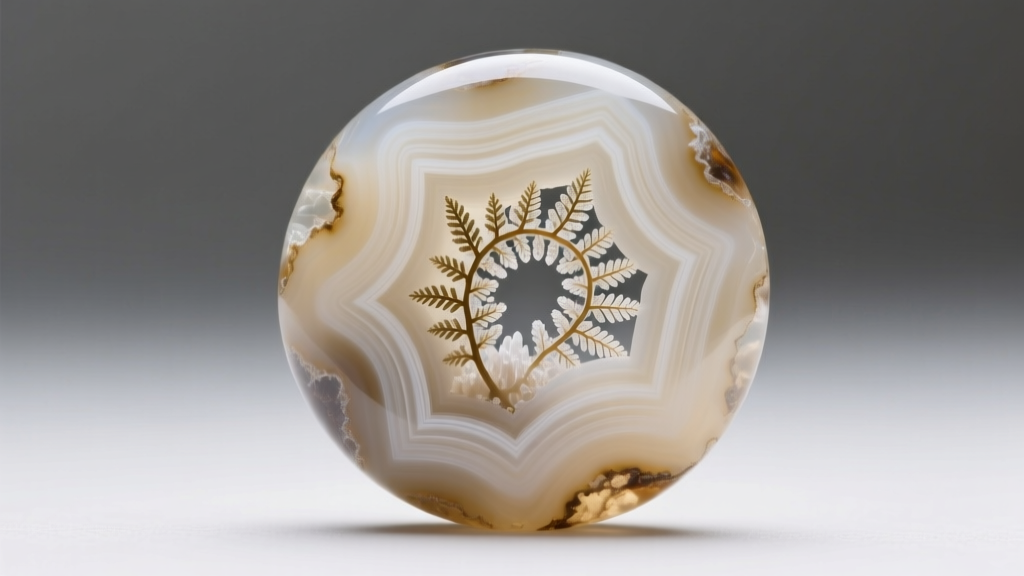
The most valuable subset of this stone is "Landscape Agate." These pieces contain dendritic inclusions—fern-like patterns created by manganese or iron oxide impurities. According to the Gemological Institute of America (GIA), these inclusions are not flaws; rather, they are highly sought-after features that increase the stone's value exponentially when cut into cabochons for pendants.
3. Translucency vs. Opacity
While Indian agate is generally more opaque than other chalcedony varieties, the finest grades possess a slight translucency at the edges when held up to a strong light source. Completely opaque, chalky stones indicate a lower silica purity and a softer, more porous structure.
4. Polish Quality and Surface Pitting
Because agate has a Mohs hardness of 6.5 to 7, it takes an excellent polish. Run your fingernail over the surface of the beads or cabochon. If you feel microscopic pitting, grooves, or a "waxy" drag, the lapidary rushed the tumbling or polishing process. A gem-grade Indian agate necklace should feel as smooth as glass.
Setting Styles and Metal Pairings
The earthy, grounded aesthetic of Indian agate requires careful metal pairing. Bright, highly polished yellow gold can often clash with the stone's natural, muted tones. Below is a decision framework for selecting the right metal setting for your necklace:
| Metal Type | Aesthetic Match | Best Necklace Style | Price Impact |
|---|---|---|---|
| Oxidized Sterling Silver (925) | Exceptional. The dark patina highlights the stone's natural cream and moss bands. | Cabochon pendants, heavy chain links. | Moderate ($80 - $250) |
| Rose Gold Vermeil | Very Good. The warm copper undertones complement rusty red and mustard agate. | Delicate bezel-set pendants, layering chains. | Affordable ($60 - $150) |
| Antiqued Brass / Copper | Good. Creates a bohemian, vintage look but requires maintenance to prevent skin discoloration. | Wire-wrapped pendants, mala beads. | Budget ($25 - $75) |
| High-Polish Yellow Gold (14k) | Poor. The high shine competes with the stone's matte, earthy visual weight. | Not recommended for traditional Indian agate. | High ($400+) |
Pricing Tiers: What You Should Actually Pay in 2026
The market for Indian agate necklaces is highly fragmented. Use this pricing guide to ensure you are paying fair market value based on the materials and craftsmanship involved:
- Commercial Grade Beaded Strands ($15 - $40): Typically 16 to 18 inches long, featuring 6mm to 8mm tumbled beads strung on elastic or nylon. The banding will be muddy, and the stones may be slightly asymmetrical. Often dyed to enhance color.
- Mid-Tier Cabochon Pendants ($60 - $150): Features a single, well-polished Indian agate cabochon (usually 20x30mm or larger) set in 925 sterling silver or gold vermeil. The stone will have distinct banding and a high-quality bezel setting.
- Gem-Grade Dendritic Landscape Necklaces ($200 - $500+): Custom-cut stones featuring distinct, centered dendritic "landscape" inclusions. These are usually set in heavy oxidized silver or artisan-crafted settings. The lapidary work will be flawless, with no surface pitting.
Spotting Fakes: Dyed Agate vs. Natural Indian Agate
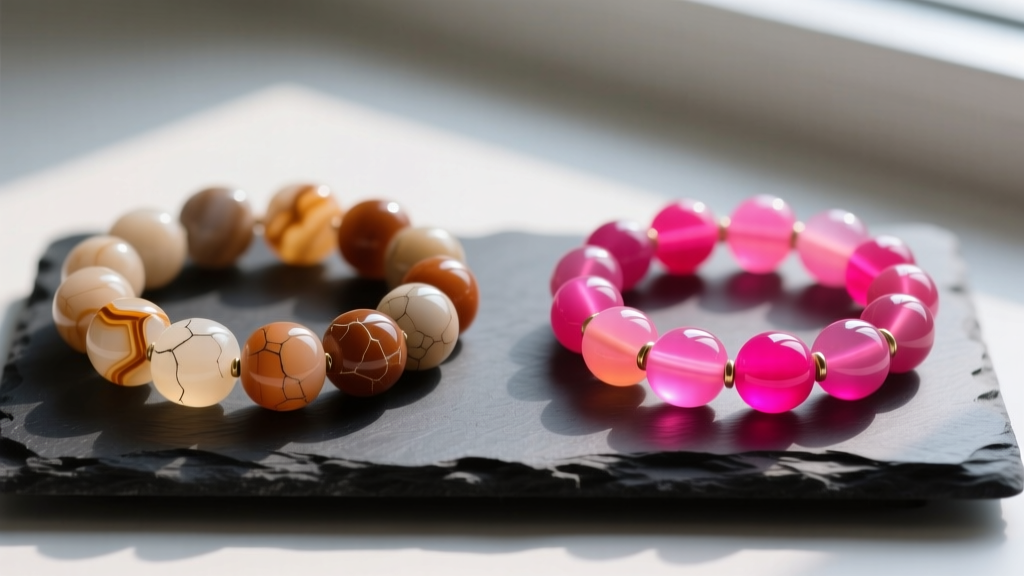
Because natural Indian agate features muted tones, suppliers frequently dye lower-grade, pale chalcedony to mimic the look—or to create unnatural colors like neon pink, deep purple, or bright blue. If you are buying an indian agate necklace and the colors look artificially vibrant, proceed with caution.
The Acetone Test: If you already own the piece or have the seller's permission, dip a cotton swab in nail polish remover (acetone) and rub it vigorously on an inconspicuous area of the stone or inside the bead hole. If the swab picks up color, the stone is dyed. Natural Indian agate will never bleed color.
Furthermore, examine the bead holes under a jeweler's loupe (10x magnification). In dyed agate, the dye concentrates in the microscopic fractures and the drill holes, creating dark, spider-web-like rings of color. Natural Indian agate will show uniform color distribution right up to the edge of the drill hole.
Care and Maintenance for Porous Banded Chalcedony
While Indian agate is relatively hard, its banded structure means it is composed of microscopic layers that can harbor microscopic voids. Improper care can lead to catastrophic failure of the stone.
Never use ultrasonic cleaners. The high-frequency vibrations can cause the stone to fracture along its natural banding lines, especially if the stone has internal stress or dendritic inclusions. Instead, clean your indian agate necklace using a soft, lint-free microfiber cloth dampened with warm water and a drop of mild, phosphate-free dish soap. Dry it immediately.
Avoid thermal shock. Leaving your necklace on a car dashboard in the summer sun or wearing it into a hot sauna can cause the different mineral bands to expand at varying rates, leading to internal cracking. Store your necklace flat in a soft pouch to prevent the heavier cabochon pendants from pulling and stretching the chain or cord over time.
By prioritizing sharp banding, natural earthy tones, and appropriate metal pairings, you can confidently select an Indian agate necklace that is not only a stunning sartorial choice but also a genuine geological treasure built to last a lifetime.


