The Anatomy of an Emo Necklace: Materials & Hardware
Discover the technical anatomy of an emo necklace. We break down metal grades, chain gauges, leather thickness, and hardware engineering.

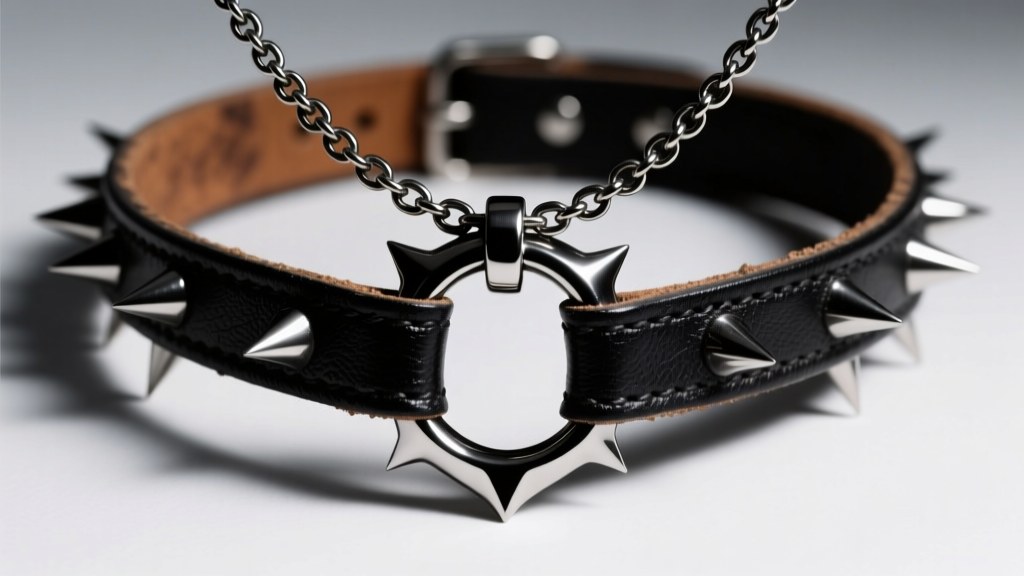
The Metallurgy of Subculture: Base Metals and Finishes
When analyzing the construction of an authentic emo necklace, the first point of failure is almost always the base metal and its surface treatment. The alternative jewelry market is flooded with cheap cast alloys, but a technically sound piece requires specific metallurgical properties to withstand daily wear, skin acidity, and the sheer weight of the hardware.
316L Surgical Steel vs. Zamak Alloys
High-quality emo chains and pendants are forged from 316L stainless steel. The 'L' stands for low carbon, but the critical addition is molybdenum, which provides exceptional resistance to chloride corrosion—essential for preventing rust from human sweat. In contrast, mass-market mall-goth jewelry often relies on Zamak (a zinc alloy with aluminum, magnesium, and copper). Zamak is cast, not forged, making it brittle. Under the tensile stress of a heavy O-ring pendant, Zamak jump rings will snap rather than stretch.
PVD Coating vs. Electroplating
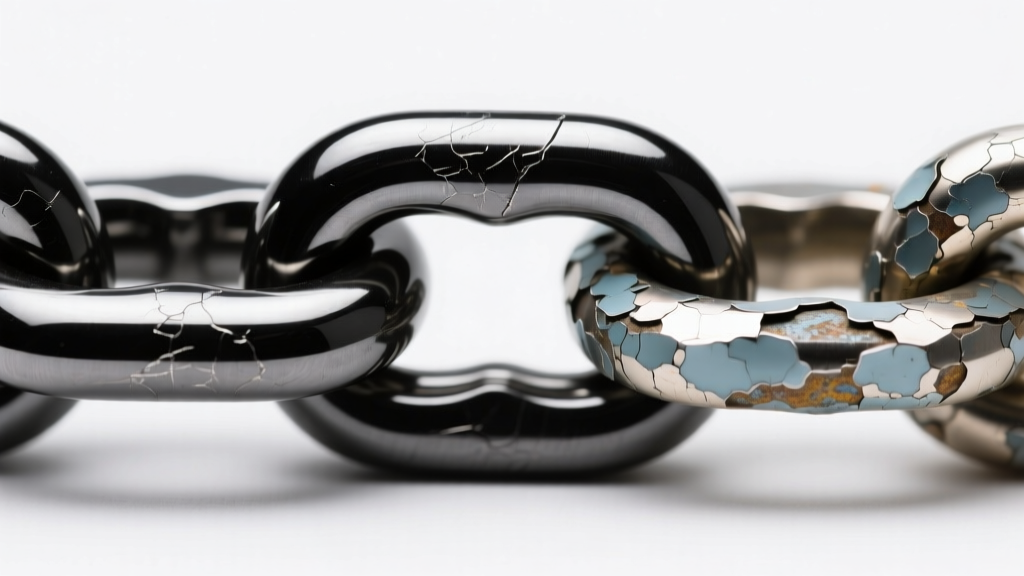
The signature black finish of an emo necklace is achieved through one of two methods. Standard electroplating involves dipping the metal in a chemical bath, resulting in a superficial layer that flakes and turns green within months. Premium pieces utilize PVD (Physical Vapor Deposition). According to metallurgical resources at Ganoksin, PVD bonds a microscopic layer of titanium nitride or zirconium carbon to the steel in a vacuum chamber. This creates a black finish that is structurally integrated into the metal, offering a hardness rating of up to 2000 HV (Vickers), making it virtually impervious to scratching from zippers or belt buckles.
Chain Architecture: Gauge, Weave, and Tensile Strength
The chain is the structural spine of any emo necklace. The aesthetic demands bulk, but bulk without proper wire gauge and weave geometry results in a necklace that kinks, snags, and eventually breaks. Chainmaille and heavy cable chains rely on the relationship between Wire Gauge (AWG) and Inner Diameter (ID).
Understanding Wire Gauge and Soldered Links
For a heavy collar or choker, the wire thickness should never drop below 16 AWG (1.3mm). For the main structural chains, 14 AWG (1.6mm) to 12 AWG (2.0mm) is the industry standard for subculture jewelry. Furthermore, every link on a heavy emo chain must be soldered. Unsoldered links rely purely on the tension of the bent metal; when a 200-gram steel padlock pendant is attached, unsoldered links will slowly pull apart at the seam. Soldering fuses the seam, increasing the tensile strength by over 400%.
For complex weaves, artisans often refer to the aspect ratio (AR) guidelines documented by suppliers like RingLord. The AR dictates how tightly the rings lock together. A weave that is too loose will snag on clothing; a weave that is too tight will become rigid and fail to drape over the clavicle.
Technical Chain Specifications
| Weave / Chain Type | Wire Gauge (AWG) | Inner Diameter (mm) | Aspect Ratio (AR) | Best Application |
|---|---|---|---|---|
| Cable (Soldered) | 12 AWG (2.0mm) | 6.0mm | 3.0 | Heavy Padlock / O-Ring Pendants |
| Byzantine | 16 AWG (1.3mm) | 4.5mm | 3.5 | Flexible Collars, Layering |
| Full Persian | 18 AWG (1.0mm) | 4.0mm | 4.0 | Textured Chokers, High Drape |
| Cuban Link | 10 AWG (2.5mm) | 8.0mm | 3.2 | Statement Chest Pieces |
Collar Construction: Leather Grades and Hardware Setting
Many emo necklaces integrate leather collars with steel hardware. The longevity of these pieces depends entirely on the tanning process and the mechanical fasteners used to attach spikes and D-rings.
Vegetable-Tanned vs. Chrome-Tanned Leather
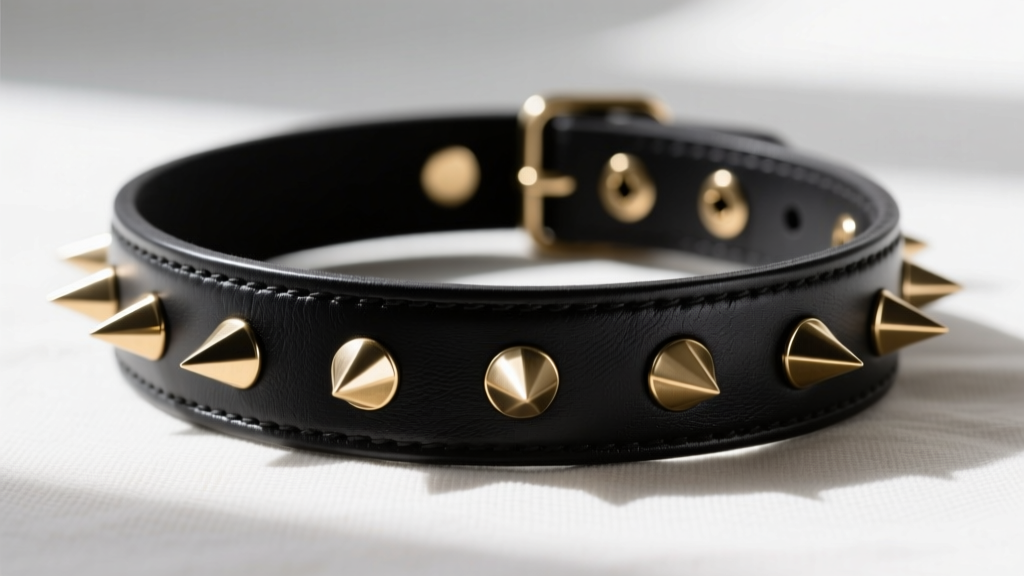
Chrome-tanned leather is soft, pliable, and cheap, but it lacks the structural rigidity required to support heavy steel spikes. Over time, the weight of the hardware will cause chrome-tan leather to stretch, warp, and eventually tear around the puncture holes. A properly engineered emo collar uses 8 to 9 oz (3.2mm to 3.6mm) vegetable-tanned leather. Veg-tan leather is dense and molds to the neck without losing its tensile integrity.
Fastener Engineering: Rivets vs. Chicago Screws
Split rivets are commonly used in fast fashion, but they are prone to catching on hair and fabric, eventually prying open. For high-end alternative jewelry, Chicago screws (sex bolts) are the superior choice. A Chicago screw features a female barrel with internal threading and a male screw. This allows the wearer to remove spikes for cleaning or customization, and provides a clamping force that a standard rivet cannot achieve. To prevent the screws from vibrating loose due to body movement, a drop of medium-strength threadlocker (like Loctite 243) is applied to the threads during assembly.
Clasp Engineering: Supporting Heavy Pendants and Chains
The clasp is the most critical stress point on any necklace. A heavy emo chain can easily weigh between 150 and 300 grams. Standard spring-ring clasps, which rely on a tiny internal steel spring, are rated for less than 50 grams of dynamic tension. Using a spring ring on a heavy subculture chain is a guaranteed path to losing the jewelry.
- Lobster Clasps (Heavy Duty): Suitable for chains up to 150g. Ensure the clasp is cast solid, not stamped from sheet metal. Stamped clasps will crush under lateral pressure.
- Toggle Clasps: The gold standard for heavy emo chains (150g - 300g+). The T-bar relies on gravity and geometry rather than a mechanical spring. As long as the T-bar is at least 3mm longer than the inner diameter of the receiving ring, it will not slip.
- Magnetic Clasps: Excellent for accessibility, but must feature neodymium rare-earth magnets encased in 316L steel. Weak ceramic magnets will separate when the heavy pendant swings outward.
Troubleshooting Common Hardware Failures
Even well-constructed emo necklaces require maintenance. Understanding failure modes allows you to repair rather than replace your hardware.
Jump Ring Elongation
If the jump ring connecting your O-ring pendant to the chain begins to stretch into an oval shape, the wire gauge is too thin for the pendant's weight. Do not simply squeeze it back into a circle with pliers. This work-hardens the metal and creates micro-fractures. Instead, replace the jump ring with one that is two AWG sizes thicker (e.g., swap a 16 AWG for a 14 AWG) and ensure the new ring is soldered shut.
O-Ring Weld Failure
The central O-ring pendant is a staple of the emo aesthetic. These rings are formed from steel tubing or bent wire and welded at the seam. If you notice a hairline crack at the weld point, the piece is structurally compromised. The heat from the initial welding process likely altered the temper of the steel, creating a brittle heat-affected zone (HAZ). According to fabrication guidelines from Fire Mountain Gems, attempting to re-solder or weld a cracked O-ring without annealing it first will result in immediate re-fracture. The safest protocol is to retire the pendant and source a seamless, cold-drawn steel O-ring.
"Alternative jewelry is not just about the visual shock value; it is about industrial durability. An emo necklace should be built with the same hardware tolerances as a motorcycle harness." — Master Jeweler & Hardware Fabricator
By prioritizing 316L steel, PVD finishes, proper wire gauges, and structural fasteners, you ensure that your necklace survives the mosh pit, the daily commute, and the test of time.


