How to Buy a Low Cost Diamond Necklace Without Getting Scammed
Avoid common scams and cloudy stones. Learn how to troubleshoot and select a genuine low cost diamond necklace with our expert grading and setting guide.

The Hidden Traps of Budget Diamond Jewelry
Finding a genuine low cost diamond necklace often feels like navigating a minefield of deceptive marketing and compromised quality. When budgets dip below the $1,000 mark, jewelers and online retailers frequently rely on confusing terminology to mask inferior stones and fragile settings. The most common trap is the illusion of size. Many budget-conscious buyers are drawn to pendants labeled as "1 Carat Total Weight" (CTW or TCW), assuming they are getting a substantial diamond. In reality, a 1.00 TCW necklace might feature a meager 0.15-carat center stone surrounded by 0.85 carats of "diamond dust" or single-cut melee. Single-cut melee diamonds possess only 17 or 18 facets compared to the 58 facets of a full-cut brilliant, resulting in a pendant that looks cloudy and lacks the signature diamond sparkle.
Another frequent issue is the use of "diamond chips." While the term sounds rugged and natural, in the jewelry industry, chips are often fractured, poorly shaped remnants from the cutting process. They do not reflect light predictably and are essentially industrial-grade carbon. When troubleshooting your purchase, always demand the exact carat weight of the center stone separate from the total carat weight of the entire piece.
Decoding the 4Cs for Budget-Friendly Pendants
To secure a beautiful low cost diamond necklace, you must know exactly where to compromise on the GIA 4Cs (Cut, Color, Clarity, Carat) and where to hold firm. According to the GIA Diamond Buying Guide, cut is the most critical factor for brilliance, and it is the one area where you should never cut corners.
Clarity and Color: Where to Compromise
For budget necklaces, aim for a color grade of I or J. These stones possess a faint warmth that is virtually undetectable to the naked eye once set, especially if you choose a yellow or rose gold chain, which masks the slight yellow tint. For clarity, target the SI1 (Slightly Included) or SI2 range. The key here is to ensure the stone is "eye-clean." Avoid stones with black carbon inclusions located directly under the table (the flat top facet), as these are visible without magnification and block light return. Instead, look for SI1 stones with white or transparent inclusions near the girdle edge, which can be hidden by a prong or bezel setting.

The Cut Quality Non-Negotiable
A poorly cut 1-carat diamond will look smaller and darker than an expertly cut 0.50-carat stone. When shopping on a budget, prioritize "Excellent" or "Ideal" cut grades. A well-cut diamond will face up larger than its actual carat weight because its proportions maximize the diameter of the stone while maintaining optimal light refraction. If a retailer does not provide a cut grade or a certificate from a reputable lab like GIA or AGS, walk away.
Lab-Grown vs. Natural: The Ultimate Cost-Solver
The diamond market has shifted dramatically. As of 2026, lab-grown diamonds have completely stabilized in price and are chemically, physically, and optically identical to mined diamonds. If your goal is to maximize size and quality on a strict budget, a lab-grown low cost diamond necklace is the most logical troubleshooting solution.
- $500 Budget: Yields a 0.25ct natural diamond (I color, SI2 clarity) OR a 0.75ct lab-grown diamond (F color, VS2 clarity).
- $1,000 Budget: Yields a 0.50ct natural diamond (H color, SI1 clarity) OR a 1.50ct lab-grown diamond (E color, VVS2 clarity).
Lab-grown stones allow you to bypass the "size vs. quality" compromise entirely. However, ensure the pendant comes with a laser inscription on the girdle and a grading report from the IGI or GIA to guarantee authenticity and resale transparency.
Troubleshooting Chain and Setting Failures
A diamond is only as secure as the metal holding it. Budget jewelry often cuts costs by using inferior alloys or fragile setting styles. The most critical troubleshooting step is evaluating the metal and the setting type. Sterling silver, for instance, is a massive red flag for diamond settings. Silver is too soft; prongs will bend, wear down, and eventually snap, leading to catastrophic stone loss. Similarly, 10k gold (only 41.7% pure gold) is highly prone to porosity, tarnishing, and causing nickel allergies due to its high alloy content.
| Metal / Setting Type | Pros | Cons | Expert Verdict |
|---|---|---|---|
| Sterling Silver (Prong) | Extremely low upfront cost | Prongs bend easily; high stone loss risk; tarnishes | Avoid entirely for real diamonds |
| 10k Gold (Bezel) | Durable metal; very cheap | High nickel content; dull color; skin reactions | Budget backup only if hypoallergenic |
| 14k Gold (Bezel) | Highly secure; hides poor girdles; hypoallergenic | Slightly higher upfront cost; reduces light entry | Highly Recommended for daily wear |
| 14k Gold (4-Prong) | Classic look; maximizes light return | Prongs can snag on sweaters; requires maintenance | Good, but requires annual check-ups |
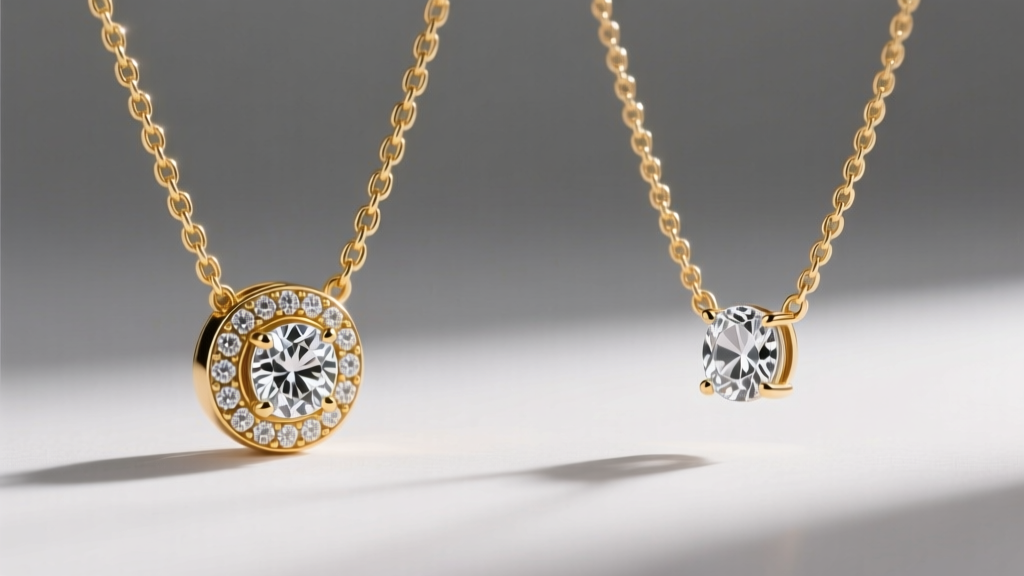
For a low cost diamond necklace intended for daily wear, a 14k gold bezel setting is the ultimate problem-solver. A bezel wraps a thin rim of metal entirely around the diamond's girdle. This not only protects the stone from impacts but also creates an optical illusion that makes the diamond appear up to 20% larger than its actual carat weight. Furthermore, a bezel setting hides a poor or chipped girdle, allowing you to safely purchase a lower-priced diamond with a "Fair" or "Poor" polish/girdle rating that would be vulnerable in a traditional prong setting.
Red Flags: Clarity Enhancement and FTC Disclosures
One of the most dangerous pitfalls in the budget diamond market is "clarity enhancement" or "fracture filling." This process involves injecting a glass-like resin into surface-reaching feathers (cracks) within a diamond to make them invisible to the naked eye. While this makes a heavily included stone look like a VS-clarity gem, it introduces severe durability issues. If you wear a fracture-filled necklace into a hot tub, expose it to harsh chemicals, or take it to a jeweler for a routine resizing or ultrasonic cleaning, the heat and vibrations will boil the glass out, leaving you with a cloudy, fractured stone that may split in half.
The Federal Trade Commission (FTC) Jewelry Guides strictly mandate that sellers must disclose any clarity enhancement or fracture filling. However, shady online retailers often bury this disclosure in the fine print or use vague terms like "treated" or "enhanced for beauty." If a 1-carat diamond pendant is priced at $400 and claims to be natural and untreated, it is almost certainly a scam or a heavily fracture-filled stone. Always ask the seller directly, in writing, if the diamond has been subjected to laser drilling or fracture filling.
Final Checklist Before Checkout
To ensure your budget purchase is a triumph rather than a tragedy, run through this final troubleshooting checklist:
- Verify the Center Stone Weight: Ignore TCW; confirm the exact carat weight of the primary diamond.
- Demand a Certificate: Ensure the stone is graded by GIA, AGS, or IGI (for lab-grown).
- Check the Metal Stamp: Look for "14k" or "18k". Reject "925" (silver) or "10k" for diamond prongs.
- Inspect the Return Policy: You must have at least 14 days to inspect the necklace in natural sunlight for visible black inclusions or milkiness.
- Ask About Enhancements: Get written confirmation that the stone is not fracture-filled.
By applying these strict troubleshooting parameters, you can confidently navigate the market and secure a stunning, genuine low cost diamond necklace that offers lasting brilliance and structural integrity without draining your bank account.


