Why The Vintage Rose Necklace Dominates 2026 Trends
Discover why the vintage rose necklace is the defining jewelry trend of 2026. Explore era-specific styling, authentication tips, and pricing guides.

The Resurgence of Botanical Romanticism in 2026
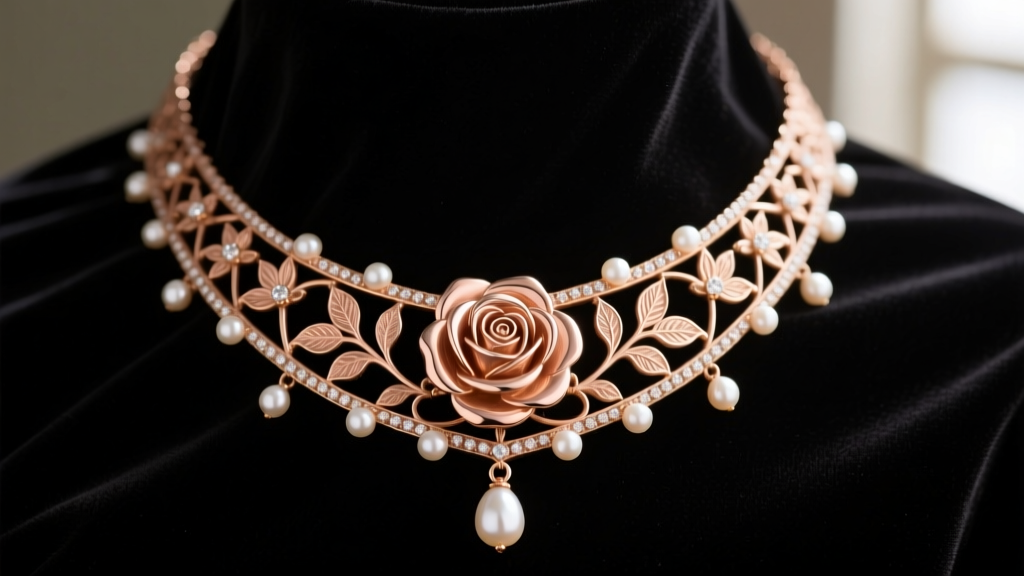
The transition from the sterile, hyper-minimalist aesthetics of the early 2020s to the rich, narrative-driven "heirloom maximalism" of 2026 has positioned the vintage rose necklace as the ultimate sartorial anchor. No longer relegated to dusty estate jewelry cases, botanical motifs are dominating contemporary styling, driven by a cultural craving for permanence and historical romance. According to archival research from the Victoria and Albert Museum, the rose has maintained its status as the preeminent symbol of devotion and secrecy (sub rosa) since the Victorian era. Today, collectors and stylists alike are bypassing modern mass-produced floral pendants in favor of authentic vintage pieces that offer superior metallurgy, lost-wax casting nuances, and genuine historical patina.
Decoding Eras: Which Vintage Rose Necklace Suits You?
Understanding the provenance of your vintage rose necklace is critical for both valuation and styling. The rose motif evolved drastically across three primary jewelry periods, each offering distinct material compositions and design philosophies.
Victorian (1837-1901): Sentimental & Symbolic
Victorian rose necklaces are deeply rooted in floriography—the language of flowers. A red rose signified passionate love, while a yellow rose denoted jealousy or a decrease of love. Authentic Victorian pieces often feature hand-engraved 14k or 15k rose gold. Modern 14k rose gold typically contains 58.5% gold, 20% copper, and 21.5% silver. In contrast, 19th-century English and Russian rose gold alloys often pushed copper content to 25% or higher, resulting in a darker, more russet tone that develops a highly prized, velvety patina over decades of wear. Look for seed pearl halos, which symbolized tears or purity, and carved coral or jet roses. The Gemological Institute of America (GIA) notes that Victorian floral pieces frequently incorporated rose-cut diamonds, which possess a flat base and domed, triangular facets that glow softly in candlelight, unlike the brilliant-cut diamonds of today.
Art Nouveau (1890-1910): Whiplash Curves & Enamel
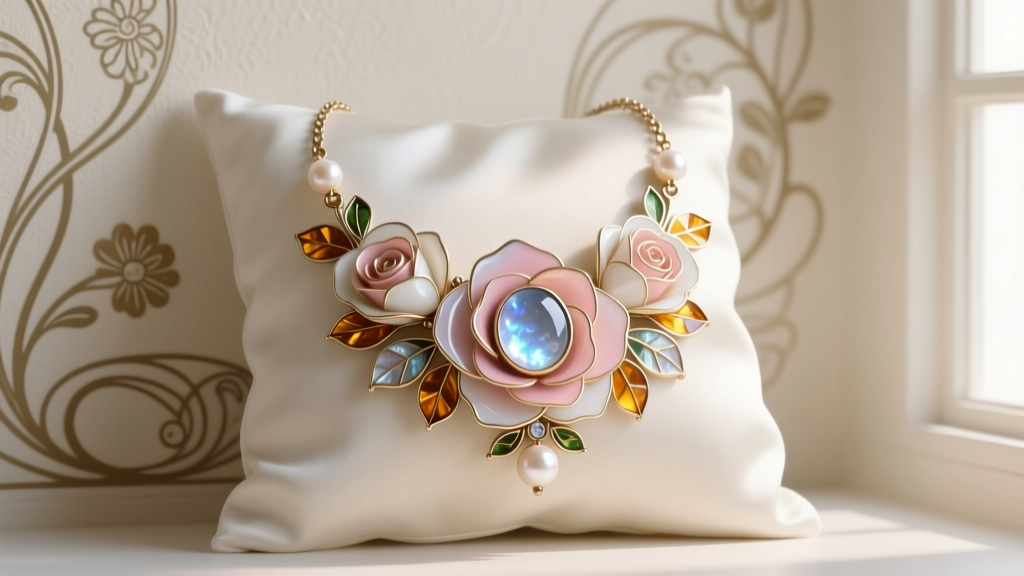
If your vintage rose necklace features asymmetrical vines, sinuous "whiplash" curves, and translucent enamel, it likely hails from the Art Nouveau movement. Masters like René Lalique and Georges Fouquet rebelled against industrialization by elevating the rose from a mere pretty flower to a wild, untamed force of nature. The defining technique here is plique-à-jour—a backless enamel technique that allows light to shine through the petals like stained glass. These pieces are exceptionally rare and fragile, often commanding premium prices at auction.
Retro (1935-1950): Bold Gold & Carved Stones
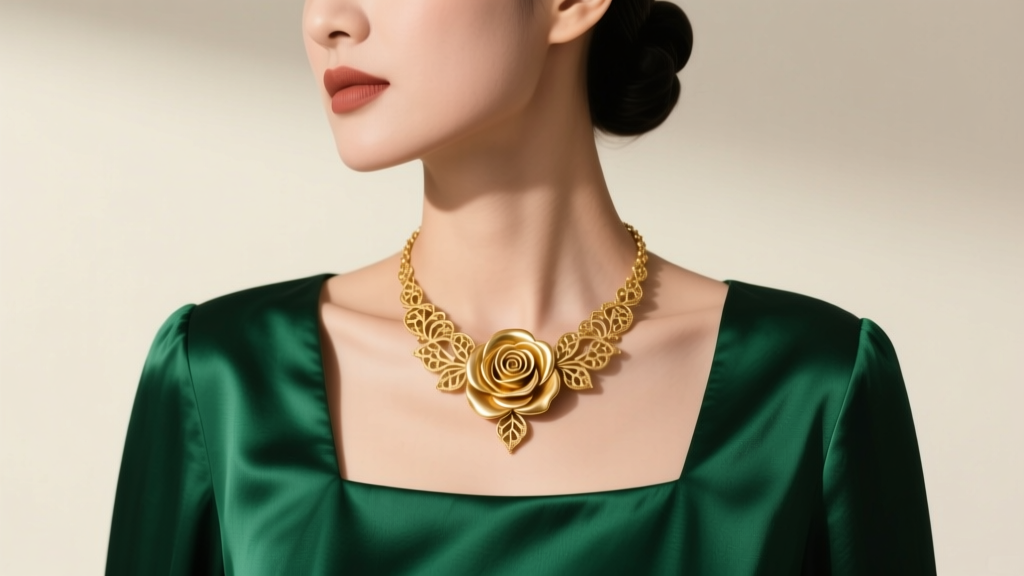
World War II metal rationing forced jewelers to innovate. Retro-era vintage rose necklaces are characterized by voluminous, three-dimensional designs made from thin sheets of 14k rose or yellow gold. The "gas pipe" or "snake" chain became ubiquitous, supporting large, carved citrine, amethyst, or rose quartz roses. These pieces are heavier in visual impact but surprisingly lightweight on the neck, making them ideal for daily wear in 2026.
Authentication vs. Reproduction: A Buyer's Matrix
The 2026 market is flooded with "vintage-inspired" reproductions. Distinguishing a true antique or vintage rose necklace from a modern replica requires examining the hardware, hallmarks, and metallurgical wear patterns. Below is a diagnostic matrix for serious buyers.
| Era | Clasp Type | Metal Purity Marks | Typical 2026 Estate Price |
|---|---|---|---|
| Victorian | C-Clasp / T-Bar Hinge | Rarely stamped; acid tested for 15k/18k | $1,200 - $4,500 |
| Art Nouveau | Early Spring Ring / Hook | French Eagle Head (18k) or Maker's Mark | $3,500 - $15,000+ |
| Retro | Box Clasp with Figure-8 Safety | 14k or 18k stamped; occasional maker's mark | $900 - $3,800 |
| Modern Repro | Lobster Claw | Laser-etched 10k/14k; "925" for silver | $150 - $600 |
2026 Styling Framework: Necklines & Layering
Styling a vintage rose necklace in 2026 requires a departure from the overly matched sets of the past. The current trend relies on the "Rule of Contrast"—pairing ornate, historical jewelry with structured, modern tailoring.
- The Sweetheart Anchor: A 16-inch Victorian rose gold pendant with seed pearls sits perfectly in the negative space of a sweetheart neckline. Avoid high collars, which will cause the delicate C-clasp to catch and the pendant to flip.
- The Asymmetrical Balance: Art Nouveau pieces are inherently asymmetrical. Pair them with one-shoulder silk tops or draped jerseys. Let the "whiplash" vine dictate the flow of the fabric.
- The Retro Layer: Retro carved quartz roses are bold. Layer a 18-inch Retro rose necklace with a modern, minimalist 20-inch 18k yellow gold paperclip chain. The juxtaposition of the heavy, vintage floral motif against the stark, geometric modern chain is the defining look of 2026 editorial fashion.
Investment, Maintenance & Market Value
As the supply of pristine, unaltered vintage jewelry dwindles, the investment value of authenticated pieces continues to appreciate. Estate jewelry auction houses report a 14% year-over-year increase in bidding for verified Art Nouveau botanical pieces. However, buyers must be wary of "married" pieces—where a vintage rose pendant has been attached to a modern chain, or where original rose-cut diamonds have been replaced with modern brilliant cuts to increase perceived sparkle. Always demand a loupe inspection to check the girdle thickness and facet junctions of any stones set within the rose motif.
Crucial Maintenance Note: Never place an Art Nouveau vintage rose necklace in an ultrasonic cleaner. The high-frequency vibrations will shatter the plique-à-jour enamel and loosen the delicate collet settings of rose-cut diamonds. Clean only with a soft, dry microfiber cloth and store flat to prevent chain kinking.
"The true value of a vintage rose necklace lies not just in its gold weight, but in the survival of its original enamel work and the integrity of its period-correct clasp. A replaced lobster claw on a Victorian piece instantly relegates it from 'antique' to 'damaged' in the eyes of serious collectors."
Final Verdict
The vintage rose necklace is far more than a fleeting seasonal trend; it is a masterclass in wearable history. Whether you are drawn to the sentimental seed pearls of the Victorian era, the breathtaking enamel work of Art Nouveau, or the bold, sculptural gold of the Retro period, investing in an authentic piece ensures you are wearing a tangible fragment of the past. As 2026 fashion continues to embrace narrative-driven styling, the vintage rose remains the most eloquent storyteller in the jewelry box.


