What Size Necklace for a Man? The Ultimate Value Guide
Discover what size necklace for a man offers the best value. We break down chain lengths, widths, metal grades, and price-per-gram metrics for smart buyers.

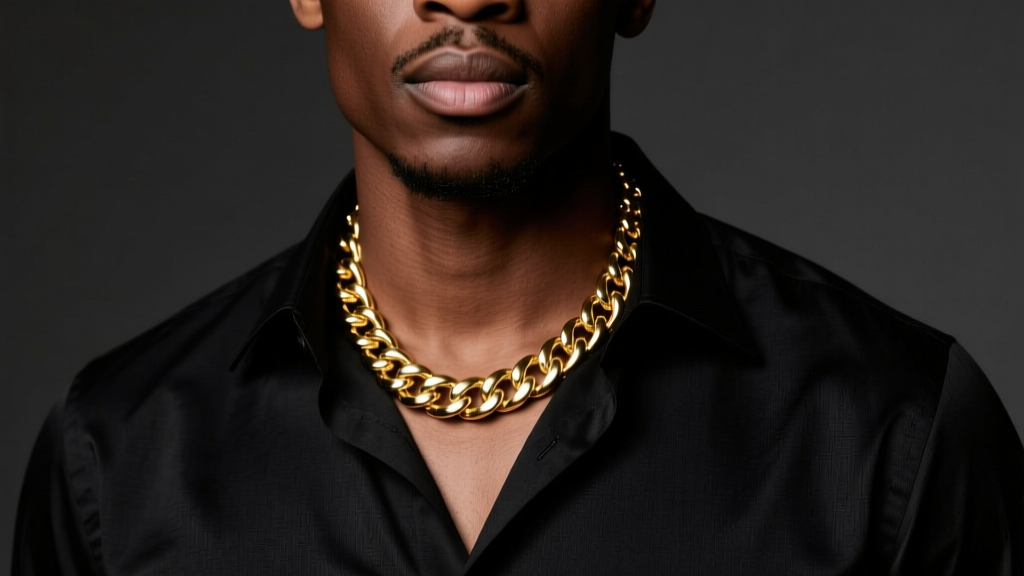
When searching for what size necklace for a man to buy, most style guides focus purely on aesthetics—matching chain lengths to necklines or face shapes. However, as a buyer, your primary concern should intersect with financial pragmatism. Sizing directly dictates metal weight, structural integrity, and ultimately, the retail markup you pay. A poorly sized or poorly constructed chain isn't just a style misstep; it is a depreciating asset that will fail under its own dynamic load.
In this comprehensive value assessment, we bypass generic fashion advice and analyze the economics of men's necklace sizing. We will evaluate length premiums, the hidden costs of hollow chains, and how to calculate the true price-per-gram value across different metal grades in 2026.
The Core Lengths and Their Price Premiums
The length of a chain is the most obvious variable affecting price, as it directly correlates to the volume of raw material required. However, the retail markup scales disproportionately as you move up in size.
- 18 Inches (Choker/Base of Neck): Best for men with neck circumferences under 15 inches. Because it requires less metal, an 18-inch chain is the most budget-friendly entry point for precious metals. However, it limits pendant versatility.
- 20 Inches (Collarbone): The industry standard. A 20-inch chain rests perfectly at the collarbone, offering the highest resale liquidity and cost-per-wear value. Most manufacturers optimize their production runs for 20-inch lengths, meaning you pay the lowest retail premium over melt value.
- 22 Inches (Mid-Chest): Ideal for broader builds or wearing over crewneck t-shirts. Expect a 15% to 20% price jump from the 20-inch equivalent, not just due to metal weight, but because thicker widths (4mm+) are usually required to keep a 22-inch chain looking proportional.
- 24 Inches (Sternum): Standard for streetwear and heavy pendants. The structural requirement here demands heavier links, pushing both the base material cost and the labor cost (soldering larger links) significantly higher.
Width, Weight, and the "Hollow" Trap
When determining what size necklace for a man provides the best budget value, width (measured in millimeters) is just as critical as length. A standard men's chain ranges from 2mm (subtle) to 6mm+ (statement). But this is where budget buyers fall into the hollow chain trap.
Solid vs. Semi-Solid vs. Hollow
To make wider chains (e.g., 5mm to 8mm) affordable, mass-market jewelers manufacture "hollow" or "semi-solid" links. A hollow 5mm Cuban link chain might weigh 18 grams, while a solid equivalent weighs 55 grams.
The Value Verdict: Hollow chains are a financial liability. They dent easily if dropped on a hard surface, kink under the torque of a heavy pendant, and are virtually impossible for a jeweler to repair. Always prioritize a narrower, solid chain (e.g., a 3mm solid chain) over a wider, hollow one (e.g., a 6mm hollow chain) for long-term value retention.
Material Grade & Price-Per-Gram Analysis
According to the Federal Trade Commission Jewelry Guides, metal purity must be accurately disclosed, but retail markups vary wildly based on the material. Below is a value assessment of common men's chain materials for a standard 20-inch, 4mm solid curb chain.
| Material | Grade / Purity | Avg. Weight (20" 4mm) | Est. Retail Range | Durability (1-10) | Value Retention |
|---|---|---|---|---|---|
| Surgical Steel | 316L | 45g | $40 - $85 | 9 | Zero (Scrap) |
| Sterling Silver | 925 | 42g | $120 - $250 | 6 | Low (Melt) |
| 10k Gold | 41.7% Pure | 55g | $800 - $1,200 | 10 | Medium |
| 14k Gold | 58.3% Pure | 55g | $1,800 - $2,600 | 9 | High |
| Platinum | 950 | 85g | $4,500 - $6,000+ | 10 | Medium |
For strict budget buyers, 316L stainless steel offers the highest utility value. Unlike 304 steel, 316L contains molybdenum, which drastically increases resistance to chloride corrosion (sweat and saltwater). For precious metal investors, 14k gold remains the sweet spot, offering superior scrap liquidity compared to 10k, without the extreme softness and premium of 18k or 24k gold. The Gemological Institute of America (GIA) notes that 14k gold's alloy composition provides the optimal balance of tensile strength and precious metal value for daily-wear chains.
The Value Assessment Framework
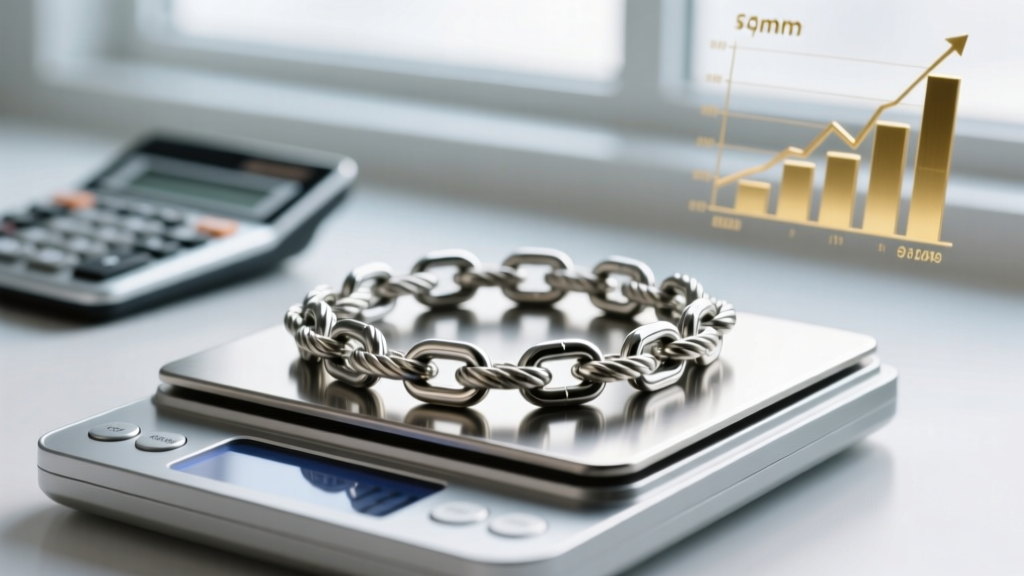
To determine if a specific chain size and material combination is priced fairly, use the following framework to deconstruct the retail tag:
- Calculate Melt Value: Multiply the chain's exact gram weight by the current spot price of the pure metal (adjusting for purity, e.g., multiplying 14k gold spot by 0.583).
- Assess the Labor Premium: Intricate weaves (like Rope or Franco) require extensive manual or specialized machine soldering. Expect a 20% to 40% markup over melt value for complex weaves. Simple Curb or Cable chains should carry no more than a 10% to 15% labor premium.
- Identify the "Brand Tax": Luxury or streetwear-branded jewelry often carries a 200% to 500% markup. From a pure value perspective, you are paying for the logo, not the metallurgy.
Hardware: Where Budget Chains Fail
A chain is only as strong as its clasp. When evaluating the value of a men's necklace, inspect the hardware. A heavy 5mm solid gold chain (weighing 60+ grams) generates significant dynamic tension when the wearer moves.
If a retailer pairs a heavy chain with a standard 8mm lobster clasp, the clasp's internal spring mechanism will eventually fail, resulting in lost metal. A high-value, properly engineered chain will feature an oversized lobster clasp (minimum 12mm-15mm) or a box clasp with a figure-eight safety catch. Never compromise on clasp sizing to save $30; the risk of losing a $2,000 chain is not worth the budget savings.
Final Verdict: Maximizing Your Budget
Ultimately, deciding what size necklace for a man offers the best value comes down to matching the metal's structural properties to the wearer's lifestyle. If your budget is under $150, opt for a 20-inch, 3mm to 4mm solid 316L stainless steel chain. If you are investing in precious metals, a 20-inch or 22-inch solid 14k gold Cuban or Curb link chain (minimum 4mm width) will provide decades of wear, resist stretching, and retain the highest percentage of its intrinsic melt value upon resale.