2026 Trend Guide: Mastering the Layered Bead Necklace
Discover 2026 trends for the layered bead necklace. Learn expert stacking techniques, material pairings, and neckline matching for flawless styling.
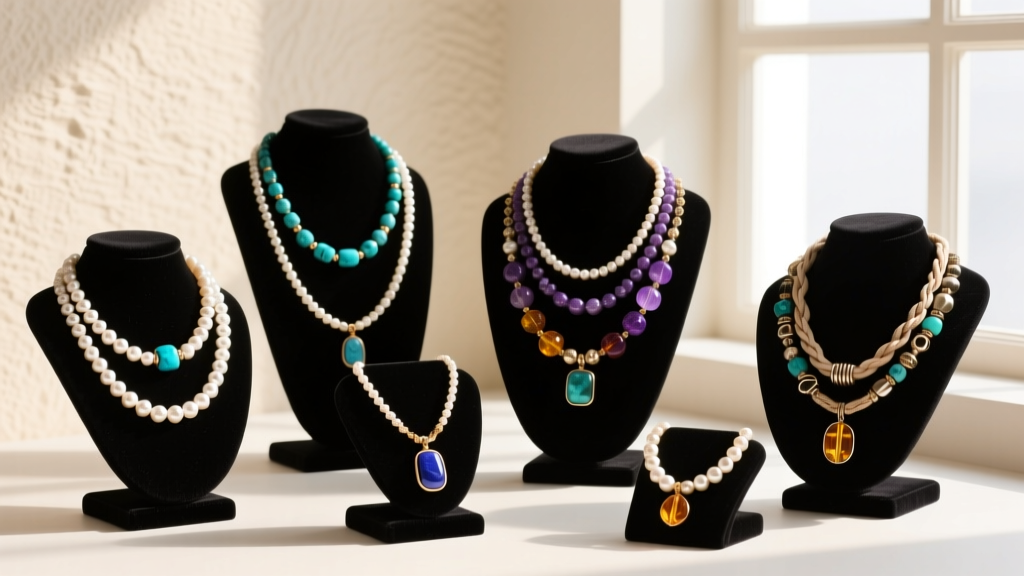
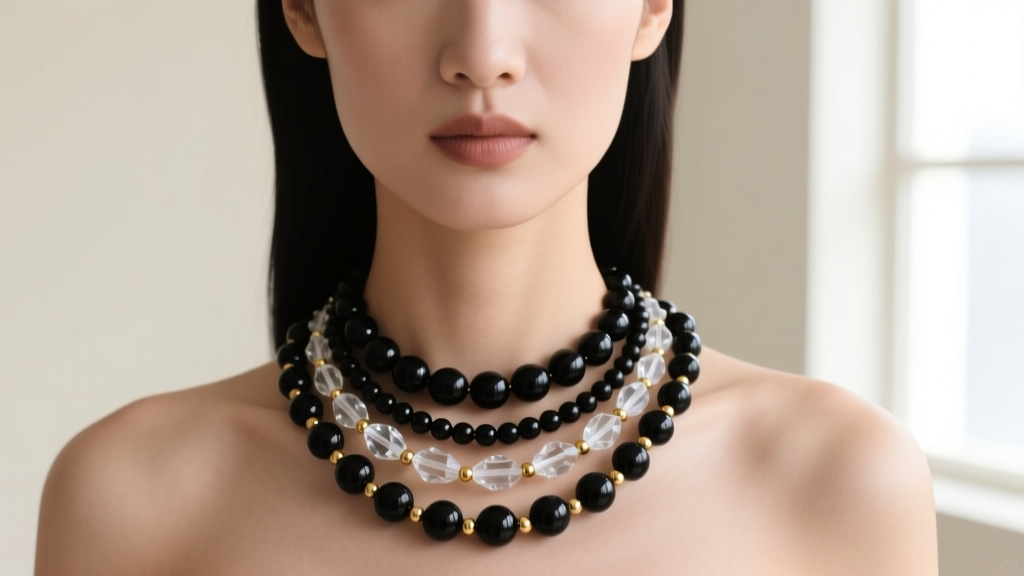
The jewelry landscape of 2026 has decisively shifted away from the chaotic, bohemian maximalism of the early 2020s, settling instead into an era of "architectural stacking." Nowhere is this more evident than in the styling of the layered bead necklace. Once relegated to casual summer wear or festival fashion, bead layering has been elevated by contemporary designers into a sophisticated exercise in textural contrast, proportion, and material alchemy. Whether you are working with organic pearls, vibrant Murano glass, or semi-precious gemstones, mastering this trend requires a strategic approach to lengths, hardware, and gemstone hardness.
The Evolution of the Layered Bead Necklace in 2026
According to recent trend forecasts by Vogue, the modern layered bead necklace relies on intentionality rather than sheer volume. The 2026 aesthetic champions "curated friction"—the visual tension created when matte stones clash beautifully with high-polish metals, or when organic, asymmetrical baroque shapes are anchored by perfectly spherical glass beads. Consumers are moving away from pre-strung, uniform multi-strand necklaces, opting instead for individual strands of varying weights that can be dynamically reconfigured. This shift demands a deeper understanding of jewelry mechanics, as mixing heavy stone beads with delicate chains or thinner glass requires specialized stringing materials to prevent catastrophic breakage.
The Anatomy of a Perfect Stack: Lengths and Proportions
The most common failure mode in bead layering is the "tangle cluster," where necklaces of similar lengths twist together, hiding the beads and damaging the stringing wire. To achieve a flawless cascade, you must adhere to the 1.5-inch drop rule. Each subsequent layer in your stack must be at least 1.5 to 2 inches longer than the one above it, accommodating the physical depth of the beads themselves.
| Layer Position | Ideal Length | Bead Diameter | Visual Function |
|---|---|---|---|
| Layer 1 (Choker) | 14" - 15" | 3mm - 5mm | Anchors the stack; sits flush on the collarbone. |
| Layer 2 (Princess) | 16" - 17" | 6mm - 8mm | The focal point; introduces color or primary texture. |
| Layer 3 (Matinee) | 18.5" - 20" | 8mm - 12mm | Elongates the torso; features statement or asymmetrical beads. |
When building a three-tier layered bead necklace, ensure the heaviest beads are placed on the longest strand. This lowers the center of gravity, allowing the shorter, lighter strands to lay flat against the skin without being pulled outward.
Material Alchemy: Mixing Gemstones, Glass, and Metals
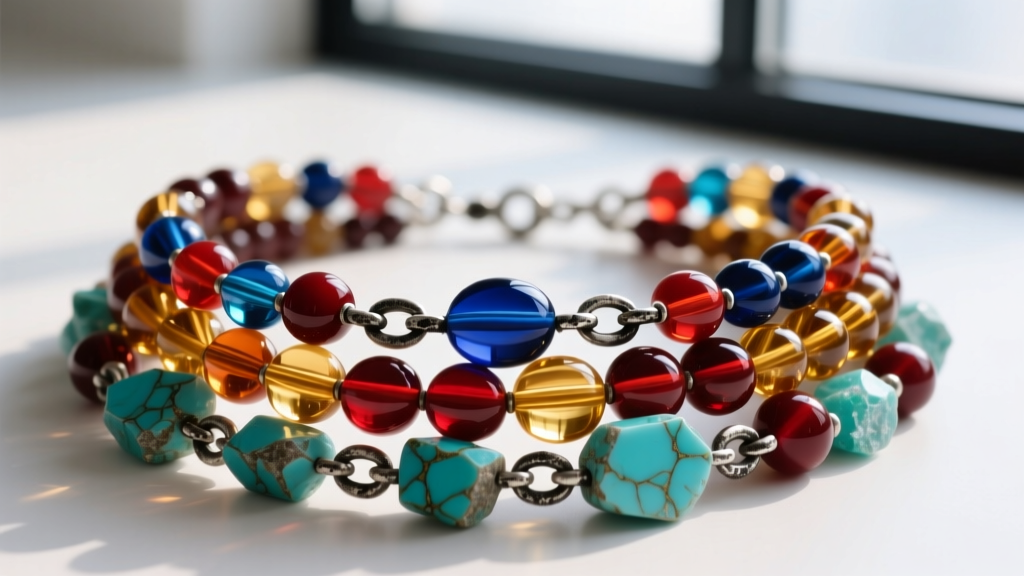
The hallmark of a high-end bead stack in 2026 is material juxtaposition. However, mixing materials requires an understanding of the Mohs Hardness Scale to prevent softer beads from being scratched or ground down by harder ones. The Gemological Institute of America (GIA) notes that minerals like turquoise (Mohs 5-6) and amber (Mohs 2-2.5) are highly susceptible to abrasion.
The 70/20/10 Rule for Bead Layering
- 70% Base Material: Choose a unifying element, such as matte onyx, wood, or neutral glass, to serve as the visual anchor across multiple strands.
- 20% Contrast Texture: Introduce a secondary material with a vastly different light-reflective property. If your base is matte stone, use high-gloss porcelain or polished quartz.
- 10% Metallic Punctuation: Use 14k gold-filled or sterling silver spacer beads (2mm to 3mm) interspersed every 8 to 10 beads to catch the light and break up color blocks.
Pro Tip: Never place a diamond or sapphire bead (Mohs 9) directly adjacent to a pearl (Mohs 2.5-4.5) on the same strand without a soft silicone or metal spacer between them. The friction from daily wear will permanently degrade the pearl's nacre.
Neckline Pairings: Where Bead Stacks Shine Best
A layered bead necklace interacts heavily with the geometry of your clothing. The rounded, organic shapes of beads require specific necklines to frame them correctly without creating visual clutter.
"The secret to bead layering is negative space. You need a canvas of skin or solid fabric to allow the varying opacities of the stones to breathe." — Contemporary Jewelry Styling Guidelines, 2026
- The Deep V-Neck: The ideal canvas for a 3-strand stack. The V-shape naturally follows the cascade of the 14", 16", and 18" layers, drawing the eye downward and elongating the neck.
- The Crew Neck: Limit your stack to two layers (15" and 18"). Ensure the beads sit above or distinctly below the fabric hemline; beads resting exactly on the collar seam look messy and cause friction against cotton or wool.
- The Button-Down Collar: Wear a single, chunky 16" bead strand inside an unbuttoned silk or linen shirt. The rigid collar provides a structural frame that contrasts beautifully with organic bead shapes.
Hardware and Clasp Mechanics: Avoiding Tangles
The structural integrity of a layered bead necklace relies entirely on its stringing wire and clasp hardware. Cheap nylon threads will stretch and snap under the weight of stone beads. For any bead stack featuring semi-precious stones or heavy glass, you must use 49-strand micro-braided stainless steel wire (typically 0.018" or 0.024" in gauge), coated in nylon. This specific wire offers the drape of silk with the tensile strength of steel.
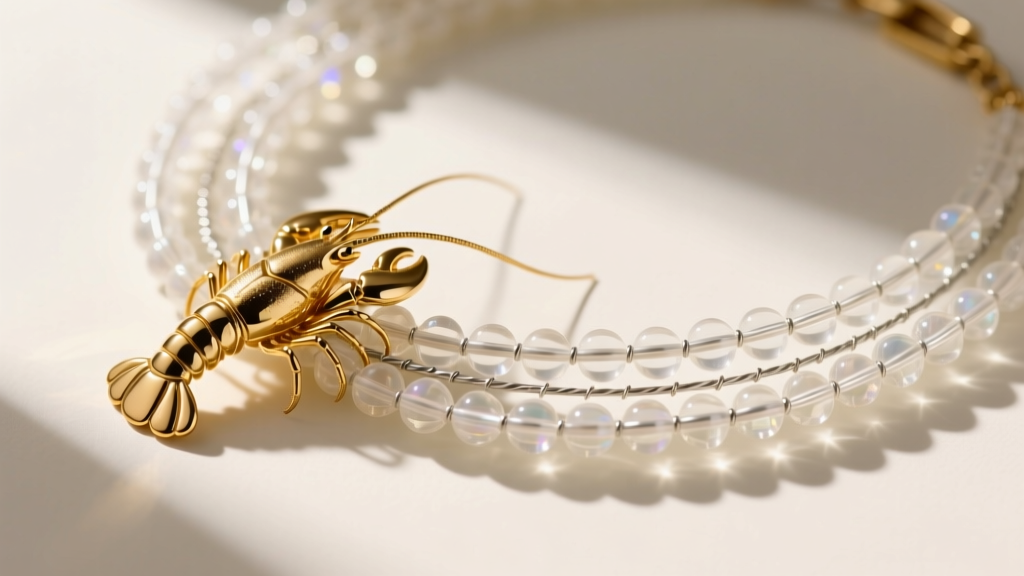
Furthermore, clasping multiple individual strands can be a frustrating daily ritual. To solve this, 2026 hardware innovations focus on multi-strand tube clasps or magnetic slide-lock clasps. These mechanisms allow you to attach three separate bead strands into a single, unified locking point at the nape of the neck. If you prefer individual lobster clasps, utilize 2mm clear silicone O-rings on the wire near the crimp beads. These act as flexible shock absorbers, preventing the rigid metal clasp from sawing through the stringing wire over time.
2026 Market Pricing: What to Expect
As the layered bead necklace has transitioned into a year-round staple, the market has stratified into three distinct pricing tiers based on material authenticity and stringing craftsmanship:
- Fashion & Glass (Under $80): Features mass-produced Czech glass, acrylic, or dyed howlite. Usually strung on basic monofilament or cotton cord. Excellent for trend-testing, but prone to tangling and wire kinking.
- Artisan & Semi-Precious ($120 - $350): The sweet spot for 2026. Features genuine turquoise, lapis lazuli, and hand-blown Murano glass, strung on 49-strand coated wire with sterling silver or gold-filled hardware. Expect to pay a premium for proper crimp-cover finishing.
- Fine Jewelry & Rare Gems ($800+): Utilizes faceted briolettes, unheated sapphires, and high-grade jade, often interspersed with solid 18k gold beads. These pieces are individually knotted on heavy silk or strung on proprietary aerospace-grade cables.
Mastering the layered bead necklace in 2026 is less about piling on accessories and more about engineering a personalized, textural masterpiece. By respecting the physics of gemstone hardness, adhering to strict proportional drops, and investing in proper micro-braided hardware, you can build a stack that is as durable as it is visually arresting.


