Fixing a Chipped or Tangled Brinker and Eliza Necklace
Learn how to fix, clean, and untangle your Brinker and Eliza necklace. Expert troubleshooting for enamel chips, vermeil tarnish, and chain knots.

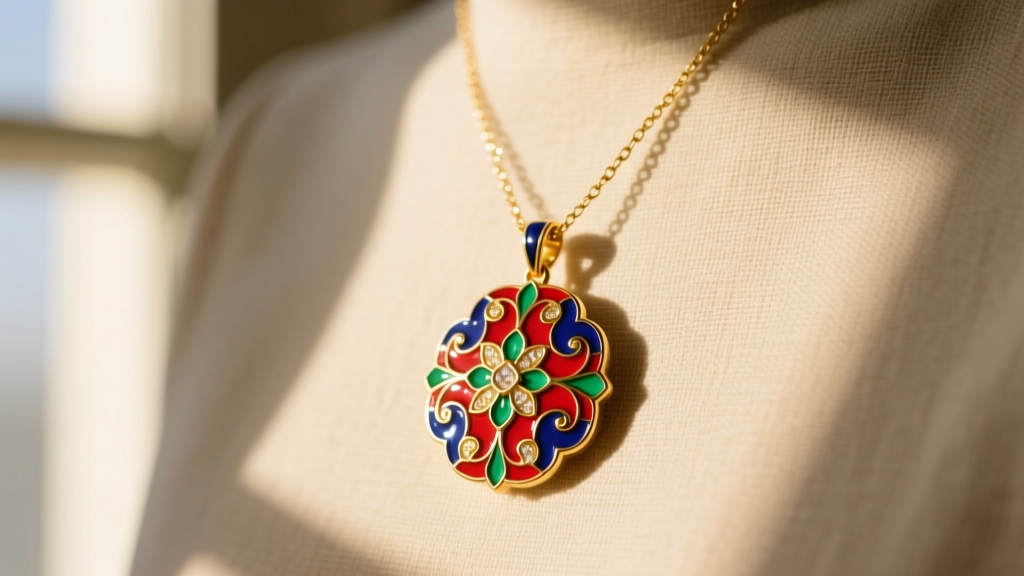
Brinker + Eliza has carved out a unique space in the contemporary jewelry market, celebrated for whimsical enamel charms, vibrant gemstone accents, and intricate mixed-chain layering sets. However, the very design elements that make a Brinker and Eliza necklace so visually striking—delicate cold enamel, 14k gold vermeil, and varied chain weaves—also introduce specific vulnerabilities. When your favorite rainbow or evil eye pendant suffers a chip, or your layered set turns into an impossible knot, standard jewelry repair advice often falls short.
This comprehensive troubleshooting guide addresses the most common structural and aesthetic failures specific to Brinker + Eliza designs. By understanding the exact materials used in these pieces, you can safely restore your jewelry without causing irreversible damage to the enamel or stripping the gold vermeil.
The Unique Anatomy of Brinker + Eliza Jewelry
Before attempting any repairs, it is crucial to understand the material composition of your necklace. Brinker + Eliza primarily utilizes 14k gold vermeil and custom-mixed cold enamel. According to the Jewelers of America, true gold vermeil requires a base of sterling silver or brass plated with at least 2.5 microns of 10k, 14k, or 18k gold. This is significantly thicker than standard gold plating, but it is still susceptible to friction wear and chemical oxidation.
Furthermore, the brand frequently uses cold enamel (an epoxy-based resin) rather than vitreous enamel (fused glass). Cold enamel allows for the brand's signature vibrant, opaque colors and intricate painted details, but it has a much lower melting point and is highly sensitive to solvents, ultrasonic vibrations, and extreme temperature fluctuations.
Troubleshooting Matrix: Quick Fixes for Common Issues
| Issue | Root Cause | DIY Solution | When to See a Professional |
|---|---|---|---|
| Enamel Micro-Fractures | Ultrasonic cleaning or impact | Stop cleaning; avoid further stress | Enamel requires complete stripping and re-pouring by a specialist |
| Mixed-Chain Tangling | Bead chains snaring cable links | Cornstarch and sewing needle method | Chain links are bent or warped from pulling |
| Vermeil Tarnish / Brass Exposure | Friction, sulfur, or cosmetic acids | Gentle polishing with a treated cloth | Base metal is exposed; requires re-plating |
| Lobster Clasp Failure | Spring tension loss or debris | Compressed air and needle lubrication | Internal spring is broken; requires soldering |
Problem 1: Enamel Chipping and Discoloration
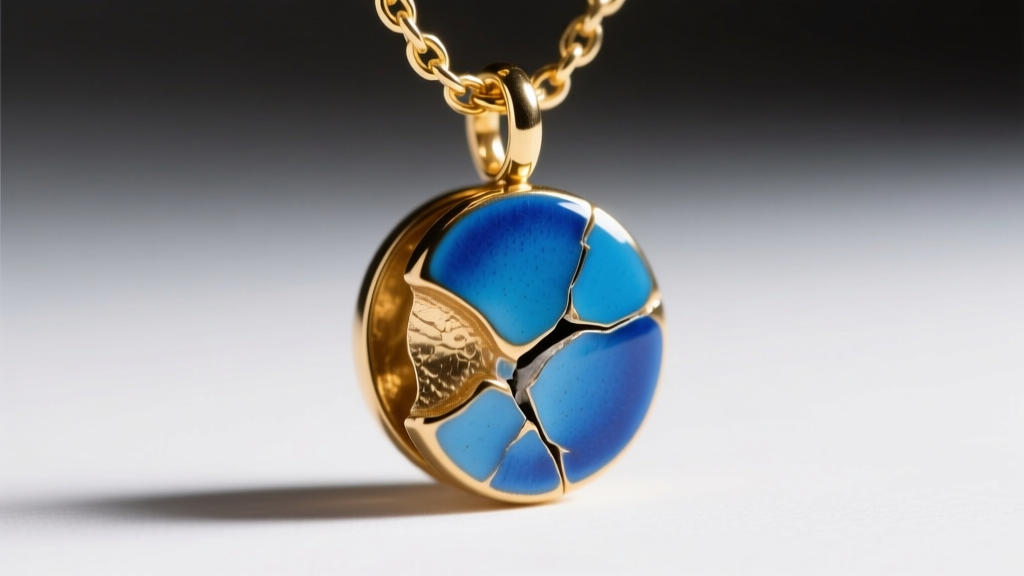
The most frequent complaint among collectors of enameled jewelry is the sudden appearance of hairline cracks or cloudy discoloration. Because Brinker + Eliza relies heavily on cold enamel, the resin is bonded to the metal base at room temperature. Unlike vitreous enamel, which is fired in a kiln at over 1,400°F, cold enamel remains somewhat flexible but is highly porous.
Safe Cleaning Protocols for Cold Enamel
Never place an enameled Brinker and Eliza necklace in an ultrasonic cleaner. The high-frequency cavitation bubbles created by these machines will literally shatter the epoxy resin from the inside out, causing the enamel to pop off the metal base in sheets. The Gemological Institute of America (GIA) consistently warns against using ultrasonic or steam cleaners on any porous or organic jewelry materials, including epoxy resins.
- The Safe Wash: Mix a few drops of pH-neutral dish soap (like Dawn) in lukewarm water. Never use hot water, as thermal shock can cause the metal base to expand faster than the enamel, leading to cracking.
- The Drying Process: Do not rub the enamel with a microfiber cloth, which can catch on microscopic chips and peel the resin. Instead, pat dry with a lint-free cotton pad and allow it to air dry completely.
- Chemical Avoidance: Keep the pendant away from alcohol-based perfumes, hand sanitizers, and chlorine. Alcohol acts as a mild solvent to cured epoxy, eventually causing the vibrant colors to turn milky or chalky.
Problem 2: The Mixed-Chain Tangling Nightmare
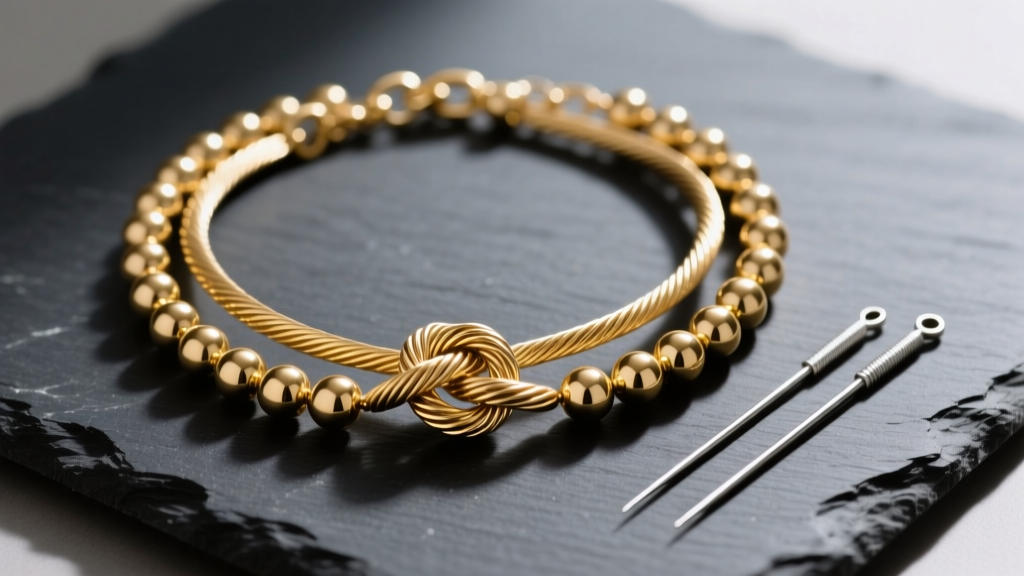
Brinker + Eliza layering sets are famous for combining three distinct chain types: a delicate cable chain, a textured rope chain, and a spherical bead chain. While visually dynamic, the bead chain acts as a mechanical snare. The tiny gaps between the metal beads easily catch the open oval links of the cable chain, creating dense, multi-layered knots that seem impossible to undo.
The Cornstarch and Needle Technique
Pulling on a tangled vermeil chain will stretch the links, permanently weakening the structural integrity of the necklace. To safely untangle a Brinker and Eliza layered set, you must reduce the friction between the metal surfaces.
- Lay the tangled necklace flat on a dark, non-slip surface (like a slate coaster or a rubber mat).
- Generously dust the knot with cornstarch or talc-free baby powder. The powder acts as a dry lubricant, filling the microscopic gaps between the snared links.
- Take two fine-tipped sewing needles or beading awls. Insert the tips into the center of the knot and gently push outward, wiggling the needles to work the powder into the chain links.
- Once the central link is loosened, use the needles to pull the cable chain loops over the spherical beads one by one.
- After untangling, use a soft-bristled makeup brush to sweep away the cornstarch, followed by a gentle rinse in lukewarm soapy water to remove any remaining residue.
Problem 3: Gold Vermeil Tarnish and Base Metal Exposure
Because the base metal of many Brinker + Eliza pieces is brass or sterling silver, exposure to the sulfur in the air, the acids in your skin's pH, and the chemicals in lotions will eventually cause the 2.5-micron gold layer to wear thin. When the base metal is exposed, it oxidizes rapidly, leaving a green or black residue on your skin and giving the chain a dull, brassy appearance.
"Polishing gold vermeil requires a delicate balance. Aggressive rubbing with standard silver polish will strip the remaining gold layers, exposing the base metal entirely and ruining the piece."
To safely restore the shine to your Brinker and Eliza necklace without stripping the vermeil, use a jeweler's rouge-impregnated polishing cloth (such as a Sunshine cloth). Gently wipe the chain links in a single direction. Critical Warning: Do not let the polishing cloth touch the enamel charms. The mild abrasives in the cloth will permanently scratch the smooth resin surface, leaving a hazy, scuffed finish that cannot be buffed out.
Troubleshooting Clasp and Jump Ring Failures
The small lobster clasps and 4mm jump rings used on delicate pendant necklaces are common failure points. If your Brinker and Eliza necklace keeps slipping off, the issue is rarely the clasp itself, but rather the jump ring connecting the clasp to the chain.
Over time, the tension of putting the necklace on and off pulls the jump ring open, creating a microscopic gap. Because these chains are so fine, the cable links easily slip through a gap of less than a millimeter. To fix this, use two pairs of flat-nose jewelry pliers. Grip the jump ring on either side of the split and twist it laterally (like opening a door) rather than pulling it apart horizontally. Squeeze it back together until you hear a faint 'click' or feel the ends meet flush. Never use your fingernails to pry open jump rings, as this will warp the metal circle into an oval, permanently weakening it.
When to Contact Brinker + Eliza for Warranty Repair
While minor tangles and surface tarnish can be managed at home, structural failures require professional intervention. If a soldered link breaks, or if an enamel charm cracks due to a manufacturing defect (such as poor adhesion to the base metal), do not take the necklace to a local bench jeweler. Standard jewelry soldering requires a jeweler's torch, and the ambient heat from soldering a gold chain will instantly melt and scorch the adjacent cold enamel.
Instead, utilize the brand's direct repair services. Brinker + Eliza offers a one-year warranty against manufacturing defects. When submitting a repair request, provide clear, macro-level photographs of the damage in natural lighting, specifically highlighting the transition point between the metal and the enamel to prove the damage was not caused by chemical solvents or impact.
Preventative Storage Solutions
The best troubleshooting method is prevention. To protect the enamel from scratching and the vermeil from oxidizing, store your Brinker and Eliza necklaces in individual anti-tarnish flannel pouches. Never store multiple layered necklaces in the same compartment, as the friction of the bead chains against the enamel charms during transit is the leading cause of hairline resin fractures. For long-term storage, include a silica gel packet in the jewelry box to control ambient humidity and slow the oxidation of the gold vermeil.


