Meaning of Ankh Necklace: Step-by-Step Guide to Styling & Buying
Discover the meaning of ankh necklace jewelry. Follow our step-by-step guide to choosing materials, chain lengths, and styling this ancient symbol.

Decoding the Meaning of Ankh Necklace Jewelry
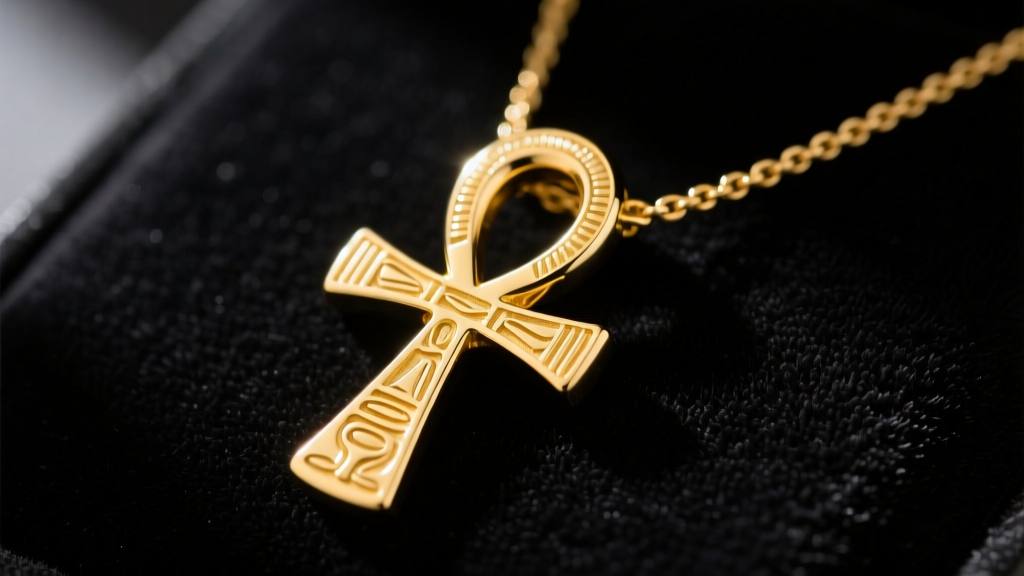
Before diving into the metallurgical and stylistic choices of your next purchase, it is crucial to understand the profound historical weight this symbol carries. The meaning of ankh necklace jewelry extends far beyond a simple fashion statement; it is a direct connection to ancient Egyptian theology. Known as the crux ansata (Latin for 'cross with a handle'), the ankh represents the concept of eternal life, the breath of life, and the divine union of masculine and feminine energies.
According to the World History Encyclopedia, the ankh was predominantly held by deities such as Osiris and Isis, often depicted offering the loop to the nostrils of pharaohs to bestow the 'breath of life.' When you wear this pendant, you are adorning yourself with an ancient talisman of vitality and spiritual awakening. The loop symbolizes the eternal soul, the horizontal crossbar represents the material plane, and the vertical shaft signifies the path of life descending into the physical world. Understanding the meaning of ankh necklace pieces allows you to wear them with the reverence and intention they deserve.
Step 1: Selecting the Right Metal and Material Grade
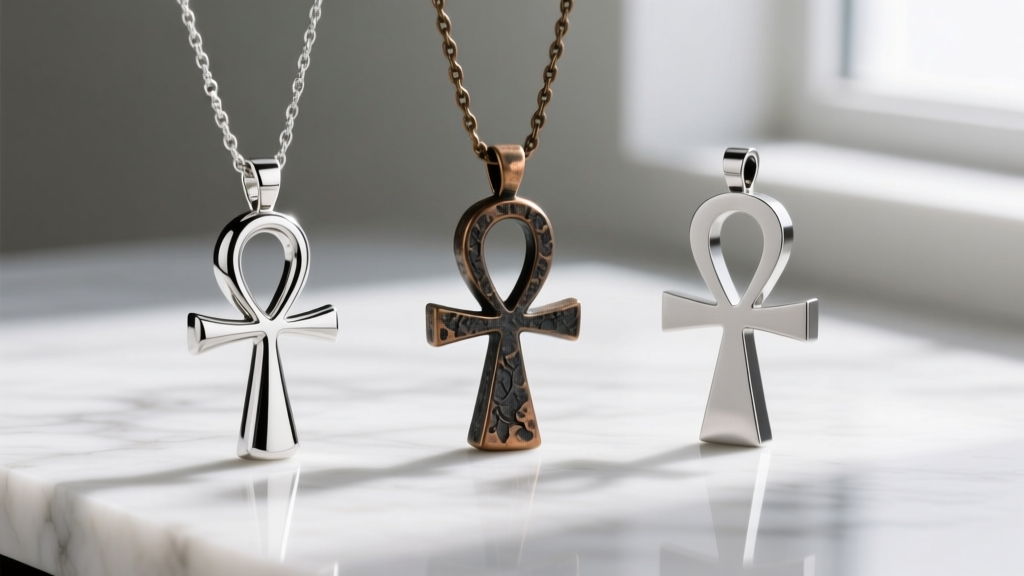
The first step in acquiring a high-quality ankh pendant is choosing the appropriate metal. The material not only dictates the price and durability but also influences the historical authenticity and skin compatibility of the piece. In 2026, consumers are increasingly prioritizing hypoallergenic and sustainably sourced metals.
| Metal Type | Grade / Purity | Pros | Cons | Estimated Price Range |
|---|---|---|---|---|
| Yellow Gold | 14k (58.5%) or 18k (75%) | Historically accurate to Egyptian sun-god Ra; highly tarnish-resistant; holds value. | High cost; 18k is softer and prone to scratching. | $250 - $800+ |
| Sterling Silver | 925 (92.5% Ag) | Accessible luxury; excellent reflectivity; easy to polish. | Prone to oxidation/tarnish; requires regular maintenance. | $45 - $120 |
| Bronze / Brass | Cu/Sn or Cu/Zn Alloys | Authentic ancient aesthetic; develops a unique, rich patina over time. | Can cause green skin discoloration; requires clear-coating or frequent polishing. | $25 - $75 |
| Surgical Steel | 316L Marine Grade | Highly durable; waterproof; hypoallergenic; budget-friendly. | Lacks the prestige and warmth of precious metals; difficult to resize or repair. | $15 - $40 |
For those seeking the most authentic representation of ancient Egyptian royalty, solid 14k or 18k yellow gold is the undisputed choice. The Gemological Institute of America (GIA) notes that 14k gold offers the perfect balance of rich color and structural durability for daily-wear pendants. If you opt for bronze or brass for a more rugged, antiqued look, ensure the piece has been treated with a jewelry-safe lacquer to prevent copper oxidation from staining your skin.
Step 2: Choosing the Ideal Chain Length and Gauge
An ankh pendant is typically top-heavy due to the dense metal required to cast the vertical shaft. Therefore, pairing it with a flimsy chain is a structural mistake that will lead to breakage. You must match the chain's gauge (thickness) and style to the pendant's weight and bail size.
Analyzing the Bail and Gauge
The 'bail' is the loop at the top of the ankh through which the chain passes. Most standard ankh pendants feature a bail with an inner diameter of 3mm to 5mm.
- Lightweight Ankhs (Under 5 grams): A 1.0mm to 1.2mm cable or box chain is sufficient.
- Medium to Heavy Ankhs (5 to 15 grams): Upgrade to a 1.5mm to 2.0mm rope or Cuban link chain. The interlocking links of a rope chain provide superior tensile strength and prevent kinking.
Determining the Perfect Length
The length of your chain drastically alters the visual impact and the meaning of ankh necklace styling:
- 18 Inches (Collarbone): Ideal for smaller, minimalist ankhs. Sits elegantly above the neckline of most shirts, drawing attention to the face and throat chakra.
- 20 to 22 Inches (Chest): The standard for medium-sized pendants. Allows the ankh to rest on the sternum, making it highly visible over crew necks and streetwear.
- 24 to 30 Inches (Streetwear/Long): Best for heavy, oversized bronze or gold ankhs. This length is a staple in hip-hop and modern streetwear layering, often worn over hoodies or outerwear.
Step 3: Styling Your Ankh Pendant for Different Necklines
Styling an ankh requires an understanding of geometric balance. The ankh is vertically dominant, meaning it pairs best with necklines that either frame or contrast its elongated shape.
V-Neck and Scoop Necks: These are the most harmonious pairings. The V-shape of the shirt mimics the downward trajectory of the ankh's shaft, creating a cohesive, elongating visual line. A 20-inch gold rope chain with a medium ankh pendant will sit perfectly in the negative space of a V-neck.
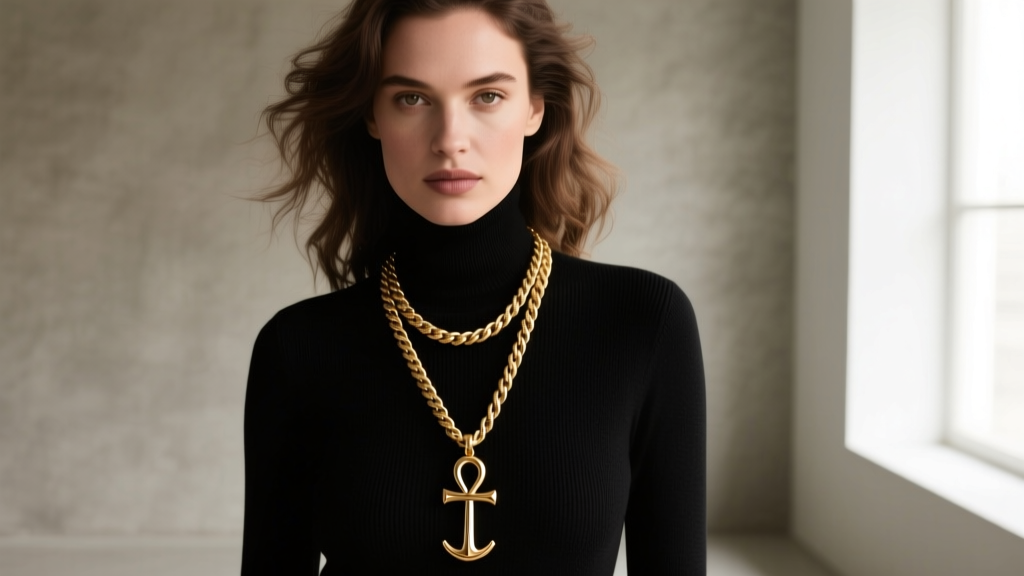
Turtlenecks and High Collars: For a bold, sophisticated winter look, layer a 24-inch oxidized silver or bronze ankh over a black ribbed turtleneck. The dark fabric provides a high-contrast canvas that makes the metallic intricacies of the pendant pop. In 2026, mixing metal tones—such as layering a delicate 18-inch silver chain with a heavier 24-inch gold ankh chain—is a dominant trend in high-fashion editorial styling.
Button-Down Shirts: Leave the top two buttons undone and let a minimalist 14k gold ankh rest against the skin. This offers a subtle, intellectual aesthetic that bridges the gap between casual and business-casual attire.
Step 4: Caring for and Cleansing Your Ankh Jewelry
Because the ankh features tight angles and intricate engravings (such as hieroglyphs or woven basket motifs at the base of the loop), dirt, oils, and polishing compounds can easily become trapped in the crevices. Proper maintenance is non-negotiable.
The Aluminum Foil Method for Sterling Silver
If your 925 silver ankh has developed heavy black tarnish in its grooves, avoid harsh abrasive pastes. Instead, line a glass bowl with aluminum foil (shiny side up). Place the ankh on the foil, add a tablespoon of baking soda, and pour boiling water over it. The electrochemical reaction will transfer the sulfur tarnish from the silver to the foil in minutes. Rinse with distilled water and pat dry with a microfiber cloth.
Maintaining Bronze and Brass Patinas
If you prefer your bronze ankh to remain dark and antiqued, simply wipe it with a dry, soft cloth after wearing to remove acidic skin oils. If you wish to restore its bright, coppery shine, create a paste of equal parts lemon juice and baking soda, apply it with a soft-bristled toothbrush to reach the deep engravings, rinse thoroughly, and seal with a micro-crystalline jewelry wax to delay future oxidation.
'The ankh is not merely a relic of the past; it is a living symbol. How you care for the metal reflects how you honor the eternal life it represents.' — Master Jeweler & Antiquities Restorer
Step 5: Navigating Authenticity and Ethical Sourcing
As the demand for historically significant jewelry grows, so does the market for mass-produced, poorly proportioned replicas. When evaluating the meaning of ankh necklace pieces, proportions matter. A historically accurate ankh features a distinct teardrop or oval loop (never a perfect circle), and the crossbar should be slightly wider than the vertical shaft. Furthermore, in 2026, ethical sourcing is paramount. When purchasing gold, look for jewelers who advertise Fairmined or recycled gold. This ensures that your symbol of 'life' does not contribute to environmentally destructive or exploitative mining practices. Always request a certificate of authenticity or a detailed receipt specifying the exact metal purity and weight in grams.
Final Thoughts on Wearing the Ankh
Choosing the right ankh necklace is a deeply personal journey that blends historical reverence with modern metallurgical science. By carefully selecting the appropriate metal grade, matching the chain gauge to the pendant's weight, and styling it to complement your wardrobe, you transform an ancient artifact into a powerful, everyday talisman. Whether you choose the sun-drenched warmth of 14k gold or the rugged, antiqued charm of oxidized bronze, the meaning of ankh necklace jewelry remains a timeless testament to vitality, balance, and eternal life.


