The Anatomy of a Large Gold Chain Necklace: Weight, Karats & Links
Master the technical specs of a large gold chain necklace. Explore link engineering, karat durability, weight metrics, and clasp mechanics.

The Engineering of Scale: Width, Weight, and Density
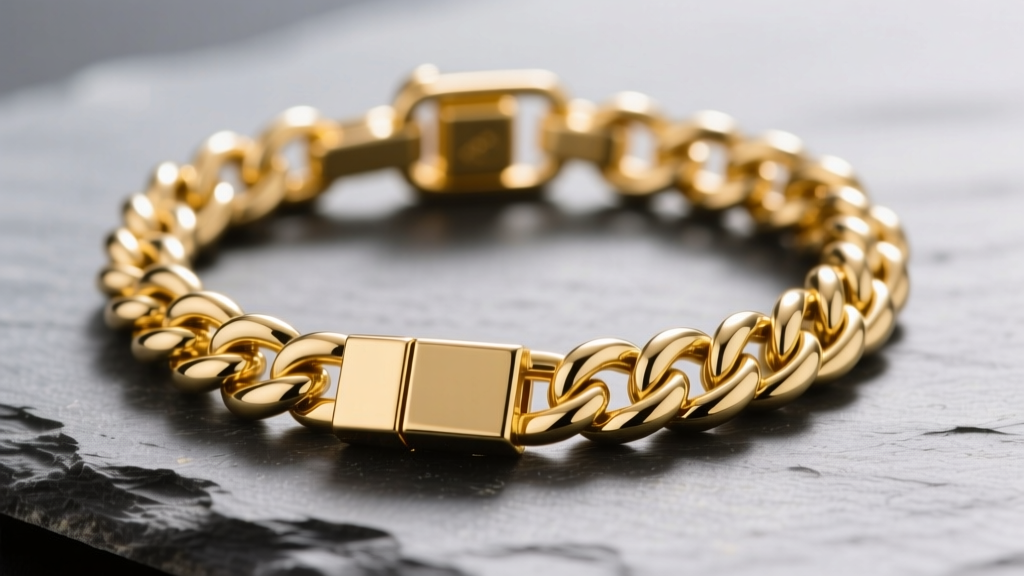
When collectors and enthusiasts discuss a large gold chain necklace, they are typically referring to pieces that exceed 8mm in width and 75 grams in total weight. However, understanding the true scale of these pieces requires a basic grasp of metallurgical density. Gold is an exceptionally dense element with a specific gravity of 19.32 g/cm³. To put this in perspective, sterling silver sits at roughly 10.49 g/cm³. A 10mm solid sterling silver Cuban link chain measuring 20 inches might weigh around 65 grams, but the exact same volume cast in solid 14k gold will push past 95 grams. As we navigate the 2026 precious metals market, where gold prices frequently test new all-time highs, understanding the exact weight-to-volume ratio is critical for verifying authenticity and assessing value.
A genuine large gold chain necklace is an exercise in structural engineering. The sheer mass of the piece creates continuous tensile stress on the lowest links and the clasp assembly. If the links are not properly soldered, or if the alloy mixture lacks sufficient tensile strength, the chain will slowly stretch and eventually deform under its own weight. This is why evaluating a heavy chain goes far beyond visual aesthetics; it requires a deep dive into karat purity, link architecture, and clasp mechanics.
Karat Alloys: Balancing Purity and Tensile Strength
A common misconception among novice buyers is that higher karat purity equates to a better chain. While 24k gold offers the richest yellow hue and the highest intrinsic melt value, it is a catastrophic choice for a large, heavy chain. Pure gold is highly malleable. According to the Gemological Institute of America (GIA), pure gold ranks very low on the Vickers Hardness (HV) scale, meaning it will easily scratch, dent, and stretch.
To create a durable large gold chain necklace, gold must be alloyed with metals like copper, silver, zinc, and sometimes palladium. These alloys dramatically increase the Vickers Hardness, allowing the links to support heavy loads without warping. Below is a technical breakdown of how different karats perform in large-format chains:
| Karat | Gold % | Vickers Hardness (HV) | Structural Viability for Large Chains |
|---|---|---|---|
| 24k | 99.9% | ~25 HV | Poor. Links will stretch and deform rapidly under heavy weights. |
| 22k | 91.6% | ~70 HV | Fair. Acceptable for moderate weights, but prone to surface abrasion. |
| 18k | 75.0% | ~125 HV | Good. Excellent color and sufficient strength for luxury statement pieces. |
| 14k | 58.3% | ~135 HV | Excellent. The optimal balance of gold content and structural rigidity. |
| 10k | 41.7% | ~160 HV | Superior strength, but lower gold content and higher tarnish risk. |
For chains exceeding 100 grams, 14k gold is widely considered the industry gold standard. The 41.7% alloy content provides the necessary rigidity to maintain the geometric integrity of complex links like the Miami Cuban or the Franco over decades of daily wear.
Link Architecture: Stress Points and Structural Integrity
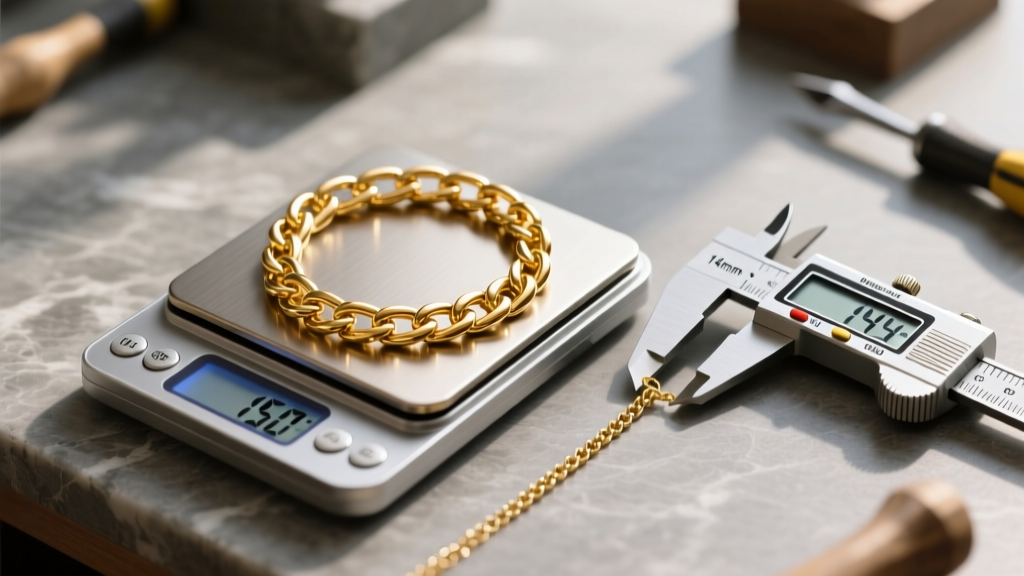
The structural integrity of a large gold chain necklace is dictated by its link architecture. Different link styles distribute mechanical stress in vastly different ways, directly impacting the chain's lifespan and repairability.
Miami Cuban Links
The Miami Cuban is the quintessential large chain. Its flat, interlocking links sit flush against the skin, providing a massive surface area for light reflection. From an engineering standpoint, the strength of a Cuban chain relies entirely on the soldering of the individual links. If a link is unsoldered, the friction of the interlocking joints will eventually wear down the gold, creating weak points. High-end manufacturers use laser soldering or precise induction heating to seal every single link, ensuring the chain acts as a single, unified tensile structure.
Franco Chains
Often overlooked in favor of flashier designs, the Franco chain is an engineering marvel. Constructed from V-shaped links woven in a continuous 360-degree pattern, the Franco chain offers unparalleled structural integrity. Because the links are tightly nested and multi-directional, the chain is virtually kink-proof and can support massive pendant weights without localized stress fractures. It is the preferred choice for heavy, oversized pendants.
Rope Chains
Rope chains achieve their brilliant light refraction through a complex twisted helix pattern. However, this twisting introduces significant structural vulnerabilities. The tight spirals create numerous microscopic friction points. Furthermore, unsoldered rope chains are notorious snag hazards, easily catching on clothing or body hair, which can pull individual links out of alignment and cause catastrophic unraveling. If purchasing a large gold rope chain, ensure it is fully soldered and diamond-cut for maximum durability.

Clasp Mechanics for Heavy Dynamic Loads
The clasp is the single most critical failure point on any large gold chain necklace. When evaluating clasps, jewelers must account for dynamic load, not just static weight. A 120-gram chain resting on a table exerts 120 grams of static force. However, when worn, the biomechanics of walking, bending, and sudden movements create a pendulum effect. This dynamic load can easily spike the force exerted on the clasp to over 180 grams.
Standard spring-ring or lobster clasps are entirely inadequate for large chains. The tiny internal steel spring in a lobster clasp will quickly fatigue and snap under repeated dynamic loads. For any chain exceeding 60 grams, a reinforced box clasp is mandatory. A properly engineered box clasp features a friction-fit internal tongue that locks into place, supplemented by dual figure-8 wire safety latches on the exterior. The Federal Trade Commission (FTC) Jewelry Guides emphasize the importance of secure fastenings in heavy jewelry, and reputable manufacturers will never pair a 10mm+ chain with a simple lobster claw.
The Hollow Chain Trap: Manufacturing Shortcuts
As gold prices surge, the market has seen an influx of 'hollow' or 'semi-solid' large gold chains. These pieces are manufactured using electroforming processes or by wrapping thin gold sheets around a base metal or resin core. While they offer the imposing visual footprint of a 15mm chain at a fraction of the gram weight, they are an engineering nightmare.
Hollow chains possess virtually no compressive strength. A simple bump against a doorframe can dent the links, and because there is no solid gold interior to melt and re-flow, they cannot be repaired by a traditional jeweler. Furthermore, the resin cores can degrade over time when exposed to ultrasonic cleaners, heat, or harsh chemicals, leading to sudden, irreparable snapping. When investing in a large gold chain necklace, always demand the exact gram weight and verify the specific gravity to ensure you are purchasing a solid, heirloom-grade piece.
Expert Buyer's Checklist
- Verify the Gram Weight: Cross-reference the chain's width and length with standard solid gold weight charts to ensure it hasn't been hollowed out.
- Inspect the Soldering: Use a jeweler's loupe to check that individual links (especially in Cuban and Rope styles) are fully soldered shut.
- Demand a Box Clasp: Reject any chain over 60g that utilizes a standard lobster clasp; insist on a box clasp with figure-8 safeties.
- Check for Hallmarks: Ensure the chain is stamped with both the karat purity (e.g., 14K) and the manufacturer's trademark, as required by US law.
- Assess the Alloy Color: For 14k and 18k chains, evaluate the copper-to-silver ratio to ensure the yellow hue meets your aesthetic preferences without compromising structural hardness.


