Types of Chain Link Necklaces: A Technical Guide to Chain Strength
Discover the structural integrity, gauge strengths, and metallurgy behind popular types of chain link necklaces in our expert technical deep dive.

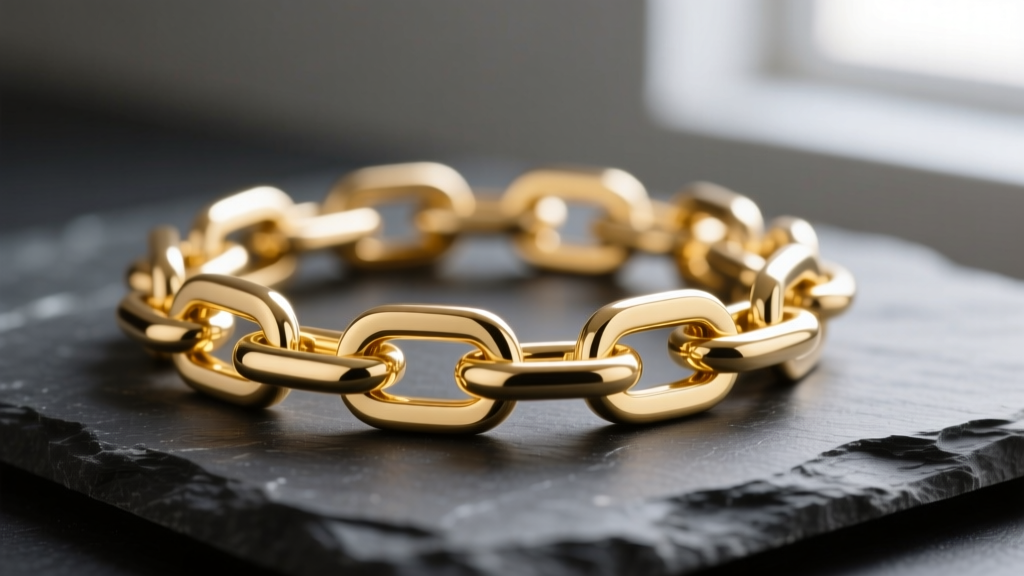
The Engineering Behind the Elegance
When most consumers evaluate jewelry, they focus on karat weight, gemstone clarity, or aesthetic profile. However, from a bench jeweler’s perspective, a necklace is a dynamic mechanical system subjected to continuous tensile stress, torsion, and abrasive wear. Understanding the true structural capabilities of different types of chain link necklaces requires looking past the polish and examining the metallurgy, link geometry, and failure thresholds that dictate a chain's lifespan.
Whether you are sourcing a piece for a heavy pendant or designing a collection for daily wear, selecting the right chain architecture is critical. This technical deep dive explores the mechanical properties, alloy behaviors, and load-bearing limits of the most prominent chain link configurations on the market today.
Metallurgical Baselines: Alloys and Work Hardening
Before analyzing link geometry, we must establish the material science governing chain durability. Pure 24k gold is entirely unsuitable for chain manufacturing due to its low Vickers hardness (approx. 25 HV). To achieve the necessary tensile strength, gold is alloyed. According to the Gemological Institute of America (GIA), 14k yellow gold (58.5% gold, alloyed with copper, silver, and zinc) typically exhibits a Vickers hardness between 130 and 150 HV when fully work-hardened, making it the industry standard for durable chains.
Conversely, 925 Sterling Silver presents unique challenges. Silver is highly susceptible to work hardening. During the wire-drawing and link-forming processes, the silver's crystalline structure becomes strained. If the chain is not properly annealed (heated to relieve internal stresses) before final polishing, the links will become brittle and prone to micro-fractures under lateral stress. For maximum structural integrity without the premium of gold, 316L marine-grade stainless steel offers a tensile strength exceeding 500 MPa, though it requires specialized laser welding for link closure due to its high melting point and thermal conductivity.
Structural Breakdown: 4 Core Link Architectures
The geometry of a chain link dictates how mechanical stress is distributed across the piece. Here is a technical analysis of four primary types of chain link necklaces.
1. Cable and Trace Links: The Tensile Standard
The cable chain consists of uniform oval or round links connected in a simple, alternating pattern. From an engineering standpoint, the cable chain excels in pure vertical tensile strength because the load is distributed evenly along the central axis of each wire. However, the critical vulnerability lies in the weld point. If the solder joint or laser weld fails to penetrate the full depth of the wire cross-section, the link will pull apart under loads as light as 15 pounds. High-quality cable chains utilize continuous laser welding to ensure a metallurgical bond that matches the base wire's strength.
2. Curb and Cuban Links: Friction and Compression
Curb chains are created by taking a cable chain and twisting it until the links lie flat, then often pressing or diamond-cutting them. Cuban links are a heavier, tighter variant of the curb. The interlocking, flat geometry provides excellent resistance to crushing and lateral deformation. Because the links have a larger surface area in contact with one another, they experience higher friction. Over years of wear, this friction acts as a lapping mechanism, slowly wearing down the inner curvature of the links. To mitigate this, premium Cuban links are hardened post-assembly and feature precision-machined tolerances to minimize internal abrasion.
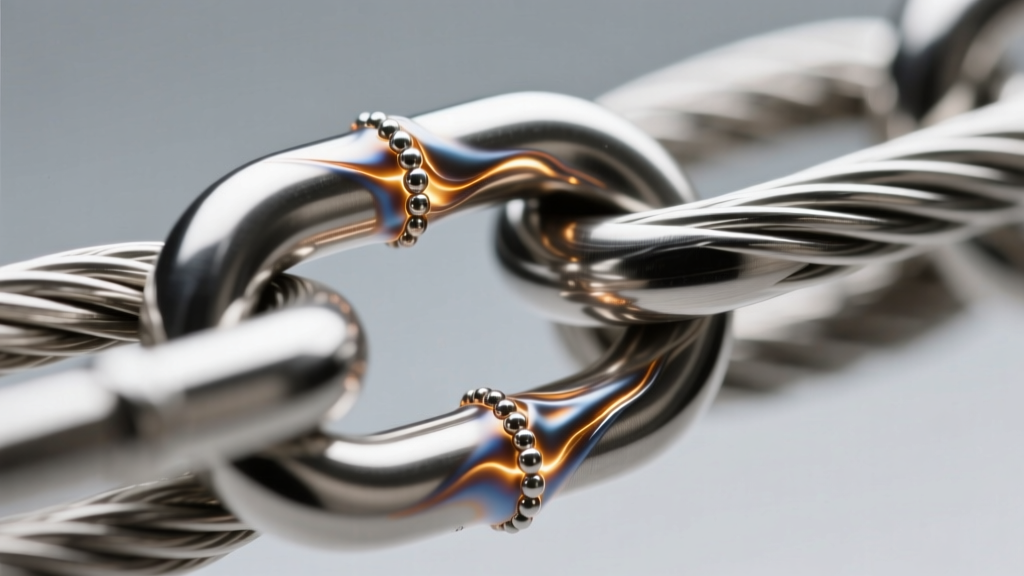
3. Rope Chains: Torsion and Solder Vulnerability
Rope chains are manufactured by twisting two or more strands of small links into a helical pattern. While visually striking and highly flexible, they are mechanically complex. The helical structure means that any pulling force introduces torsion (twisting stress) to the individual micro-links. Furthermore, traditional rope chains require thousands of microscopic solder joints to maintain the twist. If a single solder joint degrades, the chain can unravel rapidly. Modern manufacturing has introduced 'solderless' or 'woven' rope chains, which rely on mechanical tension rather than solder, vastly improving their structural longevity.
4. Box Chains: Geometric Rigidity and Shear Stress
Box chains are constructed from square, folded links that interlock at 90-degree angles. This architecture provides a rigid, geometric aesthetic but introduces severe stress concentrators at the sharp corners. Box chains have exceptionally low resistance to lateral crushing; if bent sharply or caught on clothing, the square links can easily fold inward, permanently deforming the chain. They are best utilized for lightweight pendants where the chain remains in a natural, sweeping drape rather than being subjected to sharp angular stress.
Gauge Thickness and Tensile Strength Matrix
Gauge thickness is the single most significant variable in chain durability. However, thickness alone does not determine break strength; the alloy composition plays an equally vital role. The following data table illustrates the approximate breaking strength (measured in pounds of force) for varying gauges of 14k Yellow Gold versus 316L Stainless Steel.
| Wire Diameter (mm) | Standard Gauge (AWG) | 14k Gold Break Strength (lbs) | 316L Steel Break Strength (lbs) | Recommended Max Pendant Weight |
|---|---|---|---|---|
| 1.2 mm | 16 AWG | 35 lbs | 95 lbs | Up to 10 grams |
| 1.8 mm | 14 AWG | 75 lbs | 210 lbs | Up to 25 grams |
| 2.5 mm | 10 AWG | 140 lbs | 450 lbs | Up to 50 grams |
| 3.5 mm | 8 AWG | 280 lbs | 850 lbs | Up to 100+ grams |
| 5.0 mm | 4 AWG | 550 lbs | 1,600 lbs | Heavy Statement Pieces |
Note: Break strength represents catastrophic failure. Permanent deformation (yield strength) occurs at approximately 60-70% of the listed break strength values.
Common Mechanical Failure Modes
When a necklace fails, it rarely snaps in the middle of a solid link. Bench jewelers and insurance adjusters, such as those at Jewelers Mutual, consistently identify three primary failure modes:
- Clasp Spring Fatigue: The spring ring clasp is the weakest mechanical component on 80% of necklaces. The internal steel spring loses tension over time due to repetitive compression, leading to accidental unfastening. Upgrading to a forged lobster claw or a magnetic neodymium clasp with a mechanical safety catch drastically reduces this failure rate.
- Abrasive Lapping: Everyday substances like talcum powder, lotion, and environmental dust settle into the micro-crevices of chain links. These particles act as an abrasive lapping compound. With every movement, the paste grinds away the inner wall of the link, thinning it until it snaps under minimal load.
- Galvanic Corrosion: When chains feature mixed metals (e.g., a sterling silver chain with a brass or copper clasp component), exposure to sweat and moisture creates a galvanic cell. This accelerates localized corrosion at the connection points, leading to sudden, brittle fractures.
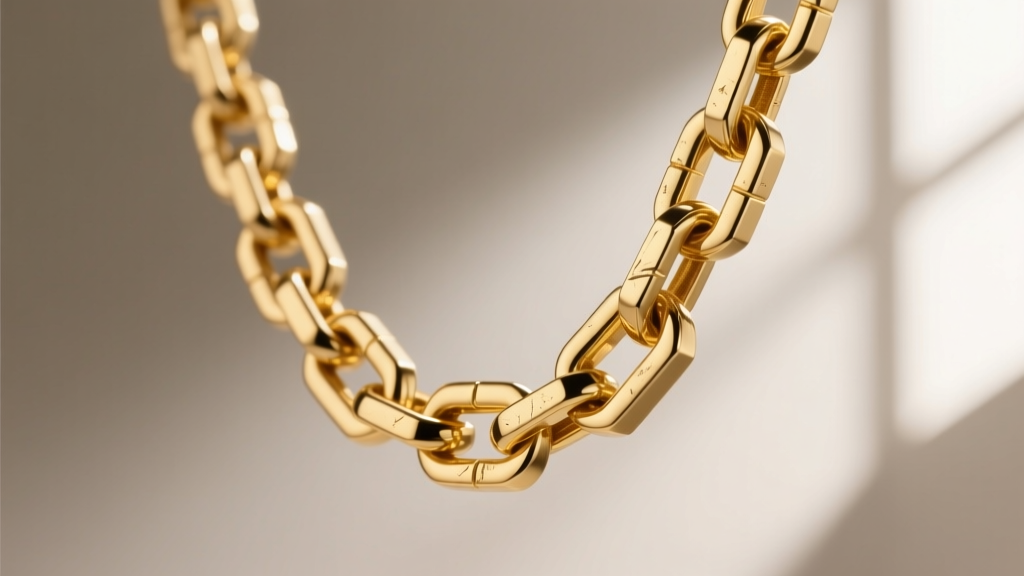
Expert Sourcing and Maintenance Protocols
For jewelers and serious collectors, sourcing chains requires verifying the manufacturing method. Machine-made chains produced by high-speed chain knitting machines must be meticulously inspected for consistent link closure. According to technical guidelines from Rio Grande, a premier jewelry supply house, chains that are 'flash-soldered' often have superficial joints that fail under dynamic loading. Always specify 'laser-welded' or 'oven-soldered' links when ordering inventory for heavy pendant applications.
'A chain is only as strong as its most poorly closed link. The transition from traditional torch soldering to automated laser welding in chain manufacturing has reduced link-seam failures by over 40% in the last decade.' — Master Bench Jeweler Technical Review
Preventative Maintenance Checklist
To preserve the structural integrity of any chain link necklace, implement the following maintenance protocols:
- Ultrasonic Degreasing: Clean chains bi-monthly in a mild, non-ammoniated ultrasonic bath to remove abrasive lapping compounds from link interiors.
- Clasp Audits: Test the tension of spring mechanisms every six months. Replace any clasp that fails to snap shut with an audible, crisp click.
- Storage Geometry: Store chains laid flat or suspended. Coiling chains tightly forces links into unnatural angles, promoting work hardening and stress fractures in rigid styles like box and herringbone chains.
By understanding the metallurgical properties and mechanical limitations of the various types of chain link necklaces, you can make informed decisions that balance aesthetic desires with long-term structural viability. Whether selecting a delicate 14k gold cable chain for a solitaire diamond or a heavy 316L steel Cuban link for daily wear, respecting the engineering behind the jewelry ensures it endures for generations.


