How to Clean and Care for Your Green Heart Necklace
Learn expert care, cleaning, and storage tips for your green heart necklace. Discover safe methods for emerald, malachite, peridot, and enamel.

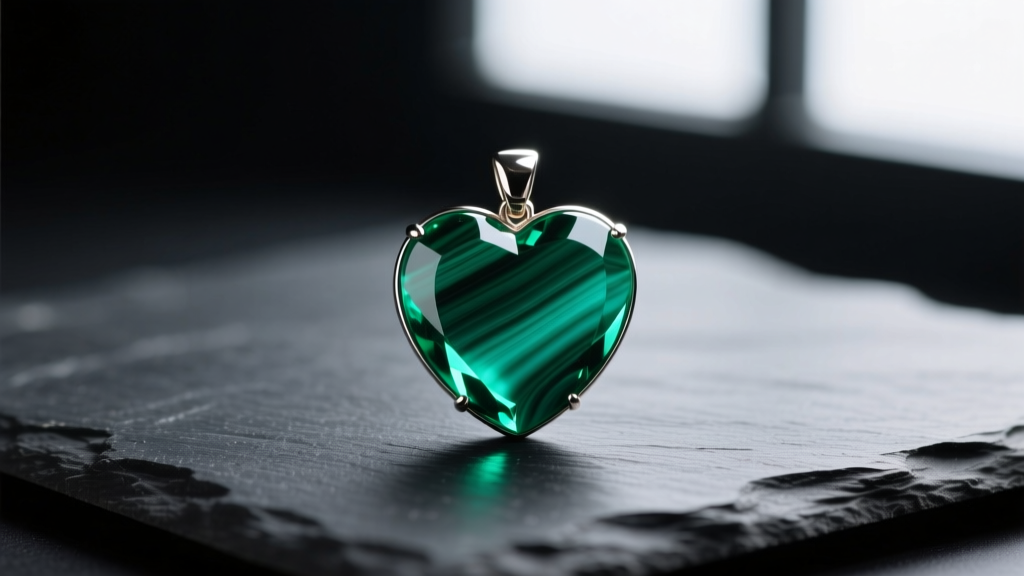
A green heart necklace is a striking, emotionally resonant statement piece. Whether it features the deep, mossy inclusions of an emerald, the banded vibrancy of malachite, the crisp sparkle of peridot, or the glossy finish of green enamel, the color green symbolizes growth, vitality, and enduring affection. However, maintaining the brilliance of a green heart pendant requires far more than a generic jewelry wipe. Because 'green' is a visual descriptor rather than a specific mineral, the care protocol depends entirely on the underlying material.
In this comprehensive guide, we break down the exact chemical and mechanical vulnerabilities of the most popular green gemstones and materials used in heart-shaped pendants. By understanding the Mohs hardness, porosity, and structural weak points of your specific necklace, you can prevent irreversible damage and keep your piece pristine for decades.
Identifying Your Green Heart Necklace Material
Before applying any cleaning solution, you must accurately identify the material of your pendant. The wrong cleaning method can dissolve a stone's polish, strip its treatments, or cause catastrophic fracturing.
- Emerald: A variety of beryl (Mohs 7.5-8). Almost all emeralds are heavily included (known as jardin) and are treated with cedar oil or synthetic resins to improve clarity. They are highly sensitive to heat and chemicals.
- Malachite: A copper carbonate hydroxide mineral (Mohs 3.5-4). It is incredibly soft, porous, and reacts violently to acids and heat. It is often cut into cabochons for heart pendants.
- Peridot: A gem-quality olivine (Mohs 6.5-7). While relatively durable, peridot is highly susceptible to thermal shock (sudden temperature changes) and acid erosion.
- Tsavorite Garnet: A rare, vivid green grossular garnet (Mohs 7-7.5). Unlike emerald, tsavorite is typically untreated, making it more durable for daily wear, though it can still chip if struck.
- Green Enamel: Either vitreous (fired glass) or cold enamel (epoxy resin). Cold enamel is common in modern fashion jewelry and is highly vulnerable to alcohol, acetone, and abrasion.
The Universal 'Never-Do' Rules for Heart Pendants
According to the Gemological Institute of America (GIA), the majority of gemstone damage occurs during well-intentioned but misguided home cleaning attempts. Regardless of your necklace's material, adhere to these strict prohibitions:
- Never use ultrasonic cleaners: The high-frequency vibrations can shatter included emeralds, strip the polish off malachite, and shake the prongs loose from the delicate cleft of a heart-shaped setting.
- Never use steam cleaners: Sudden thermal shock can cause peridot and emerald to fracture internally. Steam will also melt or cloud cold epoxy enamel.
- Avoid harsh chemicals: Bleach, ammonia, and even mild acids like lemon juice or vinegar will permanently etch malachite and degrade the alloy metals in your chain.
Step-by-Step Cleaning Protocols by Gemstone
Below is a detailed framework for safely cleaning the most common green materials found in heart pendants.
Emerald and Tsavorite Garnet
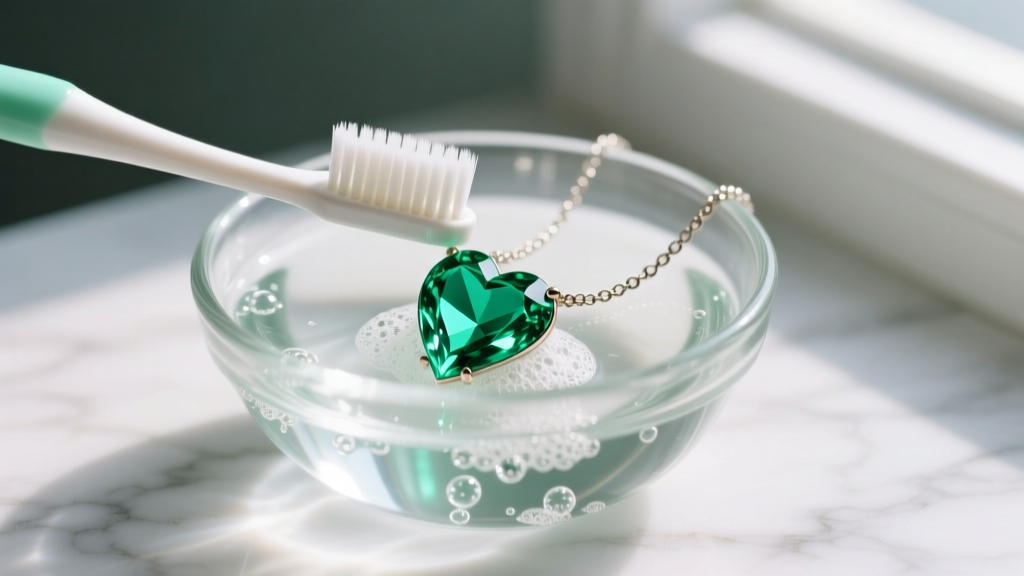
For emeralds, the goal is to clean without stripping the clarity-enhancing oils. Use only lukewarm water and a drop of pH-neutral baby shampoo. Submerge the pendant for no more than 60 seconds. Gently agitate the water with your fingers. If dirt is trapped behind the heart-shaped stone, use an extra-soft baby toothbrush to lightly flick the dirt away—never scrub the surface of the emerald. Rinse with distilled water and pat dry with a lint-free microfiber cloth. Tsavorite, being untreated, can tolerate a slightly more vigorous brushing, but the soft brush is still recommended to protect the metal setting.
Malachite and Green Enamel
Malachite and cold enamel should never be submerged in water. Malachite's porosity means it can absorb liquids, leading to discoloration or structural weakening. Instead, use a dry, untreated microfiber cloth to gently buff away skin oils and dust. If the malachite is heavily soiled, slightly dampen the cloth with distilled water, wipe the stone quickly, and immediately dry it. For vitreous enamel, a damp cloth with a tiny amount of mild soap is safe, but avoid getting soap into the metal bezel where it can accumulate and cause tarnish.
Material Care Matrix
| Material | Mohs Hardness | Safe Cleaning Method | Fatal Flaw (What to Avoid) |
|---|---|---|---|
| Emerald | 7.5 - 8.0 | Lukewarm water, pH-neutral soap, baby brush | Ultrasonics, steam, dish soap (strips oil) |
| Malachite | 3.5 - 4.0 | Dry microfiber cloth only | Water immersion, acids, ultrasonics |
| Peridot | 6.5 - 7.0 | Mild soap, lukewarm water, soft brush | Thermal shock, steam, harsh chemicals |
| Tsavorite | 7.0 - 7.5 | Mild soap, warm water, soft brush | Hard impacts, ultrasonic (if included) |
| Cold Enamel | N/A (Resin) | Damp cloth, mild soap | Alcohol, hot water, abrasive polishing |
Chain and Bail Maintenance: The Hidden Vulnerabilities
The pendant is only half the equation; the chain and the bail (the loop connecting the heart to the chain) endure the most mechanical stress. As noted by Jewelers of America, regular inspection of the bail is critical to prevent losing your pendant.
If your green heart necklace features a gold vermeil chain (a thick layer of gold over sterling silver, typically 2.5 microns), aggressive polishing will wear the gold away, exposing the silver beneath. Never use treated silver polishing cloths on vermeil. Instead, use a plain, untreated microfiber cloth to wipe away daily sweat and oils. For solid 14k or 18k gold chains, a dedicated gold polishing cloth can be used once a month to restore luster.
Inspect the bail's jump ring. Because heart pendants are often asymmetrical and hang at a specific angle, the jump ring experiences uneven friction. If the metal looks thin or the gap in the ring has widened, take it to a jeweler to be soldered shut before the pendant slips off.
The Structural Weakness of the Heart Cut
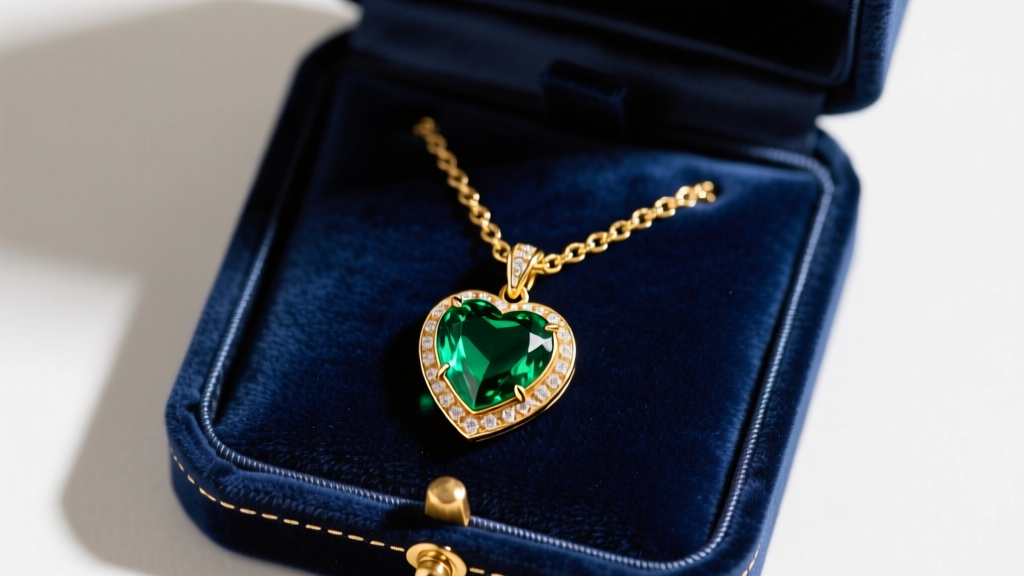
From a lapidary and bench-jeweler perspective, the heart shape is one of the most fragile gemstone cuts. The 'cleft' (the V-shaped dip at the top of the heart) and the 'point' (the bottom tip) are extreme tension points. A hard knock to the bottom point can easily chip an emerald or peridot.
When cleaning your necklace, pay special attention to the prongs holding the cleft and the point. Dirt loves to accumulate in the V-cleft. Use a wooden toothpick or a soft interdental brush to gently dislodge debris from the cleft—never use a metal needle or pin, as you risk scratching the stone or bending the delicate V-prong. If you notice the prong lifting away from the stone, stop wearing the necklace immediately and seek professional prong-tightening.
Proper Storage to Prevent Micro-Scratches
How you store your green heart necklace is just as important as how you clean it. Gemstones are ranked on the Mohs scale of mineral hardness, but this scale is exponential, not linear. A diamond (Mohs 10) is not just twice as hard as an apatite (Mohs 5); it is vastly harder and will effortlessly scratch it.
- Isolate Malachite and Enamel: Because malachite is a 3.5 on the Mohs scale, it will be scratched by almost every other piece of jewelry in your box, including the metal chain it hangs on. Store malachite heart pendants in a soft flannel pouch, completely separated from other items.
- Prevent Chain Tangles: Tangled chains can pull on the bail and warp the metal. Always clasp the chain before storing it, and lay it flat in a dedicated jewelry box compartment or hang it on a velvet-lined jewelry stand.
- Control Humidity: If your chain is sterling silver, store the necklace in an airtight ziplock bag with an anti-tarnish silica strip. Silver sulfide (tarnish) forms when silver reacts with sulfur and moisture in the air. Keeping the environment dry preserves the chain's finish without the need for chemical dips.
When to Seek Professional Jeweler Intervention
While home maintenance is excellent for daily upkeep, certain situations require a professional bench jeweler. If your emerald heart pendant looks cloudy or white-fractured, it may need to be professionally re-oiled—a process that requires specialized vacuum chambers and high-grade cedar or Opticon resins. If your malachite pendant has lost its high-gloss polish due to micro-scratches, a lapidary can re-sand and polish the cabochon using specialized diamond compounds. Finally, schedule an annual professional ultrasonic cleaning only if your pendant is a durable, untreated stone like tsavorite, and have the jeweler check the structural integrity of the heart's V-prongs under a 10x loupe.


