Water Splash Necklace Guide: Materials, Care and Styling
Discover everything about the water splash necklace. Learn about resin vs. metal materials, chain pairings, and care tips in this beginner-friendly guide.

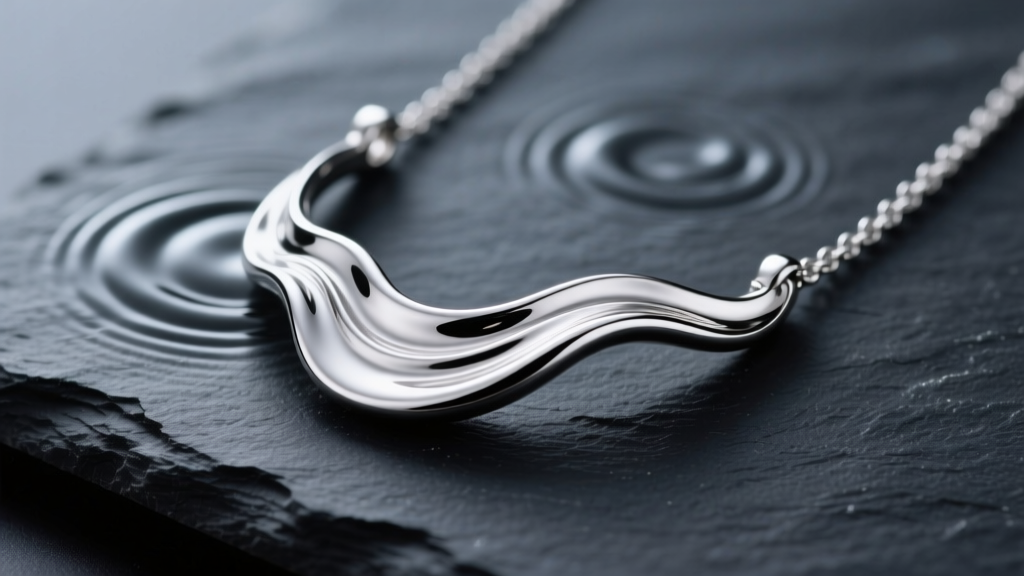
What is a Water Splash Necklace?
The water splash necklace is a striking jewelry trend that captures the ephemeral beauty of liquid in motion. Often referred to as "frozen fluid" jewelry, these pendants mimic the exact moment a water droplet hits a surface, complete with intricate ripples, asymmetrical droplets, and organic, flowing edges. While they look like actual water, they are meticulously crafted from durable materials like precious metals, epoxy resin, or fused glass.
For beginners, navigating the world of fluid-motif jewelry can be overwhelming. The market is flooded with everything from $15 mass-produced brass pieces to $300 artisan-cast sterling silver designs. Understanding how these necklaces are made, what materials are used, and how to properly care for them is essential for making a smart, long-lasting investment. According to Ganoksin jewelry making resources, capturing fluid dynamics in metal often requires advanced lost-wax casting techniques, where high-speed photography is used to map a real water splash into a 3D CAD model before being printed in castable wax.
Material Breakdown: Metal vs. Resin vs. Glass
The longevity, weight, and price of your water splash necklace depend entirely on its core material. Below is a detailed comparison to help you choose the right medium for your lifestyle and budget.
| Material | Pros | Cons & Failure Modes | Average Price Range |
|---|---|---|---|
| 925 Sterling Silver | Hypoallergenic, highly detailed casting, retains value. | Prone to silver sulfide tarnish if exposed to sulfur/sweat. | $60 - $180 |
| Epoxy Resin | Lightweight, can mimic actual water transparency, affordable. | UV photo-oxidation causes permanent yellowing over time. | $20 - $65 |
| Dichroic Glass | Stunning color-shifting properties, highly scratch-resistant. | Fragile; thin "splash" edges are prone to chipping if dropped. | $45 - $150 |
| Plated Brass | Very inexpensive, heavy and substantial feel. | Plating wears off, exposing copper that reacts with skin pH to cause green stains. | $15 - $35 |
If you want a piece that mimics the actual transparency of water, opt for a high-grade, UV-stabilized epoxy resin. As noted in ArtResin's UV resistance guide, standard resins will inevitably yellow when exposed to sunlight due to polymer chain degradation. Always check if the artisan uses a UV-inhibitor additive. For a more luxurious, heirloom-quality piece, 925 sterling silver is the superior choice, offering crisp, reflective ripples that catch the light beautifully.
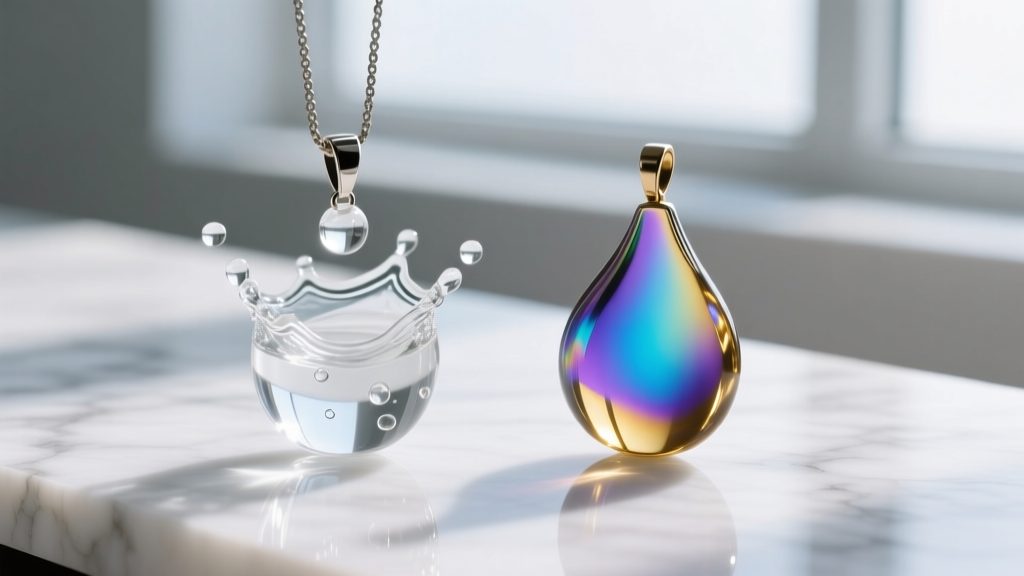
How to Choose the Right Chain for Your Splash Pendant
A common beginner mistake is pairing a heavy, intricate splash pendant with a flimsy chain. The asymmetrical nature of a water splash design means the weight is rarely distributed evenly, which can cause lightweight chains to twist, kink, or snap.
Matching Chain Width to Pendant Weight
- Delicate Silver Splashes (Under 10g): A 1.0mm to 1.2mm cable chain or a delicate box chain works perfectly. These chains slide easily through small, integrated jump rings.
- Medium Resin or Glass Splashes (10g - 25g): Opt for a 1.5mm to 2.0mm rope chain or a herringbone chain. The herringbone lays flat against the collarbone, providing a stable base that prevents the pendant from flipping upside down.
- Heavy Statement Splashes (Over 25g): You need structural integrity. A 2.5mm to 3.0mm Cuban link or a thick wheat chain is required. Ensure the pendant's bail (the loop it hangs from) is at least 3.5mm wide to accommodate the thicker chain without causing friction wear.
Styling Your Water Splash Necklace for Different Necklines
Because water splash pendants feature organic, unpredictable silhouettes, they interact with clothing necklines differently than traditional geometric pendants. Here is a practical framework for styling them:
The V-Neck Pairing: A vertically oriented splash pendant (one that looks like a droplet falling downward) perfectly mirrors the geometry of a V-neck blouse. The elongated shape draws the eye down, creating a flattering, lengthening effect on the neck.
The Crew Neck Contrast: For high crew necklines, choose a horizontally wide splash design that mimics a ripple expanding outward. This breaks up the solid block of fabric and adds a dynamic, layered look without getting lost in the collar.
Off-the-Shoulder and Scoop Necks: These expose a large canvas of skin. Layering is key here. Pair your water splash necklace with a simple, 14-inch sterling silver choker or a delicate pearl strand to create a textured, multi-dimensional aesthetic.

Essential Care and Maintenance
Proper maintenance is critical to preventing the specific failure modes associated with fluid-motif jewelry. The intricate crevices of a "splash" design can trap lotions, perfumes, and dead skin cells, leading to dullness and material degradation.
Cleaning Sterling Silver Splashes
Silver tarnishes when the copper alloy (the 7.5% in 925 sterling) reacts with sulfur in the air or sweat, forming silver sulfide. According to The Silver Institute, the safest way to clean intricate silver jewelry is with a mild, phosphate-free dish soap and a soft-bristled baby toothbrush. Gently brush the deep "ripple" crevices. Never use abrasive silver dips on oxidized or intentionally blackened silver splashes, as this will strip the contrast detailing that gives the water effect its depth.
Caring for Resin and Glass
Never put a resin or glass water splash necklace in an ultrasonic cleaner. The high-frequency vibrations can cause micro-fractures in glass, particularly along the thin, tapering edges of the splash design. For resin, ultrasonic heat can warp the material or cloud its transparency. Instead, wipe resin and glass pendants with a damp microfiber cloth and dry them immediately to prevent hard water spots from ruining the optical clarity.
Where to Buy: Navigating the Market
When shopping for a water splash necklace, scrutinize the product description. If a metal piece is listed simply as "silver toned" or "alloy," it is likely plated brass or zinc, which will eventually tarnish and cause skin discoloration. Look for explicit mentions of "925 Sterling Silver," "14k Solid Gold," or "UV-Cast Resin." Independent artisans on platforms like Etsy often provide the highest quality fluid-cast pieces, as they utilize small-batch silicone molding and hand-finishing techniques that mass-market factories skip. By understanding the materials and mechanics behind the design, you can confidently select a water splash necklace that remains a staple in your wardrobe for years to come.


