Key and Lock Pendant Necklace Guide: Mechanics, Metals & Sizing
Explore the metallurgy, locking mechanisms, and chain ergonomics of a functional key and lock pendant necklace in this expert technical guide.

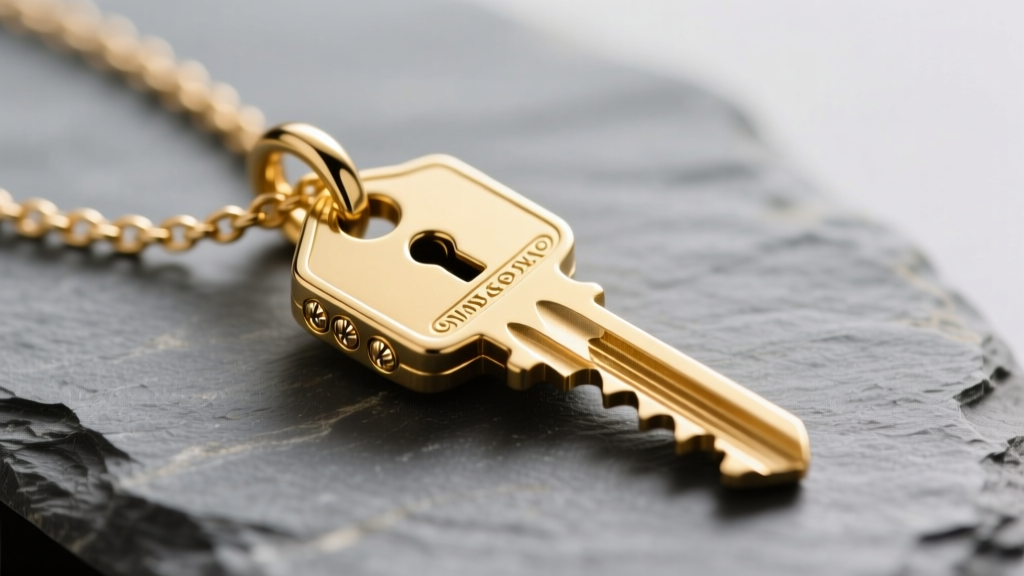
The key and lock pendant necklace has evolved far beyond its origins as a simple Victorian romantic token. Today, high-end jewelry manufacturers are integrating functional micro-mechanics, precision-cast metallurgy, and ergonomic chain engineering into these pieces. For the discerning collector or the gifter seeking a piece with genuine mechanical utility, understanding the technical specifications of these pendants is crucial. A poorly engineered lock will seize, a soft metal key will strip its teeth, and an improperly matched chain will snap under the kinetic friction of a heavy padlock.
In this expert deep dive, we deconstruct the anatomy of functional lock and key jewelry, examining material hardness scales, internal tumbler mechanisms, and the physics of pendant suspension.
Metallurgy and the Vickers Hardness Scale
The most common point of failure in a functional key and lock pendant necklace is the degradation of the key's bitting (the cut teeth). Every time the key is inserted and turned, it experiences shear stress against the internal pins of the lock. If the metal is too soft, the teeth will round off, rendering the key useless.
Jewelry manufacturers utilize the Vickers Hardness (HV) scale to determine a metal's resistance to deformation. According to material science data referenced by the Gemological Institute of America (GIA), different precious metals exhibit vastly different wear profiles:
| Metal Alloy | Avg. Vickers Hardness (HV) | Key Wear Resistance | Best Application |
|---|---|---|---|
| Sterling Silver (925) | 60 - 75 HV | Poor | Ornamental/Non-functional locks only |
| 18k Yellow Gold | 120 - 135 HV | Moderate | Low-use functional locks (ceremonial) |
| 14k White Gold | 130 - 150 HV | Good | Functional locks with nickel/palladium alloys |
| Platinum (950) | 120 - 135 HV | Excellent | High-use functional locks (malleable, won't lose mass) |
| 316L Stainless Steel | 150 - 200 HV | Superior | Daily-use mechanical locks and security pendants |
While sterling silver is popular for its affordability, it is entirely unsuitable for a functional key. After approximately 40 to 50 actuations, a silver key will suffer from plastic deformation. For a daily-wear functional piece, 316L surgical stainless steel or platinum are the optimal choices. Platinum, while similar in HV to 18k gold, is highly malleable; rather than chipping or wearing away, it displaces, maintaining the structural integrity of the key's bitting over decades of use.
Internal Mechanisms: Novelty Snap vs. Micro-Pin Tumbler
Not all locking pendants are created equal. The market is divided into two distinct mechanical categories, and knowing the difference is vital for buyers seeking actual security versus those seeking a satisfying tactile experience.
The Novelty Snap (Spring-Loaded)
Often found in fashion jewelry, the novelty snap utilizes a simple spring-loaded latch. The 'key' in these designs is usually a decorative push-pin that depresses a hidden release valve. There is no shear line, no tumblers, and no real security. The advantage here is manufacturing cost and durability, as there are no delicate internal pins to bend or break.
The Micro-Pin Tumbler
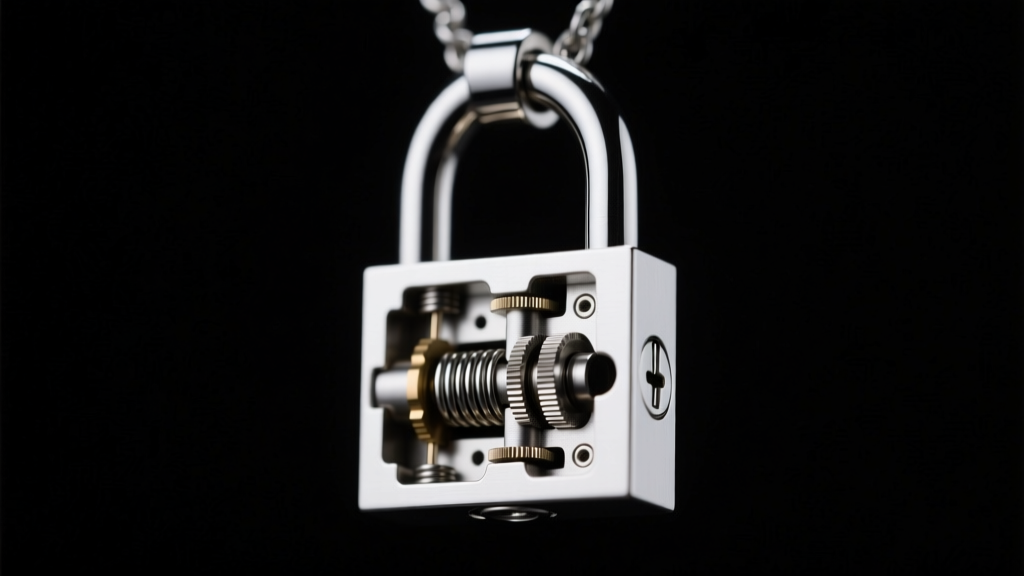
True functional pendants utilize a scaled-down version of the standard pin tumbler mechanism found in residential door locks. According to manufacturing guidelines from jewelry supply experts like Rio Grande, scaling these mechanisms down to a 15mm x 10mm jewelry footprint requires CNC micro-machining. Inside the lock cylinder, a series of 3 to 4 driver pins and key pins must align perfectly at the shear line when the correct key is inserted.
Expert Note: When purchasing a micro-pin tumbler pendant, test the 'key pull'. In high-quality micro-locks, the key should slide in with zero lateral wobble. Wobble indicates poor CNC tolerances in the keyway, which will eventually lead to internal pin misalignment and lock failure.
Chain Ergonomics, Bail Friction, and Tensile Strength
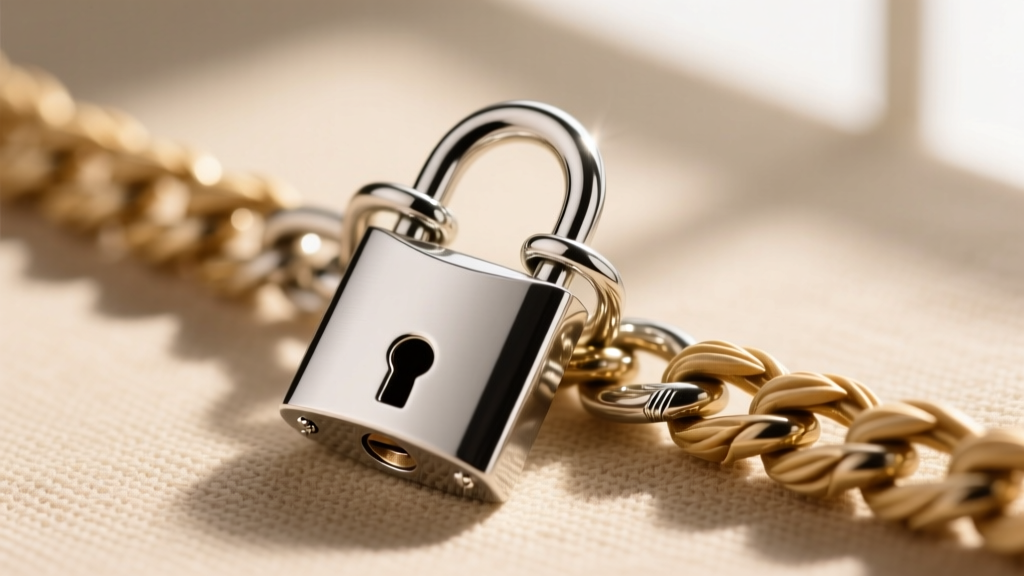
A heavy lock pendant introduces unique kinetic challenges. Unlike a flat gemstone pendant that rests flush against the sternum, a 3D padlock acts as a pendulum. As the wearer moves, the pendant swings, creating concentrated friction at the bail (the loop connecting the lock to the chain) and the jump ring.
Selecting the Right Chain Gauge and Style
The tensile strength of the chain must be matched to the weight of the lock. A common mistake is pairing a 25-gram solid brass or steel padlock with a delicate 22-gauge cable chain. The kinetic snapping motion will easily exceed the yield strength of a thin wire link.
- Under 10 grams (Lightweight Locks): 20-gauge to 18-gauge cable or rolo chains are sufficient. Standard spring-ring clasps can handle the static load.
- 10 to 25 grams (Medium Locks): 16-gauge to 14-gauge wheat, box, or curb chains. Wheat chains are highly recommended due to their woven, multi-directional link structure, which distributes kinetic stress evenly.
- Over 25 grams (Heavy Padlocks): 12-gauge to 10-gauge solid Cuban links or Figaro chains. These require a heavy-duty lobster clasp with a reinforced catch.
The Criticality of Soldered Jump Rings
The jump ring connecting the chain to the pendant bail is the single most vulnerable point of failure. For any key and lock pendant necklace weighing more than 12 grams, you must ensure the jump ring is soldered closed. An unsoldered, split jump ring will slowly twist open under the pendulum effect, eventually dropping the lock. If your piece arrives with an unsoldered ring, take it to a bench jeweler to have it laser-welded or silver-soldered shut before wearing.
Maintenance and Micro-Lubrication Protocols
Functional micro-locks are highly susceptible to environmental contaminants. Skin oils, cosmetic powders, and microscopic lint can easily infiltrate the tiny keyway, causing the pins to stick. Proper maintenance requires a departure from standard jewelry cleaning protocols.
What to Avoid
Never use liquid jewelry dips, ultrasonic cleaners, or standard oil-based lubricants (like WD-40) on a functional lock pendant. Liquid dips can leave a sticky residue inside the cylinder that attracts dust, while oil-based lubricants will create a sludge that completely immobilizes the micro-pins. Ultrasonic vibrations can also dislodge the tiny retaining springs inside the lock core.
The Dry Graphite Method
The industry standard for maintaining micro-tumblers is dry lubrication.
- Use a 0.5mm mechanical pencil to deposit a tiny amount of pure graphite directly into the keyway.
- Insert and remove the key 5 to 6 times to work the graphite into the pin chambers.
- Wipe the exterior of the lock with a microfiber cloth to remove excess graphite, which can stain clothing.
Alternatively, a PTFE (Teflon) dry spray can be applied to the key itself (never sprayed directly into the lock) before insertion. This provides a frictionless coating that evaporates cleanly without leaving a residue.
Final Verdict: Engineering Meets Sentiment
A well-crafted key and lock pendant necklace is a marvel of micro-engineering. By prioritizing high-Vickers metals for the key, demanding CNC-machined pin tumblers, and pairing the assembly with a tensile-appropriate, soldered chain, you transform a simple piece of jewelry into a functional, multi-generational heirloom. Whether you are securing a private diary, a server rack, or simply keeping a sentimental secret, the mechanical integrity of your pendant ensures that what is locked away, stays locked away.


