Is a Key Silver Necklace Worth It? 2026 Value Guide
Discover if a key silver necklace is worth your budget in 2026. We break down silver weights, retail markups, chain gauges, and how to spot true value.

The True Cost of a Key Silver Necklace in 2026
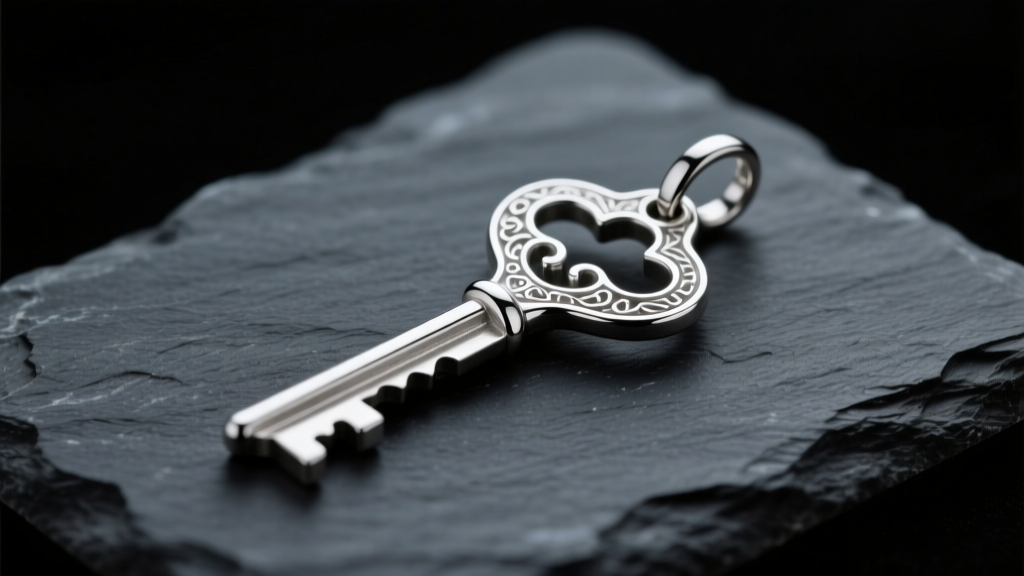
The appeal of a key silver necklace spans generations, symbolizing everything from new beginnings and secret-keeping to vintage-inspired fashion. However, as we navigate the jewelry market in 2026, the economic landscape of precious metals has shifted dramatically. Driven by increased industrial demand for silver in green energy sectors, the spot price of silver has seen notable volatility. For the savvy consumer, this means distinguishing between a genuine investment in craftsmanship and an overpriced piece of mass-produced fashion jewelry is more critical than ever.
When assessing the budget and value of any silver pendant, you must separate the intrinsic melt value from the craftsmanship premium. A standard key pendant typically weighs between 3 and 8 grams. With the 2026 silver spot price hovering around $32 per troy ounce (approximately $1.03 per gram of pure silver), the raw material cost of 925 sterling silver (which is 92.5% pure) sits at roughly $0.95 per gram. Therefore, the base scrap value of a 5-gram key pendant is a mere $4.75. If a retailer is charging $150 for a lightweight, mass-cast key pendant, you are paying a 3,000% markup. Understanding where that markup comes from—and whether it is justified—is the core of our value assessment.
Solid Sterling vs. Plated: A Buyer’s Breakdown
The most common trap in the budget jewelry market is confusing silver-plated brass or copper with solid sterling silver. According to the Federal Trade Commission Jewelry Guides, a piece must contain at least 92.5% pure silver to be legally marketed as 'sterling' or '925'. However, unregulated online marketplaces are flooded with counterfeit hallmarks.
To assess true value, you must look beyond the stamp. Solid sterling silver is non-magnetic and has a distinct thermal conductivity—it feels noticeably cool to the touch compared to plated brass, which warms up almost instantly. Furthermore, examine the bail (the loop that connects the pendant to the chain). On high-quality solid silver pieces, the bail is usually soldered shut or cast as a single continuous piece. On cheap plated alternatives, you will often see a visible seam or a glued-on jump ring, which is a primary failure point.
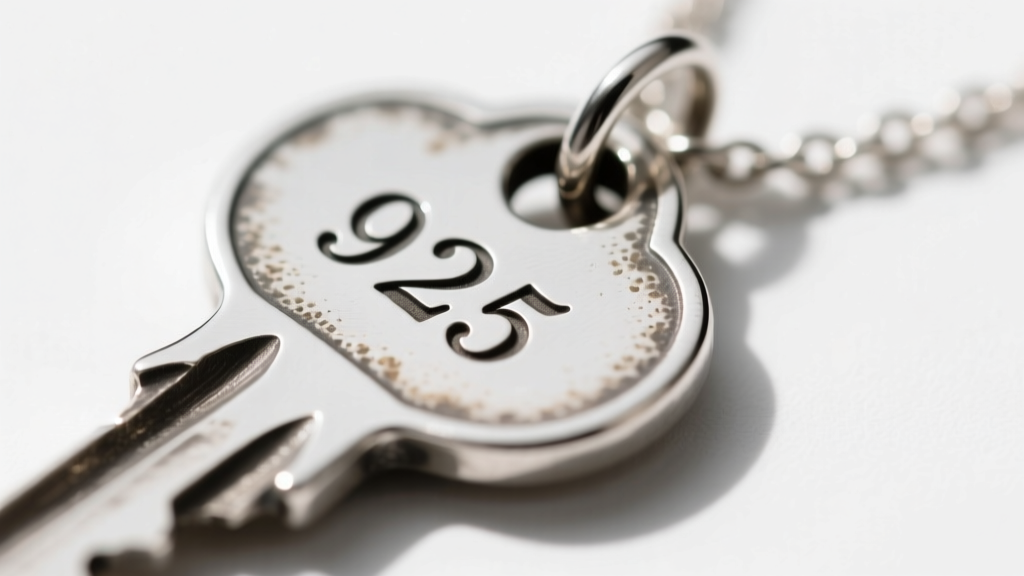
For a comprehensive understanding of silver identification and quality markers, the Gemological Institute of America (GIA) provides excellent guidelines on recognizing authentic hallmarks and understanding the limitations of silver-plated jewelry, which typically contains less than 1% actual silver by weight and holds zero intrinsic resale value.
Deconstructing the Markup: What Are You Actually Paying For?
Not all markups are inherently bad. You are also paying for design, labor, finishing, and retail overhead. To help you benchmark your budget, we have categorized the market into three distinct tiers based on current 2026 pricing models.
| Tier | Average Price Range | Manufacturing Method | Value Assessment |
|---|---|---|---|
| Fast Fashion | $15 - $45 | Die-struck or hollow electroformed base metal with silver flash plating. | Poor long-term value. Plating will wear off within months, exposing brass that turns skin green. |
| Mid-Tier Artisan | $60 - $130 | Lost-wax cast solid 925 sterling silver, hand-polished, often with oxidized detailing. | Excellent value. You are paying a fair 10x-20x multiplier over scrap for genuine craftsmanship and durability. |
| Luxury / Heritage | $250 - $800+ | Hand-forged, intricate filigree, gemstone inlays, or heavy brand-name prestige markup. | Diminishing returns on raw materials. You are paying for brand heritage, bespoke design, or rare gemstone accents. |
If your goal is everyday wear and long-term durability, the Mid-Tier Artisan category offers the highest return on investment. You secure solid precious metal that can be easily polished and repaired by any local jeweler, unlike plated fashion jewelry which is essentially disposable.
The Chain Conundrum: Gauge, Weight, and Clasp Integrity
When buying a key silver necklace, the pendant is only half the equation. The chain represents up to 60% of the total silver weight and is the most frequent point of mechanical failure. Budget brands often pair a beautiful, heavy solid silver key pendant with a flimsy, low-karat or thinly plated chain to keep the overall retail price down.
Pay strict attention to the chain gauge (thickness). For a standard 4-to-6-gram key pendant, you need a chain gauge between 0.9mm and 1.2mm. Anything under 0.7mm (like a standard micro-cable chain) will eventually snap under the pendulum-like stress of a swinging key pendant. Furthermore, inspect the clasp. Spring-ring clasps are the hallmark of budget manufacturing; they are difficult to operate and prone to internal spring failure. A proper lobster clasp or a custom toggle clasp indicates a manufacturer that prioritizes structural integrity over cost-cutting.
Hollow Cast vs. Solid Cast: The Hidden Value Trap
A major trend in 2026 is the use of electroforming to create voluminous, oversized key pendants that weigh almost nothing. While a large, ornate skeleton key might look impressive in a display case, hollow-cast silver is incredibly fragile. If dropped on a hard surface, a hollow electroformed pendant will dent or crush, and because the silver layer is paper-thin (often less than 0.2mm), it cannot be hammered out or repaired by a jeweler.
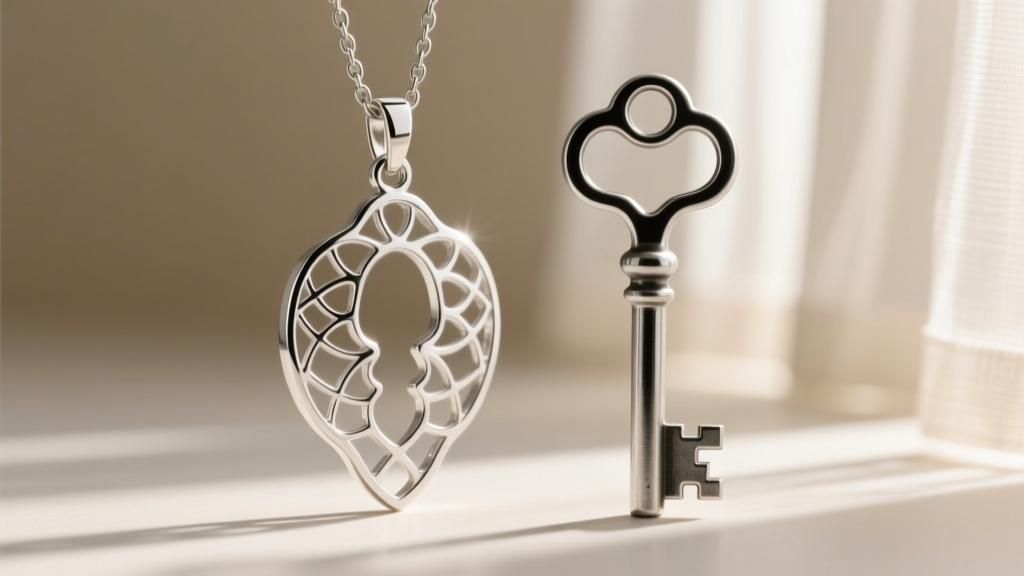
Solid cast pendants, produced via the traditional lost-wax casting method, possess a dense, uniform internal structure. They can withstand daily impacts, be aggressively polished to remove scratches, and even be resized or modified. To test a piece in person, use the 'tap test': gently flick the bow (the top loop) of the key with your fingernail. A solid piece produces a dull, dense 'thud', while a hollow piece emits a high-pitched, metallic 'ting'.
Red Flags and Common Failure Modes
When conducting your budget assessment, actively look for these structural red flags that indicate poor manufacturing quality:
- Unsoldered Jump Rings: The jump ring connecting the key to the chain must be soldered shut. If you can see a tiny slit where the wire ends meet, the pendant will eventually slip through the gap and be lost.
- Thin Bail Loops: The hole drilled through the top of the key should be reinforced with a silver tube or a cast bail. If the chain simply threads through a thin, sharp hole drilled directly into the silver, the friction will eventually saw through the chain links.
- Heavy Rhodium Flashing: Many brands plate their sterling silver with rhodium to prevent tarnishing and mimic white gold. While aesthetically pleasing initially, thick rhodium plating can flake off over time, and it prevents you from using traditional silver polishing cloths without stripping the finish.
Final Verdict: How Much Should You Actually Pay?
To determine if a specific key silver necklace is priced fairly, use this simple 2026 valuation formula: Calculate the total gram weight of the pendant and chain, multiply it by $0.95 (the raw sterling value), and add a craftsmanship premium. For a well-made, mid-tier piece, a craftsmanship premium of $30 to $70 is entirely reasonable. This accounts for the CAD design, casting, hand-finishing, and quality control.
For real-time tracking of precious metal markets to inform your purchasing decisions, resources like Kitco's Silver Price Charts are invaluable. Ultimately, a key silver necklace is a timeless accessory, but its value is entirely dependent on structural integrity. By prioritizing solid casting, appropriate chain gauges, and secure soldering over brand names and oversized hollow designs, you can secure a piece that holds both sentimental and material value for decades to come.