Hyo Silver Mens Cross Necklaces: Alloy & Metal Guide
Explore the metallurgy of Hyo Silver mens cross necklaces. Compare alloys, oxidation, durability, and hardware in this expert material guide.

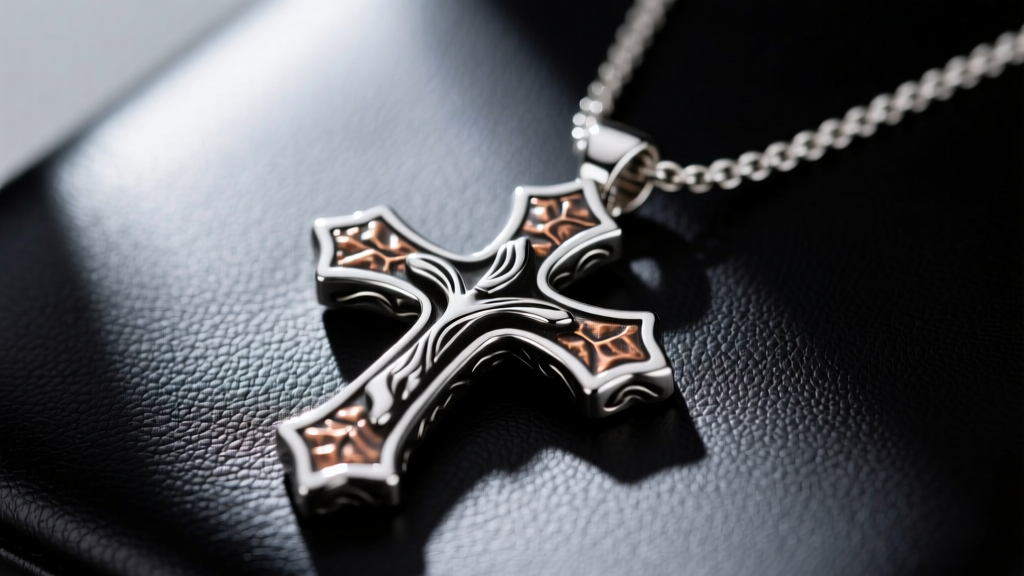
When evaluating premium men's jewelry, the conversation often defaults to standard precious metals like white gold or platinum. However, for those drawn to rugged, Western-inspired aesthetics, Hyo Silver mens cross necklaces represent a masterclass in artisanal metallurgy. Founded by Hyo Hooper in Texas, the brand has built a legacy on handcrafted, multi-metal designs that eschew mass-produced uniformity in favor of living, breathing alloys. In 2026, as consumers increasingly prioritize heritage craftsmanship and material transparency, understanding the specific metallurgical properties of these pieces is essential for making an informed investment.
This comprehensive material guide dissects the exact alloys, oxidation techniques, and hardware specifications that define Hyo Silver's cross pendants, comparing them directly against standard market alternatives.
The Signature Hyo Silver Alloy: Beyond Standard Sterling
Standard sterling silver is an alloy consisting of 92.5% pure silver and 7.5% copper. While pure silver is too soft for daily wear jewelry, the addition of copper provides necessary tensile strength. However, Hyo Silver rarely relies on standard 925 sterling alone. Their signature aesthetic is achieved through the meticulous casting and soldering of sterling silver alongside bronze (an alloy of copper and tin) and brass (copper and zinc).
According to Hyo Silver's official heritage archives, the brand utilizes traditional lost-wax casting methods. This allows for the seamless integration of different metal families within a single cross pendant. The bronze elements are not merely plated onto the silver; they are structurally integrated, meaning the two-tone contrast will not flake or wear off over time like electroplated rhodium or gold vermeil.
Material Comparison Chart: Hyo Silver vs. Standard Men's Cross Metals
To understand where Hyo Silver mens cross necklaces sit in the broader jewelry market, we must compare their physical properties against common alternatives. The following data table highlights the metallurgical differences that affect durability, weight, and aging.
| Metal / Alloy | Primary Composition | Vickers Hardness (HV) | Patina Potential | Avg. Price Range (USD) |
|---|---|---|---|---|
| Hyo Silver Blend | 925 Silver, Bronze, Brass | 65 - 80 HV | High (Intentional & Natural) | $150 - $450 |
| Standard 925 Sterling | 92.5% Ag, 7.5% Cu | 60 - 70 HV | Medium (Often Rhodium Plated) | $80 - $250 |
| 316L Stainless Steel | Iron, Chromium, Nickel, Mo | 150 - 200 HV | None (Corrosion Resistant) | $30 - $90 |
| 14k White Gold | 58.5% Au, Cu, Zn, Ni/Pd | 130 - 150 HV | Low (Requires Rhodium Dipping) | $600 - $1,500+ |
As noted by The Silver Institute, the relatively lower Vickers hardness of silver-based alloys means they are more prone to micro-scratches than stainless steel or white gold. However, in the context of a Hyo Silver cross, these micro-abrasions contribute to the desired 'living finish' rather than detracting from the piece's value.
Patina and Oxidation: The Chemistry of the Living Finish
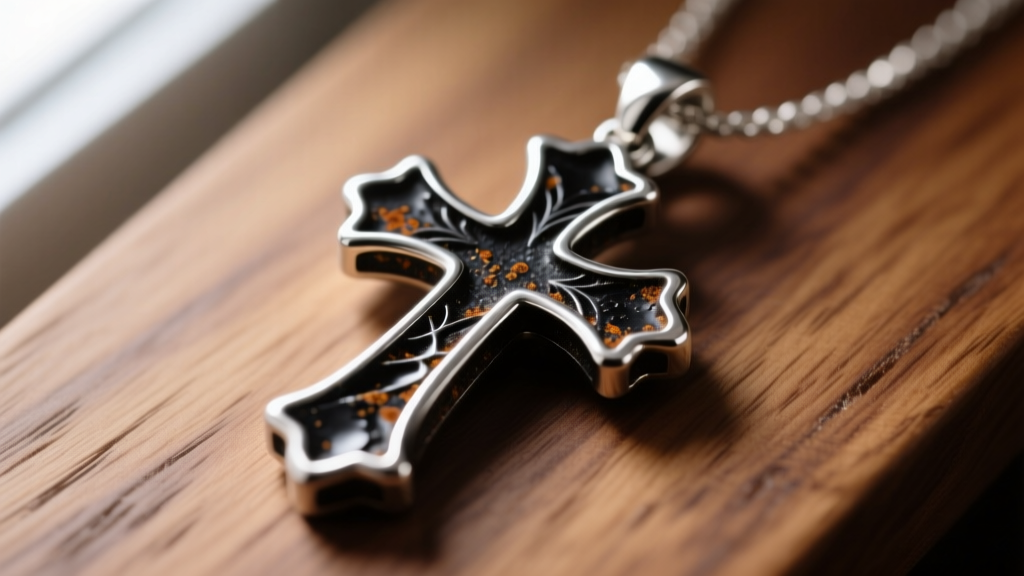
The most striking visual property of Hyo Silver mens cross necklaces is the deep, charcoal-black background that makes the intricate Western engravings pop. This is not paint or enamel; it is a controlled chemical oxidation.
The Liver of Sulfur Reaction
Artisans achieve this high-contrast finish using a chemical compound known as liver of sulfur (potassium sulfide). When heated and applied to the sterling silver and bronze alloys, the sulfur reacts with the copper content in the metals to create copper sulfide—a dark, blackish layer on the surface. The artisan then hand-polishes the high points of the cross, removing the oxidation from the raised areas while leaving it locked deep within the engraved crevices.
Maintenance and Polishing Protocols
Because the finish is chemically reactive, it will continue to evolve based on the wearer's body chemistry and environment. To maintain the high-contrast look:
- Do NOT use ultrasonic cleaners: The high-frequency waves and chemical baths will strip the intentional oxidation from the crevices, leaving the cross looking flat and overly bright.
- Avoid liquid silver dips: These harsh acids will instantly remove the patina and can damage the structural integrity of the bronze inlays.
- Use a dry polishing cloth: Gently rub only the raised, high-polish areas of the cross with a treated jeweler's cloth to remove fingerprints and natural oils without disturbing the darkened engravings.
Weight, Gauge, and Chain Hardware Specifications
A heavy, artisanal cross pendant requires equally robust hardware. A common failure point in men's jewelry is the chain snapping under the weight of a solid metal pendant. Hyo Silver addresses this through specific gauge selections and clasp engineering.
Chain Architecture
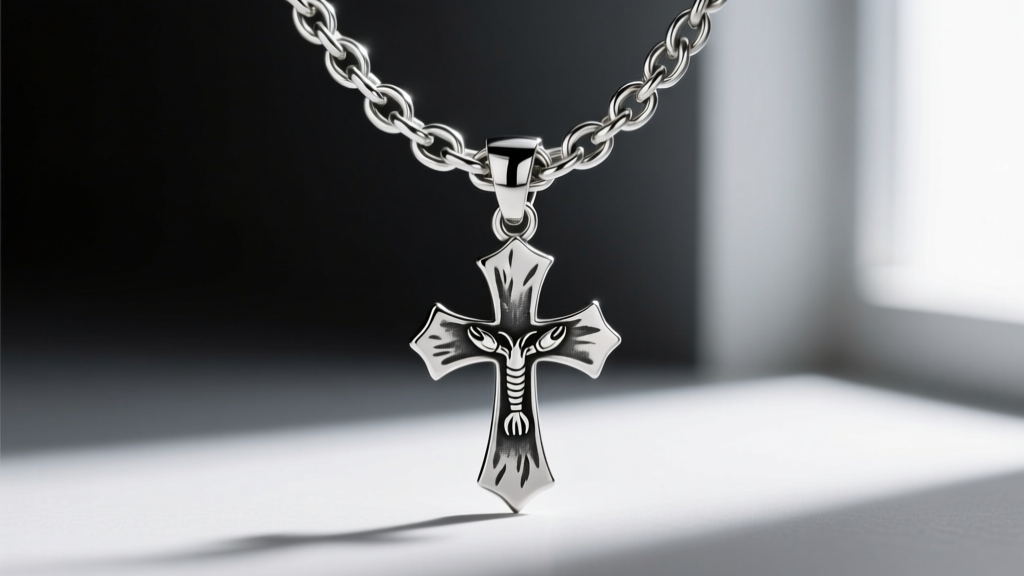
Most Hyo Silver cross necklaces are paired with heavy-duty Rolo or Figaro chains ranging from 3.5mm to 5.5mm in width. These chains are cast in solid sterling silver rather than being hollow-core, providing the necessary tensile strength to support pendants that frequently weigh between 25 and 45 grams. The links are typically soldered shut, preventing them from pulling apart under sudden tension.
Clasp and Jump Ring Integrity
Standard spring-ring clasps are entirely inadequate for heavy men's pendants. Hyo Silver utilizes cast lobster clasps with reinforced internal springs. Furthermore, the jump ring connecting the clasp to the chain is heavily soldered. The bail (the loop through which the chain passes on the pendant) is often integrated directly into the wax casting of the cross itself, eliminating the weak point of a soldered-on bail that can snap under lateral stress.
Skin Sensitivities and the Copper Factor
Because both sterling silver and bronze rely heavily on copper for their structural integrity, skin sensitivities are a valid consideration. According to the Gemological Institute of America (GIA), pure silver is hypoallergenic, but the copper alloys mixed with it can react to acidic sweat, occasionally leaving a harmless green or black residue on the skin.
For the vast majority of men, the heavy oxidation and natural oils from daily wear create a barrier that prevents this reaction. However, individuals with highly acidic skin chemistry or specific copper allergies may experience discoloration on the chest. This is not a sign of counterfeit metals or poor quality; rather, it is a fundamental chemical property of copper-bearing alloys. Applying a thin layer of clear jewelry wax or Renaissance Wax to the back of the cross pendant can effectively seal the metal and prevent skin transfer without altering the front-facing aesthetic.
Final Verdict: Is the Hyo Alloy Right for You?
Hyo Silver mens cross necklaces are not designed for men seeking the icy, maintenance-free brilliance of rhodium-plated white gold or the indestructible nature of 316L stainless steel. Instead, they are engineered for those who view their jewelry as a living artifact. The proprietary blend of sterling silver, bronze, and brass, combined with master-level chemical oxidation, results in a piece that physically records the passage of time. By understanding the metallurgical realities of these alloys—from their Vickers hardness to their sulfur-induced patinas—collectors can properly care for these iconic Western crosses and ensure they endure for generations.


