Expert Care Guide for Your White Gold Clover Necklace
Learn how to safely clean, maintain, and restore the rhodium plating on your white gold clover necklace without damaging delicate stone inlays.

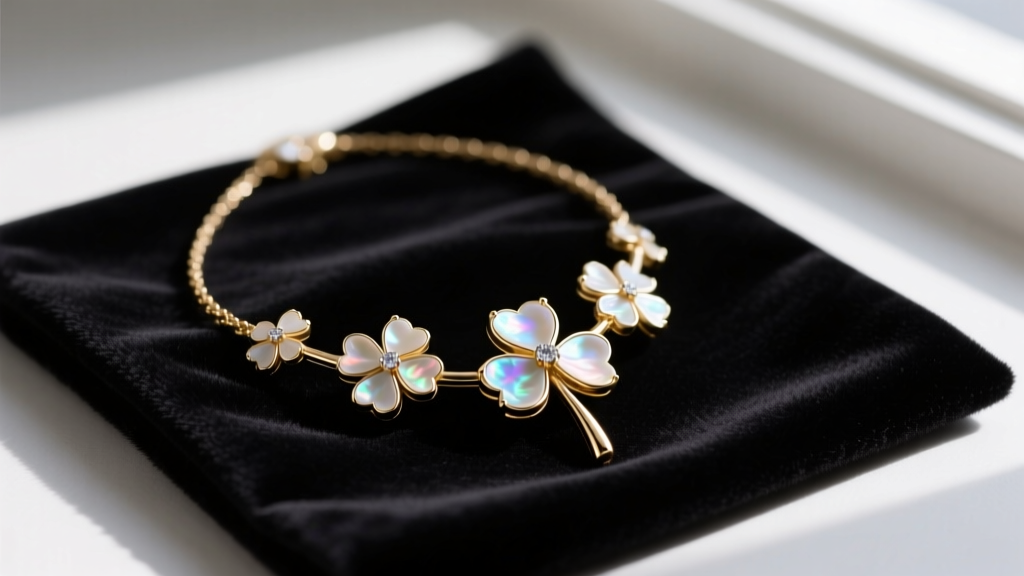
The Anatomy of a White Gold Clover Necklace
Owning a luxury white gold clover necklace is an investment in both craftsmanship and timeless design. However, maintaining its brilliant luster requires a nuanced understanding of its metallurgy and gemology. Unlike solid platinum, white gold is an alloy. In 18k white gold, 75% of the metal is pure yellow gold, mixed with white alloys like palladium, nickel, or silver. To achieve that iconic, mirror-like silvery finish, the piece is electroplated with a microscopic layer of rhodium, typically measuring between 0.75 and 1.0 microns thick.
The complexity of care multiplies when you factor in the signature clover motif. Whether your necklace features organic inlays like mother-of-pearl, hardstones like onyx and malachite, or intricate diamond pavé, each material reacts differently to environmental factors, chemicals, and cleaning agents. A one-size-fits-all approach to jewelry cleaning will inevitably lead to ruined inlays or stripped plating. According to the Gemological Institute of America (GIA), organic gems require drastically different care protocols than crystalline structures, making targeted maintenance essential.
Daily Wear and Preventative Maintenance
The most effective way to maintain your white gold clover necklace is to minimize its exposure to corrosive elements. The rhodium plating is highly resistant to tarnish but is vulnerable to friction and chemical degradation.
- The 'Last On, First Off' Rule: Always put your necklace on after applying cosmetics, perfumes, and hairsprays. The alcohols and aerosols in these products can create a cloudy film over both the rhodium and the stone inlays.
- Avoid Chlorine and Bromine: Never wear your necklace in swimming pools or hot tubs. Chlorine reacts aggressively with the alloy metals in white gold (especially copper and silver traces), causing microscopic pitting and structural weakening over time.
- Friction Management: The bail (the loop connecting the clover pendant to the chain) and the clasp are the highest-friction areas. Expect rhodium wear to appear here first. Removing the necklace before sleeping prevents the chain from grinding against the pendant and your skin's natural oils from accelerating the plating's breakdown.
Step-by-Step Cleaning Protocols by Inlay Material
Because the clover design relies heavily on contrasting inlays, your cleaning method must be dictated by the stone, not just the metal. Below are the specific protocols for the most common clover necklace materials.
Mother-of-Pearl and Opal (Organic & Porous)
Mother-of-pearl ranks at a mere 2.5 to 3.5 on the Mohs hardness scale, making it exceptionally soft and porous. It is highly sensitive to acids, ammonia, and extreme heat. Never use ultrasonic cleaners (which typically operate at 40 kHz), as the high-frequency vibrations will fracture the nacre layers and loosen the adhesive securing the inlay to the gold bezel.
The Safe Method: Mix one drop of pH-neutral, phosphate-free dish soap into a cup of distilled water. Dampen a lint-free microfiber cloth in the solution, wring it out until it is barely moist, and gently wipe the mother-of-pearl surface. Immediately dry with a separate soft cloth. Do not soak the pendant.
Onyx and Carnelian (Chalcedony Hardstones)
Onyx and carnelian are varieties of chalcedony, ranking around a 7 on the Mohs scale. They are much more durable than organics but are still susceptible to thermal shock. Avoid running the necklace under alternating hot and cold water, which can cause internal stress fractures.
The Safe Method: You can safely submerge onyx and carnelian clover pendants in a lukewarm bath of distilled water and mild surfactant (like baby shampoo) for up to three minutes. Use a soft-bristled baby toothbrush to gently agitate the dirt trapped in the seam where the gold bezel meets the stone. Rinse with lukewarm distilled water and pat dry.
Malachite (Copper Carbonate)
Malachite is a stunning but notoriously fragile stone (Mohs 3.5-4). Because it is a copper carbonate, it will chemically react and dissolve if exposed to acidic solutions, ammonia, or even prolonged contact with human sweat. If your malachite clover loses its polish or develops a dull, chalky white spot, it has suffered acid etching and requires professional lapidary repolishing.
The Safe Method: Wipe malachite only with a dry, untreated jeweler's polishing cloth. If absolutely necessary, use a barely damp cloth with pure distilled water—never tap water, which contains trace minerals and chlorine.
Diamond Pavé Settings
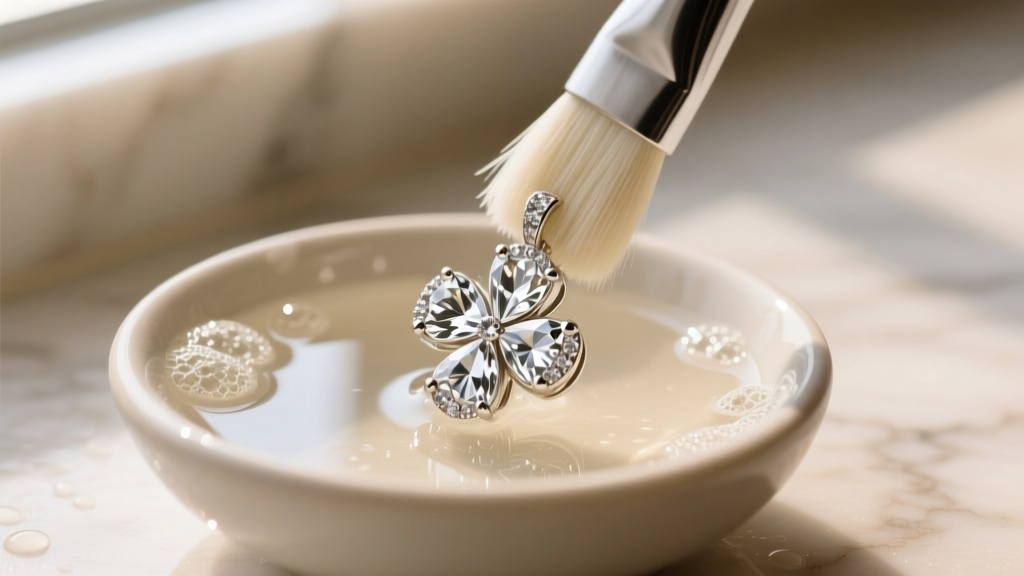
If your white gold clover features diamond pavé, the primary concern is keeping the tiny prongs clear of lotion and sebum buildup, which blocks light return and makes the diamonds look dead. While diamonds are a 10 on the Mohs scale, the white gold prongs holding them are soft. You may use a soft brush and mild soapy water, but avoid harsh scrubbing that could bend a micro-prong and result in a lost stone.
Comparison Chart: Cleaning Agents to Avoid
Many commercial jewelry cleaners are formulated for plain diamond solitaires and will destroy the delicate components of a clover necklace. Refer to this chart before applying any chemical to your piece.
| Cleaning Agent | Effect on White Gold / Rhodium | Effect on Clover Inlays |
|---|---|---|
| Ammonia-based Cleaners | Safe for bare gold; can degrade rhodium over time. | Disastrous. Will dissolve malachite and strip the luster from mother-of-pearl. |
| Ultrasonic Cleaners | Safe for metal, but can loosen worn prongs. | High Risk. Shatters porous stones, cracks onyx, and dissolves epoxy adhesives. |
| Steam Cleaners | Safe for metal. | High Risk. Thermal shock will fracture hardstones and melt inlay adhesives. |
| Baking Soda Paste | Acts as an abrasive; will scratch rhodium plating. | Damaging. Will permanently scratch soft organics like pearl and malachite. |
| Toothpaste | Highly abrasive; strips rhodium instantly. | Disastrous. Leaves deep, irreversible micro-scratches on all inlay types. |
When to Seek Professional Re-Plating and Servicing
Eventually, the rhodium plating on your white gold clover necklace will wear thin, particularly around the clasp, the chain links, and the edges of the pendant. When you notice a pale yellow or grayish hue bleeding through the metal, it is time for a professional rhodium dip.

Before re-plating, a jeweler must lightly polish the piece to remove scratches. Expert Warning: Instruct your jeweler to use a minimal-abrasive approach. Over-polishing white gold removes actual karat gold from the setting, softening the bezels and prongs over the lifespan of the necklace. A professional rhodium re-plating service typically costs between $60 and $120, depending on the complexity of the piece and the thickness of the micron layer applied. For a high-wear item like a necklace, request a 'heavy flash' of at least 1.0 microns to ensure longevity.
Additionally, the Jewelers of America recommends having fine jewelry professionally inspected every 12 months. A bench jeweler will use a loupe to check the integrity of the bezel wires holding the clover inlay and ensure the chain's jump rings are fully soldered and secure.
Storage Solutions to Prevent Micro-Scratches
How you store your white gold clover necklace is just as critical as how you clean it. White gold is prone to micro-scratching when it rubs against other jewelry, and certain environmental factors can accelerate the degradation of the inlays.
- Ditch the PVC: Never store your necklace in soft PVC (polyvinyl chloride) plastic bags. PVC traps moisture and emits trace gases that can tarnish the underlying gold alloy and degrade organic inlays. Always use polyethylene zip-lock bags or acid-free tissue paper.
- Anti-Tarnish Strips: Place a 3M anti-tarnish strip in your jewelry box or storage pouch. These strips absorb airborne sulfur compounds that cause the alloy metals in white gold to oxidize beneath the rhodium plating.
- Isolate the Pendant: Diamonds and hardstones like onyx can easily scratch the rhodium plating on the chain or the pendant's gold borders. Store the clover necklace in its own dedicated, soft-lined compartment, or hang it on a velvet-lined necklace bust to prevent the chain from tangling and kinking.
By respecting the unique material science of your white gold clover necklace and adhering to these targeted care protocols, you will preserve both the structural integrity of the settings and the vibrant contrast of the inlays for generations to come.


