How to Clean and Restore a Sterling Silver Diamond Necklace
Learn how to safely clean, polish, and restore your sterling silver diamond necklace at home with this expert step-by-step guide and material tips.

The Material Science: Why Sterling Silver and Diamonds Need Specific Care
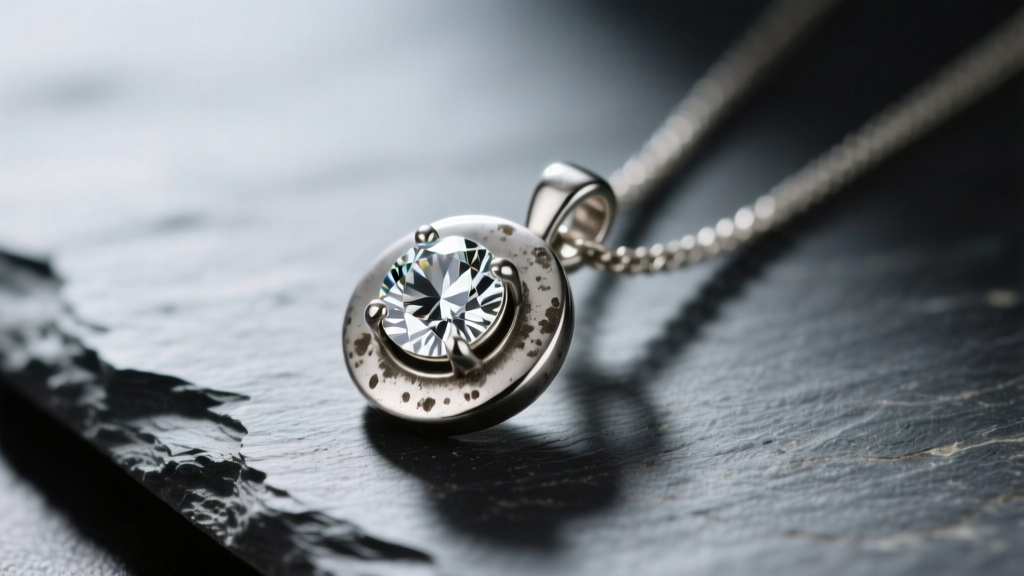
A sterling silver diamond necklace represents a fascinating intersection of metallurgy and gemology. To properly maintain this piece, you must understand the distinct chemical behaviors of its two primary components. Sterling silver is an alloy composed of 92.5% pure silver and 7.5% copper. While pure silver is highly resistant to oxidation, the copper additive is highly reactive to hydrogen sulfide (H2S) in the atmosphere, resulting in silver sulfide (Ag2S)—the blackish tarnish that dulls your jewelry over time.
Diamonds, conversely, do not tarnish, but they are highly lipophilic, meaning they naturally attract and hold onto oils, sebum, and cosmetic residues. According to the Gemological Institute of America (GIA), even a microscopic layer of oil on a diamond's pavilion can reduce its light return (brilliance and fire) by up to 40%. When you combine a tarnishing metal with an oil-attracting gemstone, standard cleaning methods often fall short or, worse, cause irreversible damage to rhodium plating or fracture-filled stones.
Step 1: Pre-Cleaning Inspection and Preparation
Before introducing any moisture or solvents to your necklace, you must verify the structural integrity of the setting. Sterling silver is a relatively soft metal (2.5 to 3 on the Mohs scale), meaning prongs can bend or lift with daily wear.
The Loupe Test
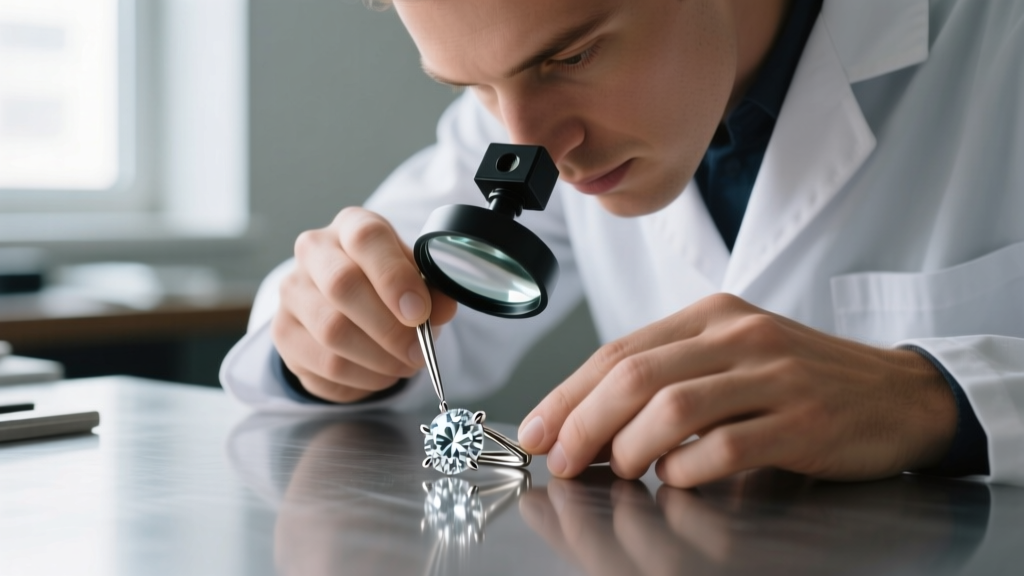
- Magnification: Use a 10x triplet jeweler's loupe to examine the prongs or bezel securing the diamond.
- Check for Lift: Look for gaps between the metal and the diamond's girdle. If a prong is lifted, cleaning the piece could dislodge the stone.
- Inspect the Chain: Run the chain through your fingers to check for kinks, weakened jump rings, or frayed links near the clasp.
If you notice any structural compromises, halt the cleaning process and take the piece to a professional jeweler. If the setting is secure, gather your supplies: a pH-neutral liquid dish soap (like Dawn), distilled water (to prevent mineral spotting), an extra-soft baby toothbrush, and a lint-free microfiber cloth.
Step 2: The Ultrasonic vs. Hand-Wash Decision Matrix
Not all sterling silver diamond necklaces can withstand modern cleaning technology. The decision to use an ultrasonic cleaner depends entirely on the diamond's treatment history and the silver's finishing.
| Cleaning Method | Best For | Avoid If... | Risk Level |
|---|---|---|---|
| Hand-Wash (Recommended) | All sterling silver, rhodium-plated silver, and all diamond types. | N/A (Safest universal method) | Low |
| Ultrasonic Cleaner | Untreated diamonds in heavy, secure prong settings without rhodium plating. | Diamonds are fracture-filled (Yehuda process) or laser-drilled; silver is rhodium-plated. | High |
| Steam Cleaning | Quick degreasing of untreated diamonds in solid, unoxidized settings. | The silver has intentional antiquing/oxidation; stones have surface-reaching fractures. | Medium |
As noted by Jewelers of America, ultrasonic cavitation can easily strip the microscopic layer of rhodium plating often applied to sterling silver to prevent tarnish, leaving you with a patchy, discolored pendant.
Step 3: The 5-Minute Hand-Washing Protocol
For 95% of sterling silver diamond necklaces, the hand-wash protocol is the most effective and safest method to restore brilliance without compromising the metal.
- Mix the Solution: In a small glass bowl, combine one cup of warm distilled water with 1/4 teaspoon of pH-neutral degreasing dish soap. Avoid hot water, as extreme temperature shifts can cause thermal shock to included diamonds.
- Soak: Submerge the necklace completely. Let it soak for exactly 3 to 5 minutes. This allows the surfactants in the soap to break the surface tension of the oils clinging to the diamond's pavilion.
- Agitate Gently: Using the extra-soft baby toothbrush, gently brush the diamond. Focus specifically on the underside (the pavilion and culet), where skin oils and lotions accumulate most heavily. Brush the silver chain using long, sweeping strokes rather than aggressive circular scrubbing, which can induce micro-scratches on high-polish silver.
- Rinse: Rinse the necklace under a gentle stream of lukewarm distilled water. Ensure the drain is securely plugged or use a mesh strainer to prevent catastrophic loss.
Step 4: Drying and Polishing Without Micro-Scratches
Air-drying a sterling silver necklace is a critical error. Even distilled water can leave faint water spots as it evaporates, and lingering moisture in the crevices of the chain links will accelerate copper oxidation.
The Proper Drying Technique
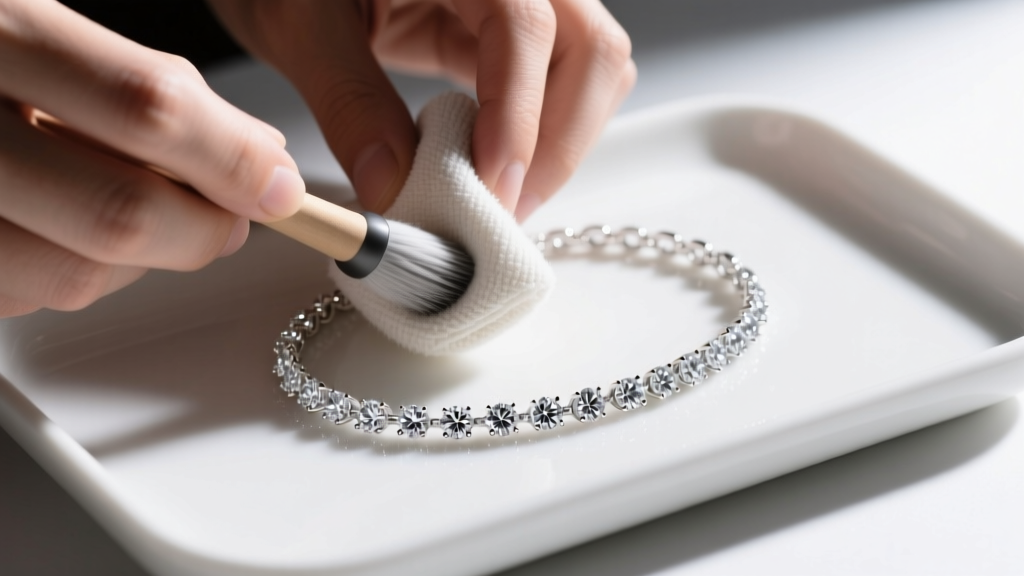
Pat the necklace dry with a clean, lint-free microfiber cloth. Do not use paper towels or tissues; their wood-pulp fibers are abrasive enough to leave microscopic scratches on both the silver and the diamond's polished table. Once the bulk of the moisture is removed, use a dedicated, non-impregnated jeweler's polishing cloth to gently buff the silver links. Avoid the diamond itself with the polishing cloth, as any residual polishing compounds on the fabric can smear the gemstone and reduce its optical clarity.
Step 5: Long-Term Storage and Anti-Tarnish Strategies
Restoring your necklace is only half the battle; preventing future tarnish requires an understanding of environmental controls. Silver sulfide forms when silver reacts with airborne sulfur compounds. To halt this reaction, you must control the storage microclimate.
- Airtight Containment: Store the necklace in a sealed polyethylene (PE) zip-lock bag. Avoid polyvinyl chloride (PVC) plastics, which emit chemicals that actively accelerate silver tarnish.
- Anti-Tarnish Strips: Place a 3M anti-tarnish strip inside the bag. These strips contain copper-based particles that act as a sacrificial anode, absorbing sulfur and halogens before they can reach your silver.
- Silica Gel Packs: Include a small desiccant packet to maintain a low-humidity environment, as moisture acts as a catalyst for the oxidation process.
- Isolation: Never store your sterling silver diamond necklace in a communal jewelry box where it can rub against harder gemstones (like sapphires or rubies) or softer metals (like gold), causing cross-contamination and physical scratching.
Troubleshooting Common Issues
Issue: The Diamond Remains Cloudy After Washing
If your diamond still looks milky or dull after a thorough hand-wash, it likely has a buildup of hardened cosmetics, such as hairspray or waterproof sunscreen. Apply a single drop of isopropyl alcohol (90% or higher) directly to the diamond's table and gently agitate with a soft brush. The alcohol will dissolve the polymeric films that soap cannot break down. Rinse immediately with distilled water.
Issue: Heavy, Blackened Tarnish on the Silver
If the sterling silver has turned completely black, surface polishing will not suffice. While commercial 'silver dips' (thiourea-based chemical baths) can strip heavy tarnish in seconds, they are highly toxic and can permanently etch the surface of the silver if left too long. Furthermore, these dips will strip rhodium plating and can discolor the metal alloy. For heavy tarnish, a professional electrochemical cleaning or a gentle manual polish using a specialized silver polishing foam is the safest route to restore the original luster without compromising the piece's structural integrity.
Expert Insight: If your sterling silver diamond necklace features intentional 'oxidized' or 'antiqued' detailing (darkened crevices designed to highlight the metalwork), avoid all liquid dips and aggressive polishing cloths, as these will strip the deliberate patina and leave the piece looking flat and washed out.


