Cleopatra Style Necklace Materials: Gold vs Brass vs Enamel
Discover the best metals and enamels for a cleopatra style necklace. We compare gold, brass, and copper properties, pricing, and skin reactions.

The Anatomy of an Authentic Cleopatra Style Necklace
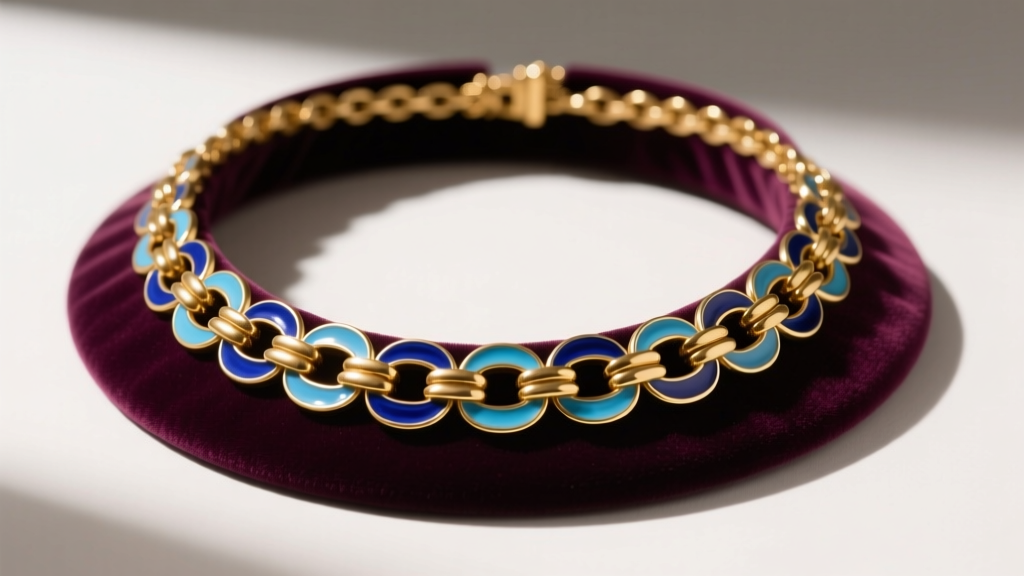
When jewelers and historians refer to a cleopatra style necklace, they are almost exclusively referencing the wesekh—the ancient Egyptian broad collar. Unlike a standard chain that hangs in a U-shape or V-shape, the wesekh is engineered to sit flat against the clavicle and sternum, fanning out across the shoulders in a rigid, multi-rowed crescent. This unique structural demand dictates everything about the piece, from the metallurgical yield strength required for the links to the specific types of clasps needed to support its substantial weight.
In 2026, the market for these statement pieces is divided between historical reproductions, high-fashion luxury interpretations, and artisan-crafted brass alternatives. Choosing the right material is not merely an aesthetic decision; it is a matter of structural engineering, skin chemistry, and long-term wearability. Below, we deconstruct the exact material properties, failure modes, and pricing tiers of the metals and inlays used in modern broad collars.
Material Deep Dive: Precious vs. Base Metals
The base metal of your collar determines its drape, its tensile strength, and how it reacts to the natural acidity of your skin. Because a traditional wesekh requires hundreds of interlocking tubular beads or flat wire links, the metal must be malleable enough to articulate but strong enough to resist stretching under its own weight.
Solid Gold & Vermeil (The Luxury Tier)
For heirloom-quality pieces, 14k and 18k gold remain the standard. However, there is a distinct mechanical difference between the two when applied to a broad collar:
- 18k Gold (75% Pure): Offers the rich, buttery yellow hue that most closely mimics the electrum and high-karat gold of antiquity. However, 18k gold has a lower yield strength. If the collar is constructed with thin, flat wire links, the weight of the piece can cause the links to permanently elongate over time.
- 14k Gold (58.5% Pure): The higher alloy content (usually copper and silver) provides superior tensile strength. For a heavy, multi-row cleopatra style necklace that will be worn frequently, 14k gold is the mechanically superior choice to prevent structural sagging.
- Vermeil (Gold over Sterling Silver): A cost-effective alternative, but sterling silver is notoriously soft. Vermeil collars must be cast with thicker cross-sections to compensate for the silver core's lack of rigidity. Expect to pay between $400 and $1,200 for high-micron vermeil pieces.
Jeweler's Brass & Bronze (The Artisan Tier)
For historically accurate patinas and accessible pricing, artisan jewelers frequently turn to copper alloys. According to metallurgical suppliers like Rio Grande, Jeweler's Brass (often called Merlin's Gold) consists of 85% copper and 15% zinc. This specific ratio yields a warm, golden tone that perfectly replicates ancient Egyptian artifacts without the premium of solid gold.
Bronze (typically 90% copper, 10% tin) is harder and more brittle. While excellent for cast pendants or rigid collar terminals, it is less ideal for the flexible, articulated rows of tubular beads required for a comfortable wesekh. Pricing for solid brass or bronze collars typically ranges from $150 to $450, depending on the complexity of the casting and the artisan's labor.
The Role of Vitreous Enamel and Resin Inlays
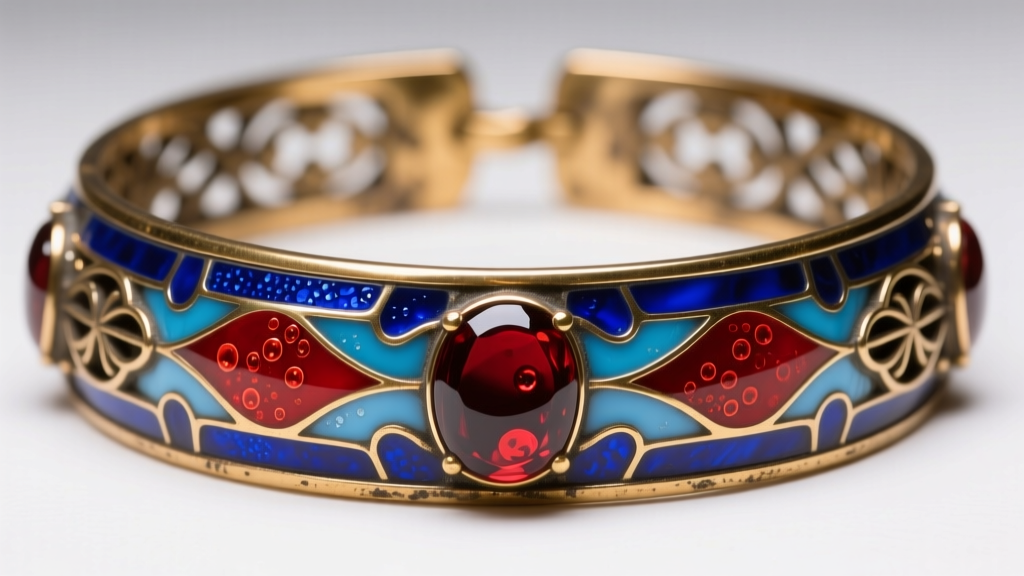
The visual impact of a cleopatra style necklace relies heavily on its color blocking. Historically, these collars utilized lapis lazuli, turquoise, and carnelian. Today, due to the cost and weight of solid gemstones, jewelers rely on advanced inlay techniques to achieve the same regal aesthetic.
Vitreous Enamel vs. Epoxy Resin
The Gemological Institute of America (GIA) notes that vitreous enamel is essentially glass fused to a metal substrate at temperatures exceeding 1400°F. This creates a brilliant, UV-stable, and scratch-resistant surface that will never yellow or cloud. However, vitreous enamel is rigid; if the metal collar bends or twists, the glass inlay will shatter.
Conversely, modern epoxy resins are impact-resistant and flexible, making them ideal for everyday wear. The trade-off is longevity: even high-grade, UV-inhibited resins will eventually yellow or degrade after 5 to 7 years of exposure to sunlight and skin oils. When purchasing, always verify whether the inlay is kiln-fired enamel (heirloom) or cast resin (fashion).
Material Comparison Matrix
Use the following data table to evaluate which material profile best aligns with your budget, wear frequency, and maintenance tolerance.
| Material | Approx. Price Range | Tensile Strength | Tarnish / Oxidation | Best Use Case |
|---|---|---|---|---|
| 14k Solid Gold | $1,500 - $4,500+ | High | None (Requires polishing) | Daily wear, heirloom investment |
| 18k Solid Gold | $3,000 - $8,000+ | Medium | None | Occasional luxury wear, historical accuracy |
| Jeweler's Brass | $150 - $450 | Medium-High | High (Requires e-coating) | Artisan fashion, costume reproduction |
| Sterling Vermeil | $400 - $1,200 | Low-Medium | Medium (Silver core tarnishes) | Lightweight event wear |
| Cast Bronze | $200 - $600 | High (but brittle) | High (Develops patina) | Rigid collar terminals, sculptural pieces |
Skin Chemistry & Hardware Failure Modes
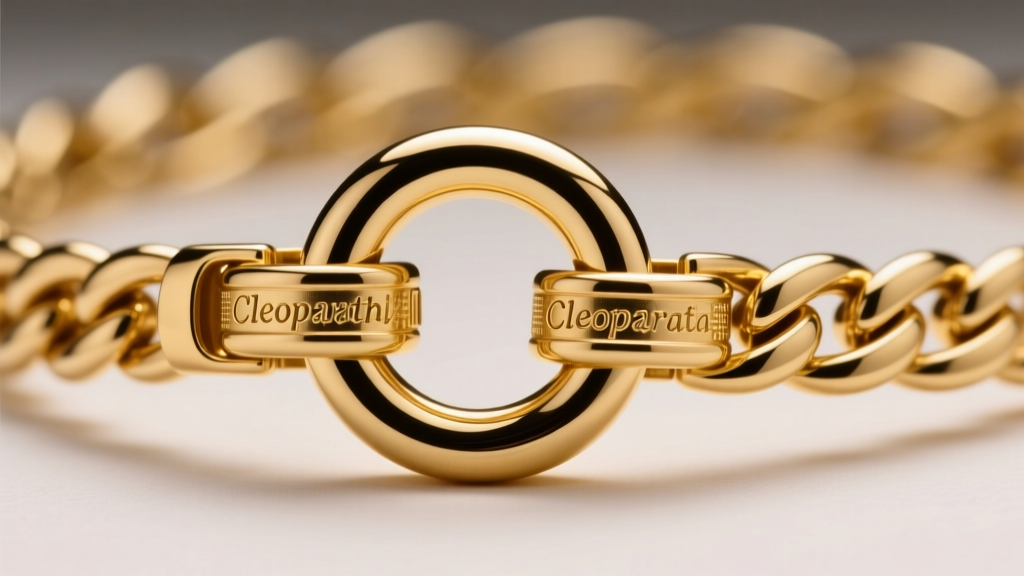
The most common point of failure in a cleopatra style necklace is not the metal itself, but the hardware used to secure it. A fully articulated broad collar weighing between 150 and 350 grams exerts massive shear stress on the clasp.
The Clasp Engineering Problem
Standard 12mm lobster clasps or spring rings are entirely inadequate for this weight. The lever mechanism will eventually deform, leading to a catastrophic drop. For any collar exceeding 100 grams, you must insist on a neodymium magnetic barrel clasp rated for a minimum 15kg (33lb) pull force. Furthermore, because magnetic clasps can slide apart when subjected to lateral twisting, a secondary figure-8 safety chain or a dual-ring interlocking catch is mandatory for security.
Copper Oxidation and the "Green Skin" Effect
Base metals like brass and bronze contain high levels of copper. When copper reacts with the lactic acid, sebum, and salts in human sweat, it produces copper chelates—resulting in the infamous green stain on the skin. This is not an allergic reaction, but a simple chemical oxidation.
To prevent this without sacrificing the use of brass, modern jewelers apply an electrophoretic e-coating (a microscopic, clear ceramic-polymer layer) or treat the metal with Renaissance Wax. When buying a brass wesekh, always ask the artisan if the interior neck-line has been sealed. If not, you will need to reapply a protective barrier wax every few months.
Sourcing and Final Verdict
Historical context is vital when investing in this silhouette. As detailed by the Metropolitan Museum of Art, the original broad collars were not merely jewelry; they were symbols of status, protection, and divine connection, often featuring specific gemstone arrangements meant to invoke deities. When shopping in 2026, seek out jewelers who respect this structural and historical integrity.
The Final Verdict: If you are commissioning a permanent, heirloom-quality piece, invest in 14k gold with vitreous enamel inlays and a heavy-duty magnetic clasp. If you are looking for a visually stunning, historically evocative piece for seasonal wear, a Jeweler's brass collar with e-coating and epoxy resin inlays offers the best balance of aesthetic impact, structural durability, and price.


