Antique Cross Necklace Value Guide: 2026 Pricing & Hallmarks
Discover how to evaluate an antique cross necklace in 2026. Learn pricing tiers, hallmark identification, material grades, and value assessment tips.

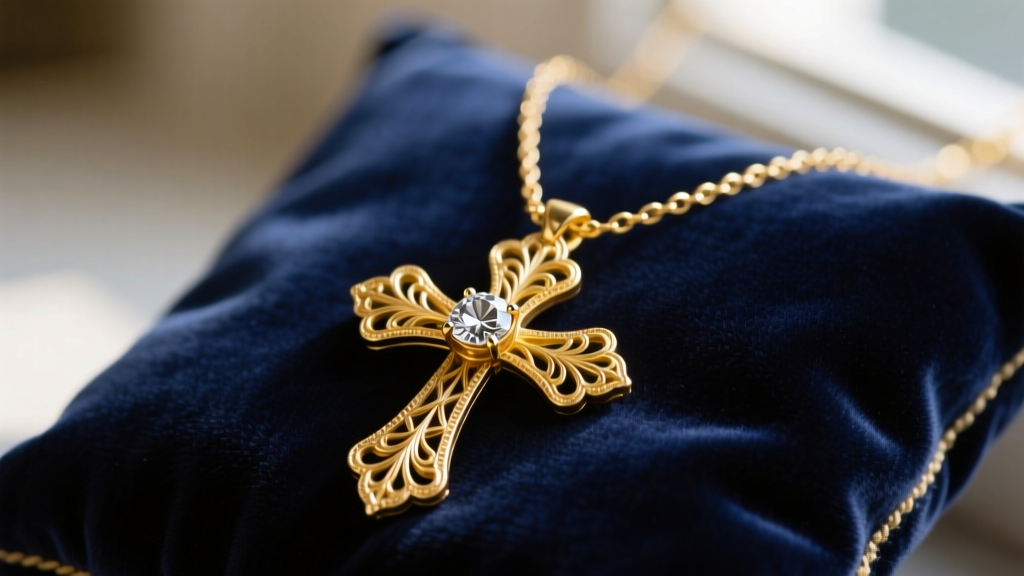
The Allure and Investment Potential of Antique Cross Pendants
When navigating the estate jewelry market, an antique cross necklace represents a unique intersection of historical reverence, artisanal craftsmanship, and tangible asset value. Unlike mass-produced contemporary religious jewelry, true antique pieces—defined as being over 100 years old—carry the distinct metallurgical and design signatures of their respective eras. In 2026, as collectors increasingly pivot toward tangible, historically significant assets, the demand for authenticated Victorian, Edwardian, and Art Deco crosses has surged. However, assessing the true budget and value of these pieces requires moving beyond superficial aesthetics to scrutinize hallmarks, material grades, and structural integrity.
Whether you are a devout collector, a vintage jewelry enthusiast, or an investor looking for wearable assets, understanding the nuanced pricing tiers and authentication markers is critical. This guide provides a deep-dive framework for evaluating an antique cross necklace, ensuring you pay a fair market price while avoiding sophisticated reproductions.
Decoding Eras: Victorian vs. Edwardian vs. Art Deco Crosses
The value of an antique cross pendant is heavily dictated by its era. Each historical period introduced specific metalworking techniques and gemstone cuts that serve as primary authentication markers. According to the Victoria and Albert Museum's jewelry archives, the transition between these eras fundamentally altered how religious motifs were expressed in precious metals.
| Era (Years) | Defining Metal | Motif & Technique | 2026 Entry Price | High-End Auction Value |
|---|---|---|---|---|
| Victorian (1837-1901) | 15k Yellow Gold, Silver, Jet | Cannetille, Repoussé, Rose-Cut Diamonds, Enamel | $400 - $800 | $3,500 - $8,000+ |
| Edwardian (1901-1915) | Platinum, Silver-Topped Gold | Filigree, Millegrain, Old Mine Cuts, Seed Pearls | $600 - $1,200 | $4,000 - $12,000+ |
| Art Deco (1920-1935) | 18k White Gold, Platinum | Geometric, Onyx Inlay, Calibré-Cut Sapphires | $800 - $1,500 | $5,000 - $15,000+ |
Victorian Sentimentalism and Mourning Jewelry
Victorian crosses often feature intricate cannetille (fine wire coiling) and repoussé (hammered relief) work. A highly prized subcategory is the mourning cross, crafted from black enamel, vulcanite, or Whitby jet. Value spikes significantly if the piece features a woven hair compartment on the reverse, provided the original rock crystal cover is uncracked and the seal remains intact.
Edwardian Elegance and the Platinum Revolution
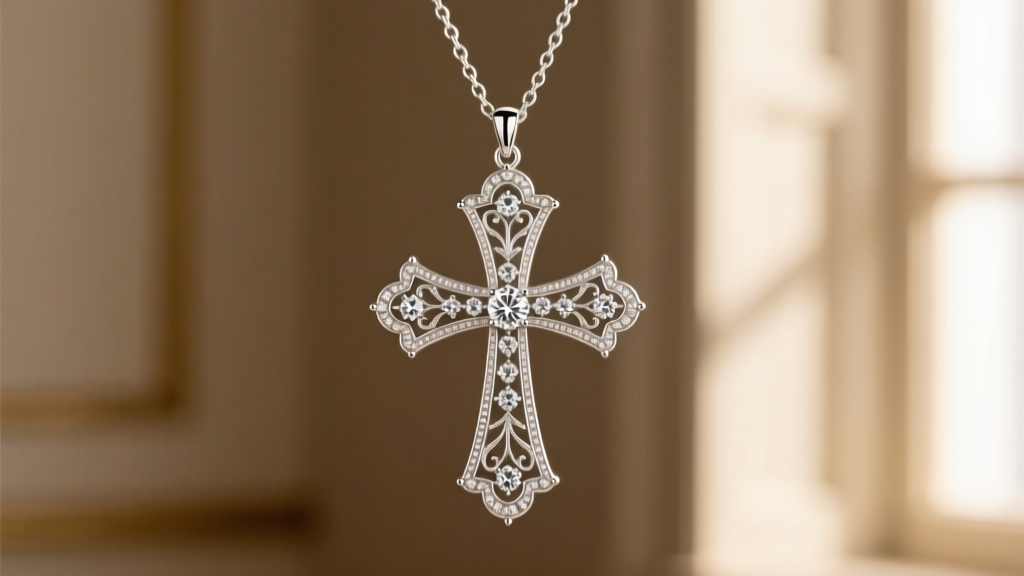
The invention of the oxyacetylene torch allowed Edwardian jewelers to work with platinum, yielding incredibly delicate, lace-like filigree. An authentic Edwardian antique cross necklace will almost always feature millegrain (tiny beaded edges) along the platinum borders. If the piece is silver-topped gold—a common practice before platinum became malleable enough for fine piercing—the silver layer should show microscopic wear, revealing the warm gold beneath.
Art Deco Geometry and Contrast
Art Deco crosses abandoned the flowing curves of the Edwardian era for stark, geometric lines. Look for high-contrast material pairings, such as translucent rock crystal paired with opaque black onyx, or vivid calibré-cut sapphires framing a central old European cut diamond. The precision of the calibré cuts (stones custom-cut to fit seamlessly into a specific channel) is a major value driver; any gaps indicate later replacement stones.
Material Grades and Hallmark Verification
Authentication relies heavily on decoding historical hallmarks. A missing hallmark does not automatically devalue a piece, as many early American and custom-commissioned European pieces were unstamped, but a present hallmark must align perfectly with the era's metallurgical laws.
The 15k Gold Anomaly (UK)
Under the UK Gold Standard Act of 1854, 9k, 12k, and 15k gold were legalized as standard fineness marks. If you find an antique cross necklace stamped "15k" or "15.625", it is a strong indicator of British Victorian or Edwardian origin. Notably, 15k gold was phased out in 1932 and replaced by 14k. Therefore, a 15k stamp is a highly reliable chronological anchor that authenticators at Lang Antique & Estate Jewelry frequently use to verify period accuracy.
Silver Tarnish vs. Authentic Patina
Many buyers mistakenly polish antique silver crosses, inadvertently stripping away the oxidized patina that highlights the piece's dimensional relief work. In the antique market, original, undisturbed patina in the crevices of a repoussé cross can increase the value by 15% to 20%. Look for the French "Minerva Head" (indicating .800 or .950 silver) or the British Lion Passant (.925 sterling). American coin silver (.900) pieces from the mid-19th century often bear only the maker's mark, requiring metallurgical XRF testing for definitive grading.
2026 Market Pricing Tiers for Antique Cross Necklaces
To accurately assess budget and value, we must segment the current market into three distinct tiers based on condition, provenance, and gemstone quality.
- Tier 1: Accessible Antiques ($250 – $800)
These pieces are typically late Victorian or early 20th-century unstamped silver or 9k/10k gold. They may feature synthetic sapphires (common in the 1920s) or exhibit moderate bail wear and minor enamel loss. Excellent for everyday layering without the anxiety of wearing a high-value asset. - Tier 2: Collector Grade ($800 – $3,500)
This bracket includes well-preserved Edwardian platinum filigree crosses with original old mine cut diamonds, or heavy 15k Victorian gold crosses with intact cannetille. Gemstones will be natural, though perhaps lower in modern clarity grades (e.g., SI1-I1), which is historically accurate and expected. - Tier 3: Museum & Investment Grade ($3,500 – $20,000+)
Reserved for masterworks. Examples include Art Deco crosses featuring flawless calibré-cut emeralds, signed pieces by houses like Boucheron or Cartier, or rare Scottish agate and silver pebble crosses from the mid-Victorian era. Provenance and original fitted boxes drastically elevate the price in this tier.
Red Flags and Common Forgery Tactics
As prices for an antique cross necklace have climbed, so has the sophistication of reproductions. Here are the critical failure modes and forgery red flags to inspect before purchasing.
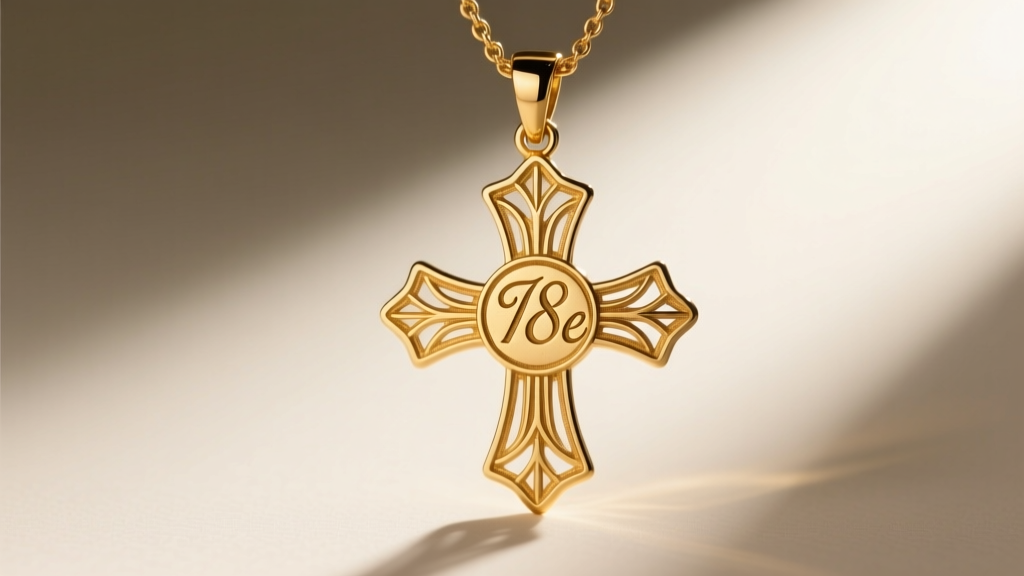
Expert Insight: Always inspect the bail (the loop connecting the pendant to the chain). Antique bails were forged by hand and are often smaller and thinner than modern cast bails. If the bail looks overly thick, perfectly symmetrical, or bears modern laser-welding marks, it has likely been replaced or the entire piece is a modern reproduction.
1. The Foil-Back Trap
Many Georgian and early Victorian crosses feature foil-backed gemstones to enhance brilliance. Unscrupulous sellers may reseal loose foils with modern epoxy. To test, use a UV flashlight; modern adhesives will often fluoresce bright blue or green, whereas historical shellac or natural resins will not. Furthermore, ultrasonic cleaning will instantly destroy a foil-backed stone, turning it cloudy and opaque—a vital care instruction for new owners.
2. Lead Solder Repairs
Inspect the joints where the cross arms meet. Historical repairs were often done with lead-based solder, which appears dull, gray, and slightly bulbous under magnification. While period repairs do not ruin a piece, they must be factored into the price. Modern jewelers use laser welding, which leaves a microscopic, clean seam. A piece advertised as "mint condition" should show no evidence of either.
3. Cast Porosity
True antique crosses were largely fabricated by hand—sawn, pierced, and soldered from sheet metal and wire. If you examine the reverse of the pendant and see a pitted, porous texture or uniform thickness without tool marks, you are likely looking at a modern 3D-printed wax cast reproduction. Hand-fabricated pieces will show microscopic file marks and slight asymmetries that prove human craftsmanship.
Sourcing and Chain Pairing Recommendations
When sourcing an antique cross necklace, prioritize specialized estate dealers who provide high-resolution macro photography and XRF metallurgical reports over generalized online marketplaces. According to gemological education standards outlined by the Gemological Institute of America (GIA), verifying the natural origin of antique diamonds and colored stones is paramount, as synthetic rubies and sapphires entered the market in the late 19th century via the Verneuil process.
Preserving the Bail: Chain Selection
The most common point of failure for an antique cross pendant is the friction wear caused by modern, heavy chains. To preserve the integrity of a 100-year-old bail, avoid modern box chains or thick rope chains. Instead, pair your antique cross with a 1.0mm to 1.5mm platinum or 18k gold cable chain. The smooth, rounded links of a fine cable chain will glide through the bail without acting as a microscopic file, ensuring the pendant survives for another century.
Final Assessment
Evaluating an antique cross necklace requires a synthesis of historical knowledge, metallurgical scrutiny, and market awareness. By focusing on era-specific hallmarks, authenticating hand-fabrication techniques, and understanding the delicate nature of period gemstone settings, you can confidently navigate the 2026 market. Whether you secure a modest Victorian silver piece for daily wear or invest in a masterful Art Deco platinum cross, the true value lies in owning a meticulously preserved fragment of jewelry history.


