Antique Crystal Necklace Value: 2026 Gift & Appraisal Guide
Discover how to determine antique crystal necklace value for gifting. Learn appraisal tips, era identification, and occasion matching for vintage jewels.

The Allure of Gifting Antique Crystal Jewelry
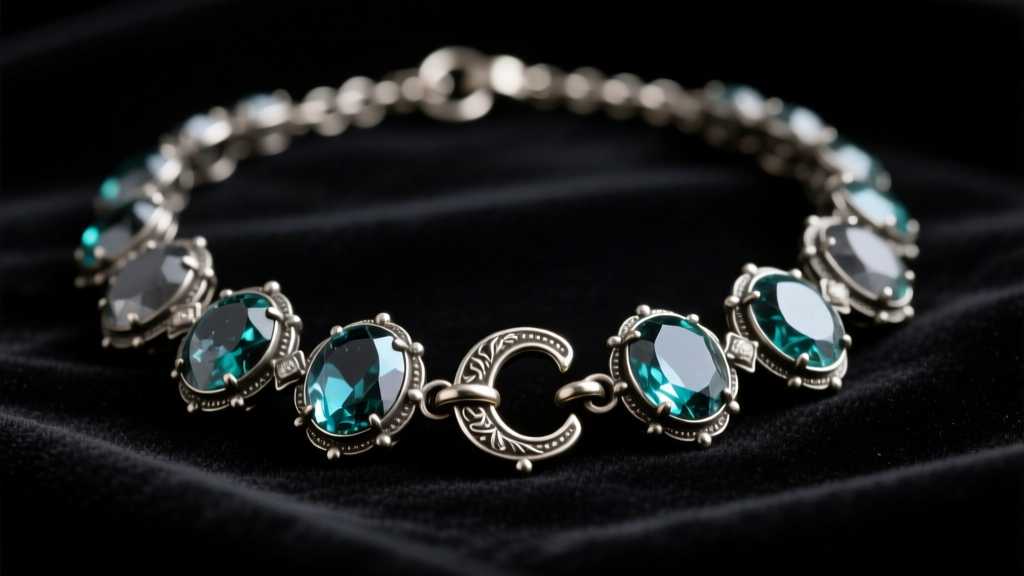
Gifting an antique crystal necklace is more than a simple exchange of accessories; it is the passing of history, craftsmanship, and enduring elegance. As we navigate the jewelry market in 2026, the shift toward sustainable, pre-owned luxury has significantly elevated the antique crystal necklace value, making these pieces both emotionally resonant and financially sound gifts. However, unlike modern diamond or gemstone jewelry, antique crystals—ranging from Georgian paste to Mid-Century Aurora Borealis rhinestones—require a specialized appraisal approach. Understanding the nuances of lead glass, rock crystal, and early synthetic coatings is essential for selecting a piece that matches the gravity of your occasion and holds its intrinsic worth.
This comprehensive guide will decode the valuation metrics of antique crystal necklaces, provide a practical appraisal checklist, and help you match specific historical eras to the perfect gifting occasion.
Decoding Antique Crystal Necklace Value: Eras & Materials
The term "crystal" in antique jewelry rarely refers to pristine, natural quartz. Historically, it encompasses high-lead-content glass (paste), cut steel, and early synthetic rhinestones. The value of these pieces is dictated by their era, manufacturing technique, and survival condition.
Victorian Paste & Foil-Backed Crystals (1830s–1900)
Victorian "paste" is a high-refractive-index lead glass that was meticulously hand-cut to mimic diamonds and precious gems. According to the Lang Antiques University, the true value of a Victorian paste necklace lies in its foil backing. Artisans placed delicate metallic foils behind the glass to amplify light reflection. A genuine 19th-century paste choker with intact foil and a closed-back silver setting commands a premium, often ranging from $600 to $1,500. Look for the "black dot" in the center of the culet—a deliberate painted detail meant to mimic the open culet of an old mine-cut diamond.
Art Deco Rhinestones & Cut Glass (1920s–1930s)
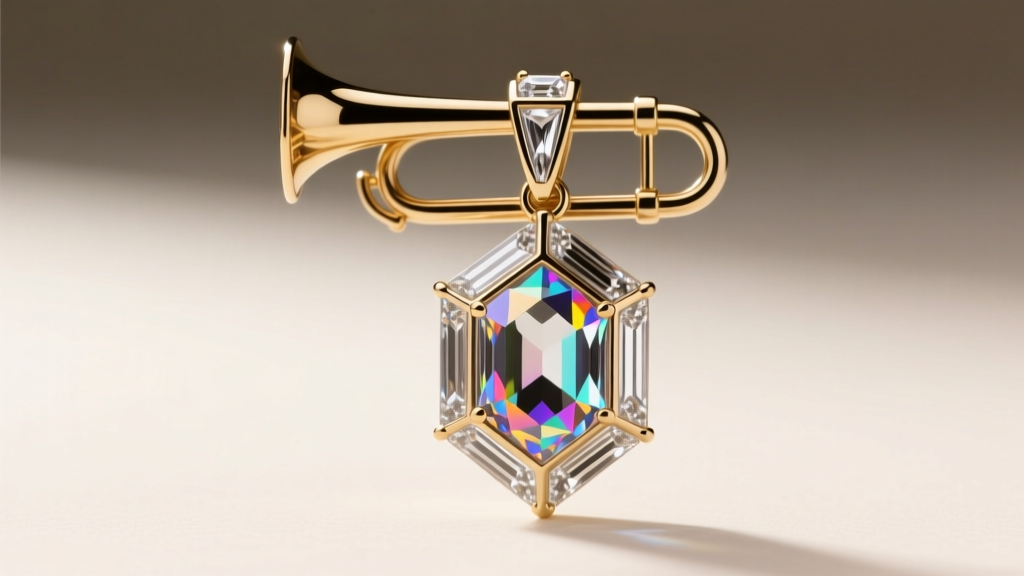
The Art Deco era introduced geometric precision and the widespread use of machine-cut rhinestones. Brands like Trifari and Coro began experimenting with platinum-tone pot metal settings. The antique crystal necklace value from this era spikes when pieces feature complex pavé work, calibré-cut baguette stones, and intact enamel accents. A high-quality Deco bib necklace in excellent condition typically appraises between $350 and $900. The presence of a "trombone" clasp or an early spring-ring clasp is a vital authentication marker for this decade.
Mid-Century Aurora Borealis & Early Swarovski (1950s–1970s)
In 1955, Swarovski collaborated with Christian Dior to introduce the Aurora Borealis (AB) finish, a micro-thin metallic vapor coating that gave crystals an iridescent, rainbow-like flash. While Mid-Century pieces are younger, the antique crystal necklace value for signed, high-end couture pieces (such as those by Dior, Schiaparelli, or early Miriam Haskell) remains robust. Unsigned, mass-produced AB strands usually fetch $40 to $120, whereas documented couture examples can easily exceed $800.
Appraisal Checklist: How to Authenticate and Price
When evaluating a piece for a gift, do not rely solely on the seller's description. Use this structured framework to assess the true market value and authenticity of the necklace.
| Era | Clasp Type | Material / Stone Cut | 2026 Market Value Range |
|---|---|---|---|
| Victorian (1830s-1900) | C-Clasp, Tube Hinge | Hand-cut lead glass, foil-backed, closed-back silver | $600 - $1,500+ |
| Art Deco (1920s-1930s) | Trombone, Early Spring-Ring | Machine-cut rhinestone, pot metal, geometric baguettes | $350 - $900 |
| Retro (1940s-1950s) | Box Clasp w/ Safety Catch | Unfoiled rhinestone, sterling silver, aurora glass | $150 - $450 |
| Mid-Century Couture (1950s+) | Modern Lobster / Fold-Over | AB-coated crystal, signed couture settings | $300 - $1,200 (Signed) |
To verify the material, consult resources like the GIA Gem Encyclopedia. Natural rock crystal (quartz) will feel significantly colder to the touch than lead glass and will exhibit double refraction under a loupe, whereas antique paste glass is singly refractive and may contain tiny, round gas bubbles.
Matching the Antique Crystal Gift to the Occasion
The historical weight of a crystal necklace should align with the milestone you are celebrating. Here is how to match the era to the event:
- Milestone Anniversaries (10th, 25th, 50th): Opt for a Victorian Rivière or Art Deco Lavalier. These pieces feature a continuous line of graduated stones or a striking central pendant, symbolizing endurance and unbroken continuity. The romanticism of the foil-backed glow mirrors the warmth of a long-lasting partnership.
- Graduations & Career Milestones: A sharp, geometric Art Deco collar is the perfect choice. The bold, architectural lines of the 1920s project confidence, ambition, and modernity, making it an empowering gift for a young professional entering a new chapter.
- Birthdays & Holiday Gifting: Mid-Century Aurora Borealis strands offer a playful, vibrant flash of color that feels festive yet deeply nostalgic. They are highly versatile, easily layered over modern silk blouses or winter knitwear.
- Heirloom Passing (Weddings): If you are gifting a piece to a bride on her wedding day, a Georgian or early Victorian festoon necklace provides the regal, old-world glamour that perfectly complements vintage lace and silk wedding gowns.
Critical Failure Modes: What to Avoid When Buying
Even the most beautiful antique crystal necklace will suffer a catastrophic drop in value if it exhibits severe structural or chemical degradation. When inspecting a potential gift, watch out for these specific failure modes:
1. "Dead" Stones and Moisture Damage
The greatest vulnerability of Victorian and Edwardian crystal jewelry is the foil backing. If the necklace has been submerged in water or stored in high humidity, moisture seeps past the glass and oxidizes the metallic foil. This turns the stone gray or black, effectively "killing" its sparkle. A necklace with multiple dead stones loses up to 60% of its market value, as replacing the foil requires complete disassembly by a master jeweler.
2. Verdigris on Base Metal Settings
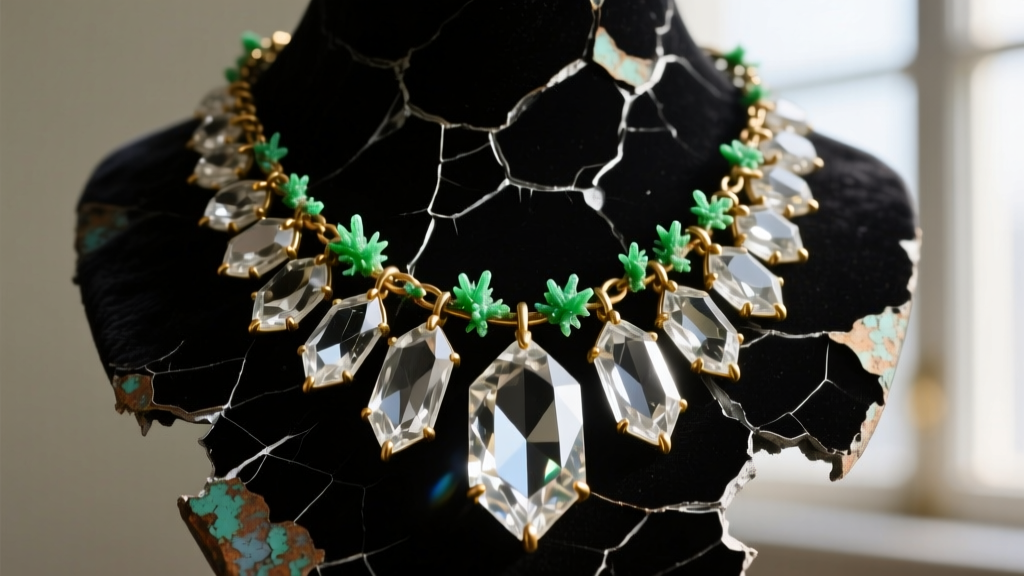
Verdigris is the green, powdery corrosion that forms on copper-heavy alloys like brass and pot metal when exposed to skin acids and moisture. While a tiny amount on the clasp is common and cleanable, deep verdigris that has pitted the metal or crept under the stone prongs compromises the structural integrity of the piece. Avoid necklaces where the prongs are brittle or flaking due to advanced oxidation.
3. Stretched or Fraying Silk Threads
Many antique crystal beads were strung on natural silk. Over a century, silk degrades, stretches, and weakens. If you notice gaps between the beads or a frayed knot near the clasp, the necklace is a breakage risk. Factor in the cost of professional restringing (typically $75 to $150 per strand) when negotiating the purchase price.
Final Thoughts on Gifting History
Evaluating antique crystal necklace value requires a discerning eye and an appreciation for historical manufacturing techniques. By understanding the distinct characteristics of Victorian paste, Art Deco rhinestones, and Mid-Century couture, you can confidently select a piece that is not only a stunning accessory but a tangible artifact of the past. When gifted with an understanding of its unique provenance, an antique crystal necklace transcends mere jewelry, becoming a cherished, wearable heirloom for generations to come.


