A Technical Metal and Sizing Guide for Guys with Necklace Chains
Discover the metallurgy, wire gauges, and clasp mechanics behind durable men's chains. An expert technical guide for guys with necklace pendants.

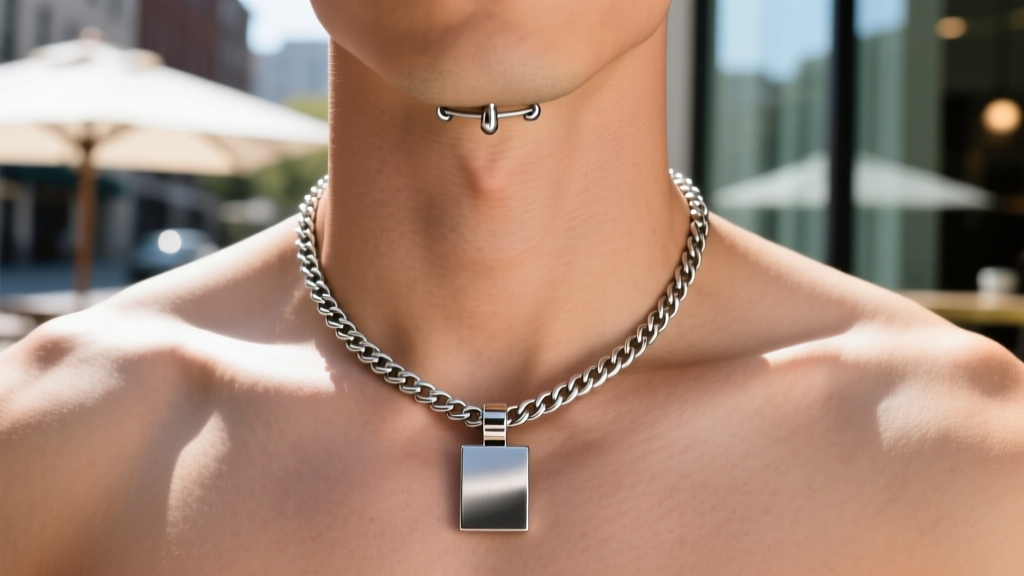
The Engineering Behind Men's Neckwear
When evaluating jewelry for men, aesthetics often overshadow structural engineering. However, for guys with necklace chains that endure daily wear, physical activity, and environmental exposure, understanding metallurgy and tensile mechanics is non-negotiable. A chain is only as reliable as its weakest soldered link, its alloy composition, and its clasp spring tension. This guide bypasses superficial style advice to deliver a technical deep dive into wire gauges, metal hardness scales, and failure modes in modern men's neckwear.
Metallurgy and Material Grades: What Actually Lasts?
The longevity of a chain is dictated by its Vickers hardness (HV) and its resistance to galvanic corrosion. According to the Gemological Institute of America (GIA), pure 24k gold (HV 25) is entirely unsuitable for structural chains due to its malleability. It will stretch and deform under the weight of a pendant within weeks. Therefore, alloying is critical.
Gold Alloys and Tensile Strength
- 14k Gold (58.5% Au): With an HV of roughly 135-150 depending on the copper-to-silver ratio, 14k gold offers the optimal balance of tarnish resistance and tensile strength for heavy chains.
- 18k Gold (75% Au): Softer (HV 110-125) and more prone to micro-abrasions. Best reserved for lighter, solid-cast link geometries rather than drawn-wire chains.
Steel and Silver Alternatives
For industrial durability, 316L surgical stainless steel is the benchmark. Unlike 304 stainless steel, 316L contains 2-3% molybdenum, which drastically increases resistance to chlorides (sweat and saltwater). Sterling silver (925), while classic, contains 7.5% copper. As noted by the GIA's silver guidelines, this copper content makes it highly susceptible to oxidation, requiring frequent chemical polishing that slowly degrades the chain's overall mass over time.
| Material | Vickers Hardness (HV) | Corrosion Resistance | Best Use Case |
|---|---|---|---|
| 14k Yellow Gold | 135 - 150 | High | Heavy pendants, daily wear |
| 18k Yellow Gold | 110 - 125 | Very High | Lightweight, solid cast links |
| 316L Stainless Steel | 150 - 190 | Extreme | Active lifestyles, thick gauges |
| 925 Sterling Silver | 60 - 75 | Low (Tarnishes) | Occasional wear, vintage styles |
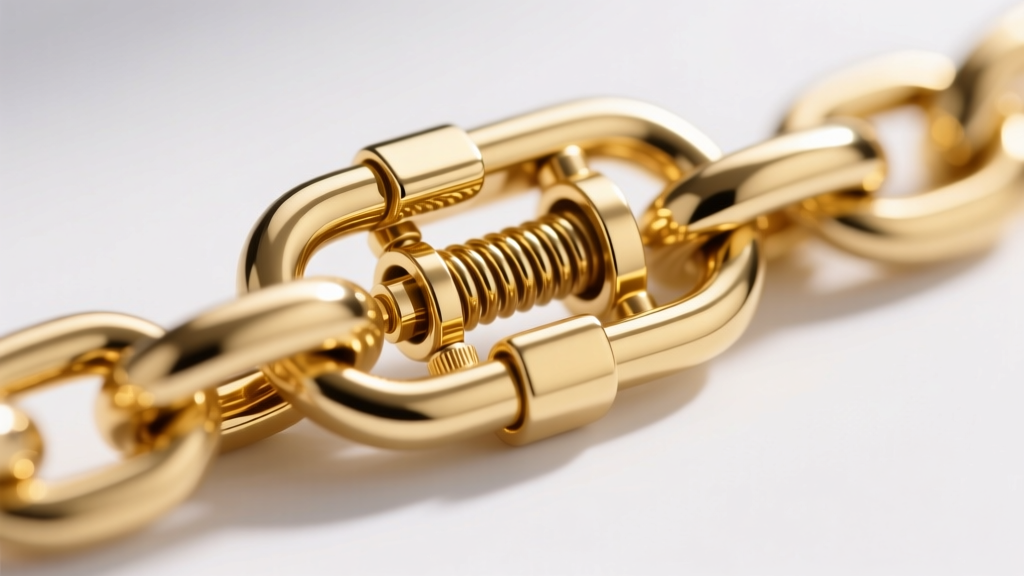
Wire Gauge, Link Geometry, and Tensile Failure
The term 'gauge' refers to the thickness of the wire used to form the links. In men's jewelry, relying on millimeter width alone is a common mistake; a 10mm wide chain made from 22-gauge (0.64mm) hollow wire will snap under minimal torque. You must evaluate the actual wire gauge.
The Gauge-to-Weight Ratio
For guys with necklace pendants weighing over 15 grams, the chain wire must be at least 14-gauge (1.63mm). Thinner wires experience 'necking'—a localized reduction in cross-sectional area that precedes a catastrophic snap when subjected to sudden kinetic loads (e.g., the chain getting caught on clothing).
- 18-Gauge (1.02mm): Maximum pendant weight: 5-8 grams. High risk of deformation.
- 16-Gauge (1.29mm): Maximum pendant weight: 10-15 grams. Moderate durability.
- 14-Gauge (1.63mm): Maximum pendant weight: 20-30 grams. Excellent structural integrity.
- 10-Gauge (2.59mm): Maximum pendant weight: 50+ grams. Industrial strength.
Link Geometry Weak Points
Not all links distribute stress equally. Box chains are notorious for structural failure in men's neckwear. The right-angle folds required to create the box shape act as stress concentrators; when pulled, the corners bear the brunt of the kinetic energy, leading to micro-fractures. Conversely, Cuban and Curb links lay flat, distributing tensile stress evenly across the interlocking lateral surfaces of the wire, making them vastly superior for heavy daily wear.
Clasp Mechanics and Failure Modes
The clasp is the most frequent point of failure on any necklace. Understanding the mechanical limitations of different clasp types is essential for securing valuable pendants.
Lobster Claws vs. Box Clasps
The standard lobster claw relies on an internal steel spring. Over time, sweat and environmental moisture can corrode this spring, or the lever arm can bend outward, reducing the closing tension. For heavy chains, always opt for a solid-cast lobster clasp with a laser-welded lever arm rather than a stamped sheet-metal version.
Box clasps, often found on high-end tennis or Cuban chains, use a folded metal 'tongue' that compresses to enter a housing and expands to lock. The failure mode here is metal fatigue. Repeated compression and expansion of the tongue eventually causes it to lose its outward spring tension, resulting in the chain unfastening without warning. To mitigate this, premium box clasps include a secondary figure-eight safety wire.
A chain is only as secure as its secondary safety mechanism. Never trust a single-stage box clasp on a pendant exceeding 20 grams without a reinforced safety wire.
The Pendant-to-Chain Weight Ratio
A critical error in men's styling is pairing a massive, dense pendant with an under-engineered chain. The golden rule in jewelry manufacturing is the 1:4 weight ratio. The chain should weigh at least four times as much as the pendant it supports. This ensures that the pendant's kinetic swing does not generate enough centrifugal force to warp the individual links at the bail (the loop connecting the pendant to the chain). If the bail is constantly dragging against a lightweight chain, it will act like a saw, slowly cutting through the wire via friction abrasion.
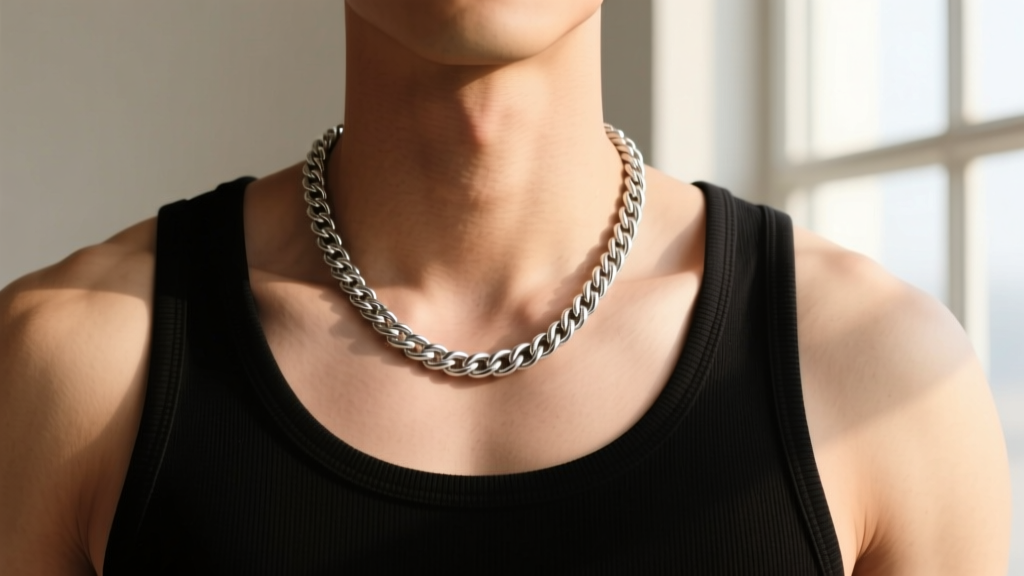
Anatomical Sizing and Drop Measurements
Men's neck circumferences and sternum lengths vary significantly, making standard sizing highly subjective. A technical approach requires measuring the 'drop'—the distance from the nape of the neck to the desired resting point on the chest.
Standard Lengths and Sternal Placement
- 18 Inches (Collarbone): Sits tightly at the base of the neck. Only suitable for lightweight, 18-gauge or thinner chains. Restricts movement and is prone to snapping if pulled.
- 20 Inches (Clavicle/Upper Chest): The industry standard for men. Rests just below the collarbone, allowing the chain to move freely without catching on the jawline or collar.
- 22 Inches (Upper Sternum): Ideal for medium-to-heavy pendants. The extra length provides a wider arc, reducing the acute angle of tension on the back links when the pendant swings.
- 24+ Inches (Mid-Sternum): Reserved for statement pieces and heavy 10-gauge to 8-gauge chains. The longer drop minimizes friction against chest hair and clothing, preserving the chain's polished finish.
Ultimately, selecting the right hardware requires looking past the visual appeal of the metal and scrutinizing the gauge, alloy composition, and mechanical linkages. By applying these technical parameters, you ensure that the jewelry not only looks commanding but survives the physical demands of daily life.


