Troubleshooting a Tarnished Pearl and Starfish Necklace
Learn how to clean, repair, and restring a pearl and starfish necklace. Expert tips on removing tarnish without damaging delicate nacre.

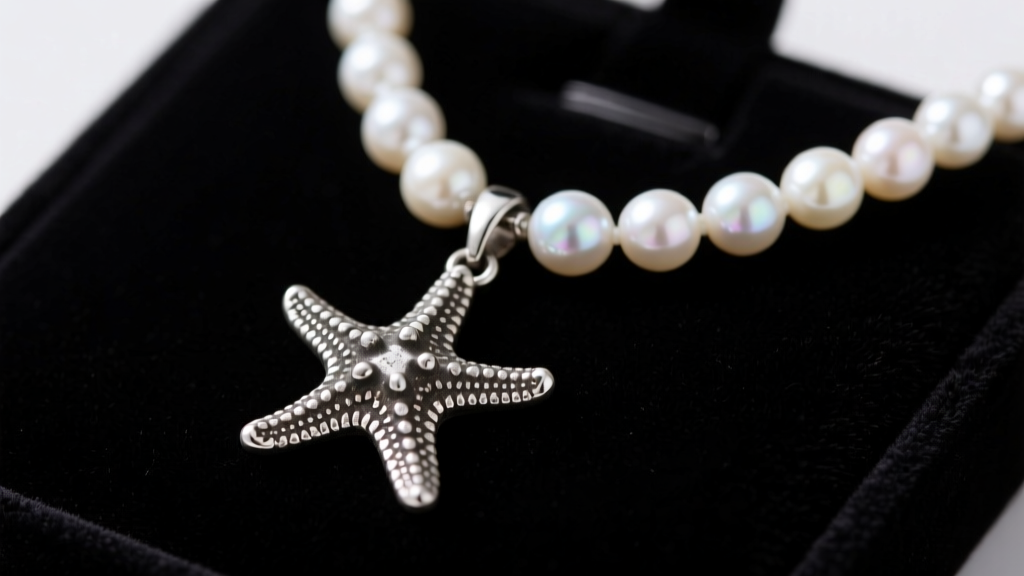
The pearl and starfish necklace remains a definitive staple of coastal-core jewelry, blending organic elegance with nautical whimsy. However, as we navigate the jewelry care landscape in 2026, jewelers and collectors alike are increasingly frustrated by the inherent structural and chemical conflicts in this specific design. Pairing porous, delicate calcium carbonate (pearls) with oxidizing metals (sterling silver or brass starfish charms) creates a maintenance nightmare. If you are dealing with a blackened starfish pendant, stretched threading, or a failing clasp, this comprehensive troubleshooting guide will help you restore your piece to its original glory without causing irreversible damage to the nacre.
The Inherent Material Conflict in Coastal Jewelry
To effectively troubleshoot a pearl and starfish necklace, you must first understand why it fails. The primary issue is a severe conflict in material care requirements. According to the Gemological Institute of America (GIA), pearls rank at a mere 2.5 on the Mohs hardness scale and are highly sensitive to acids, alkalines, and harsh chemicals. Conversely, the silver or brass used for starfish charms naturally oxidizes, forming silver sulfide (tarnish) when exposed to sulfur in the air and skin oils.
The problem arises during cleaning. Commercial silver dips and ultrasonic cleaners—which instantly remove tarnish from metal starfish charms—will permanently etch, dull, and destroy the nacre of adjacent pearls. Furthermore, the physical weight of a solid metal starfish charm (often weighing between 8 to 14 grams) creates a localized point-load stress on the necklace's threading, leading to premature stretching and fraying directly above the bail.
How to Safely Remove Tarnish from the Starfish Charm
Never submerge a pearl and starfish necklace in any liquid cleaning solution. Instead, you must isolate the metal components and clean them using a localized, dry, or micro-damp approach.
The Micro-Swab Technique for Heavy Tarnish
If your silver starfish pendant has developed heavy, blackened tarnish, you need a targeted chemical reduction method that protects the pearls.
- Step 1: Lay the necklace flat on a microfiber cloth. Use painter's tape to gently mask off the pearls immediately adjacent to the starfish charm, leaving only the metal exposed.
- Step 2: Apply a pea-sized amount of a non-ammonia silver polish (such as Goddard's Silver Polish) to a cotton micro-swab, not a standard cotton ball which can leave fibers caught in the charm's crevices.
- Step 3: Gently rub the swab into the starfish's grooves. The sulfur will transfer to the cotton, turning it black.
- Step 4: Use a clean, dry swab to buff the metal to a high shine, then immediately remove the painter's tape.
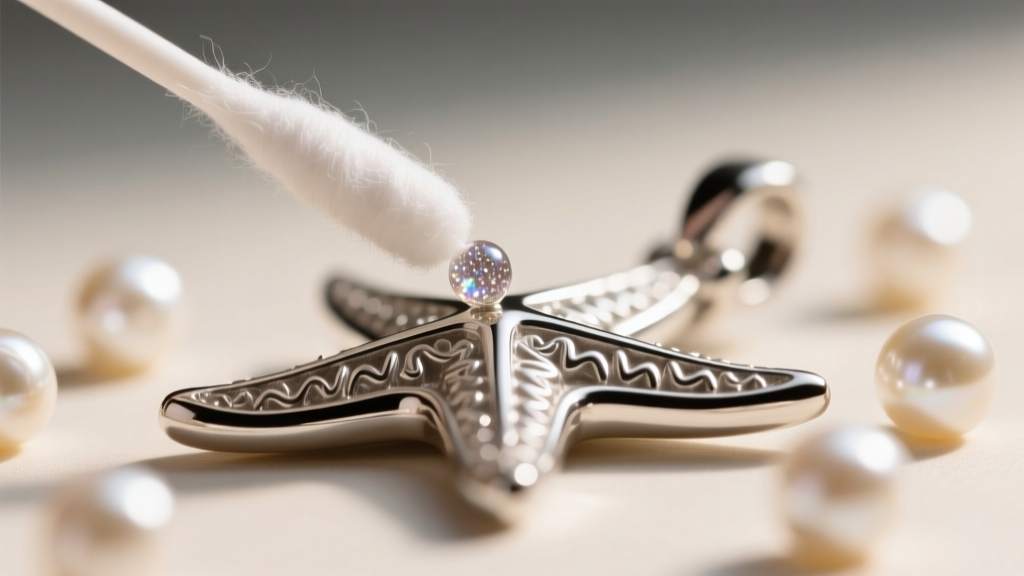
Pro-Tip: For light, yellowish tarnish, skip the polish entirely. Use a specialized treated silver polishing cloth (like a Sunshine Cloth) cut into small 1-inch squares. This allows you to pinch the starfish charm and polish it without the cloth accidentally brushing against the pearls.
Fixing Thread Stretch and Pendant Imbalance
A common failure point in a pearl and starfish necklace is the stretching of the thread directly above the pendant. Traditional silk thread (Size F or G) is the gold standard for knotting pearls, but it lacks the tensile strength to support a heavy, swinging metal starfish charm over time. The friction of the metal bail against the silk eventually cuts the fibers.
According to master stringing techniques documented by Fire Mountain Gems, hybrid stringing is the professional solution for heavy pendants.
| Thread Material | Best Use Case | Tensile Strength | Drawbacks |
|---|---|---|---|
| Griffin Silk (Size F) | Lightweight pearls (under 6mm) | Low (approx. 4 lbs) | Stretches when wet; cuts easily on metal bails |
| Power Pro Braided (20lb) | Heavy starfish pendants & large pearls | High (20 lbs test) | Difficult to knot; requires a bead tip or French wire |
| Soft Flex Wire (0.019") | Uncut, continuous necklace designs | Very High (approx. 30 lbs) | Cannot be knotted between pearls; requires crimps |
The Hybrid Restringing Solution
If your necklace requires restringing, do not use silk for the entire strand. String the main body of the pearls on Size F silk with traditional overhand knots. However, for the final three inches leading to the clasp and the drop-loop holding the starfish charm, transition to a 20lb test gel-spun polyethylene thread (like Power Pro). This hybrid approach maintains the beautiful drape and knotting of silk while providing industrial-grade support exactly where the starfish charm exerts the most mechanical stress.
Upgrading the Hardware: Jump Rings and Clasps
The starfish charm is typically attached to the necklace via a jump ring. If you find your charm has fallen off, or the jump ring has pulled apart, the issue is almost always inadequate wire gauge.
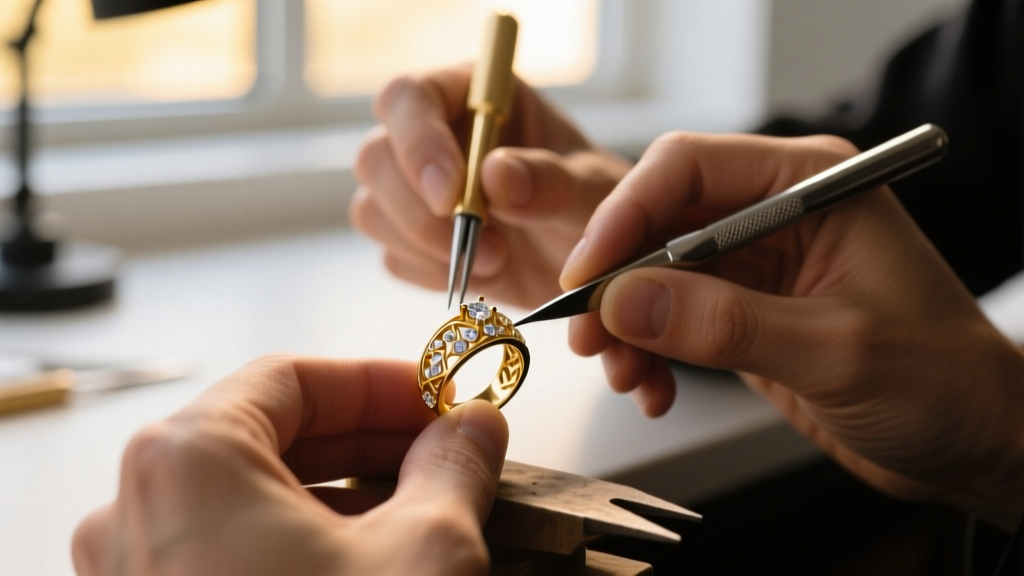
Many mass-produced pearl and starfish necklace designs use 20-gauge (0.81mm) open jump rings to save on manufacturing costs. A 20-gauge jump ring will easily pull open under the pendulum-like swinging motion of a 10-gram starfish charm.
Jeweler's Diagnostic Rule: Any metal pendant exceeding 5 grams must be suspended from an 18-gauge (1.02mm) or 16-gauge (1.29mm) jump ring. Furthermore, the jump ring should be soldered closed or feature a locking mechanism to prevent lateral pull-apart failures.
The Fix: Take your necklace to a local bench jeweler and ask them to replace the standard open jump ring with a 4mm or 5mm outer-diameter (OD) soldered jump ring. The cost for this minor hardware upgrade is typically between $15 and $25, but it will permanently eliminate the risk of losing your starfish pendant.
Proper Storage to Prevent Future Oxidation
Once you have cleaned the starfish and reinforced the hardware, proper storage is critical to prevent the tarnish from returning. The goal is to neutralize the ambient sulfur and humidity without trapping moisture against the pearls.
- Use Pacific Silvercloth: Store the necklace in a pouch made of Pacific Silvercloth, which contains embedded silver particles that absorb tarnish-causing gases before they reach your starfish charm.
- Avoid Airtight Plastic with Pearls: While ziplock bags with anti-tarnish strips are great for solid silver jewelry, pearls require a minimal amount of ambient moisture to prevent their nacre from drying out and cracking. Never store your pearl and starfish necklace in a completely sealed, airless plastic environment for months on end.
- The Silica Gel Warning: Do not toss silica gel packets into your jewelry box with pearls. Silica aggressively pulls moisture from the air, which can dehydrate the organic conchiolin matrix inside your pearls, leading to crazing (surface cracking).
Summary Checklist for Necklace Maintenance
Keep this quick-reference checklist handy to ensure your coastal jewelry remains in pristine condition year after year:
- Inspect the Bail: Check the metal loop (bail) on the starfish charm for sharp edges that might be sawing through your thread.
- Test the Jump Ring: Ensure the jump ring is 18-gauge or thicker, and ideally soldered shut.
- Clean Locally: Never use liquid silver dips; use a micro-swab and non-ammonia polish on the metal only.
- Wipe After Wear: Always wipe the pearls with a damp microfiber cloth after wearing to remove skin acids, which accelerate both pearl degradation and metal tarnishing.
By respecting the distinct material properties of both the organic pearls and the metallic starfish charm, you can effectively troubleshoot common failures and ensure your pearl and starfish necklace remains a durable, breathtaking heirloom.


