Expert Guide to Buying a White and Gold Bead Necklace
Discover what to look for when buying a white and gold bead necklace. Expert tips on pearl grades, gold purity, stringing, and clasps.

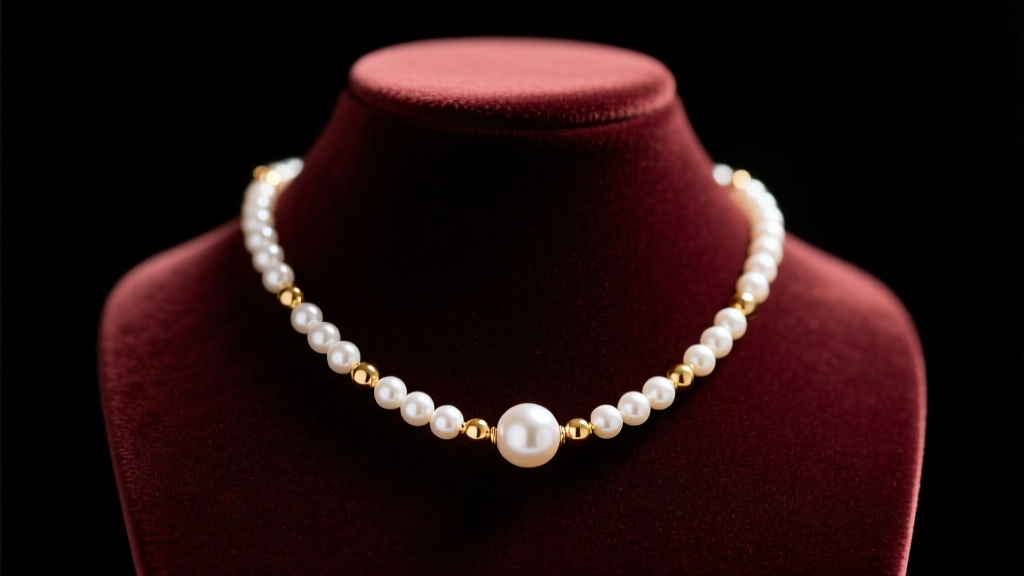
The combination of pristine white beads and warm gold accents creates a timeless aesthetic that bridges the gap between casual daytime wear and elegant evening styling. However, the market is flooded with varying qualities of materials, making it crucial to know exactly what you are paying for. Whether you are looking at vintage estate pieces or contemporary artisan designs, this comprehensive buying guide will help you evaluate the authenticity, durability, and craftsmanship of any white and gold bead necklace you consider adding to your collection.
Decoding the 'White' Beads: Material Matters
The term 'white bead' is a broad umbrella that can encompass everything from organic gemstones to synthetic polymers. The material dictates not only the price but also the necklace's weight, luster, and care requirements.
Freshwater and Saltwater Pearls
For organic white beads, pearls are the gold standard. When evaluating a pearl and gold bead necklace, look beyond simple color. According to the Gemological Institute of America (GIA), you must assess the nacre thickness and luster. For freshwater pearls, seek a minimum nacre thickness of 0.4mm to ensure the bead won't peel or chip with regular wear. 'AAA' graded pearls will exhibit sharp, mirror-like reflections and minimal surface blemishes. Akoya saltwater pearls will command a premium (often $800+ for a standard strand) but offer unmatched, sharp luster compared to the softer glow of freshwater variants.
Mother-of-Pearl and Shell
Carved or polished mother-of-pearl (MOP) beads offer a striking iridescent white finish. While beautiful, MOP is significantly more brittle than nacre-covered pearls. If the necklace features large, carved MOP beads, ensure they are set in protective gold bezels or separated by gold spacer beads to prevent them from clicking against each other and fracturing.

Ceramic, Enamel, and Glass
For a modern, opaque white finish, artisans frequently use high-fired ceramic or enameled metal beads. Ceramic beads are highly scratch-resistant and maintain a uniform matte or glossy white without the organic variations of pearl. When buying glass beads, inspect them under a bright light for mold seam lines, which are indicative of mass production and lower resale value.
The Gold Elements: Solid, Vermeil, or Plated?
The gold beads, spacers, and findings in your necklace represent a major portion of its intrinsic value and longevity. Understanding the Federal Trade Commission's jewelry guidelines regarding gold terminology is essential to avoid overpaying for thin plating.
| Gold Type | Base Metal | Gold Layer Thickness | Average Price (18' Strand) | Durability & Best Use |
|---|---|---|---|---|
| Solid 14k/18k | None (Alloy) | 100% Gold | $600 - $2,500+ | Heirloom quality; safe for water/exposure |
| Gold Vermeil | Sterling Silver | Min. 2.5 Microns | $150 - $400 | Excellent for daily wear; requires dry storage |
| Gold-Filled | Jeweler's Brass | 5% of Total Weight | $80 - $200 | Highly durable; great for spacer beads/wire |
| Gold Plated | Brass or Copper | ~0.5 Microns | $30 - $90 | Fashion jewelry; will tarnish/rub off quickly |
Pro Tip: If a seller advertises a 'white and gold bead necklace' at a $45 price point but claims the gold beads are 'solid,' it is almost certainly gold-plated brass. Always request the exact karat weight and base metal for the gold components.
Stringing, Wire, and Chain Integrity
A necklace is only as strong as the material holding the beads together. The stringing method should match the weight and edge-sharpness of the beads used.
- Silk Thread: The traditional choice for pearls. Look for German-made Griffin silk threads. For 6mm to 8mm beads, a No. 4 or No. 6 silk thickness is ideal. Silk must be knotted between every bead to prevent loss if the strand breaks, and to protect the delicate drill holes of pearls from friction.
- Beading Wire: If the necklace features heavy ceramic or stone beads with sharp drill holes, silk will eventually fray and snap. High-end pieces use 49-strand stainless steel beading wire (such as Soft Flex in 0.019-inch or 0.024-inch diameter) coated in nylon. This provides the drape of thread with the tensile strength of steel.
- Chain Integration: Many modern designs alternate bead clusters with gold chain links. Ensure the chain links are soldered closed. Open jump rings will easily pull apart under the weight of glass or stone beads.
Clasp Mechanics and Security
The clasp is the most frequent point of mechanical failure on any necklace. When evaluating a high-quality white and gold bead necklace, the clasp should be proportionate to the weight of the beads and crafted from the same metal grade as the gold accents.
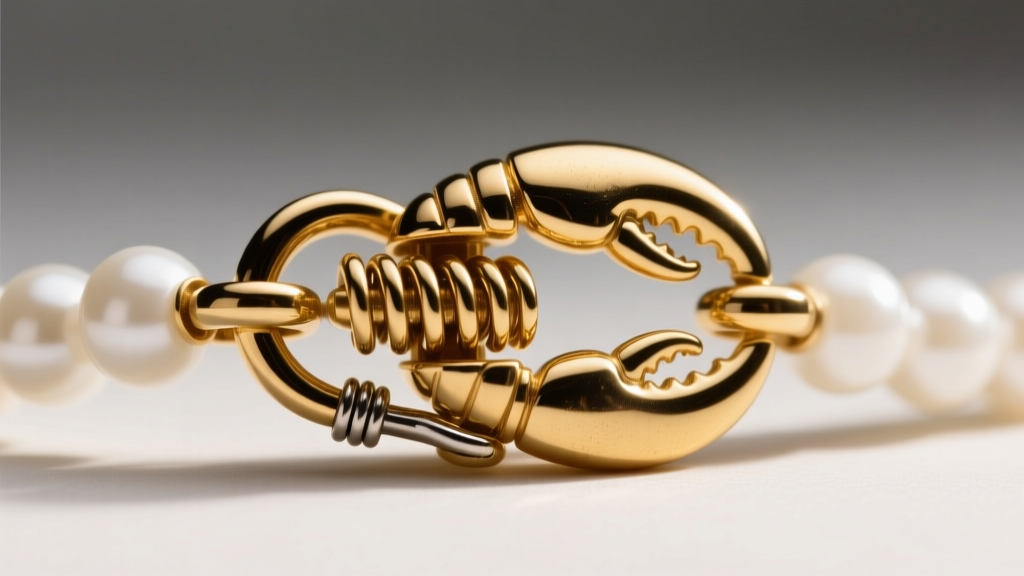
Never accept a standard spring-ring clasp on a heavy bead necklace. The internal spring mechanism in inexpensive spring rings is prone to snapping under the pendulum-like weight of swinging beads. Always opt for a solid-cast lobster clasp or a secure box clasp with a safety figure-eight catch.
For multi-strand pearl and gold necklaces, a gold box clasp with a tongue-and-groove mechanism is mandatory. It distributes the tension evenly across multiple strands and prevents the necklace from twisting or collapsing onto itself.
Sizing, Proportions, and Neckline Pairing
The visual impact of a bead necklace relies heavily on the millimeter size of the beads and the overall length of the strand.
- 4mm - 5mm Beads (Petite): Best worn in multi-strand torsades or as a delicate 16-inch choker. Pairs beautifully with V-necks and open collared blouses.
- 6mm - 8mm Beads (Classic): The industry standard for a single-strand 18-inch Princess length. This sits perfectly on the collarbone and works with almost any neckline, from crewnecks to evening gowns.
- 10mm - 14mm Beads (Statement): Heavy and bold. These require robust stringing (like 0.024-inch wire) and are best kept to a shorter 16-inch length so the weight rests comfortably on the upper chest rather than swinging awkwardly.
Red Flags to Avoid When Shopping
Before finalizing your purchase, inspect the piece (or high-resolution photos) for these common manufacturing flaws:
- Chalky Pearl Drill Holes: If the edges of the drill holes on white pearls look dull, chalky, or jagged, the nacre is too thin, exposing the chalky shell bead nucleus underneath.
- Flaking Gold Spacers: If you see a silver or copper tint peeking through the gold spacer beads, the piece is cheaply electroplated and will continue to degrade.
- Stiff Drape: A beaded necklace should drape fluidly like fabric. If the necklace holds a rigid, circular shape when laid flat, the stringing wire is too thick or the knots are pulled too tight, which will lead to premature wire fatigue and breakage.
By scrutinizing the organic origins of the white beads, verifying the micron thickness of the gold elements, and demanding high-quality stringing mechanics, you can confidently invest in a white and gold bead necklace that will remain a staple in your jewelry wardrobe for decades to come.


