How to Choose a Poison Necklace: Secret Compartment Guide
Discover how to choose the perfect poison necklace. Explore secret compartment mechanisms, safe materials for liquids, and styling tips.

The Evolution of the Poison Necklace
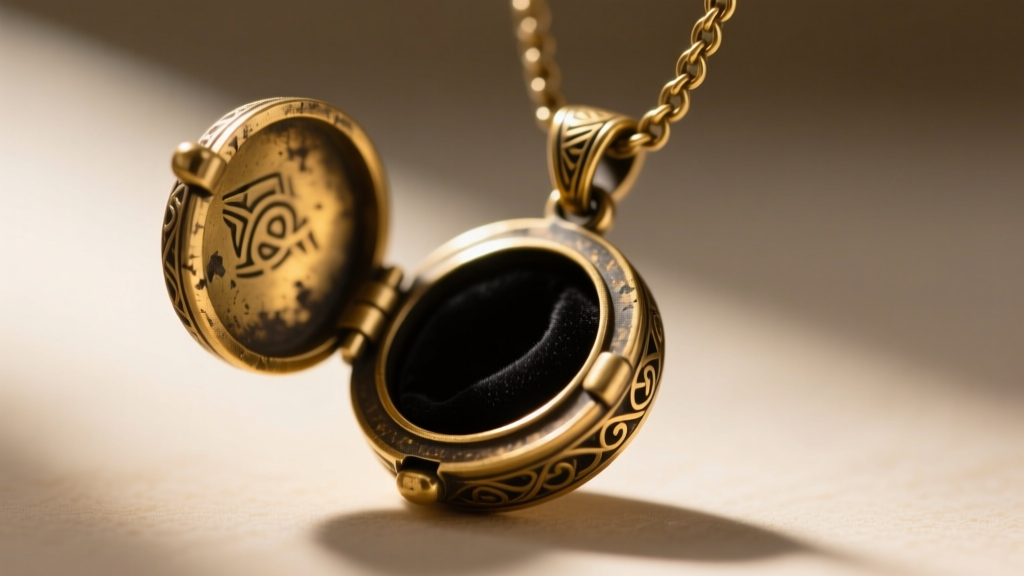
The term 'poison necklace' evokes images of Renaissance intrigue, Renaissance nobility, and clandestine espionage. While historically, poison rings were the preferred vessel for the Borgia family and their contemporaries, the evolution of concealed jewelry eventually migrated to the neck. During the Victorian era, the 'poison' concept morphed into mourning lockets holding locks of hair, and vinaigrettes—small, ornate containers holding sponges soaked in aromatic vinegar or perfume to ward off foul odors. Today, the modern poison necklace has experienced a massive renaissance. In 2026, these secret compartment pendants are highly sought after for carrying essential oils, emergency medication, cremation ashes, and personal mementos. However, buying a functional secret compartment pendant requires a deep understanding of jewelry engineering, metallurgy, and fluid dynamics.
According to the Victoria and Albert Museum's jewellery archives, the transition from functional concealment to sentimental keepsake began in the 17th century, laying the groundwork for the multi-purpose lockets we design today.
Decoding the Compartment Mechanism
The most critical aspect of any poison necklace is its opening mechanism. A flawed mechanism will result in lost ashes, evaporated perfumes, or damaged clothing. When shopping, you will encounter three primary engineering styles:
1. Threaded Screw-Top Vials
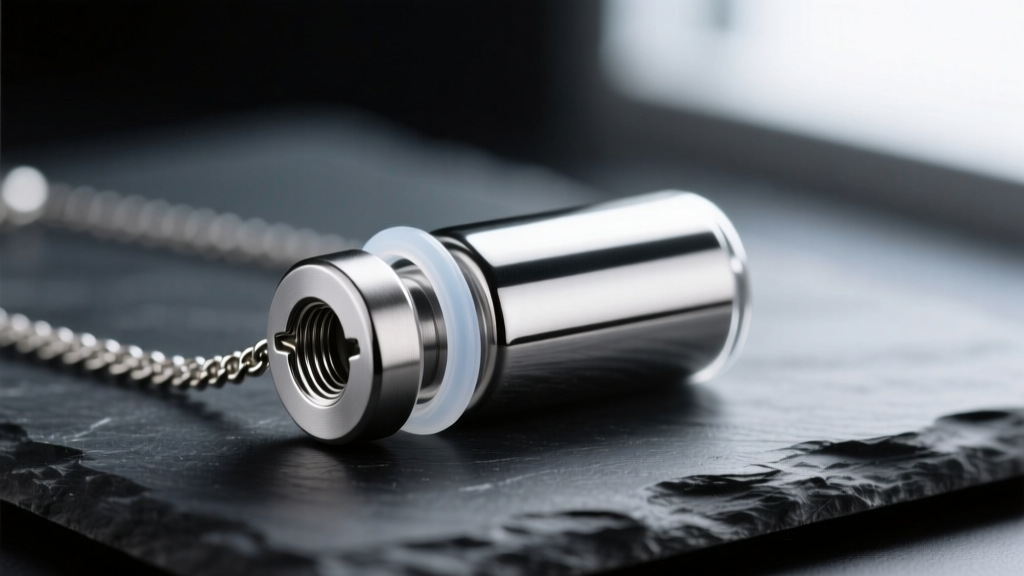
The screw-top is the gold standard for liquid and powder containment. High-quality pieces feature a precision-machined thread pitch (usually 0.5mm to 0.8mm) that ensures a tight seal. For liquids like essential oils, the screw-top must include a food-grade silicone O-ring (typically 40-durometer Shore A) seated in a micro-groove. Without this O-ring, volatile oils will evaporate within days, and capillary action will draw the liquid up the threads, causing leaks against the skin.
2. Hinged Lockets with Friction or Magnetic Clasps
Hinged poison necklaces are traditional and visually striking but are notoriously poor for liquids. They rely on metal-on-metal friction fits or tiny magnetic catches. These are ideal for dry contents: rolled paper notes, cremation ashes (if sealed with a secondary resin barrier), or solid pills. Never put liquids in a standard hinged locket unless it contains a sealed glass insert.
3. Glass Vial in a Metal Cage
This design features a borosilicate glass tube sealed with a cork or metal stopper, encased in a decorative metal cage. Borosilicate is crucial here; standard soda-lime glass is too porous and fragile for daily wear. The stopper must be wrapped in PTFE (Teflon) tape or fitted with a silicone sleeve to prevent the essential oils from degrading the seal over time.
| Mechanism Type | Liquid Safe? | Best Use Case | Maintenance Level |
|---|---|---|---|
| Threaded Screw-Top (with O-ring) | Yes | Essential oils, perfumes, liquid medication | Medium (O-ring replacement every 1-2 years) |
| Hinged Locket (Friction Fit) | No | Ashes, hair, dry herbs, rolled notes | Low (Hinge pin check annually) |
| Glass Vial Cage | Yes | Highly acidic oils, visual liquid displays | High (Stopper resealing required) |
Metallurgy and Chemical Reactivity
What you intend to put inside your poison necklace dictates the metal you must buy. Many consumers make the mistake of purchasing sterling silver (925) pendants for carrying citrus or eucalyptus essential oils. The Gemological Institute of America (GIA) notes that silver is highly reactive to sulfur and certain organic compounds. Limonene, found in citrus oils, will cause sterling silver to oxidize, tarnish, and pit rapidly when exposed to micro-spills or vapor.
Safe Metals for Essential Oils and Liquids
- 316L Surgical Stainless Steel: The absolute best choice for liquid-carrying poison necklaces. It is non-reactive, highly resistant to acidic essential oils, and will not tarnish. Look for 'marine-grade' or 'surgical' stamps.
- Titanium (Grade 2 or 4): Hypoallergenic, incredibly lightweight, and entirely inert. Titanium will not react with any organic compound, making it perfect for medical-grade containment.
- Solid 14k or 18k Gold: While expensive, high-karat gold is largely non-reactive. However, avoid gold-plated or gold-vermeil pieces, as the friction of screwing and unscrewing the cap will wear away the plating, exposing the reactive brass or copper base metal underneath.
Metals to Avoid
Avoid zinc alloys, pewter, and brass for the interior threading of liquid vessels. These porous metals will absorb oils, leading to a permanent, rancid odor that cannot be cleaned out. Furthermore, raw copper interiors can cause skin discoloration and allergic reactions if the pendant leaks against the chest.
Structural Engineering: Chains, Bails, and Weight
A common failure point in secret compartment jewelry is the chain. A solid brass or steel cylindrical poison vial measuring 15mm x 35mm can weigh between 15 and 22 grams when filled. Standard fashion jewelry chains (0.8mm to 1.0mm cable or box chains) have a tensile breaking point of roughly 2 to 4 kilograms, but they suffer from 'link deformation' under constant dynamic stress from a heavy, swinging pendant.
Choosing the Right Chain Gauge
To support a heavy poison necklace pendant safely, you must upgrade your chain specifications:
- Minimum Gauge: 1.5mm to 2.0mm thickness.
- Best Chain Styles: Wheat chains, Rope chains, and Curb chains. These styles feature interlocking or twisted links that distribute the pendant's weight across multiple planes, preventing single-link stress fractures.
- Clasp Selection: Discard the standard spring-ring clasp. The internal spring will fail under the pendulum effect of a heavy vial. Always opt for a sturdy lobster clasp with a soldered jump ring.
- Bail Sizing: Ensure the pendant's bail (the loop the chain passes through) has an inner diameter of at least 4mm x 2mm. Many mass-produced vials have tiny 2mm bails that will not accommodate the heavy-duty chains required to hold them safely.
The 2026 Buyer’s Pre-Purchase Checklist
Before adding a poison necklace to your cart, run it through this rigorous quality assurance checklist:
- The O-Ring Test: If it is a screw-top, does the product description explicitly mention a replaceable silicone O-ring? If not, it will leak.
- Material Verification: Is the interior of the compartment solid 316L steel, titanium, or glass? (Avoid plated interiors).
- Thread Quality: Look for macro photos showing the threads. They should look sharp and uniform, not smoothed over by heavy polishing.
- Weight-to-Chain Ratio: Does the seller provide the pendant's weight in grams? Match it with a chain that is rated for at least triple that weight.
- Opening Tool: Does the pendant require a specialized micro-spanner or coin to open? Pendants that require tools are more secure against accidental opening but less convenient for daily access.
Conclusion
The modern poison necklace is a brilliant intersection of historical romance and practical utility. Whether you are safeguarding a few drops of calming lavender oil for your commute, carrying a vital emergency medication, or keeping a loved one's ashes close to your heart, the right piece of jewelry will protect your secrets flawlessly. By prioritizing precision threading, chemically inert metals like 316L steel, and structurally sound chains, you can invest in a secret compartment pendant that is as durable as it is mysterious.