Summary of The Necklace Guy de Maupassant: 2026 Jewelry Analysis
Explore a summary of The Necklace by Guy de Maupassant through a 2026 jewelry trend lens, analyzing diamond simulants, rivière styles, and value.

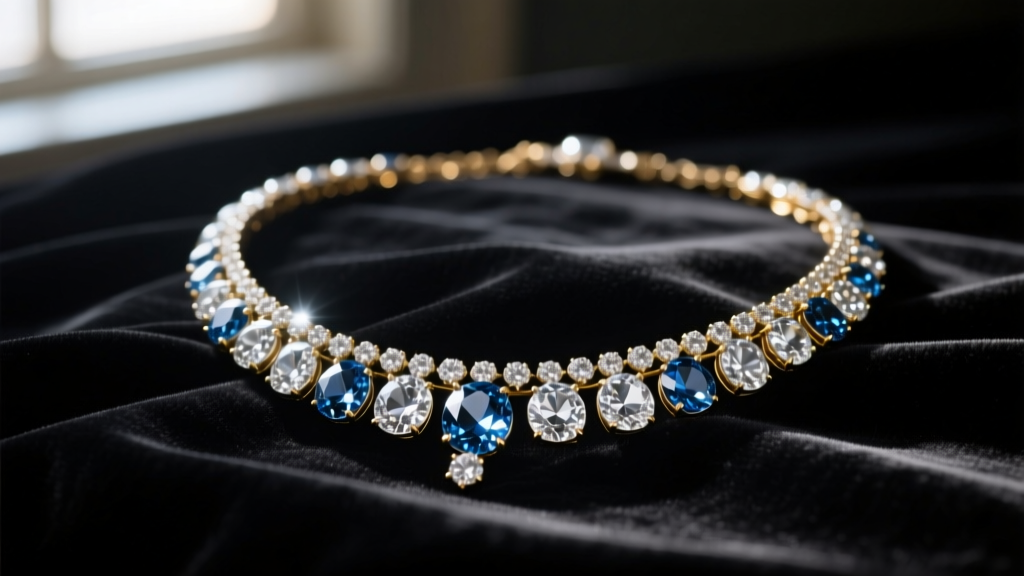
Guy de Maupassant’s 1884 short story La Parure (The Necklace) remains one of the most famous pieces of French literature, but for jewelry historians and gemologists, it is also a masterful case study in material value, status signaling, and the dangerous illusion of precious stones. When readers search for a summary of the necklace guy de maupassant, they are often looking for a simple plot recap. However, viewed through the lens of 2026’s jewelry market—where lab-grown diamonds, advanced simulants, and the 'quiet luxury' movement dominate—the story offers profound insights into how we assign worth to the adornments we wear.
In this style and trend analysis, we will deconstruct the legendary literary necklace, explore the evolution of 'paste' jewelry from the 19th century to modern moissanite and lab-grown carbon, and provide actionable frameworks for modern collectors navigating the fine line between intrinsic material value and perceived social status.
The Literary Summary of The Necklace by Guy de Maupassant
For those needing a brief summary of the necklace guy de maupassant, the plot hinges entirely on a single piece of jewelry. Mathilde Loisel, a woman born into a modest family but yearning for high-society luxury, borrows what she believes to be an exquisite diamond rivière necklace from her wealthy friend, Madame Forestier, to wear to a prestigious gala.
After the ball, Mathilde loses the necklace. Rather than confessing the loss, she and her husband purchase a seemingly identical diamond replacement for 40,000 francs (a crippling sum equivalent to over $100,000 today), plunging themselves into a decade of grueling poverty to pay off the debt. In the story’s iconic twist ending, a hardened, aged Mathilde finally confesses the truth to Madame Forestier, only to learn that the original borrowed piece was 'paste' (costume jewelry) worth at most 500 francs.
"Oh, my poor Mathilde! Mine was paste. It was worth at most five hundred francs!" — Madame Forestier
The 'Mathilde Loisel' Effect: Status Signaling in 2026
Mathilde’s tragic flaw was not her love of jewelry, but her reliance on it as a proxy for personal worth. She assumed that the visual brilliance of the stones equated to financial reality. In 2026, the jewelry industry has completely inverted this paradigm. The rise of the 'demi-fine' category and the mainstream acceptance of lab-grown diamonds have decoupled visual brilliance from exorbitant price tags.
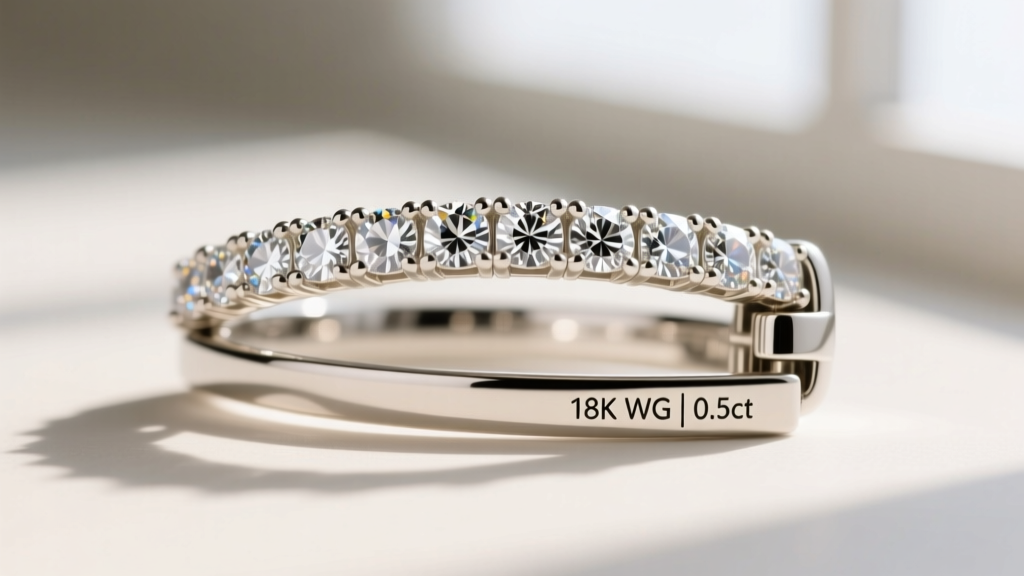
Today’s consumers are highly educated on gemology. According to the Gemological Institute of America (GIA), the market share of lab-grown diamonds in the bridal and fine jewelry sectors has surged, driven by buyers who want the exact optical and chemical properties of mined diamonds without the historical markup. If Mathilde Loisel were shopping in 2026, she could have purchased a visually identical, gemologically pure lab-grown diamond rivière for a fraction of the cost, avoiding her decade of ruin.
Paste vs. Precious: The Evolution of Diamond Simulants
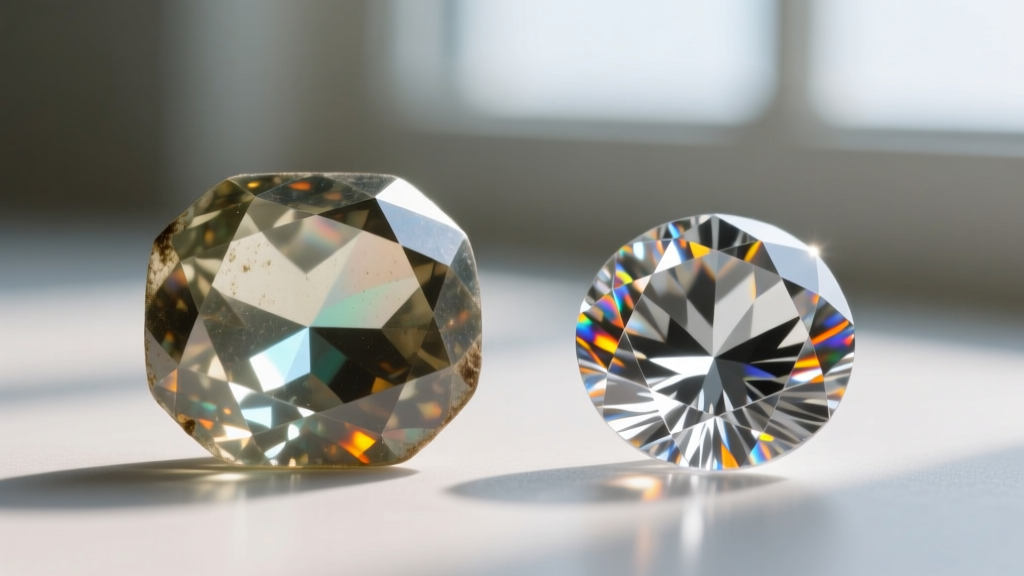
To truly understand the twist of Maupassant's story, we must examine what 'paste' meant in 1884 versus what high-end simulants represent today. In the 19th century, paste jewelry was crafted from high-lead glass. It was a respected craft, but the material was fundamentally soft and optically inferior to diamond. According to the Victoria and Albert Museum, 18th and 19th-century paste was often backed with metallic foil to enhance its sparkle, a technique that degraded over time as moisture tarnished the foil.
In 2026, the term 'paste' is obsolete, replaced by advanced diamond simulants and synthetics that rival or exceed natural stones in specific optical metrics. Below is a technical comparison of the materials that define the 'illusion' of the diamond necklace.
| Feature | 1884 Lead Glass Paste | 2026 Moissanite | 2026 Lab-Grown Diamond |
|---|---|---|---|
| Material Composition | High-lead silica glass | Silicon Carbide (SiC) | Pure Crystalline Carbon |
| Mohs Hardness | 5.0 - 6.0 | 9.25 | 10.0 |
| Refractive Index (RI) | ~1.70 | 2.65 - 2.69 | 2.42 |
| Dispersion (Fire) | Low | 0.104 (Very High) | 0.044 (High) |
| Price (10 CTW Rivière) | $50 - $150 (Antique) | $800 - $1,500 | $2,500 - $4,500 |
Notice the disparity in pricing. A 10-carat total weight (CTW) natural diamond rivière in 18k white gold can still command $25,000 to $45,000 in the 2026 retail market. The lab-grown equivalent sits at roughly $3,500, while moissanite is under $1,500. The 1884 gap between 40,000 francs and 500 francs is perfectly mirrored in today's market by the gap between earth-mined diamonds and advanced lab alternatives.
Anatomy of the Rivière: Then and Now
The specific style of necklace Mathilde borrowed—a rivière—translates to 'river' in French. It is designed to showcase a continuous, flowing stream of gemstones, typically with no visible metal links between them, allowing the stones to wrap seamlessly around the décolletage.
19th-Century Construction
In Maupassant’s era, a diamond rivière was often set in silver-topped gold (to prevent the silver from tarnishing the skin while allowing the white metal to enhance the diamonds' color). The stones were typically collet-set or held in chunky, hand-cut bezels. Because diamond cutting was limited to old mine or old European cuts, the stones exhibited broad, chunky flashes of light rather than the pinpoint scintillation of modern brilliants.
2026 Modern Rivière Specifications
Today’s riviere necklaces are marvels of CAD-assisted precision. When evaluating or purchasing a modern diamond or simulant rivière, collectors should look for the following technical specifications:
- Setting Style: 4-prong or 6-prong shared prong settings are standard. Shared prongs minimize metal visibility, maximizing the 'river' effect.
- Graduation: True antique rivière necklaces featured graduated stones (e.g., 3mm at the clasp scaling up to 7mm at the center). Modern 2026 trends heavily favor uniform sizing (e.g., all 4.5mm stones) for a more cohesive, modern aesthetic.
- Clasp Mechanisms: High-end modern pièces feature hidden box clasps with double figure-eight safety catches, often integrated seamlessly into the 14k or 18k gold chain links.
- Carat Weight: A standard 16-inch princess length rivière with 4mm round brilliants will contain approximately 45 stones, yielding a total carat weight of roughly 11.5 to 12.5 CTW depending on the depth of the cut.
Actionable Takeaways for the Modern Collector
The tragedy of Mathilde Loisel was rooted in a lack of transparency and an over-reliance on perceived social validation. The 2026 jewelry market rewards informed buyers who prioritize material reality and personal style over archaic status symbols. Here is how to avoid the 'Loisel Trap' when investing in necklaces and pendants today:
- Demand Origin Transparency: Whether purchasing natural or lab-grown, always require a grading report from a reputable tier-one laboratory (GIA or IGI). The laser inscription on the girdle of a lab-grown diamond is the modern equivalent of an insurance policy against deception.
- Embrace High-Grade Simulants for Travel: If you desire the look of a $40,000 diamond rivière for a gala or vacation, purchase a precision-cut moissanite or high-grade cubic zirconia replica set in solid 14k gold. You get the optical fire without the catastrophic risk of loss.
- Value Craftsmanship Over Carat Weight: A well-crafted, 3-CTW pendant with exceptional cut grades (Ideal/Hearts & Arrows) will out-sparkle a poorly cut, 5-CTW stone every time. Light performance is the true metric of beauty, not mere mass.
Conclusion: The Enduring Illusion of Value
A summary of the necklace guy de maupassant ultimately reveals a timeless truth about human nature: we often project our own insecurities onto the objects we wear. The necklace itself was innocent; it was merely glass and foil. It was the societal pressure to appear wealthy that destroyed Mathilde's life. In 2026, with the democratization of diamond brilliance through lab-grown stones and the celebration of artisanal, non-traditional materials, we are finally moving past the illusion. True style is not about convincing others of your wealth—it is about understanding the artistry, geology, and engineering behind the jewels you choose to wear.


