Expert Care Guide for Your Antique Jade Bead Necklace
Discover how to safely clean and store your antique jade bead necklace. Expert tips on silk restringing, avoiding harsh chemicals, and preserving patina.

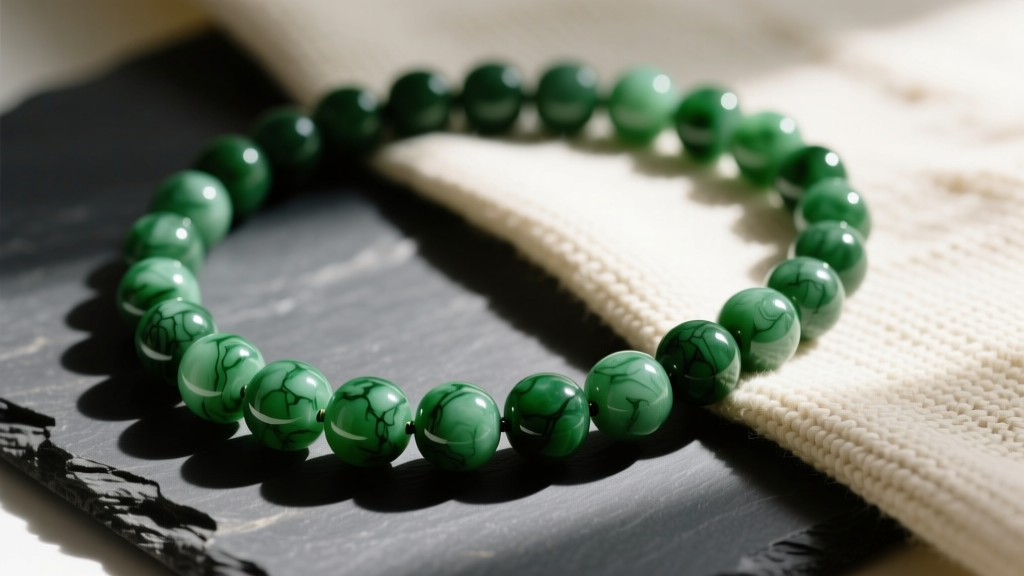
An antique jade bead necklace is more than just a piece of jewelry; it is a tangible connection to history, craftsmanship, and cultural heritage. Whether your heirloom features deeply saturated imperial jadeite or the rich, spinach-green tones of traditional nephrite, caring for these porous, organic-strung treasures requires a highly specific approach. Modern jewelry cleaning methods can easily destroy the delicate surface polish, strip historical wax treatments, or rot the antique silk threading that holds the piece together.
In this comprehensive guide, we break down the exact mineralogy of antique jade, the chemistry of safe cleaning agents, and the structural maintenance required to preserve your necklace for the next generation.
Understanding Your Jade: Mineralogy and Traditional Treatments
Before applying any moisture to your antique jade bead necklace, you must understand the stone's physical properties and historical enhancements. Jade is an umbrella term for two distinct minerals: nephrite (calcium magnesium silicate) and jadeite (sodium aluminum silicate). Antique Chinese pieces crafted before the 18th century are almost exclusively nephrite, which ranks between 6.0 and 6.5 on the Mohs hardness scale. Jadeite, introduced in larger quantities later, is slightly harder at 6.5 to 7.0.
While jade is renowned for its exceptional toughness (resistance to breaking due to its interlocking fibrous crystal structure), its surface is highly susceptible to micro-scratches from common household dust, which contains quartz (Mohs 7.0). Furthermore, according to the Gemological Institute of America (GIA), almost all antique jade underwent a traditional waxing process. Artisans historically polished the beads and dipped them in natural beeswax or paraffin to fill microscopic surface pores, enhancing the luster and protecting the stone. Using modern degreasers or harsh detergents will strip this historical wax coating, leaving the beads looking dull, chalky, and vulnerable to staining.
The Step-by-Step Cleaning Protocol
When cleaning an antique jade bead necklace, the golden rule is to minimize moisture exposure, especially near the drill holes where water can become trapped and rot the internal silk thread. Follow this conservative, museum-grade cleaning protocol:
1. Dry Dusting (The Safest First Step)
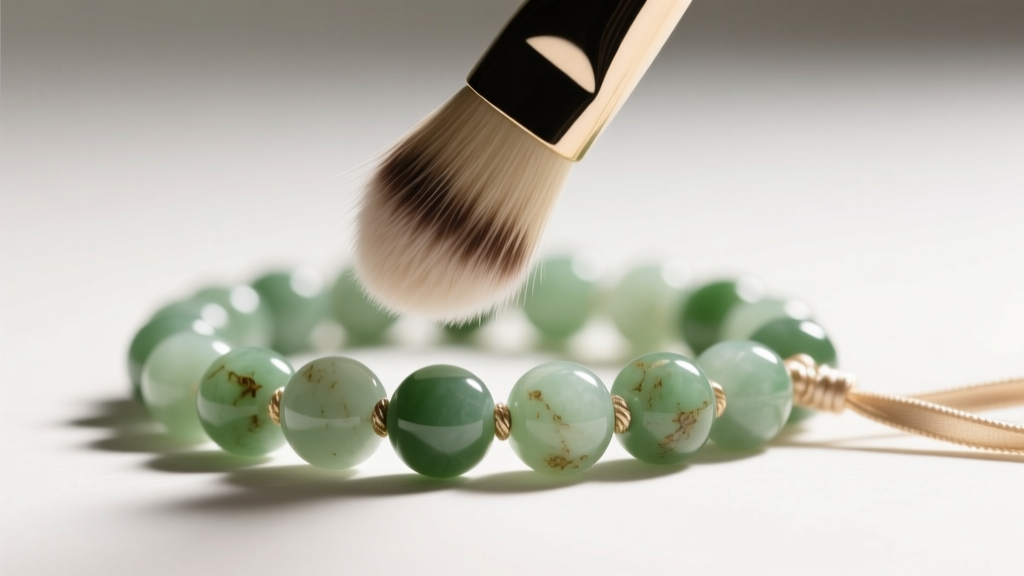
Before introducing any liquid, remove surface particulates. Use a clean, soft goat-hair makeup brush to gently sweep the crevices between the beads and the knotting. Never use a toothbrush, even a soft-bristled one, as the stiff nylon bristles can scratch the wax coating and leave micro-abrasions on the jade surface.
2. Damp Wiping for Surface Oils
Human skin secretes sebum and lactic acid, which can build up on the beads over time. Dampen a lint-free microfiber cloth with distilled water (never tap water, which contains chlorine and hard minerals that can leave deposits). Wring the cloth out until it is barely damp, and gently wipe each bead individually. Immediately dry the bead with a separate, bone-dry microfiber cloth.
3. Deep Cleaning (Only When Absolutely Necessary)
If the necklace requires a deeper clean, use a pH-neutral, unscented liquid Castile soap diluted in distilled water. Dip a cotton swab into the solution, squeeze out the excess liquid, and gently roll it over the surface of the jade. Avoid the drill holes entirely. Rinse the swab in plain distilled water and repeat the process to remove any soap residue, then buff dry immediately.
Protecting the Silk: The Necklace's True Weak Point
The most critical vulnerability of an antique jade bead necklace is not the stone, but the stringing material. Historically, these necklaces were strung on natural silk threads, which are highly sensitive to moisture, acidity, and UV light. When silk degrades, it loses its tensile strength, leading to catastrophic strand failure.
The Victoria and Albert Museum (V&A) emphasizes that organic stringing materials must be kept entirely dry and protected from the acidic pH of human sweat. If you wear your necklace regularly, the silk will inevitably degrade. Monitoring the condition of the knots is essential for preventing the loss of your antique beads.
| Condition / Warning Sign | What It Means | Required Action |
|---|---|---|
| Stiff, crusty, or darkened knots | Silk has absorbed sweat, oils, and dead skin cells, causing the fibers to lock and rot. | Immediate professional restringing. |
| Visible gaps between beads | The silk has stretched beyond its elastic recovery point, weakening the structural integrity. | Restring within 3 months; avoid wearing. |
| Fraying near the clasp or ring | Friction from the metal finding has cut into the silk fibers. | Immediate restringing with French wire guards. |
| Routine Maintenance (No visible signs) | Preventative care for frequently worn antique silk necklaces. | Restring every 2 to 3 years. |
Environmental Hazards and Storage Best Practices
How you store your antique jade bead necklace when it is not being worn is just as important as how you clean it. Jade is a relatively stable mineral, but the traditional wax coatings and the silk thread are highly reactive to environmental fluctuations.
- Humidity Control: Store the necklace in an environment with a stable relative humidity of 40% to 50%. Extremely dry conditions can cause the traditional wax filling to brittle and flake out of the jade's micro-pores, while high humidity accelerates silk rot and mildew growth.
- Temperature Stability: Avoid storing the necklace near radiators, heating vents, or in direct sunlight. Sudden thermal shocks can cause internal stress fractures within the jade beads to expand, leading to crazing or outright cracking.
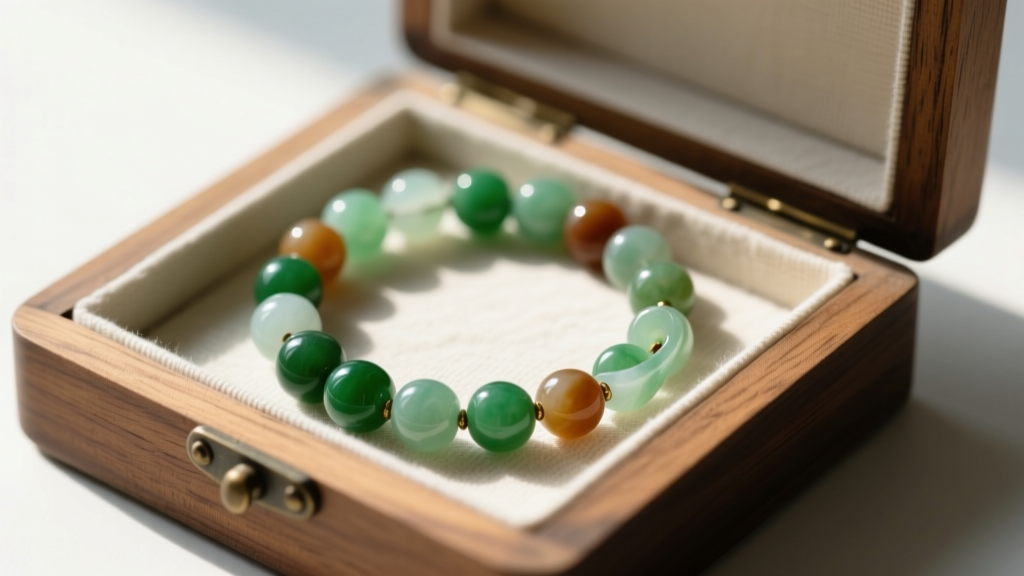
- Physical Protection: Jade can be scratched by harder gemstones like diamonds, sapphires, or quartz. Store the necklace flat in a dedicated, unbleached cotton-lined jewelry box. Never hang an antique silk necklace on a jewelry tree, as the constant gravitational pull will permanently stretch the wet or aged silk fibers.
Forbidden Cleaning Methods: What Will Destroy Your Heirloom
The jewelry industry has popularized several "quick-fix" cleaning methods that are absolutely catastrophic for antique jade. Never subject your necklace to the following:
- Ultrasonic Cleaners: The high-frequency vibrations in an ultrasonic bath can easily shatter antique jade beads that possess unseen internal fissures or stress lines. It will also completely obliterate the silk knotting.
- Steam Cleaners: Thermal shock from pressurized steam can cause the jade to crack. Furthermore, the intense heat will melt and strip the historical wax coating, ruining the bead's luster.
- Ammonia and Bleach: Harsh alkaline chemicals like ammonia will etch the surface of the jade, leaving a permanent, dull frostiness that can only be fixed by professional re-polishing (which removes historical material and lowers the antique value).
- Commercial Jewelry Dips: These acidic solutions are formulated for gold and diamonds. They will chemically react with the calcium and magnesium in nephrite, causing irreversible surface pitting.
Preserving the Patina and Value
Caring for an antique jade bead necklace is an exercise in restraint. By prioritizing gentle, dry-cleaning methods, monitoring the structural integrity of the silk, and strictly avoiding modern chemical interventions, you protect both the physical beauty and the historical provenance of the piece. When in doubt regarding the necklace's structural stability or the need for re-waxing, always consult a certified gemologist or an antique jewelry conservator who specializes in East Asian artifacts.


