Egyptian Cartouche Necklace: 2026 Value & Pricing Guide
Learn how to evaluate an Egyptian cartouche necklace in 2026. Discover gold karat pricing, hallmark verification, and how to avoid tourist markups.

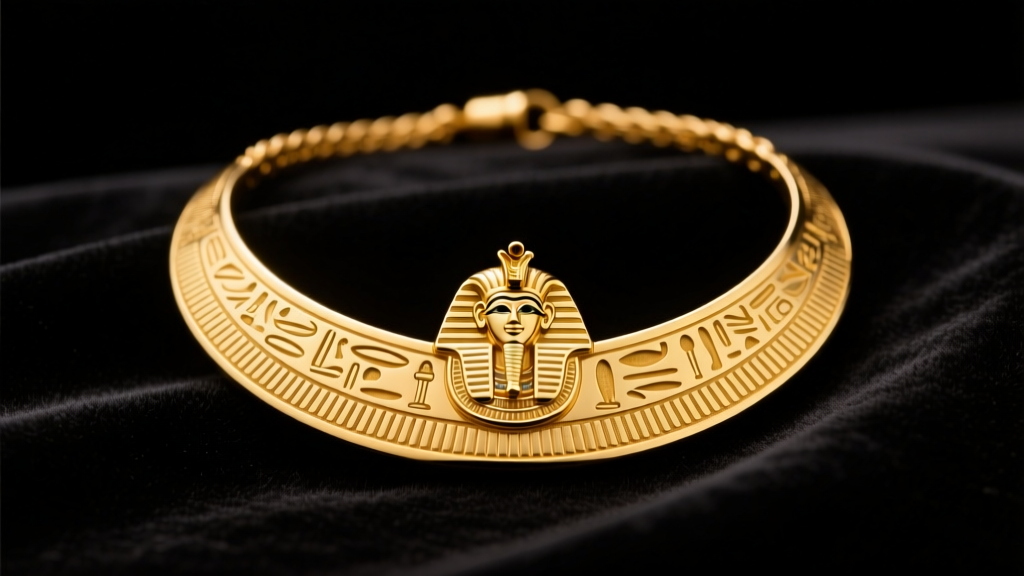
The Egyptian cartouche necklace remains one of the most iconic and deeply personal pieces of jewelry a traveler or historian can acquire. Originally known in ancient Egypt as the shenu, this elongated oval frame represents a rope tied at the ends, symbolizing the sun's enclosure and the wearer's protection. Today, it serves as a wearable translation of your name or a meaningful phrase in hieroglyphs. However, purchasing an authentic cartouche—especially in the bustling souks of Cairo or Luxor—requires a sharp eye for metallurgical value and an understanding of local pricing structures. In this 2026 budget and value assessment guide, we strip away the tourist markups and provide a definitive framework for evaluating the true worth of an Egyptian cartouche necklace.
The Allure and the Catch: Understanding Cartouche Value
When assessing the value of any gold pendant, the primary metric is the intrinsic metal value combined with the craftsmanship premium. The Egyptian gold market operates differently than Western retail jewelry. In the United States or Europe, you typically pay a flat retail price that includes massive overhead, brand markups, and marketing costs. In Egypt's gold districts, such as the famous Sagha (Goldsmiths' Quarter) in Islamic Cairo, jewelry is sold based on a transparent, daily fluctuating formula: the global spot price of gold multiplied by the item's exact gram weight, plus a negotiated making charge.
The catch for international buyers is that many shops near tourist hubs abandon this transparent model in favor of 'per-piece' pricing, which can inflate the cost of an Egyptian cartouche necklace by 40% to 200%. To accurately assess value, you must shift your mindset from buying a 'souvenir' to acquiring a raw precious metal asset with bespoke artisan engraving.
Gold Purity Breakdown: 18K vs. 21K vs. 24K
Egyptian jewelers predominantly work in 18-karat and 21-karat gold, which differs from the 14K standard common in North America. Understanding these purities is critical for your budget assessment, as the price per gram scales directly with the gold content. According to the Gemological Institute of America (GIA), karatage dictates the ratio of pure gold to alloy metals, which impacts both the necklace's color and its structural integrity.
| Karat | Purity % | Estimated 2026 Price/Gram (USD) | Durability & Best Use |
|---|---|---|---|
| 18K | 75.0% | $55 - $62 | Highly durable; ideal for cartouches with intricate, deep-set gemstone inlays or diamond accents. |
| 21K | 87.5% | $64 - $72 | The Egyptian standard. Rich, warm yellow hue. Excellent for traditional, heavily engraved hieroglyphic pendants. |
| 24K | 99.9% | $73 - $82 | Very soft and prone to bending. Rarely used for cartouches unless cast exceptionally thick, which drives up weight and cost. |
For a traditional, custom-engraved cartouche, 21K gold is the undisputed champion. It offers the unmistakable, buttery yellow luster associated with Middle Eastern jewelry while retaining just enough copper and silver alloy to withstand the deep pressure of the engraver's chisel without warping.
Decoding the Price Tag: The Weight Calculation Method
To determine if you are getting a fair deal on an Egyptian cartouche necklace, you must use the local pricing formula. Never accept a flat 'per-piece' quote. Instead, follow this exact valuation framework:
Step 1: Check the Daily Spot Price
Before heading to the jeweler, check the daily global gold spot price via authoritative trackers like Kitco. If 24K gold is trading at $75 per gram, you can mathematically derive the base value of 21K gold (75 × 0.875 = $65.62 per gram).
Step 2: Weigh the Pendant and Chain Separately
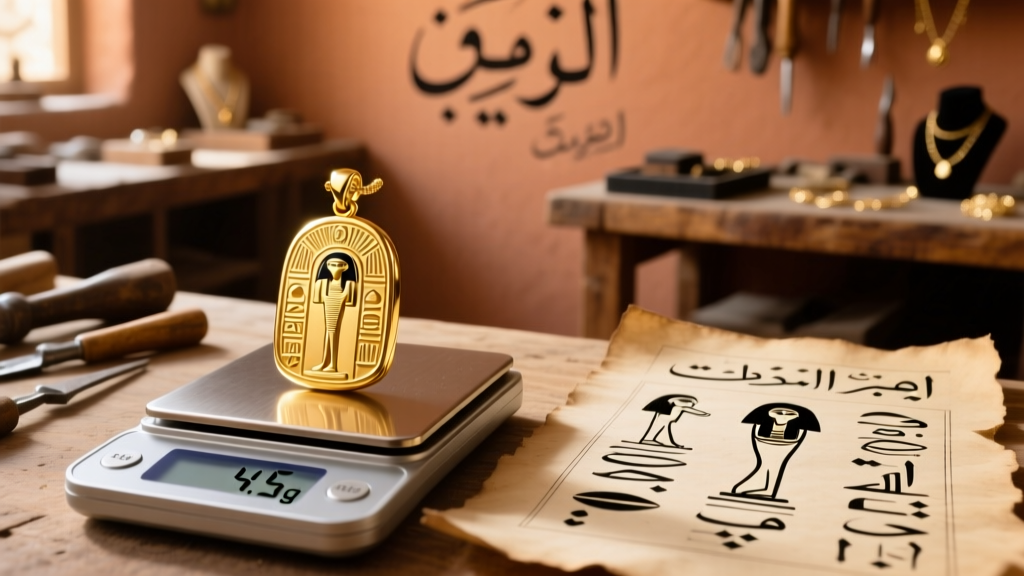
A standard, medium-sized cartouche pendant (roughly 1.2 inches long) typically weighs between 3.5 and 6 grams. The chain can add another 5 to 15 grams depending on the style. Demand that the jeweler weigh the pendant and the chain separately on a calibrated digital scale in front of you.
Step 3: Negotiate the 'Masna'iyya' (Making Charge)
The Masna'iyya is the artisan's fee for casting, polishing, and engraving. This is the only negotiable part of the transaction. In 2026, a fair making charge for a custom-engraved cartouche ranges from $4 to $12 per gram, depending on the complexity of the hieroglyphs and the prestige of the workshop. If a jeweler attempts to charge a making fee exceeding $20 per gram, you are paying a tourist premium and should walk away.
Tourist Traps vs. Authentic Jewelers: Spotting the Difference
Not all gold shops in Egypt are created equal. Assessing the true value of your necklace requires buying from a reputable source that adheres to the strict hallmarking laws enforced by the Egyptian Ministry of Supply and Internal Trade. Here is how to differentiate a legitimate goldsmith from a tourist trap:
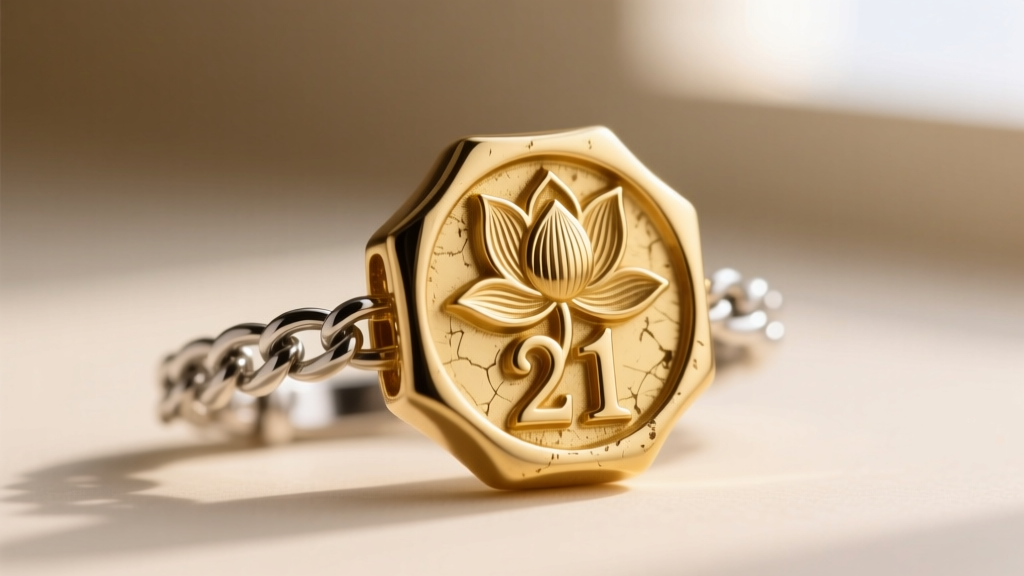
- The Hallmark Test: Authentic Egyptian gold must bear an official government stamp. For 21K gold, look for the number '21' alongside a lotus flower symbol (the official Egyptian hallmark for gold). If the piece lacks this stamp, or if the jeweler claims 'we don't stamp custom pieces,' it is likely under-karat or a brass alloy.
- The Solder Joint Check: Inspect the jump rings and chain links with a jeweler's loupe. High-quality Egyptian chains use laser welding or high-karat solder that matches the chain's color. Cheap tourist chains often use dark, oxidized lead-tin solder at the joints, which devalues the scrap weight of the necklace.
- The 'No Haggling' Red Flag: In legitimate Egyptian gold souks, haggling over the Masna'iyya is expected and respected. If a shop refuses to break down the price by gram weight and insists on a fixed tag price, they are operating on a retail-tourist model, not a bullion-artisan model.
Custom Hieroglyph Translation: Hidden Costs and Value Adds
The engraving itself is a major component of the cartouche's value. A poorly translated or clumsily carved pendant loses its historical resonance and its future heirloom value. Many tourist shops use phonetic 'cheat sheets' that translate modern English letters into loosely matched single hieroglyphs, resulting in nonsensical strings of ancient symbols.
True value lies in semantic translation. For example, rather than spelling out 'S-A-R-A' phonetically, a master engraver can translate the meaning of the name (e.g., 'Princess' or 'Noblewoman') using authentic Middle Egyptian syntax, referencing the established Gardiner's Sign List.
Expect to pay a slight premium (an additional $15 to $30 flat fee) for a workshop that employs a dedicated calligrapher or Egyptologist to draft your name or phrase before the metalworker begins carving. This upfront cost drastically increases the sentimental and appraisal value of the piece, transforming it from a trinket into a genuine historical artifact.
Chain Selection: Maximizing Budget and Durability
The pendant is only half the equation; the chain you pair with your Egyptian cartouche necklace dictates both the overall budget and the structural safety of the piece. Because 21K gold is inherently softer than 14K, the chain must be robust enough to hold a 5-gram pendant without stretching or snapping.
Best Value Chains:
- Rope Chain (2.0mm - 3.0mm): Offers excellent tensile strength and a brilliant, light-catching twist. A 16-inch 21K rope chain will weigh approximately 6 to 9 grams, adding roughly $400 to $650 to your total material budget.
- Box Chain (1.5mm - 2.5mm): Highly durable due to its interlocking square links. It lays flat against the collarbone, allowing the cartouche to hang perfectly centered. However, if a link bends, it is notoriously difficult to repair.
Chains to Avoid:
- Snake Chain: While sleek, snake chains are prone to kinking and can easily snap under the pendulum-like weight of a solid gold cartouche.
- Herringbone: Extremely fragile. The flat links bend permanently with minimal pressure, making it a poor investment for daily wear.
Final Verdict: Budgeting for Your Heirloom
When evaluating an Egyptian cartouche necklace in 2026, your budget should be strictly tethered to the global gold market and local artisan labor rates. For a complete set featuring a 4.5-gram 21K custom-engraved pendant and an 8-gram 21K rope chain, a fair, non-inflated total weight of 12.5 grams should cost approximately $850 to $950 USD (assuming a 21K base price of $68/g + average making charges).
By insisting on weight-based pricing, verifying the lotus hallmark, and demanding accurate semantic translations, you bypass the tourist traps and secure a piece of wearable history that holds its intrinsic and cultural value for generations.


