How to Wear Necklace With Collared Shirt: A Value Guide
Discover how to wear a necklace with a collared shirt while maximizing value. Compare materials, chain weaves, and cost-per-wear metrics.

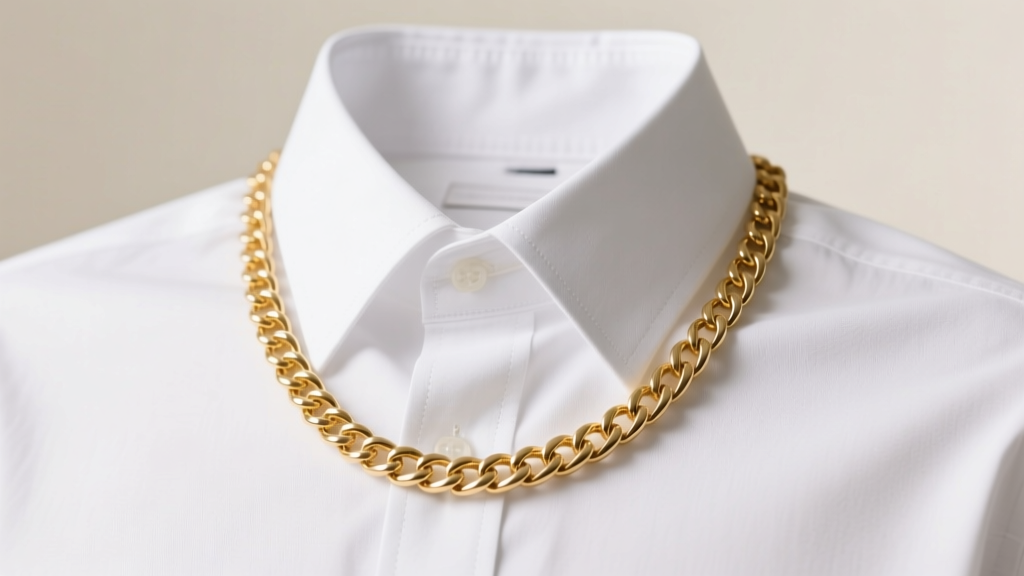
Collared shirts—ranging from structured Oxford button-downs to relaxed linen polos—are the undisputed backbone of smart-casual and professional wardrobes. Yet, when it comes to accessorizing, they present a unique set of mechanical and aesthetic challenges. Many men and women invest in beautiful jewelry, only to find that their chains tangle in collar stays, pendants catch on cotton weaves, or cheap plating rubs off within weeks due to friction and trapped sweat. Understanding how to wear necklace with collared shirt ensembles is not just a matter of style; it is a critical exercise in budget preservation and value assessment.
From a financial perspective, the "cost-per-wear" (CPW) metric dictates that a necklace meant for daily collar wear must withstand high-friction environments. In this comprehensive guide, we will evaluate the physics of collar friction, break down the exact chain weaves that survive daily wear, and provide a data-driven budget assessment to help you invest in pieces that offer genuine long-term value.
The Physics of Collar Friction: Why Cheap Chains Fail
When assessing the value of a necklace for collared shirts, you must first understand the micro-abrasive nature of common shirt fabrics. Oxford cloth, pinpoint cotton, and heavy linens feature pronounced weaves that act like fine sandpaper against metal surfaces. Furthermore, the structural elements of a shirt—such as collar stays, stiff interlinings, and tightly fastened top buttons—create intense pressure points.
Chain Weave Durability Assessment
Not all chains are engineered for the collar zone. If you are buying a necklace specifically to wear with button-downs, avoid snake chains and herringbone chains. These weaves feature flat, interlocking plates that easily kink or permanently bend when crushed against a collar button or caught on a collar stay. Once a snake chain kinks, its structural integrity is compromised, rendering it a poor financial investment.
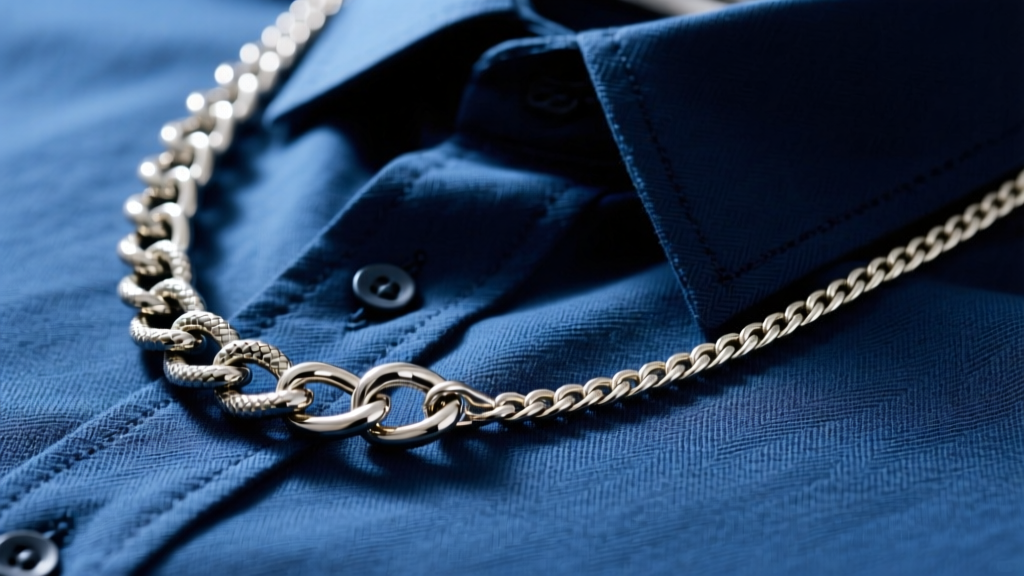
Instead, allocate your budget toward high-tensile, three-dimensional weaves. Box chains and wheat (spiga) chains are superior for collar wear. Their geometric, interlocking links distribute pressure evenly and glide smoothly over cotton fibers without snagging. A solid 14k gold box chain may cost 30% more upfront than a flat herringbone, but its lifespan in a high-friction collar environment is exponentially longer, drastically lowering your cost-per-wear.
The Clasp Vulnerability
Friction also targets the weakest point of any necklace: the clasp. Standard spring-ring clasps are notorious for failing under the lateral tension created by a snug collar. For maximum value retention, insist on lobster clasps or box clasps with figure-eight safety latches. The marginal $5 to $10 premium for a heavier lobster clasp prevents the catastrophic loss of the pendant or chain, protecting your overall investment.
Length and Proportion: The ROI of Exact Measurements
Wearing a necklace with a collared shirt requires precise length calibration. A chain that sits in the "awkward gap"—neither fully hidden nor cleanly displayed—diminishes the visual return on your investment. Here is a strategic breakdown of lengths based on collar types:
- 16 Inches (The Choker/Collarbone): Best worn with open-collar camp shirts or wide-spread collars where the chain sits entirely above the fabric line. Avoid with tight button-downs, as sweat accumulation will accelerate metal degradation.
- 18 Inches (The Base of the Neck): The most versatile length for business-casual. It rests just inside the collarbone, remaining hidden when the top button is fastened, but elegantly framing the neck when unbuttoned. Ideal for minimalist pendants.
- 20 to 22 Inches (The Chest Drop): Essential for wearing necklaces over the shirt. This length allows the pendant to rest below the collar points, avoiding fabric bunching and ensuring the jewelry remains the focal point.
- 24+ Inches (The Statement): Reserved for heavy pendants worn over relaxed, unstructured linen or denim shirts. Avoid with stiff dress shirts, as the heavy metal will drag the fabric downward, ruining the shirt's drape.
Value Tip: If you are on a strict budget, purchase a high-quality 20-inch chain with a 2-inch extender. This single purchase bridges the gap between inside-the-collar and over-the-shirt styling, effectively giving you two necklaces for the price of one.
Budget Breakdown: Cost-Per-Wear Analysis by Material
When evaluating how to wear necklace with collared shirt outfits daily, material selection dictates long-term financial viability. The trapped body heat and perspiration inside a closed collar create a highly corrosive microclimate. Below is a value assessment of common jewelry metals subjected to daily collar wear.
| Material Grade | Upfront Cost Range | Lifespan (Daily Collar Wear) | Cost-Per-Wear Rating |
|---|---|---|---|
| Gold-Plated Brass (<0.5μm) | $25 - $45 | 2 - 4 Months | Poor (High Replacement Rate) |
| Gold Vermeil (Min 2.5μm over Silver) | $70 - $130 | 1 - 2 Years | Moderate (Requires Care) |
| Solid 10k / 14k Gold | $180 - $350 | Lifetime | Excellent (Generational ROI) |
| Grade 23 Titanium (Ti-6Al-4V) | $40 - $90 | Lifetime | Outstanding (Budget Champion) |
According to the Federal Trade Commission's Jewelry Guides, true gold vermeil must feature a minimum thickness of 2.5 microns of gold over a sterling silver base. Anything less will inevitably rub off against collar friction, exposing the silver beneath, which will then rapidly tarnish from collar sweat. For those with a budget under $100, aerospace-grade titanium offers unparalleled value: it is impervious to sweat, hypoallergenic, and possesses a tensile strength that laughs at collar-stay abrasion.
Pendant Selection: Maximizing Visual Impact Safely
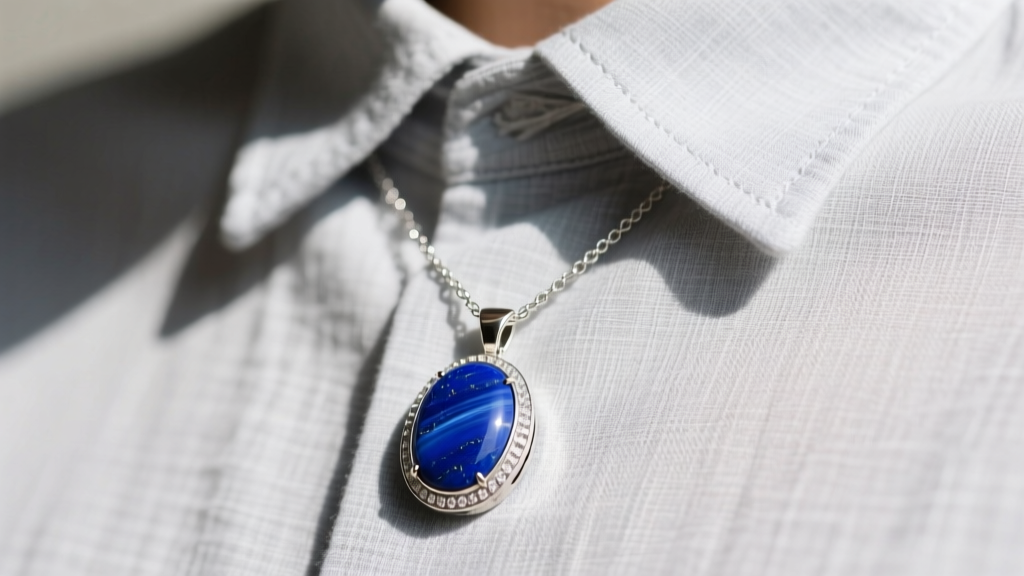
If your budget allows for a pendant, the setting style is just as critical as the metal. Prong settings (commonly used for diamonds and faceted gemstones) feature tiny metal claws that act as grappling hooks against Oxford cloth and linen weaves. A single aggressive snag can bend a prong, leading to stone loss.
For collared shirts, bezel settings are mandatory for value preservation. A bezel encircles the gemstone with a smooth metal rim, eliminating snag points entirely. Furthermore, consider the Mohs hardness scale when selecting stones. The Gemological Institute of America (GIA) notes that stones like Opal (Mohs 5.5) or Turquoise (Mohs 6) are highly susceptible to scratching if they repeatedly strike against hard plastic collar stays or shell buttons. Opt for harder materials like Sapphire (Mohs 9), Onyx, or Agate to ensure your pendant survives the mechanical hazards of the collar zone.
Real-World Troubleshooting: Sweat, Tarnish, and Maintenance
Even the most valuable solid gold chains require maintenance when subjected to the humid environment of a closed collar. Human sweat has a pH ranging from 4.5 to 7.0 and contains salts and urea that accelerate the oxidation of alloyed metals. Sterling silver (925), which contains 7.5% copper, will quickly develop a dark patina when trapped against the skin by a tight collar.
Actionable Maintenance Protocol
- The Post-Wear Wipe: Never store a necklace immediately after taking it off from under a collar. Use a microfiber cloth to wipe away invisible sweat and skin oils. This single habit extends the polish life of gold and silver by years.
- Ultrasonic Caution: While ultrasonic cleaners are excellent for solid gold box chains, never use them on porous stones (like lapis lazuli or malachite) that may have accumulated cotton dust and skin oils from shirt wear.
- Rhodium Plating Refresh: If you invest in white gold or rhodium-plated silver for a crisp, modern look against a white dress shirt, budget $25 to $40 every 18 months for a professional re-plating. The friction of a collar will wear the rhodium layer down to the yellowish base metal faster than an exposed pendant would.
Final Value Verdict
Mastering how to wear necklace with collared shirt styles is ultimately an exercise in material science and spatial awareness. By avoiding fragile weaves like snake chains, upgrading to secure lobster clasps, and investing in bezel-set pendants or solid 14k/titanium metals, you transform your jewelry from a depreciating fast-fashion expense into a resilient, lifelong asset. True value in jewelry is not found in the initial price tag, but in the piece's ability to seamlessly integrate into your daily wardrobe without succumbing to the rigorous demands of friction, tension, and wear.


