How to Layer and Clean Your Silver Snowflake Necklace
Learn how to perfectly layer your silver snowflake necklace for winter outfits and follow our step-by-step guide to cleaning and preventing tarnish.

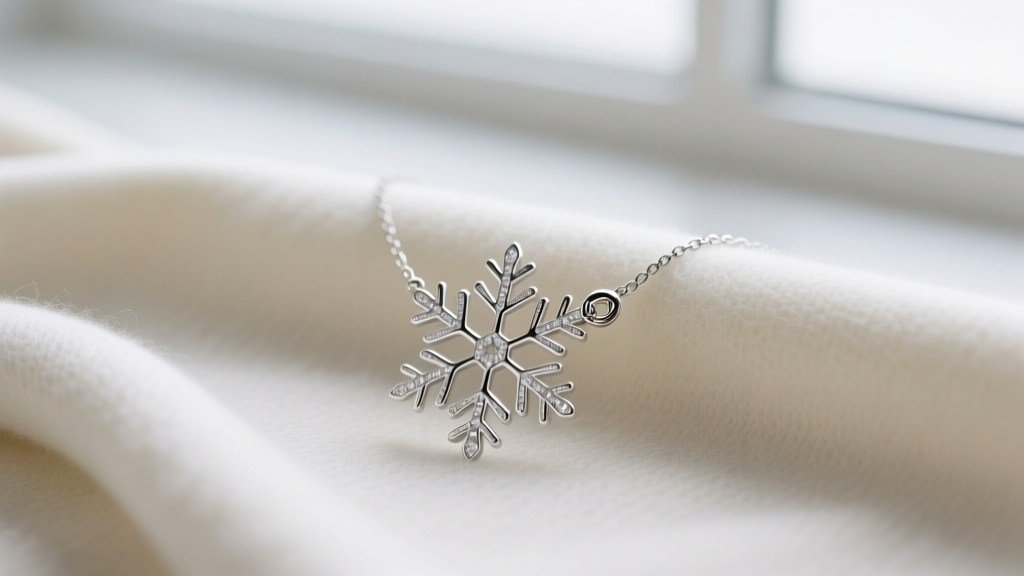
The Timeless Appeal of the Silver Snowflake Necklace
When winter arrives, jewelry boxes undergo a seasonal shift. Among the most coveted transitional pieces is the silver snowflake necklace. Delicate, symmetrical, and inherently tied to the frost-kissed months, this pendant offers a unique blend of whimsy and elegance. However, wearing a snowflake pendant isn't just about slipping it over your head; it requires an understanding of chain mechanics, strategic layering, and the chemical realities of sterling silver maintenance. In this comprehensive guide, we will walk you through the exact steps to style, layer, and scientifically clean your silver snowflake necklace to ensure it remains a brilliant winter staple for years to come.
Step 1: Selecting the Ideal Chain Gauge and Clasp
The foundation of any pendant necklace is its chain. For a silver snowflake necklace, the chain must be sturdy enough to support the metalwork but delicate enough not to overpower the intricate filigree. When shopping or evaluating your current piece, look for the .925 stamp, confirming it is genuine sterling silver (92.5% pure silver, 7.5% copper alloy). According to the Jewelers of America, this specific alloy ratio provides the necessary tensile strength for daily wear while maintaining the luminous white hue of pure silver.
Optimal Gauge and Weave
- Gauge Thickness: Aim for a chain thickness between 0.8mm and 1.2mm. Anything under 0.6mm is highly prone to kinking and snapping under the weight of a solid silver pendant. Conversely, chains over 1.5mm will visually compete with the snowflake motif.
- Box Chains: Excellent for snowflake pendants due to their geometric, square links that mirror the structured symmetry of the snowflake. They also resist tangling.
- Cable Chains: The classic choice. Ensure the links are soldered (closed) to prevent the pendant bail from slipping through a gap.
The Rhodium Advantage
For maximum tarnish resistance, seek out a silver snowflake necklace that features rhodium plating. Rhodium, a platinum-group metal, is typically plated at a thickness of 0.1 to 0.5 microns over sterling silver. This microscopic barrier prevents the underlying copper alloy from reacting with atmospheric sulfur, significantly delaying the onset of tarnish while giving the piece a bright, white-gold-like finish.
Step 2: Mastering the Winter Layering Technique
A silver snowflake necklace shines brightest when integrated into a curated stack. The golden rule of layering is the two-inch separation rule. To prevent the chains from tangling and the pendants from obscuring one another, each subsequent necklace must be at least two inches longer than the last.
The Three-Piece Winter Stack
| Layer Position | Chain Length | Pendant / Style Recommendation | Visual Role |
|---|---|---|---|
| Top (Base) | 16 inches | 2mm Silver Herringbone or Snake Chain | Provides a continuous metallic collarbone highlight without a pendant. |
| Middle (Focal) | 18 inches | Silver Snowflake Pendant (12mm-15mm) | The centerpiece. Rests perfectly in the upper chest hollow. |
| Bottom (Anchor) | 20 or 22 inches | Silver Lariat or Teardrop Moonstone | Draws the eye downward, elongating the neck and torso. |
When layering, always use a lobster clasp rather than a spring ring clasp. Lobster clasps offer superior security when multiple chains are rubbing against each other throughout the day, reducing the risk of an accidental unhooking.
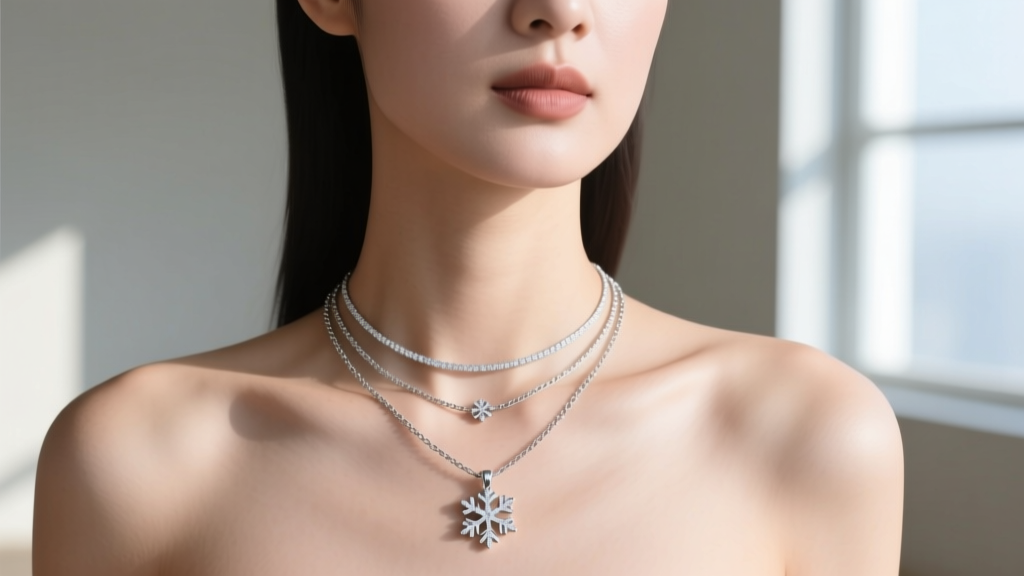
Step 3: Pairing Pendants with Winter Necklines
The geometry of your clothing dictates how your silver snowflake necklace should be worn. Winter fabrics are thick and textured, requiring deliberate styling choices.
The Turtleneck Strategy
When wearing a high-neck turtleneck, a standard 16-inch choker will get swallowed by the fabric folds. Instead, opt for a 20-inch to 24-inch chain. This allows the snowflake pendant to rest over the bust, acting as a striking metallic contrast against dark, solid-colored wools like charcoal, navy, or deep burgundy. The high contrast amplifies the reflectivity of the rhodium-plated silver.
The V-Neck and Scoop Neck Alignment
For V-neck sweaters, the necklace should mimic the garment's geometry. An 18-inch chain with a medium-sized snowflake pendant (approx. 14mm) will sit precisely at the apex of the V-neck, framing the face and drawing attention to the collarbone. For wider scoop necks, a shorter 16-inch chain keeps the jewelry within the exposed skin area, preventing the pendant from awkwardly resting on the fabric edge.
Step 4: The Chemistry of Tarnish and the Redox Cleaning Method
Despite your best efforts, sterling silver will eventually tarnish. This is not a flaw in the metal, but a predictable chemical reaction. Tarnish on silver is primarily silver sulfide (Ag2S), which forms when the copper in the sterling alloy reacts with hydrogen sulfide present in the air, wool, and even certain foods. The Gemological Institute of America (GIA) notes that regular, gentle cleaning is the best way to preserve the metal's integrity without relying on harsh abrasives that strip away rhodium plating or damage delicate snowflake filigree.
The Aluminum Foil Redox Bath (Step-by-Step)
For a heavily tarnished silver snowflake necklace, skip the abrasive pastes and use a chemical redox (reduction-oxidation) reaction to reverse the tarnish without removing any silver.
- Prepare the Vessel: Line a glass or ceramic bowl with aluminum foil, shiny side up. (Do not use metal bowls, as they will interfere with the reaction).
- Add the Catalysts: Sprinkle 1 tablespoon of baking soda and 1 tablespoon of coarse sea salt over the foil.
- Activate with Heat: Pour boiling water into the bowl. You will see immediate bubbling as the alkaline solution activates.
- Submerge the Necklace: Using wooden or plastic tongs (never metal), lower your silver snowflake necklace into the bath. Ensure the silver is physically touching the aluminum foil. This contact is critical for the electron transfer.
- The Reaction: Leave it for 2 to 5 minutes. The aluminum, being more reactive than silver, will pull the sulfur atoms away from the silver sulfide, transferring the tarnish onto the foil and leaving pure silver behind.
- Rinse and Dry: Remove the necklace, rinse thoroughly under lukewarm distilled water to remove any alkaline residue, and pat completely dry with a microfiber cloth.
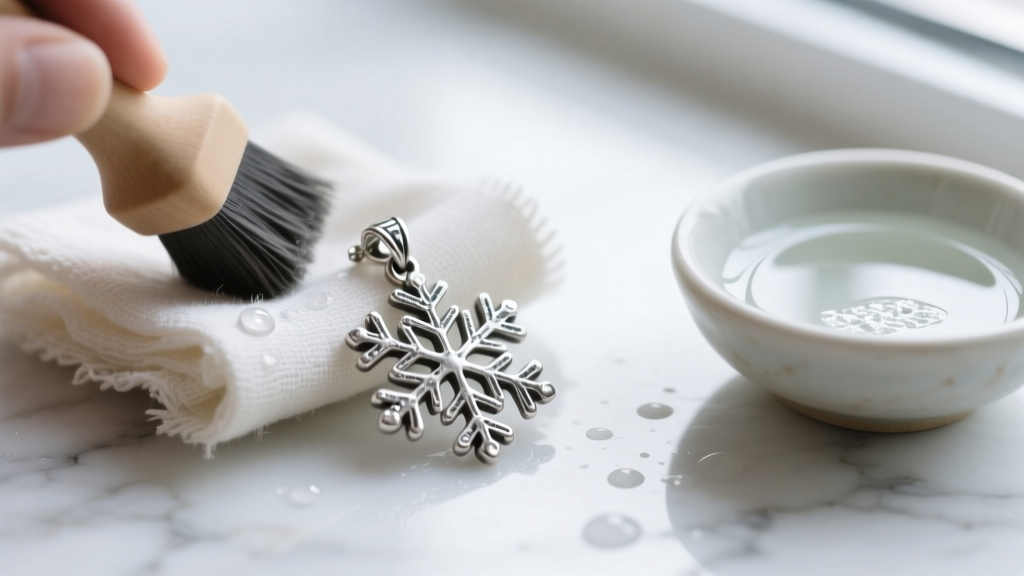
Routine Maintenance Between Deep Cleans
For weekly upkeep, use a dedicated 100% cotton jeweler's polishing cloth impregnated with microscopic jeweler's rouge. Gently buff the snowflake's surface. Avoid using tissue paper or paper towels, as they contain wood fibers that can inflict micro-scratches on high-polish silver.
Step 5: Archival Storage to Prevent Sulfide Exposure
How you store your silver snowflake necklace during the off-season (or between wears) dictates how much cleaning it will require later. The goal is to create an environment devoid of moisture and airborne sulfur.
- Airtight Containment: Store the necklace in a sealed polyethylene zip-top bag. Squeeze out as much air as possible before sealing.
- Anti-Tarnish Strips: Place a 3M anti-tarnish strip inside the bag. These strips contain copper-based compounds that act as a sacrificial anode, absorbing sulfur and moisture before they can reach your silver.
- Silica Gel Packets: Include a small silica gel desiccant packet to control ambient humidity, which accelerates the tarnishing process.
- Avoid Cardboard and Rubber: Never store sterling silver in cardboard jewelry boxes or near rubber bands. Cardboard manufacturing processes utilize sulfur-based acids, and rubber contains high levels of sulfur, both of which will rapidly blacken your snowflake pendant.
Final Thoughts on Winter Styling
A silver snowflake necklace is more than just a seasonal novelty; it is a versatile, structurally fascinating piece of jewelry. By selecting the correct chain gauge, employing the two-inch layering rule, and utilizing chemical redox cleaning methods, you elevate your jewelry care from basic maintenance to expert preservation. Wear it with intention, store it with science, and let your winter styling shine brilliantly.


