How to Authenticate and Restore a Carved Bone Elephant Necklace
Learn how to authenticate, clean, and restring a vintage carved bone elephant necklace with our expert step-by-step restoration and care guide.

The Material Science: Understanding Organic Pendants
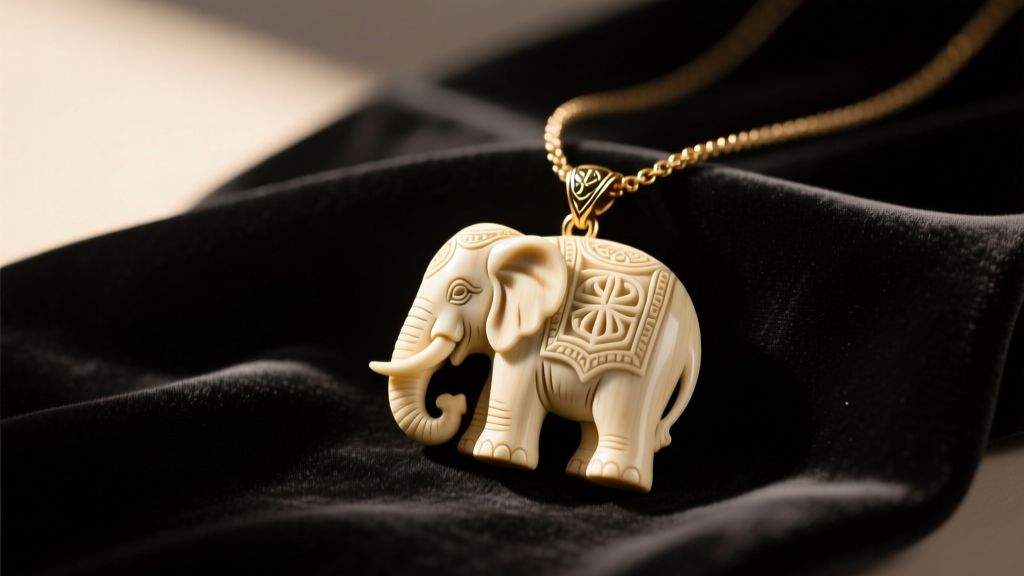
The elephant motif has long been revered in jewelry design, symbolizing wisdom, strength, and good fortune. When rendered in organic materials, a carved bone elephant necklace becomes more than just an accessory; it is a tactile piece of natural history. However, because bone is a porous, organic composite of calcium phosphate and collagen, it requires specialized care that differs vastly from metallic or gemstone jewelry. Before attempting any restoration, it is critical to understand the material science of your pendant. Bone is highly susceptible to desiccation (drying out), UV degradation, and chemical burns from harsh solvents. According to conservation guidelines published by the Getty Conservation Institute, organic skeletal materials possess a microscopic network of Haversian canals—tiny tubes that once carried blood vessels. These canals make the material breathable but also act as sponges for oils, dirt, and moisture, which can lead to internal rot if improperly cleaned.
Step-by-Step Authentication: Bone vs. Ivory vs. Synthetic
The market is flooded with resin imitations and, more problematically, illegal ivory passed off as antique bone. Authenticating your carved bone elephant necklace is the first step in proper restoration. Follow this three-point verification process:
1. The Magnification Test
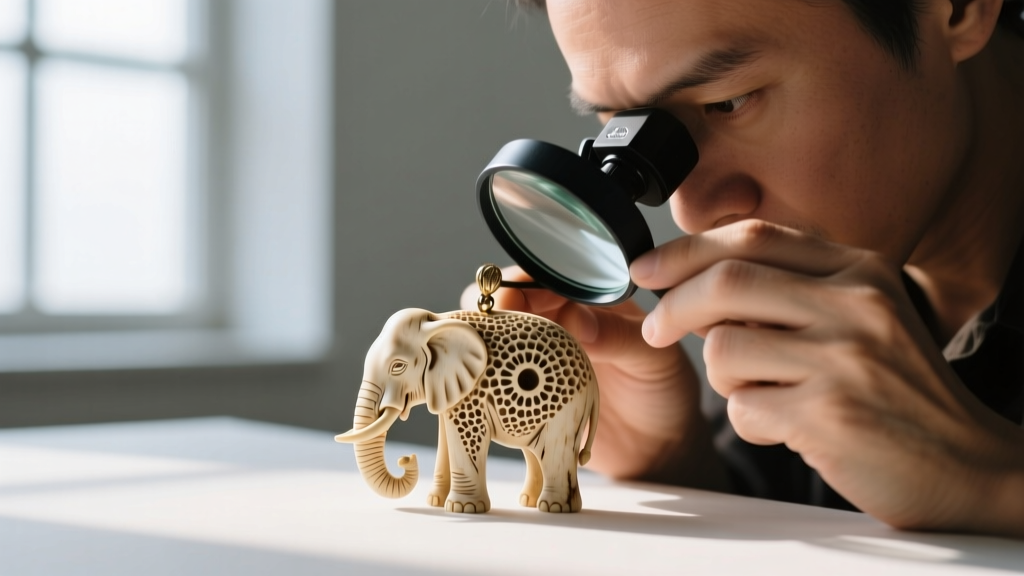
Use a 10x jeweler's loupe to examine the surface texture, particularly in the recessed areas of the carving where polishing compounds cannot reach. Genuine bone will reveal a pitted, porous surface and faint, irregular lines (Haversian systems). Ivory, by contrast, will show cross-hatched Schreger lines (engine-turning patterns) or a smooth, grainy texture. Molded resin or plastic will appear perfectly uniform, often with tiny, perfectly round air bubbles trapped just beneath the surface.
2. The UV Fluorescence Test
Shine a 365nm ultraviolet (UV) flashlight on the pendant in a dark room. Natural bone typically fluoresces a dull, chalky white or pale blue. Ivory will glow a bright, stark white. Most modern synthetic polymers and epoxy resins will either absorb the light (appearing dark) or fluoresce in unnatural shades of milky green or yellow due to optical brighteners.
3. The Thermal Pin Test (Use with Caution)
Heat a sewing needle until it is red hot and gently press it into an inconspicuous area, such as the back of the pendant or the inside of the bail. Bone is highly heat-resistant and will not melt; it may emit a faint scent similar to burning hair due to its keratin and collagen content. Plastic or resin will immediately melt, stick to the needle, and smell like burning chemicals. Note: Never perform this test on suspected ivory, as it will scorch and permanently damage the artifact.
How to Safely Clean and Condition Carved Bone
Once you have confirmed your necklace is genuine bone, you must clean it without stripping its natural moisture. Never use ultrasonic cleaners, steamers, or alcohol-based solutions, as these will extract the collagen matrix, causing the bone to become brittle and crack.
Step 1: Dry Dusting
Use a soft-bristled makeup brush or a clean, dry microfiber cloth to gently sweep away loose surface dust. Pay special attention to the intricate crevices of the elephant's trunk and ears, where dead skin cells and environmental grit accumulate.
Step 2: The Distilled Water Wash
Mix a few drops of pH-neutral liquid castile soap into a bowl of distilled water. Tap water contains chlorine and heavy minerals that can stain porous bone. Dip a soft cotton swab or a microfiber cloth into the solution, wring it out until it is only barely damp, and gently wipe the surface of the pendant. Do not submerge the necklace; prolonged water exposure can cause the bone to swell and warp.
Step 3: Drying and Conditioning
Pat the pendant dry immediately with a lint-free towel and let it air dry in a shaded, room-temperature area for two hours. Once completely dry, apply a micro-crystalline polish, such as Renaissance Wax, using a soft cloth. This creates a breathable, protective barrier against humidity and skin acids. Avoid mineral oil or olive oil, which can eventually turn rancid and stain the bone yellow.
Restringing Your Elephant Pendant: A Step-by-Step Guide
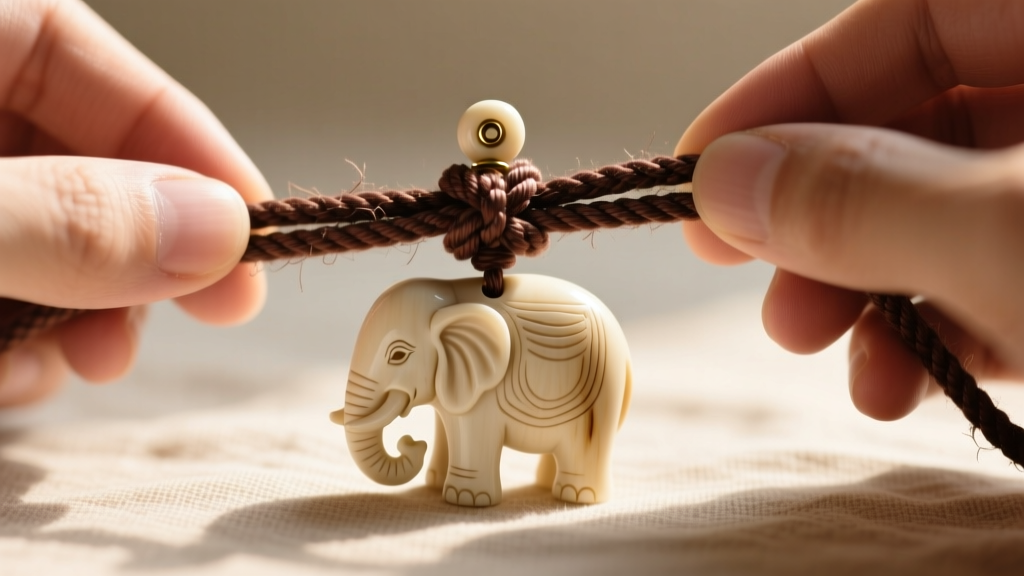
The bail (the loop at the top of the pendant) on vintage carved bone pieces is often small, asymmetrical, or worn down by decades of friction against metal chains. Restringing your carved bone elephant necklace onto a soft, organic cord not only protects the bail but enhances the bohemian, earthy aesthetic of the piece.
Choosing the Right Cord Material
Selecting the correct cord is vital for both durability and visual harmony. Below is a comparison of the best cord materials for heavy organic pendants:
| Cord Material | Diameter | Pros | Cons | Best For |
|---|---|---|---|---|
| Waxed Cotton | 1.5mm - 2.0mm | Water-resistant, durable, holds knots well | Can feel stiff initially | Heavy, large bone pendants |
| Griffin Silk (Size F) | 1.0mm | Luxurious drape, traditional look | Degrades with sweat and moisture | Small, delicate antique carvings |
| Hemp Cord | 1.0mm - 2.0mm | Eco-friendly, excellent rustic texture | Fraying over time, absorbs odors | Casual, bohemian layering styles |
| Leather Suede | 2.0mm - 3.0mm | Soft against the skin, very strong | Can stretch when wet | Statement pieces, winter wear |
The Macramé Sliding Knot Technique
To ensure your necklace is adjustable and secure without relying on fragile metal clasps that could scratch the bone, use a sliding knot.
- Step 1: Cut a 40-inch length of 1.5mm waxed cotton cord. Thread one end through the pendant's bail.
- Step 2: Cross the left cord over the right cord, forming an 'X' below the pendant.
- Step 3: Take a separate 12-inch piece of the same cord and place it horizontally across the 'X'.
- Step 4: Wrap the right side of the 12-inch cord tightly around both base cords, moving toward the left. Make 8 to 10 tight, adjacent wraps.
- Step 5: Thread the end of the wrapping cord through the loop created on the left side, then pull the left base cord to tighten the knot securely.
- Step 6: Trim the excess wrapping cord and melt the tips slightly with a lighter to seal the wax and prevent fraying.
Ethical Sourcing and CITES Regulations
When acquiring, restoring, or reselling a carved bone elephant necklace, you must be acutely aware of international wildlife trade laws. The Convention on International Trade in Endangered Species (CITES) strictly prohibits the commercial trade of elephant ivory. While bone (typically sourced from water buffalo or cattle as an agricultural byproduct) is entirely legal, the visual similarity between aged bone and antique ivory can lead to confiscation at international borders if proper provenance cannot be proven. Always retain your purchase receipts, antique appraisals, or CITES pre-Convention certificates when traveling with organic jewelry. By understanding the material, mastering the cleaning process, and respecting global conservation laws, you ensure that your carved bone pendant remains a cherished, ethical, and beautifully preserved heirloom for decades to come. For further reading on organic gem materials and their identification, the Gemological Institute of America (GIA) offers extensive educational resources on distinguishing natural skeletal materials from synthetic alternatives.


