How to Restore and Clean a Black and Pearl Necklace
Learn how to troubleshoot color transfer, restringing issues, and cleaning conflicts for your black and pearl necklace with expert jewelry care tips.

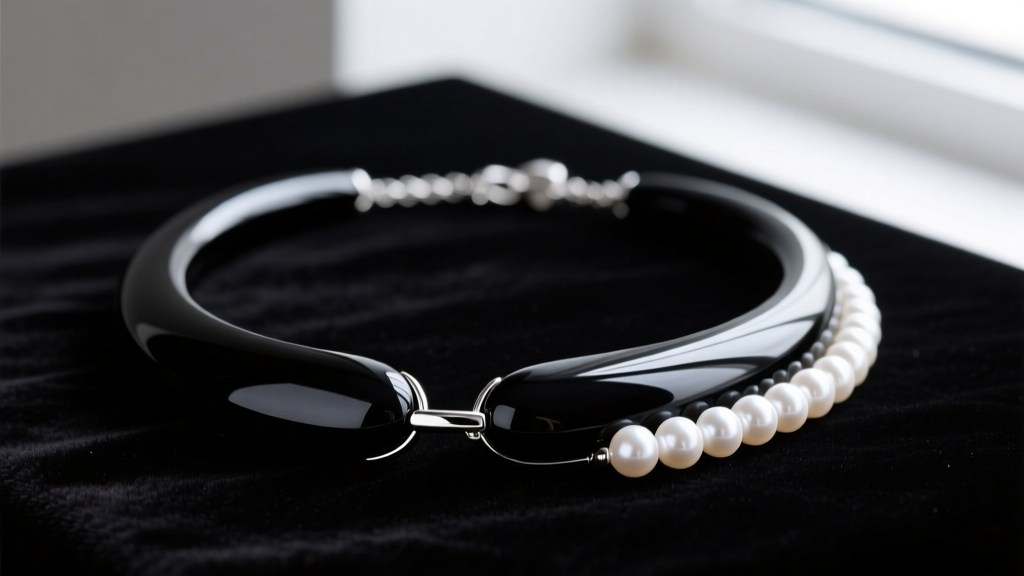
A black and pearl necklace represents a masterclass in high-contrast elegance. Whether you are pairing lustrous white Akoya pearls with deep black onyx, or mixing cream freshwater pearls with black spinel, the visual impact is undeniable. However, from a bench jeweler’s perspective, combining organic gemstones with hard, often treated, black minerals creates a unique matrix of structural vulnerabilities. If you are experiencing fraying threads, mysterious gray stains on your white pearls, or clasp failures, you are dealing with classic mixed-media degradation. This guide provides professional troubleshooting frameworks to restore, restring, and maintain your black and pearl necklace.
The Hidden Vulnerabilities of Mixed-Media Pearl Strands
To effectively troubleshoot a failing necklace, you must first understand the material science at play. Pearls are organic gems composed of microscopic aragonite platelets held together by a protein called conchiolin. They rank a mere 2.5 to 4.5 on the Mohs hardness scale. In stark contrast, black onyx (a variety of chalcedony) and black spinel rank between 7 and 8. When these materials are strung together without proper spacing or knotting, the harder black stones act as abrasive files against the softer pearl nacre during everyday wear. Over time, this friction degrades the pearl's orient and luster, while simultaneously stressing the stringing material.
Troubleshooting Color Transfer and Dye Bleed
The most common complaint we see with mixed-media strands is white pearls developing muddy, gray, or iridescent stains near their drill holes. This is almost always the result of dye migration. According to the GIA Gem Treatment Database, the vast majority of black onyx on the market is not naturally black; it is typically gray chalcedony treated with a sugar solution and sulfuric acid to carbonize the sugars. Furthermore, black freshwater pearls are almost universally dyed using organic aniline dyes or metallic salts.
The Damp Cloth Diagnostic Test
Before attempting any cleaning, you must identify if your black beads are actively bleeding. Dampen a white microfiber cloth with distilled water and a single drop of mild castile soap. Gently rub a hidden area of the black onyx or black pearl. If the cloth picks up a gray or brown residue, your stones are leaching dye. When exposed to body heat, humidity, and cosmetics, these dyes migrate along the stringing thread and are absorbed by the porous conchiolin of the adjacent white pearls.
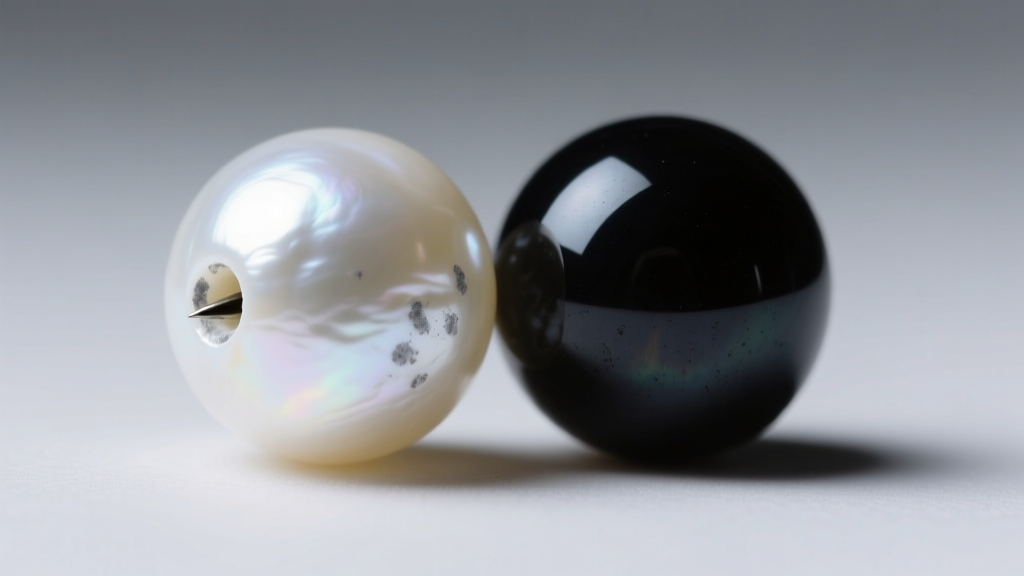
| Material Component | Typical Treatment | Bleed Risk Level | Primary Vulnerability |
|---|---|---|---|
| Black Onyx | Sugar-Acid Carbonization | Moderate | Dye migration in high humidity |
| Black Spinel | Usually None (Natural) | None | Sharp drill hole burrs |
| White Akoya Pearl | Bleached/Optically Whitened | N/A | Nacre degradation from friction |
| Black Freshwater Pearl | Aniline or Metallic Salt Dye | High | Severe color bleed onto silk |
Solving Silk Thread Fraying and Bead Tension Issues
Traditional 100% natural silk cord (such as Griffin Size 2 or 4) is the gold standard for knotting pearls. However, black onyx and black agate beads are frequently mass-drilled using high-speed diamond bits, which can leave microscopic silica burrs inside the drill channel. As the necklace flexes against your collarbone, the silk thread is repeatedly sawed against these internal burrs, leading to catastrophic snap failures.
The Micro-Spacer and French Wire Solution
If you are restringing a black and pearl necklace, you must mitigate this internal abrasion. The first line of defense is using proper pearl knotting techniques where a knot is tied between every single bead to prevent total loss if the strand breaks. However, a standard knot can be pulled partially into a wide, jagged onyx drill hole. To solve this, bench jewelers insert a 1mm sacrificial spacer bead—such as a 14k gold or sterling silver micro-roundelle—between the onyx and the pearl. The metal spacer acts as a physical shield, protecting the silk knot from the abrasive stone.
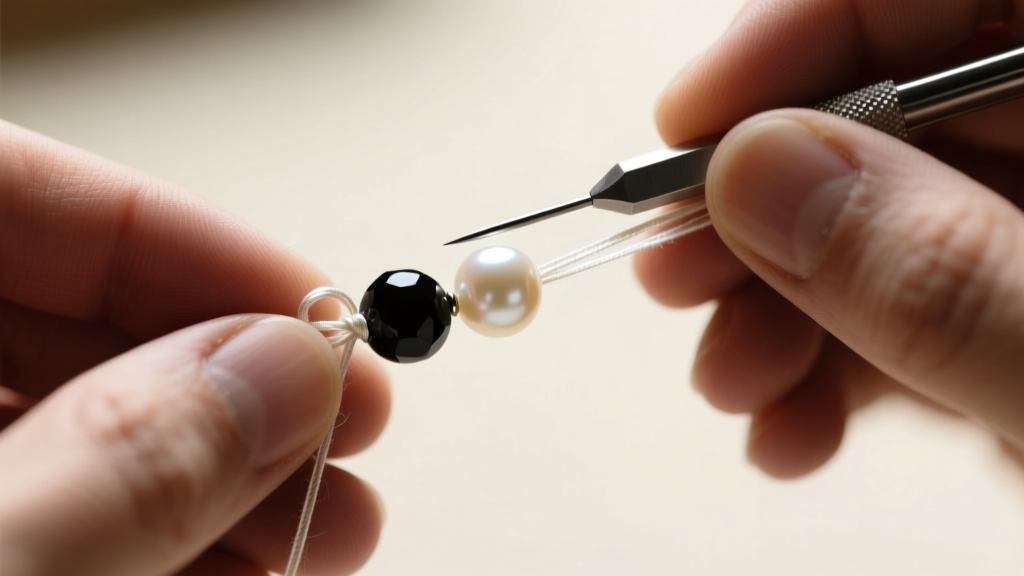
Additionally, the ends of the necklace where the thread meets the clasp endure the most tension. Always wrap the final inch of your silk or nylon thread in French wire (also known as gimp). This tiny, coiled metal spring prevents the clasp jump ring from sawing through the thread over time.
The Cleaning Conflict: Safe Methods for Dual-Material Strands
Cleaning a black and pearl necklace is a notorious conflict of material needs. While black onyx and spinel can easily withstand harsh chemicals and ultrasonic vibrations, pearls are highly sensitive to both.
Never place a mixed-media pearl necklace in an ultrasonic cleaner. The high-frequency vibrations will shatter the pearl's nacre layers and instantly dissolve the adhesive used in half-drilled pearl accents.
To safely clean your necklace without triggering dye bleed or nacre damage, follow this strict bench protocol:
- Step 1: Mix lukewarm distilled water with a single drop of pH-neutral baby shampoo. Avoid tap water, as chlorine can react with the metallic salts used in dyed black pearls.
- Step 2: Dip a soft, natural-bristle makeup brush into the solution and gently agitate the surface of the pearls and black stones. Do not submerge the strand, as water trapped in the drill holes will weaken the silk thread and promote dye migration.
- Step 3: Wipe the strand immediately with a damp, clean microfiber cloth to remove any soap residue.
- Step 4: Lay the necklace flat on a dry towel in a well-ventilated area away from direct sunlight. Never hang a wet pearl necklace, as the weight of the water will stretch the silk and distort the knot spacing.
Upgrading the Clasp for Weight Imbalance
A 16-inch strand of 8mm black onyx and pearls can easily exceed 50 grams. This significant weight places immense lateral stress on the clasp assembly. Standard 10mm lobster claws attached to thin, unsoldered jump rings will inevitably warp, gap, and fail under this load. When restoring your necklace, upgrade the findings. Replace lightweight spring rings with a 12mm or 14mm pearl tongue clasp (box clasp) featuring a figure-eight safety catch. Ensure the jump rings connecting the clasp to the French wire are heavy-gauge (at least 18-gauge) and securely soldered shut to prevent the silk from slipping through the seam.
Summary Checklist for Long-Term Preservation
Maintaining a black and pearl necklace requires respecting the boundaries of both organic and inorganic gemology. By storing the piece flat in a breathable cotton pouch (never sealed in plastic, which traps moisture and encourages dye bleed), keeping it away from aerosol cosmetics, and scheduling professional restringing every 24 to 36 months depending on wear frequency, you can preserve the striking contrast of your jewelry for generations. Always consult a certified gemologist or bench jeweler when dealing with severe dye stains, as attempting to bleach a stained pearl will permanently destroy its structural integrity.


