Material Properties and Eras of Antique Necklace Clasps
Discover the metallurgical properties, failure modes, and material evolution of antique necklace clasps from the Victorian era to the 1950s.

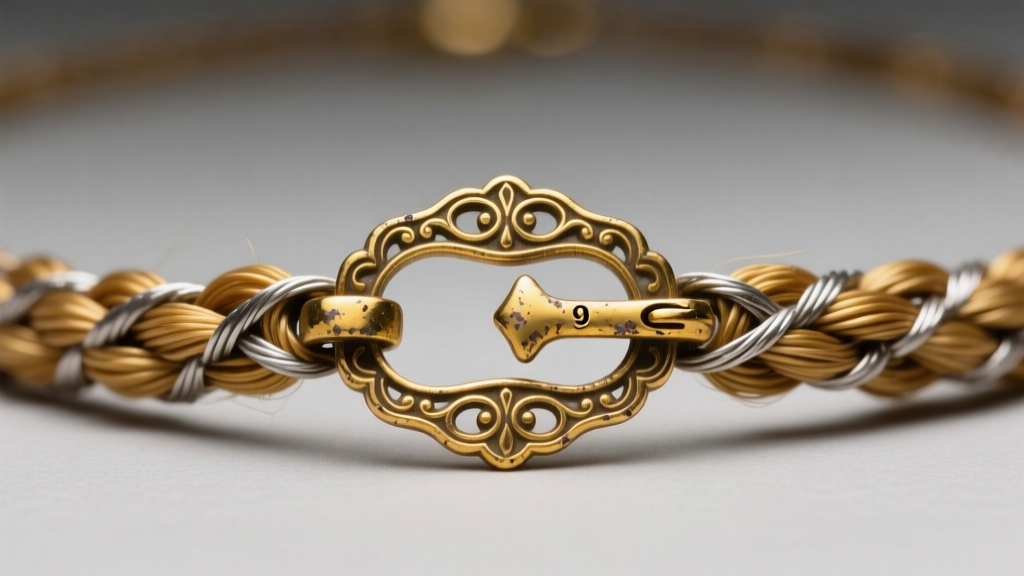
The Metallurgical Evolution of Antique Necklace Clasps
When evaluating estate and vintage jewelry, the clasp is often the most revealing component. While the pendant or chain may capture the eye, the hardware dictates the piece's structural integrity and serves as a primary forensic marker for dating. The material composition of antique necklace clasps evolved dramatically from the 1830s through the mid-20th century, driven by advancements in metallurgy, patent law, and changing fashion silhouettes. Understanding the specific alloys, tensile strengths, and manufacturing techniques used in these mechanisms is essential for accurate appraisal, authentication, and safe restoration.
Unlike modern cast or stamped clasps produced in high-volume facilities, early antique necklace clasps were predominantly hand-fabricated. Jewelers had to balance the malleability required for intricate soldering with the rigidity needed to secure heavy gemstones and beads. According to the Lang Antique Jewelry University, the transition from simple hook-and-eye closures to complex mechanical locks directly mirrors the industrialization of precious metal refining and the introduction of standardized karat hallmarking.
Material Comparison: Base Metals vs. Precious Alloys
The choice of metal for a clasp was rarely accidental. Jewelers selected alloys based on their Vickers Hardness (HV), elastic modulus, and resistance to galvanic corrosion. Below is a comparative analysis of the most common materials found in 19th and early 20th-century necklace hardware.
| Material Alloy | Vickers Hardness (HV) | Primary Era | Common Failure Mode |
|---|---|---|---|
| Pinchbeck (89% Cu, 11% Zn) | 110-130 HV | 1830s–1880s | Stress cracking, severe tarnishing, dezincification |
| 15k Yellow Gold (Pre-1854 UK) | 140-160 HV | 1830s–1854 | Wear at the friction joints, bending of the T-bar |
| 9k Yellow Gold (Post-1854 UK) | 170-190 HV | 1854–1930s | Brittle fracture under heavy chain tension |
| 14k White Gold (Ni/Zn alloyed) | 200-230 HV | 1910s–1950s | Spring fatigue, rhodium plating wear |
| 950 Platinum | 180-210 HV | 1890s–1930s | Metal galling, solder joint degradation |
| Zamak / Pot Metal | 80-100 HV | 1920s–1940s | Catastrophic intergranular corrosion, crumbling |
As noted by the Victoria and Albert Museum, the UK Hallmarking Act of 1854 was a watershed moment. It legalized 9k, 12k, and 15k gold, fundamentally shifting the material properties of British and exported jewelry. 9k gold, while harder and more wear-resistant, lacks the ductility of 15k or 18k gold, making 9k antique necklace clasps more prone to snapping if forced open incorrectly.
Identifying Clasp Types by Material and Era
The C-Clasp and T-Bar (Victorian to Edwardian)
The earliest and most ubiquitous antique necklace clasps are the C-clasp and T-bar. Originally, these consisted of a simple 'C' shaped hook and a cylindrical 'T' pin. The pin was pushed through the hook, and the weight of the necklace kept it seated. However, as necklines dropped and jewelry became heavier, the open C-clasp proved inadequate. By the late 1890s, jewelers began adding a secondary 'safety catch'—a small, hinged figure-eight loop that locked over the T-bar. Materially, these were almost exclusively crafted from 9k to 18k yellow gold, or pinchbeck for mourning and costume jewelry. The T-bars were often hollow-constructed to save on gold weight, making them susceptible to crushing if caught on heavy fabrics.
The Trombone Clasp (Late 19th to Mid-20th Century)
Predominantly found in European, particularly French and Austrian, jewelry, the trombone clasp operates on a push-pull friction mechanism. A central push-rod with a widened base is inserted into a hollow cylindrical barrel. The tension of the metal against the interior walls holds it in place. High-end trombone clasps were machined from 18k gold or platinum. The primary material challenge with the trombone clasp is the loss of friction over time. As the 18k gold push-rod repeatedly slides against the barrel, microscopic layers of gold are worn away, eventually causing the clasp to slide open under the weight of the chain.
Early Spring Rings and the Shift to White Gold (1910s–1930s)
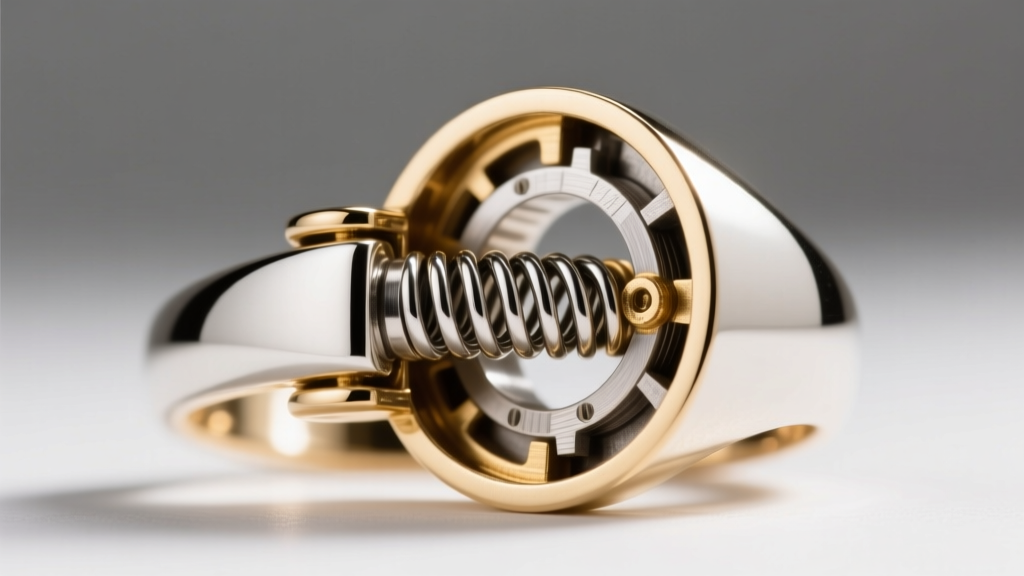
The spring ring clasp, patented in the early 1900s, revolutionized jewelry security. However, a critical metallurgical reality defines early spring rings: gold and platinum lack the elastic modulus required to function as a reliable return spring. Therefore, while the outer housing of antique spring rings was crafted from 14k white gold, yellow gold, or platinum, the internal spring mechanism was almost universally made of carbon steel. According to the Gemological Institute of America (GIA), this bimetallic construction is a primary authentication marker for early 20th-century pieces. If an antique spring ring clasp is entirely non-magnetic, it is likely a later replacement or a modern reproduction.
Common Material Failure Modes in Antique Hardware
Restoring and wearing antique jewelry requires an understanding of how these specific alloys degrade over a century of use. The most frequent failure modes include:
- Galvanic Corrosion in Spring Rings: When moisture (from sweat or humidity) bridges the gap between the carbon steel spring and the gold housing, a galvanic cell is formed. The steel rapidly oxidizes, creating rust that expands and seizes the clasp mechanism, often rendering it permanently locked or open.
- Solder Joint Degradation: Antique clasps were assembled using early soldering techniques. Over decades, the lower-melting-point alloys in the solder can undergo 'creep' or intergranular cracking, especially in heavy bead necklaces where the clasp bears dynamic, swinging loads.
- Pot Metal Decay (Zamak Disease): In 1930s and 1940s costume jewelry, clasps were frequently cast from Zamak (a zinc-aluminum alloy). If the copper and tin impurities in the alloy exceed strict limits, the clasp will succumb to intergranular corrosion, literally crumbling into a white powder when pressure is applied.
Best Practices for Restoration and Soldering
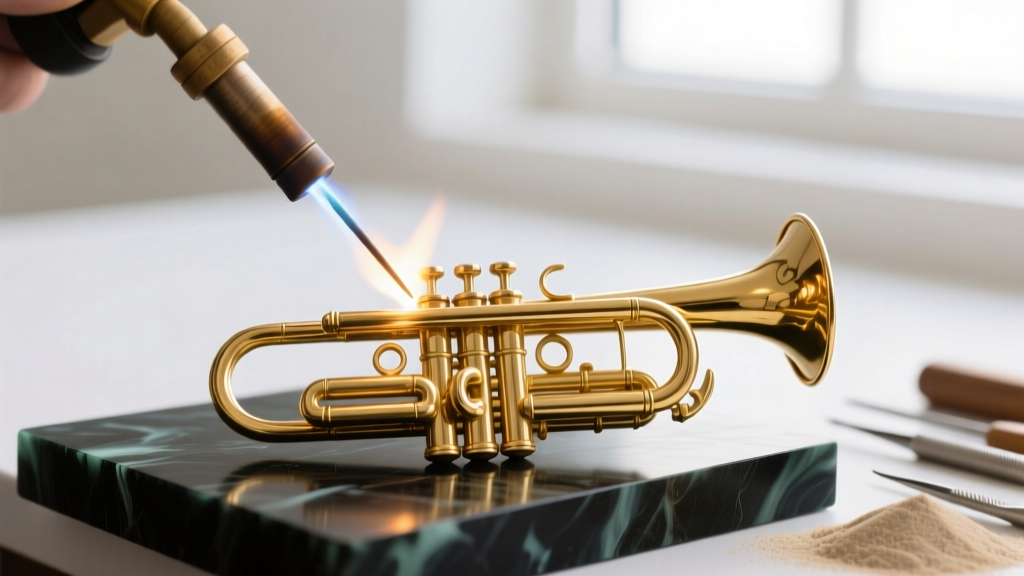
Repairing antique necklace clasps requires a delicate touch and a deep understanding of historical metallurgy. Modern jewelers often default to laser welding for these repairs, and for good reason. Traditional torch soldering poses a severe risk to the thin, hollow walls of Victorian C-clasps and Edwardian trombone barrels. The thermal conductivity of 18k gold and silver can cause the entire clasp to reach its melting point in seconds, obliterating maker's marks and altering the original geometry.
When torch soldering is unavoidable, artisans must utilize a stepped solder approach. Because antique clasps have often been repaired multiple times over the last century, the existing joints are likely saturated with 'Easy' solder (which melts at around 1,325°F). Applying 'Hard' solder (melting at 1,490°F) will cause the piece to collapse. A skilled bench jeweler will carefully test the melting point of the existing solder using a heated titanium pick before selecting a matching or slightly lower-temperature medium solder, ensuring the structural integrity of the antique hardware is preserved without compromising its historical patina.
Conclusion
The study of antique necklace clasps is a masterclass in applied metallurgy and historical engineering. From the soft, hand-forged 15k gold of the early Victorian era to the complex, bimetallic spring rings of the Art Deco period, these tiny mechanisms tell the story of industrial progress. By analyzing the material properties, hardness, and failure modes of these clasps, collectors and jewelers can accurately date pieces, authenticate origins, and execute sympathetic restorations that preserve these mechanical marvels for the next century of wear.


