Nursing Necklace Breastfeeding: Budget & Safety Value Guide
Assess the true value of a nursing necklace breastfeeding accessory. We compare food-grade silicone, safety clasps, and budget vs premium.


When a newborn begins to distract themselves during feeds, pinching, pulling, or losing their latch, many parents turn to a specialized distraction tool. The search for the perfect nursing necklace breastfeeding mothers can trust often leads to a confusing marketplace flooded with options ranging from $8 generic imports to $45 artisan-crafted pieces. But when an accessory is destined to be grabbed, chewed, and pulled by an infant, evaluating its value requires looking far beyond the aesthetic appeal.
As a jewelry style and safety analyst, I approach these pieces not just as fashion statements, but as infant-contact wearables. A true value assessment must weigh the initial financial cost against material toxicity, structural failure modes, and long-term versatility. In this guide, we will dissect the anatomy of these necklaces, expose the hidden dangers of budget knockoffs, and provide a definitive framework for assessing where your money is best spent.
The Hidden Dangers of Budget 'Knockoffs'
The most critical mistake buyers make is assuming all silicone or wooden bead necklaces are created equal. Budget-friendly options found on massive e-commerce marketplaces often cut corners in ways that directly compromise infant safety. According to the U.S. Consumer Product Safety Commission (CPSC), improperly manufactured bead jewelry poses severe choking and strangulation hazards.
Cheap necklaces frequently utilize industrial-grade silicone or PVC blends disguised as 'BPA-free.' While they may lack bisphenol-A, they can still leach phthalates and heavy metal dyes when exposed to the acidic environment of an infant's saliva. Furthermore, budget brands often string beads on standard cotton thread without individual knotting. If a baby pulls hard enough to snap cotton thread, the necklace shatters, releasing dozens of small beads directly into the child's mouth or crib—a catastrophic choking risk.
Material Value Matrix: What You Are Actually Paying For
To understand the true cost-per-wear and safety ROI, we must break down the materials used in premium versus budget tiers. The U.S. Food and Drug Administration (FDA) sets strict standards for food-contact substances, which premium baby jewelry brands adhere to, while budget brands routinely ignore.
| Material | Budget Grade ($8 - $15) | Premium Grade ($25 - $45) | Safety & Value Verdict |
|---|---|---|---|
| Silicone | Industrial blends, inconsistent Shore A hardness, prone to tearing. | 100% FDA-approved food-grade, 40-50A Shore hardness (gum-safe). | Premium only. Tearing silicone creates choking hazards. |
| Wood | Painted or chemically treated woods, potential lead/cadmium in dyes. | Untreated, sanded maple or beech, finished with organic coconut oil. | Premium only. Saliva strips cheap paint, exposing babies to toxins. |
| Cordage | Cotton or thin elastic, rots from moisture, snaps under 2 lbs of pressure. | 2mm-3mm braided nylon, moisture-resistant, high tensile strength. | Premium only. Cotton fails rapidly when exposed to drool and milk. |
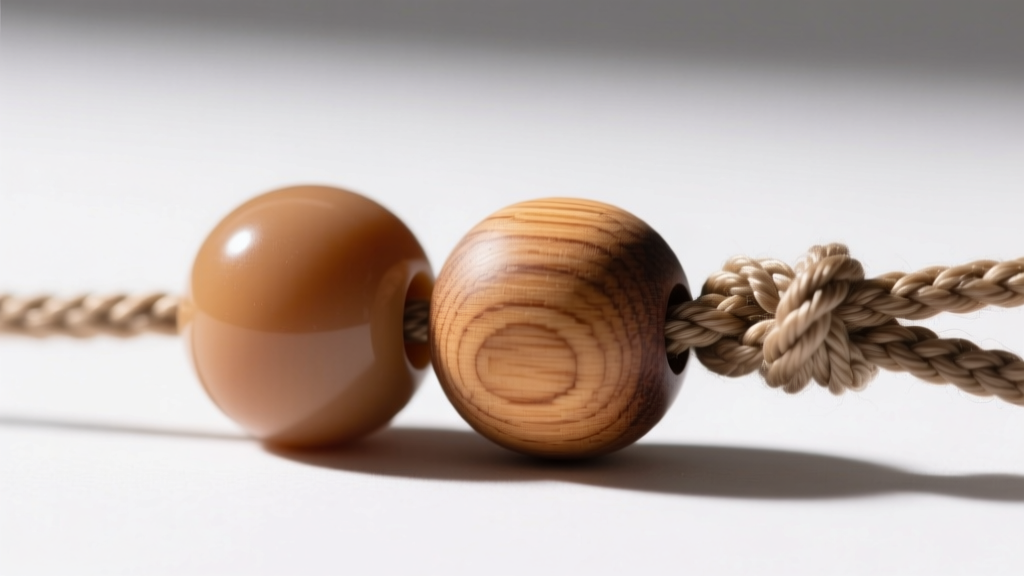
| Knotting | Strung continuously with no knots between beads. | Individually knotted between every single bead. | Premium only. Individual knots prevent scatter if the cord breaks. |
The Breakaway Clasp: A Non-Negotiable Safety Feature
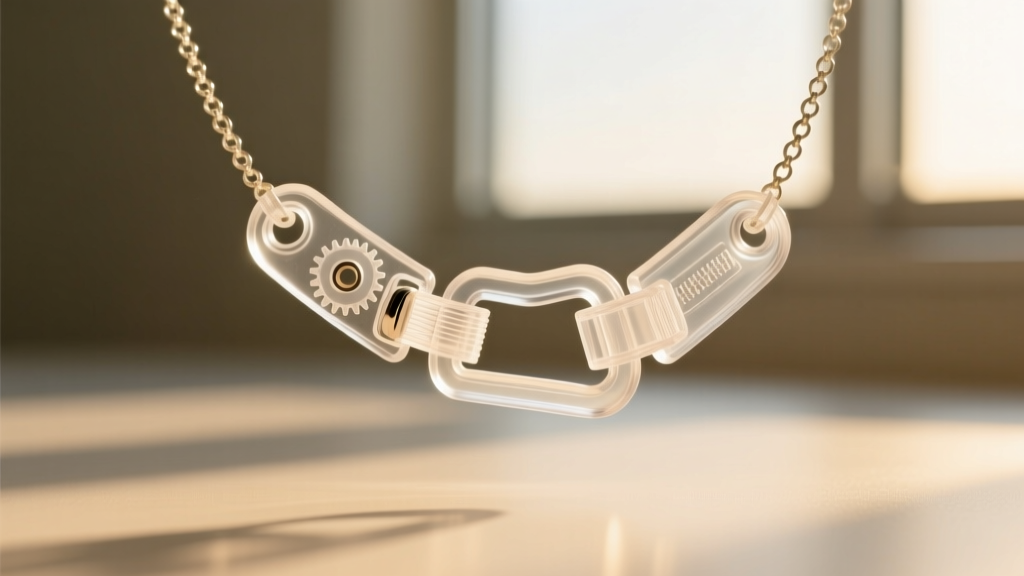
If you take only one piece of advice from this value assessment, let it be this: never purchase a nursing necklace without a certified breakaway safety clasp. Also known as a 'pom' clasp, this mechanism is designed to pop open when subjected to roughly 4 to 6 pounds (18-26 Newtons) of tensile pressure.
Babies are surprisingly strong, and a sudden yank on a continuous-loop necklace can cause severe tracheal damage. Furthermore, if a mother falls asleep while feeding or the necklace gets caught on a rocking chair, the breakaway clasp acts as a vital fail-safe against strangulation. Budget brands often use standard lobster clasps or magnetic closures. Magnetic closures are incredibly dangerous for infants, as swallowed magnets can cause catastrophic intestinal blockages. A $30 premium necklace with a tested breakaway clasp offers infinite value compared to a $10 necklace with a rigid lobster clasp.
How to Perform an At-Home Tensile Test
When your necklace arrives, perform a manual safety check before wearing it around your baby:
- The Clasp Test: Hook the clasp over a sturdy doorknob and pull firmly. It should snap open before the cord stretches or your knuckles turn white.
- The Bead Test: Grip two adjacent beads and pull them in opposite directions. You should feel the secure overhand knot wedged tightly between them. They should not slide or grind against one another.
- The Stretch Test: Pull the entire necklace taut. The braided nylon should show zero elasticity. Elastic cords degrade rapidly and snap without warning.
Price Tier Breakdown: Budget vs. Premium
Let us contextualize the financial investment by looking at what specific price brackets actually deliver in the current market.
The Danger Zone: Under $15
At this price point, you are paying for mass-produced, unregulated imports. These necklaces lack individual knotting, utilize unverified silicone blends, and often feature dangerous magnetic or rigid metal clasps. The cost-per-wear is irrelevant because the safety risk renders the product fundamentally worthless. Value Assessment: Avoid entirely.
The Mid-Tier Sweet Spot: $20 to $35
This is where genuine value lives. Reputable boutique brands and established maternal companies operate in this tier. You can expect 100% food-grade silicone, 2mm braided nylon cords, individual knotting, and rigorously tested breakaway clasps. The beads are typically large (over 3cm in diameter) to eliminate choking risks entirely. Value Assessment: High ROI, optimal balance of safety and affordability.
The Artisan Premium: $40 to $65+
Here, you are paying for aesthetic design, small-batch crafting, and unique materials like ethically sourced amber (though amber teething necklaces carry their own strangulation debates) or custom-colored silicone geodes. While beautiful, the functional safety features are identical to the mid-tier. Value Assessment: Diminishing returns on safety, but high value for fashion-forward parents who want jewelry that doubles as a statement piece.
Cost-Per-Wear and End-of-Life Value
A high-quality silicone nursing necklace is not a single-use item. To accurately assess its budget value, we must look at its lifecycle. Premium silicone is incredibly durable and can be sanitized in the top rack of a dishwasher or boiled in water for three minutes. This means the necklace can be used daily for 12 to 18 months without degrading, staining, or harboring bacteria.
Pro-Tip: Once your baby outgrows the nursing phase, a premium, individually knotted silicone necklace can be repurposed. Remove the breakaway clasp, tie a secure loop, and hang it in the stroller as a sensory toy, or freeze the silicone beads to provide soothing relief during the toddler teething years.
When you divide a $30 premium necklace by 18 months of daily use, the cost-per-wear drops to pennies. Conversely, a $12 budget necklace that snaps after three washes, or worse, causes a safety scare, represents a total loss of capital.
Final Assessment: Where to Allocate Your Budget
When evaluating a nursing necklace breastfeeding accessory, your budget should be strictly allocated toward verifiable safety features rather than superficial aesthetics. Demand 100% food-grade silicone, untreated hardwoods, braided nylon cordage, individual knotting, and a plastic breakaway clasp. By investing in the $20 to $35 mid-tier from reputable, transparent brands, you secure a durable, multi-purpose tool that protects your child while keeping them happily engaged at the breast. True value in maternal jewelry is never just about the price tag; it is about the peace of mind that comes with uncompromising safety standards.


