How to Choose the Perfect M Pendant Necklace: A Buying Guide
Discover how to choose the perfect M pendant necklace. Learn about metal grades, font styles, chain pairings, and sizing in this expert guide.

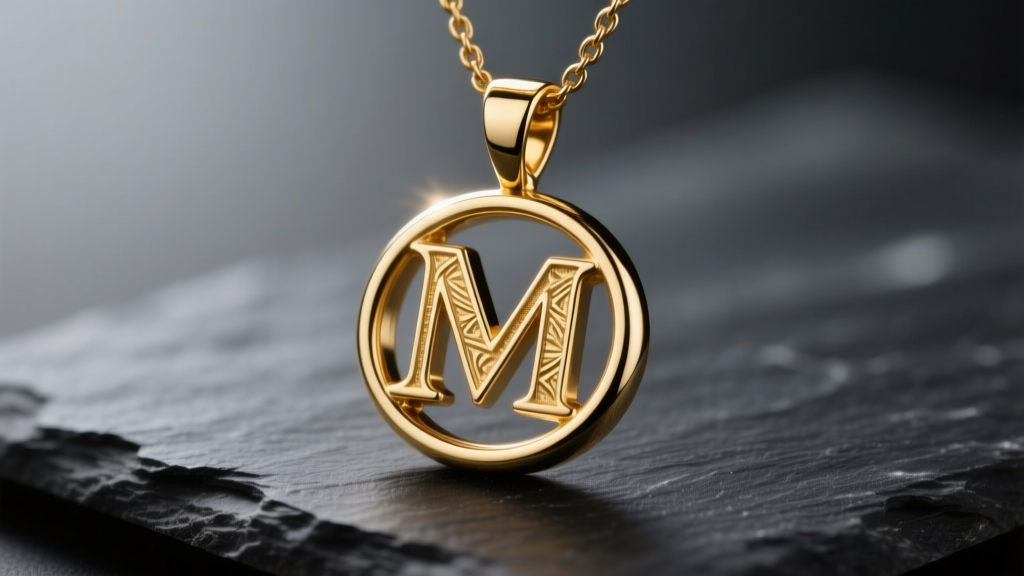
The letter M is one of the most structurally complex and visually commanding initials in the alphabet. Whether it stands for Maria, Michael, Mom, or Mateo, an M pendant necklace carries a bold, symmetrical weight that simpler letters like I or C simply cannot match. However, this unique geometry also presents specific challenges in jewelry design, casting, and chain pairing. As a senior jewelry stylist, I frequently see buyers choose an M initial pendant only to find it flips constantly, snags on knits, or wears through its chain prematurely.
This comprehensive buying guide breaks down the exact metallurgical standards, typographic nuances, and mechanical pairings you need to evaluate before purchasing your next M pendant necklace.
Decoding Metal Grades and Hallmark Standards
When investing in personalized initial jewelry, the base metal dictates both the longevity of the piece and the crispness of the letter's edges. The FTC Jewelry Guides strictly regulate how metals are stamped and marketed, meaning you should always look for precise hallmarks rather than vague marketing terms like 'gold tone'.
Sterling Silver (925) and Rhodium Plating
True sterling silver must contain 92.5% pure silver and 7.5% alloy (usually copper). Because copper oxidizes, an uncoated silver M pendant will tarnish when exposed to humidity and skin acids. For a crisp, low-maintenance M pendant, look for 925 sterling silver that has been flash-plated with rhodium. Rhodium is a platinum-group metal that provides a bright, white finish and acts as a barrier against sulfur-induced tarnish. According to the Silver Institute, proper rhodium plating should be at least 0.10 microns thick for jewelry that sees daily friction.
Gold Vermeil vs. Standard Gold Plating
Do not confuse gold vermeil with standard gold plating. By US FTC standards, vermeil must consist of a sterling silver base coated with at least 2.5 microns of 10k, 14k, or 18k gold. Standard gold-plated pendants often use a brass or copper base with a microscopic 0.5-micron gold wash. Because the letter M has sharp inner valleys (the vertices where the diagonal strokes meet the vertical stems), thin plating tends to pool or wear away rapidly in these crevices. Always demand vermeil or solid gold for intricate initial pendants.
Solid Gold: 14k vs. 18k for Daily Wear
For an heirloom-quality M pendant, solid gold is the ultimate choice. 14k gold (58.5% pure gold) is alloyed with metals like zinc and copper, giving it a Vickers hardness that resists scratching and bending. 18k gold (75% pure) offers a richer, warmer yellow hue but is softer. If your M pendant features pavé diamonds set into the letter's strokes, 14k gold provides a more secure prong structure to prevent stone loss over time.
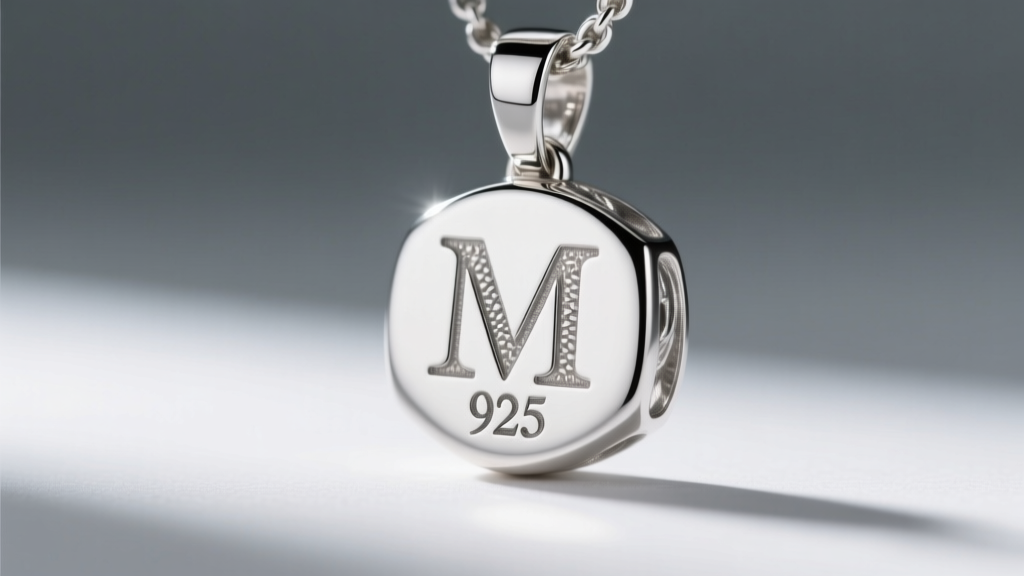
Typography and Structural Integrity of the Letter M
The typography of your M pendant drastically alters its aesthetic and structural durability. The letter M is inherently wide and top-heavy, which influences how it hangs from a chain.
- Serif Fonts: A serif M features small decorative strokes at the ends of the main stems. These serifs act as visual anchors but can be fragile if cast too thinly. Ensure the serifs are at least 1.2mm thick to prevent them from snapping off if the pendant is dropped.
- Script and Cursive: A script M often features a sweeping entry stroke and a looping exit tail. While elegant, poorly designed script Ms can look like a W when viewed from a distance. Look for a script M with a distinct, exaggerated first arch to maintain readability.
- Block / Sans-Serif: A modern, geometric block M is highly durable due to its uniform stroke width. This style is ideal for bezel-set diamond accents or a high-polish mirror finish, as the flat planes reflect light evenly.
Expert Insight: As of 2026, advancements in CNC milling and lost-wax casting allow for incredibly precise inner angles. However, you should still avoid M pendants where the inner diagonal valleys touch the bottom baseline. This creates a closed loop that can trap skin oils and lotion, leading to localized skin irritation and difficult cleaning. An open-bottom M design is vastly superior for hygiene and light reflection.
Sizing and Proportions: Finding the Right Scale
Because the M is a wide character, a 15mm M pendant will appear visually larger than a 15mm O or A pendant. When selecting dimensions, consider the intended styling context:
- Micro (8mm - 10mm): Ideal for delicate layering. At this size, block or sans-serif fonts are mandatory; script fonts become illegible blobs of metal.
- Standard (12mm - 15mm): The sweet spot for an everyday, standalone necklace. This size allows for subtle diamond accents on the outer stems without looking gaudy.
- Statement (20mm - 25mm): Best reserved for thick rope chains or worn over clothing. At this scale, the pendant's weight becomes a factor, requiring a heavy-duty bail.
Chain Pairings and Bail Mechanics
The most common failure point in any initial necklace is the bail—the loop that connects the pendant to the chain. The M pendant's wide center of gravity means it can swing and flip if the chain is too rigid or the bail is poorly proportioned. Consult the table below to match your M pendant's weight with the correct chain architecture.
| Chain Style | Optimal Thickness | Best For Pendant Weight | Drape & Movement |
|---|---|---|---|
| Cable Chain | 0.9mm - 1.2mm | Light (Under 3g) | Fluid, but prone to flipping with wide pendants |
| Box Chain | 1.0mm - 1.5mm | Medium (3g - 6g) | Structured, keeps the M pendant facing forward |
| Rope Chain | 1.5mm - 2.5mm | Heavy (6g+) | Weighted, prevents the bail from sliding off-center |
| Figaro Chain | 1.5mm - 2.0mm | Medium-Heavy (4g - 8g) | Textured, adds a vintage aesthetic to serif M fonts |
For an M pendant, a box chain is often the superior choice. The square, interlocking links provide a slightly stiffened drape that counteracts the M's top-heavy geometry, reducing the annoying 'pendant flip' that plagues initial necklaces worn on delicate cable chains.
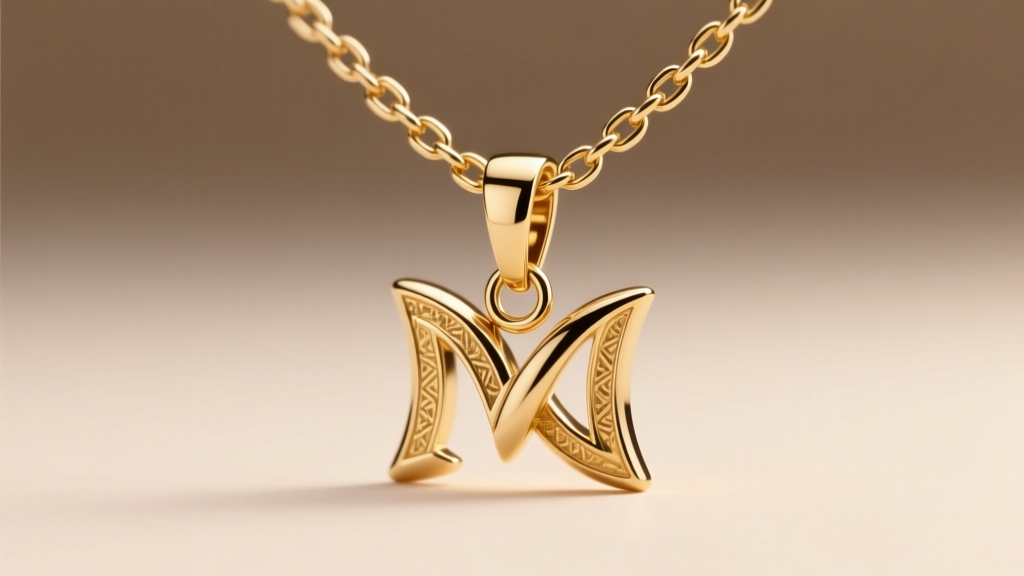
Real-World Troubleshooting: Wear, Tangles, and Tarnish
Even high-quality M pendants require specific maintenance protocols to survive daily wear. Here is how to troubleshoot the most common issues reported by jewelry collectors.
The Bail Wear-Through Phenomenon
If you pair a solid 14k gold M pendant with a softer, high-karat chain (like 22k or 24k), the friction at the bail will eventually act like a saw, cutting through the chain links. Always ensure your chain is of equal or lower karat hardness than the pendant's bail, or use a protective titanium or steel jump ring as a sacrificial buffer.
Diamond Pavé Maintenance in the Valleys
If your M pendant features pavé diamonds set into the diagonal strokes, the inner valleys will accumulate hand lotion, dead skin, and soap scum. This buildup creates a film that dulls the diamonds. Do not use ultrasonic cleaners on pave initial pendants, as the high-frequency vibrations can shake the micro-prongs loose. Instead, use a soft baby toothbrush and a drop of mild dish soap in warm water, gently brushing the crevices of the M once a month.
Preventing the 'Necklace Slide'
Because the M is wide, it can easily slide off-center, resting awkwardly near your collarbone rather than the sternum. To fix this, utilize a European bail (a wide, rectangular loop that the chain threads directly through) rather than a standard jump-ring bail. The European bail creates friction against the chain links, anchoring the M pendant firmly in the center of your chest.
Final Verdict: Investing in the Perfect M
An M pendant necklace is a timeless investment in personalized style, but it demands careful consideration of geometry, metallurgy, and mechanics. By prioritizing FTC-regulated metal grades, selecting a typographically sound design with open valleys, and pairing it with a structurally appropriate box or rope chain, you ensure your initial necklace remains a pristine, forward-facing statement piece for decades. Always verify hallmarks, inspect the bail thickness, and choose a scale that complements your neckline rather than overwhelming it. For more verified metal standards and hallmark guides, you can reference the FTC Jewelry Guides to ensure your purchase meets federal quality benchmarks.


