Troubleshooting Your Hart Necklace Cord: Fixes & Care
Is your favorite jewelry broken? Learn how to troubleshoot, restring, and replace a frayed hart necklace cord with our expert repair guide and knotting tips.

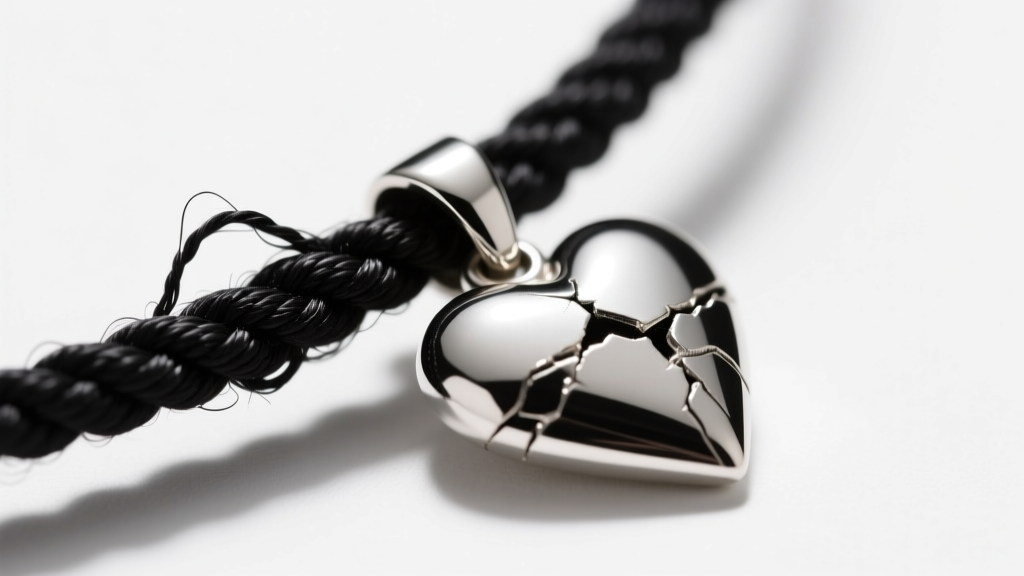
The Anatomy of a Hart Necklace Cord and Common Failure Points
The minimalist appeal of a hart pendant—whether it features a stylized stag motif or an artisan-crafted geometric heart—relies heavily on the simplicity of its suspension. Unlike heavy chain links, a hart necklace cord is typically a delicate, flexible material designed to let the pendant sit flush against the collarbone. However, this elegant design introduces specific structural vulnerabilities. When your favorite hart necklace cord begins to fray, stretch, or snap, it is rarely a random accident; it is usually the result of localized friction, environmental degradation, or manufacturing defects in the pendant's hardware.
The most frequent point of failure occurs exactly where the cord passes through the metal bail (the loop at the top of the pendant). Cast metal bails, particularly those made from lower-grade brass or porous silver alloys, often harbor microscopic burrs and sharp seams left over from the molding process. Over time, the natural motion of walking and bending acts like a microscopic saw, slowly severing the fibers of your cord. Additionally, human sweat, which typically has a pH ranging from 4.5 to 7.0, contains salts and urea that actively break down natural cellulose fibers like cotton, leading to dry rot and an eventual snap.
Troubleshooting Table: Diagnosing Your Cord Damage
Before you attempt to restring your jewelry, you must accurately diagnose why the original cord failed. Replacing the cord without addressing the root cause will only result in a repeated break within a few weeks. Use the diagnostic table below to identify your specific issue and apply the corresponding expert fix.
| Observed Problem | Root Cause | Expert Fix & Prevention |
|---|---|---|
| Cord snapping cleanly at the bail | Microscopic metal burrs or sharp casting seams inside the bail hole. | Use a diamond-coated beading reamer to smooth the interior. For a permanent fix, thread a sterling silver wire guardian through the bail before stringing. |
| Sliding knot is stuck or jammed | Wax buildup from the cord, or overtightening causing fiber fusion. | Apply a micro-drop of mineral oil to the knot. Gently work the fibers apart with a pair of nylon-jaw jewelry pliers to avoid crushing the cord. |
| Cord rotting, thinning, or emitting an odor | Bacterial growth and acid degradation on natural cotton or hemp fibers. | Switch to a synthetic alternative like C-Lon nylon, or treat natural cords with a specialized antibacterial jewelry spray after wearing. |
| Knot slipping open and pendant falling | Using the wrong knot type for the cord's coefficient of friction. | Waxed cords require a double fisherman's knot; smooth synthetic cords require melting the ends with a precision lighter to fuse the knot. |
Upgrading the Bail: The Hidden Culprit of Cord Failure
If you find that your hart necklace cord repeatedly breaks at the top loop, the hardware itself is the enemy. According to jewelry fabrication standards outlined by Fire Mountain Gems, the interior of a bail should be completely smooth to accommodate delicate stringing materials. If you cannot smooth the existing bail with a 600-grit to 1200-grit sanding needle, consider replacing the bail entirely.
You can purchase a "tube bail" or a "snap-on bail" featuring a smooth ceramic or polished titanium insert. These inserts eliminate metal-on-cord friction entirely. To install a snap-on bail, simply use flat-nose pliers to gently squeeze the prongs over the top of your hart pendant. This minor hardware upgrade can increase the lifespan of a delicate 0.5mm micro-macrame cord by up to 300%.
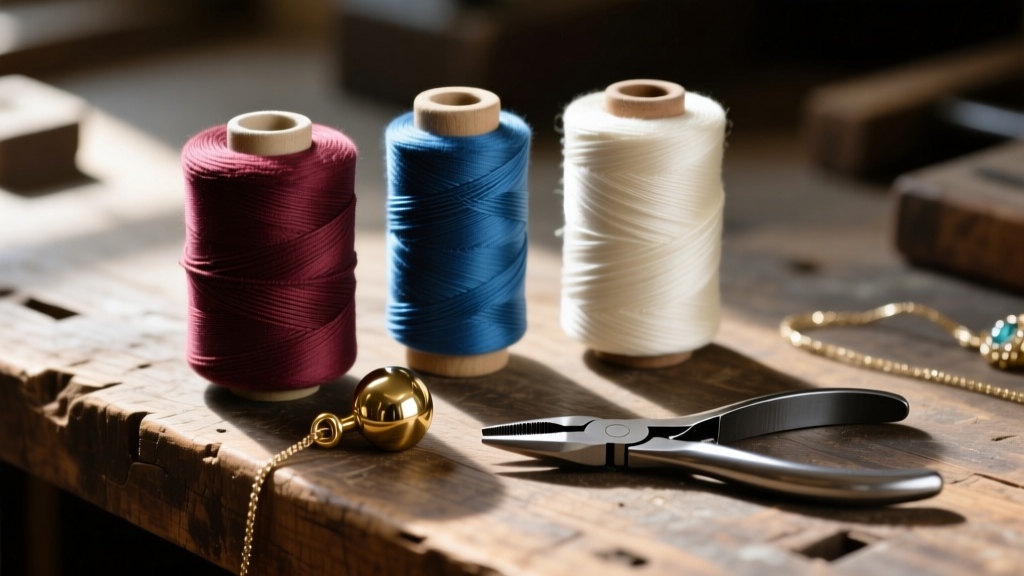
Step-by-Step Guide to Re-Stringing Your Hart Pendant
When repairing or replacing a hart necklace cord, selecting the correct material is just as critical as the knotting technique. The stringing material must possess adequate tensile strength while remaining supple enough to drape elegantly. The Spruce Crafts emphasizes that matching the cord thickness to the weight of the pendant is essential for both aesthetics and durability.
Choosing the Right Replacement Material
- Waxed Cotton (0.8mm - 1.2mm): The industry standard for artisan pendants. The wax coating provides water resistance and a slight stiffness that makes sliding knots easy to manipulate. However, it will eventually dry out and require re-waxing with beeswax.
- C-Lon Micro-Macrame Nylon (0.5mm): Offers superior tensile strength (up to 12 lbs of break strength) and is completely impervious to sweat and water. It is the best choice for everyday wear, though its smooth surface requires melted ends to secure knots.
- Griffin Silk Cord (Size F or G): Provides an unmatched luxurious drape and a subtle sheen. Silk is best reserved for lightweight, formal-wear hart pendants, as it is highly susceptible to water damage and stretching when wet.
- Greek Leather (1.5mm - 2.0mm): Ideal for heavier, oversized hart pendants. Leather requires specialized glue-on end caps and clasps, as it is too thick to tie into a secure, low-profile sliding knot.
The Re-Stringing Process
Begin by cutting a length of your chosen cord approximately 40 inches long. This excess length is necessary to accommodate your wrists when pulling the sliding knot open. Thread the cord through the bail from back to front, ensuring the pendant sits in the exact center. If you are using a wire guardian to protect against a sharp bail, thread the guardian onto the cord first, pass it through the bail, and then crimp it securely using a micro-crimping tool.
Mastering the Sliding Knot: A Permanent Fix
The adjustable sliding knot (often called a macrame square knot) is the hallmark of a well-crafted corded necklace. It allows the wearer to adjust the hart pendant from a high choker length (14 inches) down to a princess length (18 inches) without the need for a fragile metal lobster clasp.
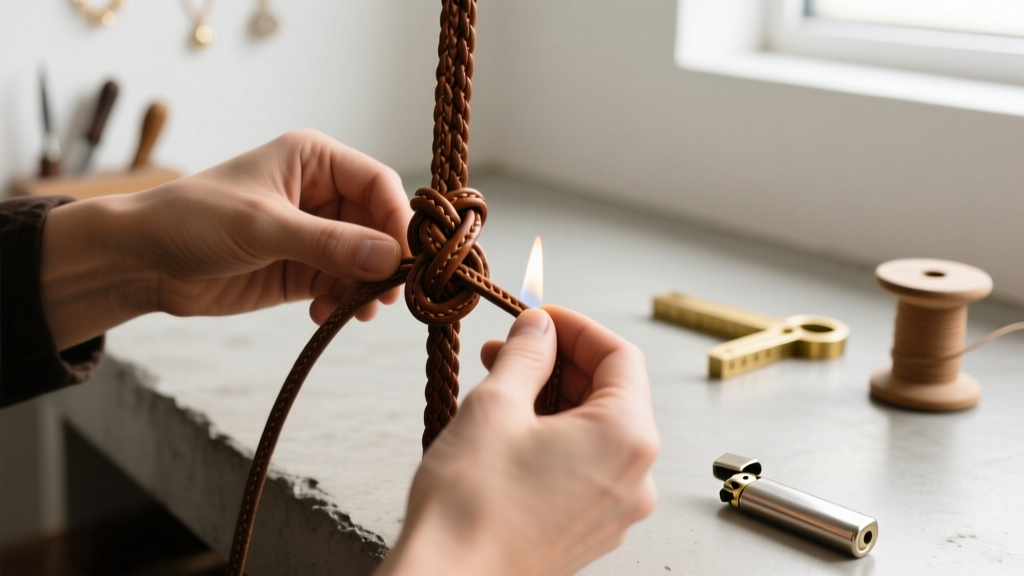
To tie a secure sliding knot, overlap the two ends of the cord. Take the right cord and wrap it over and under the left cord twice, pulling it tight to form the first half of the square knot. Repeat the process with the left cord wrapping over the right. The key to a knot that slides smoothly but holds its position under the weight of the pendant is tension: pull the knot tight enough to compress the fibers, but not so tight that you crush the core of the cord.
Once the knot is tied, you must seal the tails to prevent unraveling. If you are using nylon cord, use a precision butane lighter to briefly melt the tips, pressing them flat with a metal spoon. For waxed cotton or silk, apply a tiny drop of cyanoacrylate (super glue) or clear jewelry resin to the tips, allowing it to cure for 24 hours before wearing.
Preventative Care for Longevity
Even the highest-grade nylon cord will eventually succumb to neglect. To maximize the lifespan of your newly repaired hart necklace cord, implement a strict care routine. Always remove the necklace before showering, swimming, or applying chemical exfoliants (like AHAs or BHAs), which can degrade both the cord fibers and the metal pendant's finish.
When storing the necklace, never hang it by the cord on a jewelry tree, as the constant gravitational pull will stretch the fibers and permanently distort the sliding knot. Instead, lay the necklace flat in a lined jewelry box, or loosely coil it in a small anti-tarnish pouch. By understanding the mechanics of cord wear and utilizing the right materials and hardware upgrades, you can ensure your hart pendant remains securely and beautifully suspended for years to come.


