Dark Red Bead Necklace Guide: Comparing Gem Materials
Compare garnet, carnelian, and glass for your next dark red bead necklace. Explore hardness, pricing, and care tips in our expert material guide.

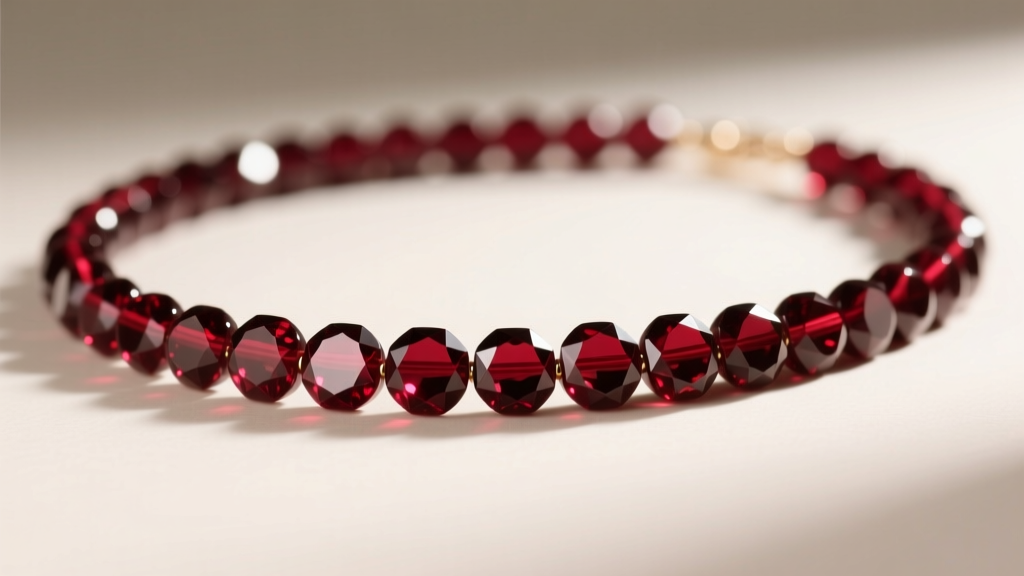
The Anatomy of a Dark Red Bead Necklace
When designing or purchasing a dark red bead necklace, the visual appeal of the color is only the beginning. The underlying mineralogy, optical properties, and structural integrity of the beads dictate the piece's longevity, drape, and value. 'Dark red' in the gemological world spans several distinct material families, each with unique specific gravities, Mohs hardness ratings, and care requirements. Whether you are stringing a heirloom piece or selecting a daily-wear accessory, understanding these material properties is essential for making an informed decision.
Natural Gemstones: Garnet, Carnelian, and Ruby
Natural stones offer unmatched optical depth due to their unique crystal structures and trace element inclusions. However, not all red stones are created equal in terms of durability.
Pyrope and Almandine Garnet
Garnet is the quintessential dark red bead. Specifically, Pyrope and Almandine varieties yield the deep, wine-red hues most commonly associated with high-quality bead necklaces. According to the Gemological Institute of America (GIA), garnet ranks between 7 and 7.5 on the Mohs scale. Crucially, garnet lacks cleavage planes, meaning it is highly resistant to chipping and fracturing upon impact—a vital property for beads that constantly knock against one another. Pyrope garnet beads (8mm rounds) typically range from $4 to $12 per bead, depending on clarity and the presence of rutile needles.
Carnelian (Chalcedony)
Carnelian provides a more opaque, earthy dark red. As a microcrystalline quartz variety, it ranks at 6.5 to 7 on the Mohs scale. Mindat.org notes that carnelian's red coloration is driven by iron oxide impurities. In the modern gem market, nearly all carnelian is heat-treated to oxidize brownish limonite inclusions into vibrant red hematite. While durable, carnelian is porous and can absorb oils and lotions, which may dull its polish over time. It is an affordable option, with high-grade 8mm beads costing between $1 and $3 each.
Ruby and Corundum Alternatives
Genuine ruby (Mohs 9) is exceptionally rare in bead form due to its astronomical per-carat pricing. Most 'ruby' bead necklaces on the market are either opaque, heavily included lower-grade corundum, or synthetic Verneuil flame-fusion rubies. For a true dark red bead necklace with premium durability without the ruby price tag, deep red spinel (Mohs 8) is an elite alternative, though it commands $20 to $50+ per bead.
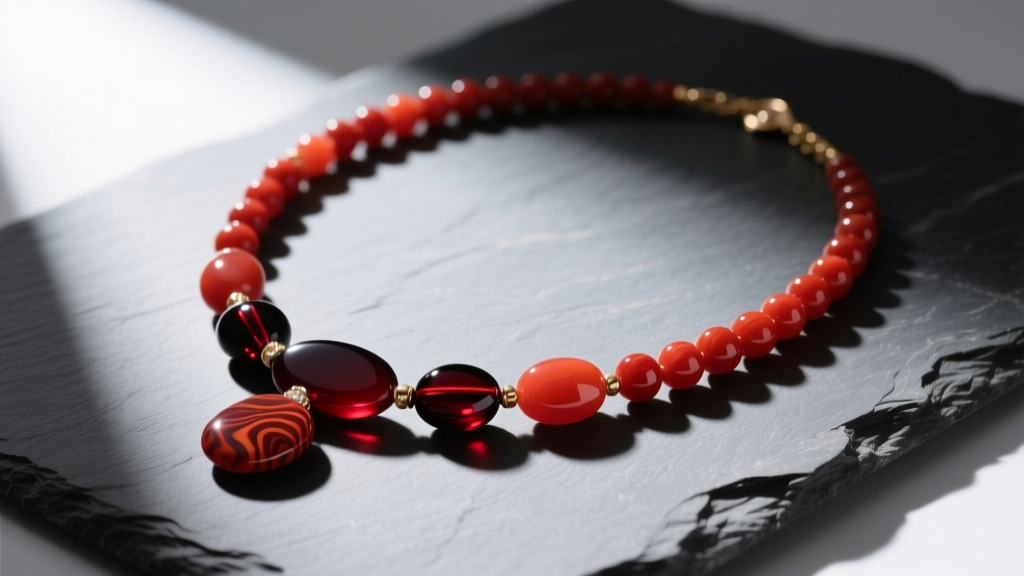
Synthetic and Organic Alternatives
For those prioritizing uniformity, ethical sourcing, or budget, non-traditional materials offer compelling alternatives for dark red bead necklaces.
Murano and Lampwork Glass
High-quality artisan glass, particularly from Murano or skilled lampwork artists, can mimic the refractive index of garnet. Lead-free crystal glass offers brilliant light return, while soda-lime glass provides a softer, more organic glow. Glass beads are completely non-porous, making them impervious to cosmetics and sweat. However, with a Mohs hardness of roughly 5.5, they are susceptible to surface scratching if stored loosely with quartz or topaz jewelry.
Sustainable Red Coral Substitutes
Historically, dark red coral was a staple in bead necklaces. Today, due to severe ecological protections and CITES regulations, natural red coral is largely restricted. Modern jewelers utilize dyed howlite, bamboo coral, or advanced ceramic polymers to replicate the lightweight, matte-finish organic feel of coral without the environmental toll.
Material Properties Comparison Chart
| Material | Mohs Hardness | Specific Gravity | Cleavage | Avg. Price (8mm Bead) | Stringing Recommendation |
|---|---|---|---|---|---|
| Pyrope Garnet | 7 - 7.5 | 3.78 | None | $4.00 - $12.00 | 0.019' Soft Flex Wire |
| Carnelian | 6.5 - 7 | 2.60 | None | $1.00 - $3.00 | Knotted Silk (Size G) |
| Red Spinel | 8.0 | 3.60 | None | $20.00 - $50.00 | 0.018' 49-Strand Wire |
| Artisan Glass | 5.5 | 2.50 | Conchoidal | $0.50 - $4.00 | 0.014' Wire or Nylon |
Stringing Materials and Structural Integrity
The weight and edge-sharpness of your chosen dark red beads dictate the stringing medium. A standard 18-inch necklace made of 8mm garnet beads weighs approximately 45 grams. While this seems light, the kinetic energy generated during daily wear can snap inferior threads.
Expert Insight: Never use standard nylon monofilament for heavy gemstone beads. The sharp edges of drilled garnet or spinel will saw through the nylon over time. Always use multi-strand stainless steel wire coated in nylon.
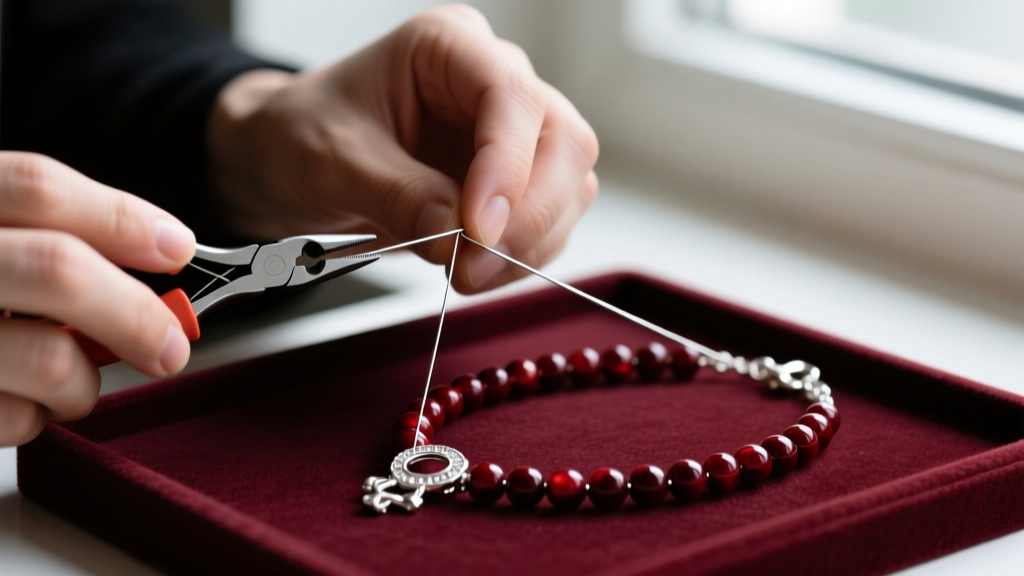
For heavy, faceted dark red beads, a 49-strand stainless steel beading wire (such as those made by Soft Flex Company) in a 0.019-inch diameter provides the ideal balance of drape and tensile strength. If you are using smooth, opaque carnelian or glass beads and prefer the traditional look of knotted jewelry, Size G or H 100% silk thread with French wire protectors at the clasp will prevent abrasion at the termination points.
Care, Maintenance, and Ultrasonic Warnings
Maintenance protocols vary drastically across dark red materials. Garnet and spinel are generally safe for ultrasonic cleaners, provided they do not have significant internal fractures. However, carnelian should never be placed in an ultrasonic cleaner. The high-frequency vibrations can exacerbate microscopic fissures caused by the heat-treatment process, leading to catastrophic bead failure.
To clean a dark red bead necklace safely:
- Garnet/Spinel: Soak in warm water with a drop of mild dish soap. Use a soft baby toothbrush to clean the drill holes, where skin oils and dead cells accumulate.
- Carnelian/Glass: Wipe down with a damp microfiber cloth. Avoid harsh chemical dips, which can strip the polish from microcrystalline quartz.
- Storage: Always store dark red bead necklaces flat or hung. Coiling them tightly in a jewelry box can create permanent memory kinks in the stringing wire, altering the necklace's drape and putting uneven stress on the crimp beads.
By matching the specific gemological properties of your dark red beads with the correct stringing hardware and care regimen, you ensure the necklace remains a durable, vibrant staple in your collection for decades.


