Buying a Givenchy Crystal Lariat Necklace: Expert Guide
Discover how to authenticate, price, and style a vintage Givenchy crystal lariat necklace with our expert 2026 buying guide and condition matrix.

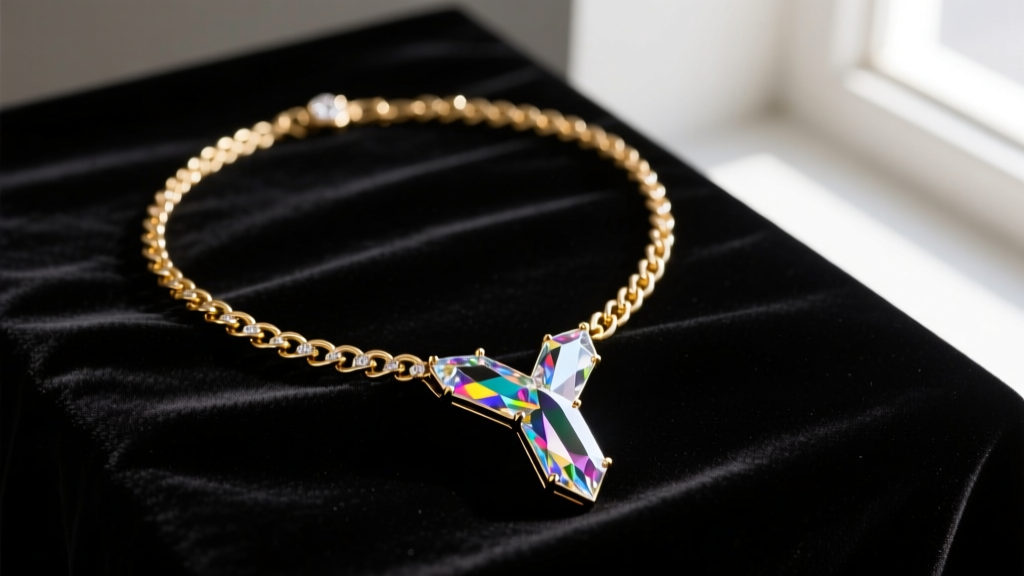
The Allure of the Y-Drop: Why Givenchy Lariats Endure
In the pantheon of vintage designer costume jewelry, few pieces command the immediate respect and sartorial power of the Givenchy crystal lariat necklace. Originally surging in popularity during the 1980s and early 1990s—an era defined by power dressing and unapologetic glamour—the lariat (or Y-drop) silhouette was a staple in Hubert de Givenchy’s runway presentations. Today, as we navigate the 2026 vintage market, these necklaces remain highly sought after by collectors and fashion archivists alike. They represent a masterclass in mid-century European manufacturing, combining substantial base metals with high-refraction lead glass crystals.
Unlike standard chokers or princess-length chains, the lariat’s defining feature is its vertical drop. This elongated silhouette draws the eye downward, creating a flattering, torso-lengthening effect that pairs impeccably with both structured blazers and fluid silk blouses. However, acquiring an authentic vintage piece requires a discerning eye. The secondary market is currently saturated with modern reproductions and counterfeit pieces that fail to capture the precise weight, crystal clarity, and metallurgical quality of the originals. This comprehensive buying guide will equip you with the exact specifications needed to authenticate, evaluate, and invest in a genuine Givenchy lariat.
Decoding the Anatomy of a Vintage Givenchy Lariat
Base Metals & Plating Quality
Authentic vintage Givenchy pieces from the golden era (roughly 1975 to 1995) were rarely made of lightweight, hollow alloys. The foundation of a genuine Givenchy crystal lariat necklace is typically a dense, sand-cast brass or pewter base. This provides the substantial 'hand-feel' and drape that collectors prize. The gold-tone finish is not a mere spray paint; it is a thick, electrolytic gold plating, often measuring between 2 to 4 microns in thickness. This heavy plating is what allows vintage pieces to survive decades of wear without exposing the base metal, provided they have been stored correctly. When inspecting a potential purchase, look for a rich, buttery yellow-gold hue characteristic of 18k gold imitation, rather than the brassy, overly yellow tint found on modern fast-fashion replicas.
Crystal Sourcing: Swarovski vs. Custom Cuts
Givenchy maintained a rigorous standard for the stones used in his maison's jewelry. The majority of the clear and aurora borealis (AB) crystals used in the 1980s lariat designs were precision-cut Swarovski chatons or custom-commissioned lead glass stones from specialized European glasshouses. According to Sotheby's costume jewelry collecting guide, the presence of high-lead-content glass is a primary indicator of vintage designer costume pieces, as it yields a refractive index that mimics fine diamonds. Genuine stones will exhibit sharp, geometric faceting with no visible mold lines, air bubbles, or cloudy inclusions. The 'foil-backing' technique, where a metallic foil is applied behind the stone to amplify light return, should be pristine and untarnished.
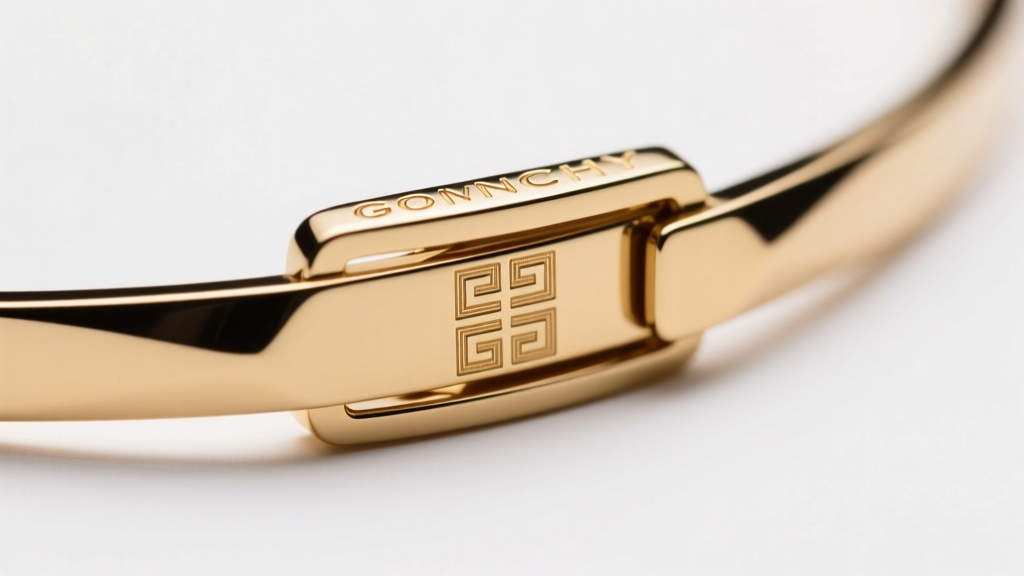
Authentication Matrix: Spotting the Real Deal
Counterfeiters often replicate the general Y-shape of the necklace but fail on the micro-details. Use the following authentication matrix to verify the provenance of a Givenchy crystal lariat necklace before completing a purchase.
| Feature | Authentic Vintage (1980s-1990s) | Modern Replica / Fake |
|---|---|---|
| Hallmark Stamping | Deeply stamped 'Givenchy', 'Paris', and the '©' symbol. Often includes 'Made in France'. | Laser-etched, shallow, or entirely missing. Fonts may appear modern or pixelated. |
| Chain Weight | Heavy, substantial brass links. Drapes with a fluid, weighted motion. | Lightweight, hollow alloy. Feels flimsy and tends to kink easily. |
| Crystal Setting | Secure prong-set or precise bezel settings. No visible adhesive. | Stones are often glued in. Visible epoxy residue or cloudy glue around the edges. |
| Clasp Mechanism | Sturdy fold-over clasp with a secondary safety chain, or a heavy-duty spring ring. | Flimsy lobster clasps with thin, easily breakable jump rings. |
| Stone Clarity | Brilliant refraction, sharp facet junctions, pristine foil-backing. | Dull, cloudy acrylic or low-grade glass with molded seams visible on the edges. |
As noted in Vogue's vintage jewelry investment analysis, the hardware and hallmarks are the most reliable indicators of authenticity, as counterfeiters rarely invest in the expensive tooling required to replicate deep-cast metal stamps.
Condition Grading & Pricing Tiers in the 2026 Vintage Market
The value of a vintage Givenchy lariat is inextricably linked to its condition. Missing stones, broken clasp mechanisms, or 'black rot' (a term for irreversible base metal corrosion beneath the plating) will severely impact the market value. Below is the current 2026 pricing framework for authentic pieces:
- Mint / Archival Condition ($550 - $950+): Zero missing stones, pristine foil-backing, fully functional original clasp, and vibrant gold plating with no wear on the high-contact points. Often includes the original Givenchy presentation box or hangtags.
- Excellent Condition ($300 - $500): Fully wearable with all stones intact. May show microscopic surface scratches on the metal or very slight dulling to the aurora borealis coating on the highest crystals. Clasp functions perfectly.
- Good / Fair Condition ($120 - $250): One or two missing non-essential stones, noticeable gold wear on the back of the pendant drop, or a replaced clasp. Ideal for buyers who want the designer pedigree for styling but do not require museum-grade preservation.
Buyers should always request high-resolution macro photography of the back of the pendant drop and the clasp area, as these are the primary zones for friction-based plating loss.
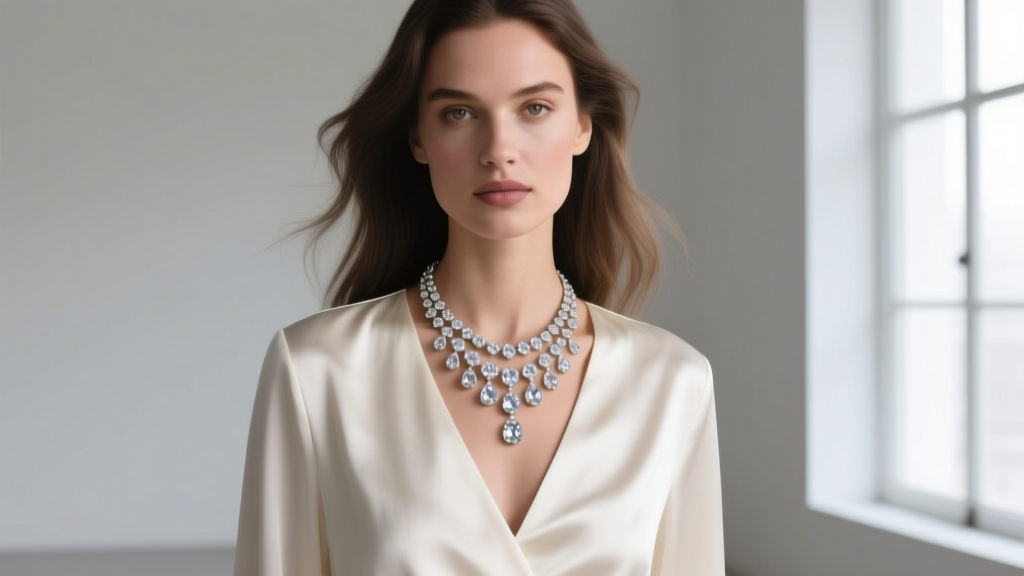
Styling the Lariat: Necklines and Drop Lengths
The versatility of the Givenchy crystal lariat necklace lies in its geometry. The standard vintage lariat features a 16 to 18-inch collar chain with a 2 to 4-inch vertical drop. To maximize its visual impact, pair it with necklines that provide an unobstructed canvas for the Y-drop.
Optimal Neckline Pairings
- The Deep V-Neck: The classic pairing. The vertical drop of the lariat mirrors the V-shape of the neckline, creating a continuous, elongating line that flatters the décolletage.
- The Structured Blazer: Worn over a silk camisole and an open, tailored blazer, the lariat adds a necessary focal point of brilliance to sharp, masculine tailoring.
- The Scoop Neck: A wider scoop neck allows the horizontal chain to rest on the collarbone while the vertical drop commands attention in the center chest.
Avoid wearing lariats with high-necked garments, turtlenecks, or heavily ruffled collars, as the intricate crystal settings will catch on the fabric, risking damage to the prongs and obscuring the design's intended silhouette.
Final Verdict: Is It a Worthy Investment?
Investing in a vintage Givenchy piece is about more than just acquiring an accessory; it is about owning a fragment of 20th-century fashion history. The Givenchy crystal lariat necklace remains a blue-chip asset in the costume jewelry market due to its enduring design relevance, superior manufacturing standards, and the dwindling supply of mint-condition examples.
When purchasing vintage designer jewelry, always prioritize condition and authenticity over immediate availability. A pristine, authenticated Givenchy lariat will not only elevate your personal style archive but will also retain its value far better than contemporary, mass-produced luxury accessories.
By meticulously checking the hallmarks, evaluating the crystal refraction, and understanding the current market pricing tiers, you can confidently secure a piece that will continue to captivate for decades to come.


