Arabic Letter Necklace Materials: A Durability & Style Guide
Discover the best metals for an Arabic letter necklace. We compare gold, silver, platinum, and steel for calligraphy detail, durability, and price.

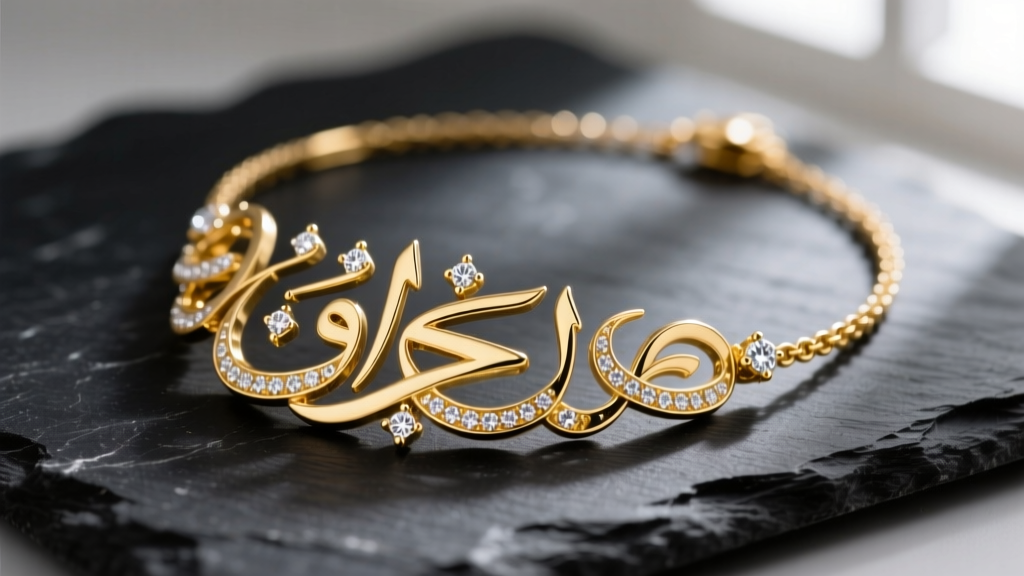
Arabic calligraphy is not merely text; it is a fluid, architectural art form. When translated into a custom arabic letter necklace, the physical properties of the chosen metal dictate whether the piece will become a cherished heirloom or a fragile disappointment. The sweeping curves of Diwani, the geometric rigidity of Kufic, and the delicate diacritic dots (tashkeel) all demand specific metallurgical traits. While custom jewelry casting technologies have advanced significantly, the fundamental physics of precious metals remain unchanged. This guide breaks down the exact material properties you need to consider before commissioning or purchasing Arabic script jewelry.
The Metallurgical Challenge of Arabic Script
Unlike standard Latin initials, which are generally blocky and structurally isolated, Arabic script is highly interconnected. Many styles utilize the tatweel (elongation) to stretch horizontal lines for aesthetic balance. These thin, elongated segments are structural weak points. If the metal lacks adequate tensile strength, these lines will warp, bend, or snap under minor lateral tension. Furthermore, the tiny dots representing vowels or consonant modifiers require a metal with excellent castability and fluid flow characteristics to capture the microscopic details of the master wax mold without porosity or pitting.
Material Breakdown: Which Metal Suits Your Script?
14k and 18k Gold (The Premium Standard)
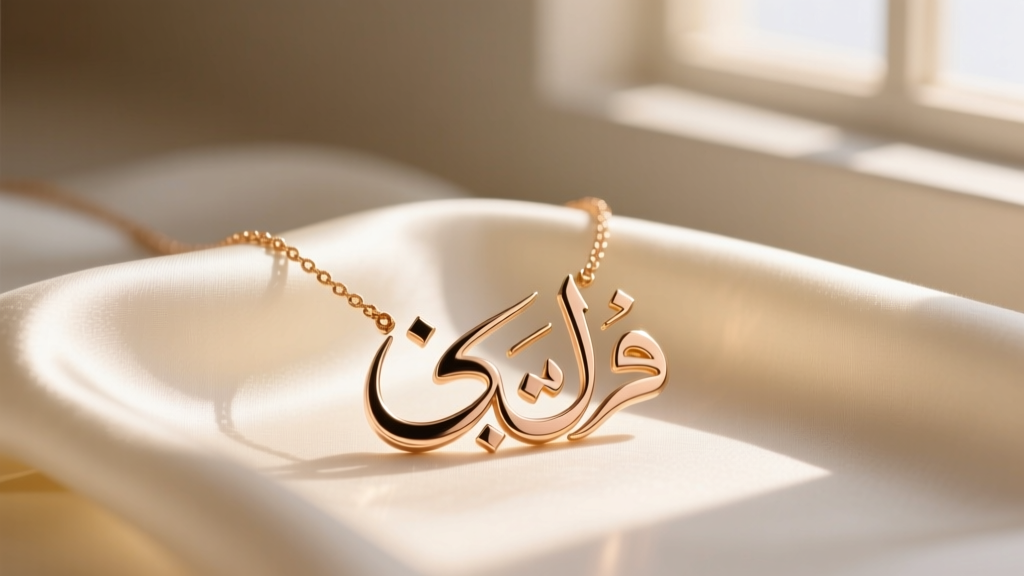
Gold remains the most popular choice for fine calligraphy jewelry, but the karat weight drastically alters its structural integrity. 14k gold (58.5% pure gold) is alloyed with copper, zinc, and silver, giving it a Vickers hardness (HV) of roughly 130-150. This makes 14k gold the superior choice for highly elongated, sweeping scripts like Diwani or Thuluth, where thin horizontal lines are prone to bending. Conversely, 18k gold (75% pure gold, HV 110-125) is softer, richer in color, and better suited for compact, geometric Kufic scripts where structural stress is minimized and the metal's natural luster can take center stage.
Sterling Silver (925) - Affordable but High Maintenance
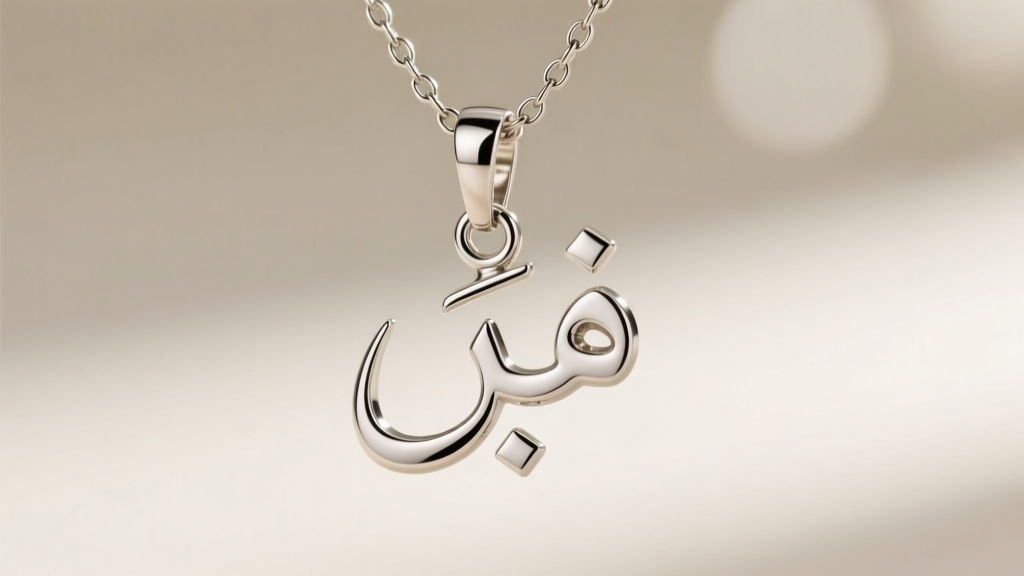
Sterling silver is composed of 92.5% silver and 7.5% copper. The copper provides necessary hardness but introduces a major vulnerability: sulfide tarnishing. When an arabic letter necklace made of uncoated sterling silver tarnishes, the dark silver sulfide (Ag2S) builds up in the crevices of the calligraphy, making the vital diacritic dots look like trapped dirt. To counter this, always insist on a rhodium plating (at least 0.2 microns thick) over the silver. According to manufacturing data from Rio Grande Jewelry Supply, rhodium not only prevents tarnish but also increases surface reflectivity, making the intricate Arabic curves pop against the skin.
Platinum (Pt950) - The Ultimate Heirloom Choice
Platinum is exceptionally dense (21.45 g/cm³) and naturally hypoallergenic. While its Vickers hardness is similar to 18k gold, its unique malleability means it bends rather than snaps when stressed. This is a massive advantage for the delicate, looping ascenders in Arabic script. However, because of its high density, a large, multi-letter Arabic name pendant in platinum can be uncomfortably heavy, pulling on the neckline and stretching the chain. It is best reserved for single-letter or short-word pendants. The hallmarking standards for platinum, as verified by the Birmingham Assay Office, ensure you are getting 95% pure platinum, usually alloyed with ruthenium for optimal casting durability.
Surgical Stainless Steel (316L) - The Budget Workhorse
316L surgical steel is incredibly hard (150-190 HV) and virtually impervious to tarnish. It is an excellent budget option for rigid, modern Kufic designs. However, it has a fatal flaw for custom jewelry: if a thin connecting loop or the bail snaps, standard jewelers cannot easily solder it. Steel requires specialized laser or TIG welding, which risks scorching the surrounding polished finish and is often more expensive to repair than the original cost of the pendant.
Comparative Data: Metals for Arabic Pendants
Use the table below to compare the physical properties and current market pricing for custom Arabic calligraphy pendants.
| Metal Alloy | Vickers Hardness (HV) | Density (g/cm³) | Tarnish Risk | Best Calligraphy Style | Avg. Custom Price |
|---|---|---|---|---|---|
| 14k Yellow Gold | 130 - 150 | 12.9 | Very Low | Diwani / Thuluth | $450 - $850 |
| 18k Yellow Gold | 110 - 125 | 15.2 | None | Kufic / Naskh | $700 - $1,400 |
| 925 Sterling Silver | 65 - 75 | 10.4 | High (without Rhodium) | All Styles (if plated) | $80 - $200 |
| Platinum (Pt950) | 110 - 135 | 21.4 | None | Short Words / Single Letter | $900 - $2,000+ |
| 316L Stainless Steel | 150 - 190 | 8.0 | None | Geometric Kufic | $40 - $120 |
Chain Pairing and Structural Integrity
An arabic letter necklace is only as strong as its chain. Because Arabic pendants are often horizontally oriented and wider than standard initial pendants, they exert lateral pull on the chain, especially when the wearer turns their head or catches the pendant on clothing.
- Avoid Snake Chains: While they look sleek, snake chains trap skin oils, kink easily under the weight of wide pendants, and are nearly impossible to repair once bent.
- Opt for Box or Wheat Chains: A 1.2mm to 1.5mm box chain or wheat chain provides an exceptional tensile strength-to-weight ratio. The interlocking links distribute the lateral pull of a wide Arabic nameplate evenly.
- Check the Bail: Ensure the bail (the loop connecting the pendant to the chain) is laser-welded or properly soldered. Mechanically crimped bails will eventually wear through the soft gold or silver where the chain rubs against it.
Gemstone Accents in Calligraphy
Adding pavé diamonds to the diacritic dots (tashkeel) of an Arabic pendant is a popular way to elevate the design. However, setting stones in script jewelry requires extreme precision. Platinum is the undisputed king of pavé settings because its malleability allows jewelers to push microscopic prongs over the girdle of the diamond without the metal springing back or snapping. If you choose 14k or 18k gold for a diamond-accented Arabic pendant, ensure the jeweler uses a high-magnification microscope to set the stones, as the curved surface of the calligraphy makes traditional flat-setting techniques impossible.
Expert Care and Maintenance
Expert Warning: Never use ultrasonic cleaners on an arabic letter necklace featuring pavé diamonds in the diacritic dots. The high-frequency vibrations can easily loosen the microscopic prongs used in delicate calligraphy settings, leading to lost stones.
For routine cleaning, mix warm water with a few drops of mild, phosphate-free dish soap. Submerge the necklace for five minutes, then gently agitate the crevices of the script using a soft baby toothbrush. Pay special attention to the underside of the pendant, where sweat and cosmetics accumulate against the skin. Always dry the piece with a lint-free microfiber cloth to prevent water spots from dulling the polished edges of the letters.
Final Thoughts on Material Selection
Choosing the right metal for your arabic letter necklace requires balancing aesthetic preference, budget, and the specific calligraphy style you wish to immortalize. For sprawling, romantic scripts, lean toward the structural rigidity of 14k gold. For bold, modern geometry, platinum or 18k gold will provide the necessary heft and luxury. By understanding the metallurgical properties outlined above, you can ensure your custom piece remains a flawless representation of your heritage and style for generations to come.


