Art Deco Necklace Vintage Authentication: Materials Guide
Explore the metallurgy, gemology, and early plastics of authentic pieces with our art deco necklace vintage materials guide for collectors.

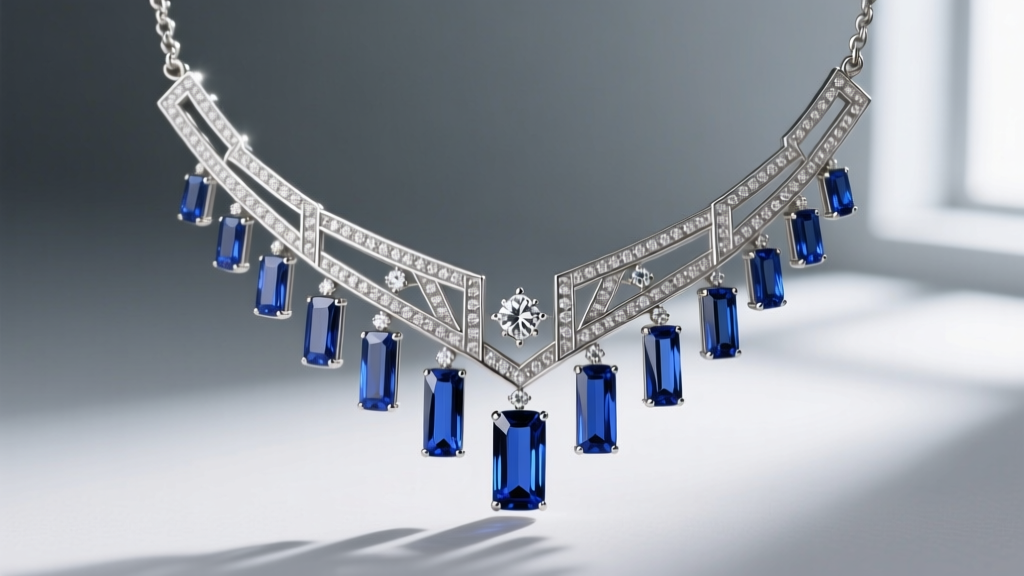
The Art Deco era (roughly 1920 to 1939) marked a radical departure from the flowing, organic lines of the Art Nouveau period, embracing stark geometry, industrial progress, and bold material contrasts. For modern collectors and appraisers, evaluating an art deco necklace vintage piece requires far more than an aesthetic appreciation; it demands a rigorous understanding of early 20th-century metallurgy, gemological synthetics, and the dawn of commercial plastics. Authenticating these pieces hinges on recognizing the specific material properties, alloy compositions, and manufacturing signatures that define the era.
The Metallurgy of the 1920s: Platinum vs. White Gold
The quintessential Art Deco aesthetic relied heavily on 'white metal' palettes to create high-contrast, monochromatic designs, often pairing bright metals with black onyx or deep blue sapphires. However, the white metals used were not created equal, and distinguishing between them is critical for accurate valuation.
Platinum (900/100 or 950/50): Platinum was the undisputed king of high-end Art Deco jewelry. Typically alloyed with 10% iridium or 5% ruthenium to increase hardness, vintage platinum possesses a specific gravity of roughly 21.45 g/cm³, making it exceptionally heavy. Its primary advantage was its tensile strength, allowing jewelers to create impossibly delicate, intricate millegrain settings and nearly invisible prongs that securely held calibre-cut gems. According to the Antique Jewelry University, platinum does not wear away; rather, it displaces, developing a soft, satiny patina over decades of wear.
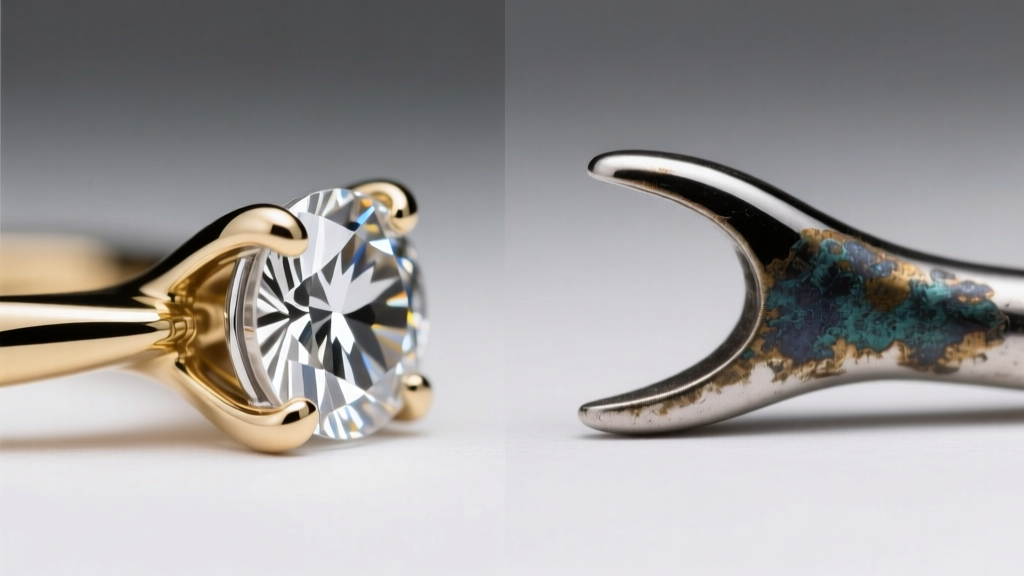
White Gold (14k and 18k): As platinum prices soared and became restricted during wartime, white gold emerged as the commercial alternative. 14k white gold (58.5% pure gold) was typically alloyed with nickel, copper, and zinc to achieve a pale color, while 18k variants used palladium. Because the underlying alloy still retained a faint yellowish-grey tint, manufacturers heavily plated these pieces with rhodium. When examining a vintage white gold necklace, look for wear on the high points and clasp mechanisms; if a yellowish hue bleeds through the rhodium flash, you are likely looking at white gold rather than platinum.
The Gemological Landscape: Naturals, Synthetics, and Simulants
Art Deco design demanded precise, uniform geometric shapes—baguettes, trapezoids, and calibre-cuts—that were incredibly difficult and wasteful to achieve with rare natural gemstones. This economic reality drove the widespread acceptance of laboratory-created stones.
Verneuil Synthetic Sapphires and Rubies
The Verneuil flame-fusion process, perfected in the early 1900s, allowed for the mass production of synthetic corundum. By the 1920s, synthetic sapphires were ubiquitous in mid-to-high-tier Art Deco necklaces, used as vibrant accents against diamonds. Under a 10x loupe, the Gemological Institute of America (GIA) notes that Verneuil synthetics often exhibit curved striae (growth lines) and microscopic gas bubbles, whereas natural sapphires display angular color zoning and straight crystal inclusions. Collectors should not view synthetic stones as 'fakes' in this context; they are historically accurate, period-correct materials that hold significant value in their own right.
Marcasite vs. Cut Steel
Often confused by novices, marcasite jewelry from the 1920s actually utilizes iron pyrite (FeS2), not the brittle mineral marcasite. Pyrite was faceted and set into silver using bead or prong settings, catching the light with a metallic, brassy sparkle. Conversely, cut steel (a holdover from the Georgian era but still used in Deco costume pieces) features flat, polished steel rivets that appear darker and more mirror-like.
The Bakelite and Celluloid Factor: Early Plastics
Not all Art Deco necklaces were forged in precious metals. The era coincided with the explosion of early synthetic plastics, which were championed by avant-garde designers like Coco Chanel and Elsa Schiaparelli for their bold colors and modern, industrial appeal.
- Bakelite (Phenol Formaldehyde): A thermoset plastic that is heavy, dense, and highly resistant to heat. Authentic Bakelite pendants and beads often feature deep, hand-carved geometric motifs. It emits a distinct, sharp chemical odor (resembling formaldehyde or camphor) when rubbed vigorously or exposed to hot water.
- Celluloid (Nitrocellulose): A thermoplastic that is much lighter and thinner than Bakelite. It was frequently used to simulate tortoiseshell, ivory, or coral. Celluloid is highly unstable; it degrades over time, off-gassing acidic camphor that can corrode adjacent metal findings.
- Galalith (Casein): Derived from milk protein, this plastic was prized for its ability to take vibrant dyes and mimic materials like jade or lapis lazuli. It cannot be molded, only machined, meaning vintage Galalith beads will always show evidence of lathe tooling.
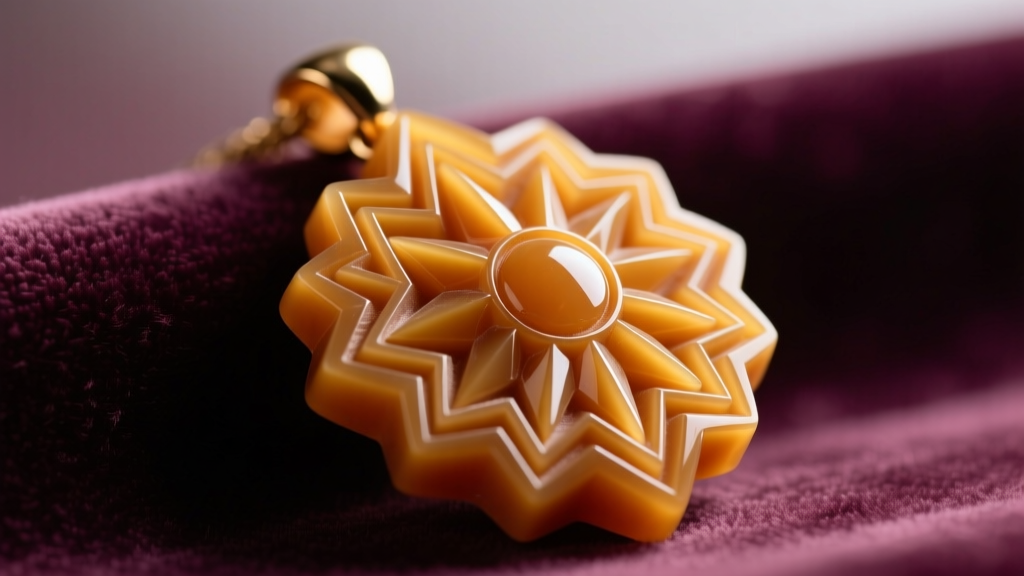
To authenticate Bakelite, collectors frequently use Simichrome metal polish. Applying a small dab on a cotton swab and rubbing it on an inconspicuous area of the plastic will yield a bright yellow stain if the piece is genuine phenol formaldehyde. Modern acrylic reproductions will not react.
Material Comparison Chart: Authentic vs. Reproduction
When evaluating an art deco necklace vintage collectors must weigh physical properties against modern reproductions. The following table outlines key diagnostic metrics:
| Material | Era of Origin | Specific Gravity | Mohs Hardness | Diagnostic Wear Sign |
|---|---|---|---|---|
| 900 Platinum | 1920s-1930s | ~20.0 g/cm³ | 4.5 - 5.0 | Satiny patina, displaced metal (not lost) |
| 14k White Gold | 1920s-Present | ~13.5 g/cm³ | 3.5 - 4.0 | Rhodium wear revealing yellow-grey alloy |
| Verneuil Sapphire | 1910s-1930s | 4.00 g/cm³ | 9.0 | Curved striae, microscopic gas bubbles |
| Bakelite | 1920s-1940s | 1.25 - 1.30 g/cm³ | ~2.0 | Heavy clunk sound, positive Simichrome test |
| Modern Acrylic | 1980s-Present | 1.18 g/cm³ | ~2.0 | Lightweight, mold seams, negative Simichrome |
Failure Modes and Preservation of Vintage Alloys
Understanding how these materials fail over a century is vital for both restoration and purchasing decisions. Galvanic corrosion is a frequent issue in mixed-metal Deco pieces. When platinum or white gold findings are soldered using lower-karat gold solders and exposed to sweat and moisture over decades, the solder joints can degrade, leading to hidden structural weaknesses in sautoir chains and lariat clasps.
Furthermore, celluloid degradation (often called 'celluloid disease') presents a severe preservation challenge. As the camphor plasticizer evaporates, the plastic shrinks, cracks, and releases nitric acid, which actively eats away at the silver or gold chains it touches. If you acquire a celluloid pendant, it must be stored in a well-ventilated, climate-controlled environment, isolated from other jewelry.
Sourcing and Pricing by Material Grade
The market for authentic Art Deco necklaces is heavily stratified by material composition. Platinum and diamond sautoirs from premier houses like Cartier or Van Cleef & Arpels routinely command between $25,000 and $150,000+ at auction, driven by the rarity of the platinum craftsmanship and natural diamond accents.
Mid-tier pieces featuring 14k white gold, natural rock crystal, and synthetic calibre-sapphires generally trade in the $2,500 to $8,000 range. Meanwhile, high-end Bakelite and carved coral or jade necklaces—highly sought after by collectors of avant-garde Deco fashion—typically sit between $800 and $4,000, depending on the intricacy of the hand-carving and the presence of original, unpolished patina. Always demand a metallurgical XRF (X-ray fluorescence) scan for high-value platinum claims to ensure the piece is not a later 20th-century white gold reproduction.


