The Necklace in Moana: Real-World Gemstone & Material Comparisons
Discover how to recreate the necklace in Moana using real-world materials. Compare resin, glass, jade, and serpentine for the perfect Heart of Te Fiti.

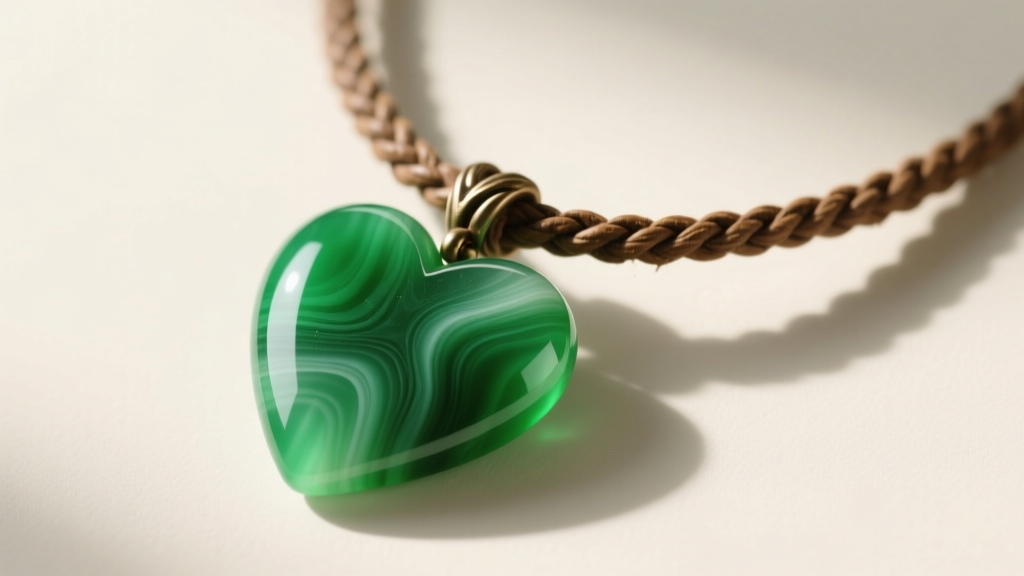
The Legacy of the Heart of Te Fiti
When fans, cosplayers, and bespoke jewelers set out to recreate the iconic necklace in Moana, they are faced with a unique lapidary and design challenge. The fictional 'Heart of Te Fiti' is depicted as a glowing, translucent green stone bearing a spiral motif. In real-world Polynesian culture, this shape is known as a koru, a Māori symbol representing new life, growth, strength, and peace. Translating this cinematic artifact into a wearable, durable piece of fine jewelry requires a deep understanding of material science, gemology, and structural integrity.
Unlike standard gemstone pendants that rely on faceting to catch the light, the necklace in Moana relies on its internal geometry, color saturation, and the tactile contrast between the polished stone and its rustic suspension cord. Below, we break down the exact materials used by professional jewelers to bring this legendary artifact to life, analyzing their physical properties, durability, and aesthetic authenticity.
Decoding the Spiral: Centerpiece Material Options
The centerpiece of the necklace must balance translucency, vibrant green coloration, and the structural capacity to be carved into a continuous, delicate spiral. We categorize the real-world material options into three distinct tiers.
Tier 1: Epoxy Resin and Polymer Clay (The Budget Tier)
For mass-produced replicas and budget-conscious crafters, two-part epoxy resin is the default choice. By mixing translucent casting resin with alcohol-based green inks, artisans can mimic the glowing, semi-transparent quality of the cinematic stone.
- Hardness: Shore D scale ~80 (equivalent to roughly 2 on the Mohs scale).
- Pros: Extremely lightweight (specific gravity ~1.1), inexpensive, and easily cast in silicone molds without the need for lapidary saws.
- Cons: Highly susceptible to micro-scratches. Without the addition of a UV stabilizer (like HALS - Hindered Amine Light Stabilizers), the resin will yellow and become brittle after 12 to 18 months of direct sunlight exposure.
Tier 2: Lampwork and Dichroic Glass (The Mid-Tier)
Glass offers a massive upgrade in durability and optical clarity. Lampworkers can melt borosilicate glass rods, infusing them with copper and chromium oxides to achieve a deep, oceanic green. The spiral is carved into the glass using diamond burr bits after annealing.
- Hardness: 5.5 to 6 on the Mohs scale.
- Pros: Excellent light refraction, highly resistant to chemical degradation, and will not yellow or degrade under UV light.
- Cons: High specific gravity (~2.5), making larger pendants quite heavy. Glass is also prone to shattering if dropped on a hard surface due to its amorphous, non-crystalline structure.
Tier 3: Serpentine vs. Nephrite Jade (The Premium Tier)
For fine jewelry applications, natural gemstones are the only acceptable choice. However, selecting the right green stone is critical. According to the Gemological Institute of America (GIA), the term 'jade' is often incorrectly applied to serpentine in the commercial market. Understanding the difference is vital for carving the intricate koru spiral.
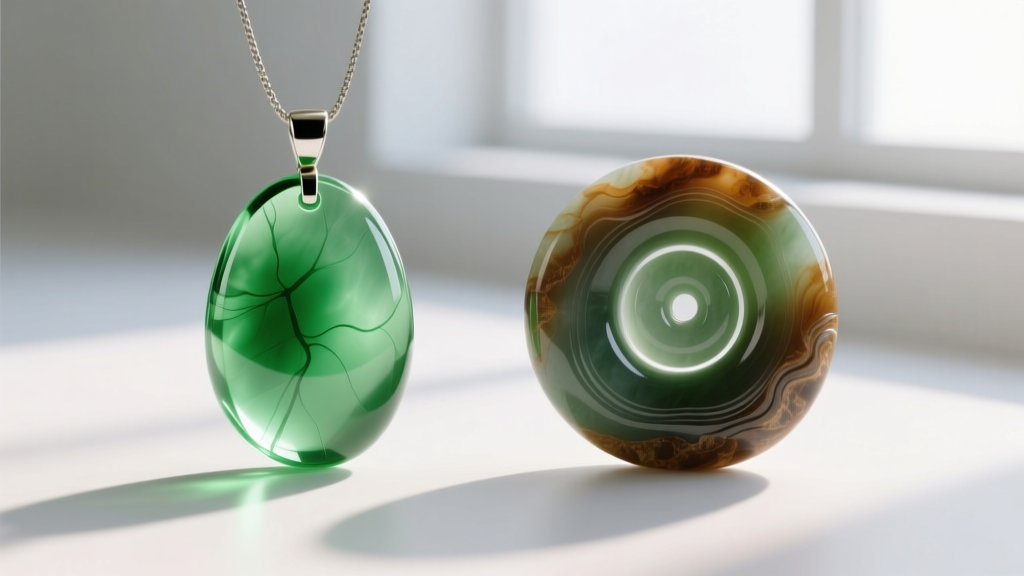
Botswana Serpentine (Often sold as 'African Jade'): Serpentine has a Mohs hardness of 2.5 to 4. While its mottled, translucent green appearance perfectly mimics the movie's prop, its low hardness makes it dangerously fragile for thin, continuous spiral carvings. The arms of the spiral are highly likely to snap during the polishing phase on a cabbing machine.
Nephrite Jade: Nephrite is a calcium and magnesium-rich amphibole mineral with a Mohs hardness of 6 to 6.5. More importantly, its interlocking fibrous crystal structure gives it immense toughness (resistance to breaking), far exceeding that of diamond or serpentine. Nephrite is the premier choice for the necklace in Moana, as it can withstand the stress of intricate undercutting required for the spiral motif. Jewelers use sintered diamond saws and 14,000-grit polishing compounds to achieve the cinematic, glass-like finish.
Cord vs. Chain: Selecting the Right Suspension
The cinematic design eschews metal chains in favor of a woven, organic fiber cord, grounding the necklace in its island-inspired lore. When engineering a real-world replica, the cord must possess high tensile strength to support a heavy jade or glass pendant, while resisting moisture and sweat degradation.
| Cord Material | Diameter | Tensile Strength | Water Resistance | Best Application |
|---|---|---|---|---|
| Waxed Cotton | 1.5mm - 2.0mm | ~25 lbs | High (Wax repels moisture) | Everyday wear, secure macrame knots |
| Braided Leather | 2.0mm - 3.0mm | ~40 lbs | Low (Degrades in water) | Heavy jade pendants, rustic aesthetics |
| Hemp Twine | 2.0mm | ~15 lbs | Very Low (Absorbs sweat/salt) | Short-term cosplay, budget props |
| Paracord (550) | 1.8mm | 550 lbs | Moderate | Utility wear, extreme durability needs |
For high-end jade replicas, a 2.0mm waxed cotton cord dyed in deep umber or charcoal is the industry standard. The wax coating prevents the cotton fibers from fraying against the bail hole of the stone, while providing enough surface friction to hold an adjustable macrame slip knot securely in place.
Sizing, Proportions, and Lapidary Techniques
Getting the scale right is where many amateur recreations fail. On screen, the necklace in Moana rests precisely on the sternum. To achieve this, the pendant itself should measure between 50mm and 65mm (2 to 2.5 inches) in diameter. Any smaller, and the intricate koru details are lost; any larger, and the pendant becomes cumbersome, swinging uncomfortably during movement.
From a lapidary perspective, cutting the inner void of the spiral requires specialized equipment. Jewelers typically drill a pilot hole using a 0.8mm diamond twist drill bit, then thread a diamond-coated wire saw through the void to cut the inner curves. The edges are then rounded using a 220-grit silicon carbide belt before moving through progressive resin polishing pads up to 14,000 grit. This meticulous process is what gives natural nephrite jade its signature 'greasy' to vitreous luster, closely matching the magical glow of the cinematic prop.
Long-Term Care and Maintenance by Material
Maintenance protocols vary wildly depending on the material you choose for your pendant. Proper care ensures the longevity of both the stone and the organic cord.
- Nephrite Jade: Jade is porous on a microscopic level. It should be cleaned with warm water and a soft brush. Avoid ultrasonic cleaners, as the high-frequency vibrations can exploit natural micro-fractures in the stone. Periodically, wipe the jade with a drop of mineral oil to maintain its luster.
- Serpentine: Because it is much softer, serpentine will scratch if stored in a jewelry box alongside harder gems like quartz or topaz. It must be stored in a dedicated microfiber pouch. Clean only with a damp cloth; harsh chemical jewelry dips will strip its polish.
- Glass and Resin: Glass can be cleaned with standard ammonia-based jewelry cleaners. Resin, however, should only be wiped with a dry microfiber cloth, as alcohol and ammonia will cloud the surface and degrade the chemical bonds of the epoxy.
- The Cord: As noted by Jewelers of America, organic materials require distinct care. Waxed cotton and leather cords should be kept away from prolonged water exposure. If the cord becomes stiff from sweat and body oils, it can be gently massaged with a tiny amount of jojoba oil to restore its flexibility.
Final Verdict: Which Material Should You Choose?
Recreating the necklace in Moana is an exercise in balancing aesthetic fidelity with material reality. If you are crafting a lightweight piece for a weekend convention, UV-stabilized epoxy resin is your most practical route. For a visually stunning, durable piece that catches the light beautifully, borosilicate lampwork glass offers a brilliant middle ground.
However, for those seeking a true heirloom-quality artifact that honors the Polynesian roots of the design, natural nephrite jade is the undisputed champion. Its unparalleled toughness allows for the delicate spiral carving, while its deep, fibrous green translucency captures the true spirit of the Heart of Te Fiti. Paired with a heavy-gauge waxed cotton cord and finished with precision macrame, a jade replica transcends mere fandom, becoming a striking piece of contemporary tribal-inspired fine jewelry.


