Expert Care & Cleaning Tips for Stacking Gold Necklaces
Learn expert care, maintenance, and cleaning tips for stacking gold necklaces. Discover how to detangle, wash, and protect your layered 14k and 18k chains.


The art of stacking gold necklaces has evolved from a fleeting trend into a permanent staple of modern jewelry styling. However, wearing multiple chains simultaneously introduces unique mechanical and chemical challenges that single-necklace wearers rarely face. When two or more gold chains rest against the collarbone, they create continuous micro-friction, trap environmental debris in overlapping links, and increase the risk of severe tangling. To maintain the structural integrity and brilliant luster of your layered collection, you must adopt a specialized care routine tailored to the specific karat weights and chain weaves in your stack.
The Hidden Toll of Friction: Karat Weight and Wear Patterns
Not all gold is created equal, and understanding your chain's metallurgical composition is the first step in proper maintenance. Pure 24k gold is far too soft for everyday jewelry, so it is alloyed with metals like copper, silver, and zinc. When you are stacking gold necklaces, the constant rubbing between links accelerates surface wear, and the severity of this wear depends entirely on the karat weight.
- 14k Gold (58.5% Gold): Because it contains a higher percentage of durable alloy metals, 14k gold is highly resistant to scratching and stretching. It is the ideal workhorse for the base layer of a stack, as it can endure the friction of heavier pendants and overlapping chains without losing its structural integrity.
- 18k Gold (75% Gold): With a richer gold content, 18k chains possess a warmer, deeper yellow hue but are significantly softer. When stacked against harder metals or abrasive fabrics, 18k chains will develop micro-scratches and 'chain stretch' (where the links slowly elongate) much faster than 14k alternatives.
According to the Gemological Institute of America (GIA), the alloy composition not only dictates durability but also how the metal reacts to environmental chemicals. If you are mixing 14k and 18k chains in a single stack, be aware that the harder 14k links can act as a mild abrasive against the softer 18k links over years of daily wear.
Chain Anatomy: Where Dirt Hides in Your Stack
Dirt accumulation in a layered necklace stack is rarely uniform. The geometry of your chosen chain styles dictates where dead skin cells, cosmetic lotions, and environmental dust will accumulate. A stack comprised entirely of flat box chains will require a vastly different cleaning approach than a stack featuring intricate rope or serpent chains.
| Chain Style | Dirt Trap Level | Primary Debris Accumulation Zones | Recommended Cleaning Tool |
|---|---|---|---|
| Cable / Link | Low | Inside the jump rings and clasp mechanisms. | Soft microfiber cloth |
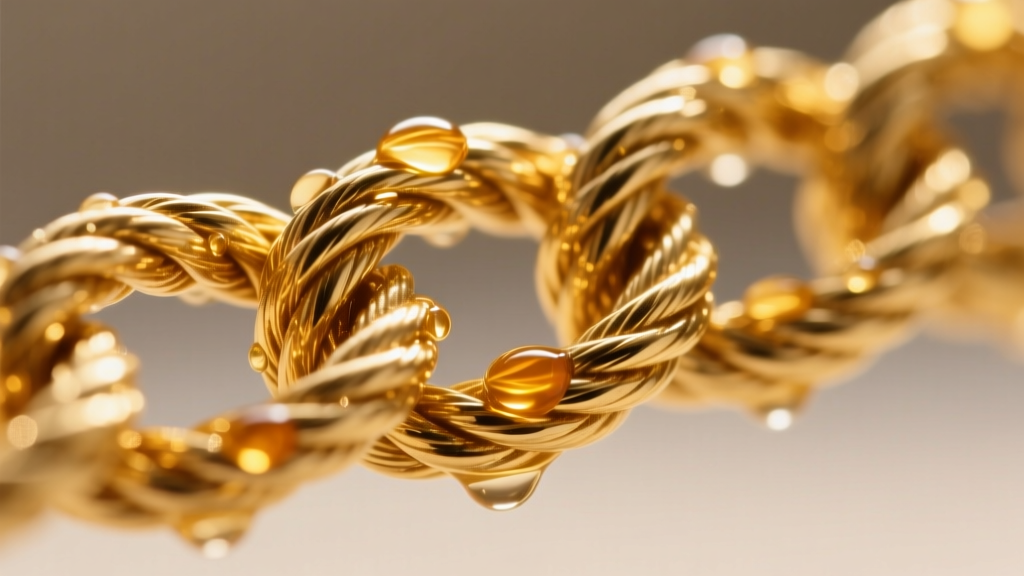
| Rope / Twisted | High | Deep within the spiral grooves and twisted wire junctions. | Extra-soft baby toothbrush |
| Box / Square | Medium | Inside the hollow square links and hinge points. | Cotton swabs and mild soapy soak |
| Figaro / Curb | Low-Medium | Underside of the flattened links resting against the skin. | Polishing cloth with jeweler's rouge |
The Step-by-Step Cleaning Protocol for Layered Gold
Throwing a tangled stack of delicate gold chains into an ultrasonic cleaner is a recipe for disaster. High-frequency sound waves can loosen the prongs on delicate gemstone pendants attached to your layered pieces and cause microscopic stress fractures in older solder joints. Instead, follow this manual, ammonia-free cleaning protocol recommended by professionals at Jewelers of America.
Phase 1: Detangling Without Micro-Tears
Never forcefully pull a knotted gold chain. Gold is malleable, and pulling a knot tight will permanently deform the links, creating weak points that will eventually snap. Lay the tangled stack flat on a hard, well-lit surface. Sprinkle a small amount of talcum powder or baby powder over the knot to act as a dry lubricant. Using a fine sewing needle or a straight pin, gently work the center of the knot loose from the inside out. Avoid using tweezers, as the serrated teeth can gouge the soft gold surface.
Phase 2: The Ammonia-Free Soak
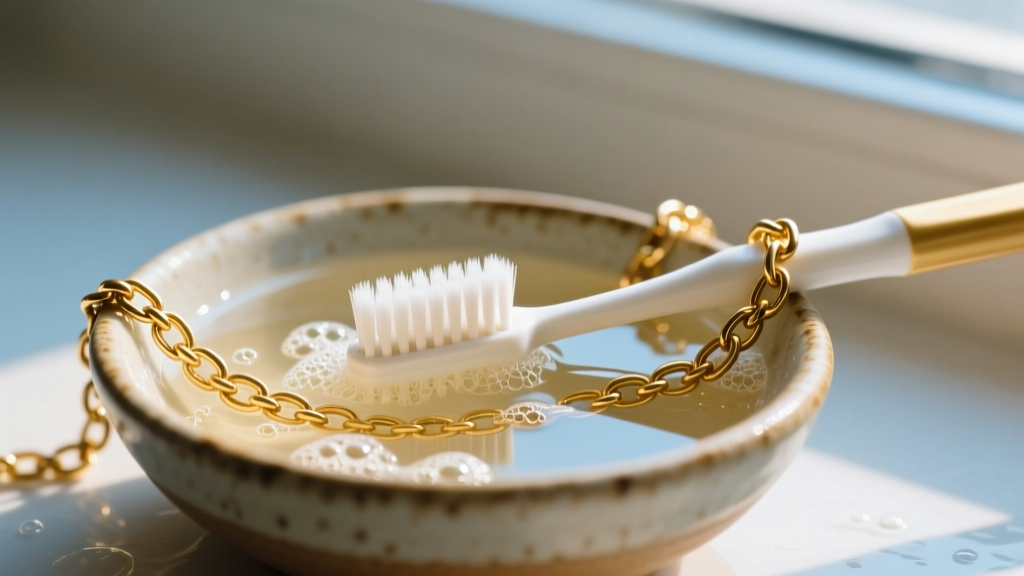
Fill a small ceramic or glass bowl with lukewarm water and add three to four drops of a mild, phosphate-free dish soap (such as original Dawn). Submerge your separated gold chains and let them soak for 15 to 20 minutes. This gentle surfactant solution will break down the lipid bonds of body oils and cosmetic residues without stripping the metal's natural patina. Never use hot water, as extreme temperature shifts can cause thermal shock to any gemstones in your stack.
Phase 3: Targeted Brushing and Rinsing
After soaking, remove one chain at a time. Using a brand-new, extra-soft baby toothbrush, gently stroke the bristles along the grain of the chain. For rope chains, use a circular motion to lift debris from the spiral grooves. Rinse the chain thoroughly under a gentle stream of lukewarm water. To prevent losing your jewelry down the drain, always perform this step over a mesh strainer or a plugged sink lined with a microfiber towel.
The Stack Killers: Chemicals You Must Avoid
The most catastrophic damage to gold necklace stacks is not caused by physical friction, but by chemical exposure. Because 14k and 18k gold contain significant amounts of copper and silver, they are highly susceptible to specific chemical reactions that can destroy a chain in a matter of minutes.
Expert Warning: Chlorine is the ultimate enemy of karat gold. When exposed to chlorinated water (swimming pools, hot tubs) or household bleach, the copper and silver alloys in your gold chains react to form copper chloride and silver chloride. This causes a phenomenon known as 'stress corrosion cracking,' where the microscopic crystalline structure of the metal literally disintegrates, leading to sudden, irreparable chain breakage.
Additionally, you must remove your stacked necklaces before entering hot springs or handling sulfur-rich products. Sulfur reacts instantly with the silver alloys in white and rose gold, causing a dark, stubborn tarnish that requires professional polishing to remove. Even everyday products like aerosol hairsprays, perfumes, and self-tanners contain alcohols and DHA (dihydroxyacetone) that will leave a dull, cloudy film on your gold chains if applied while wearing them.
Storage Solutions to Preserve Your Layered Look
How you store your stacking gold necklaces is just as critical as how you clean them. The physics of tangled chains is governed by 'random walk theory'—when multiple flexible strands are confined in a moving space (like a jewelry box drawer or a travel pouch), they will mathematically inevitably knot together.
To preserve your layered collection, abandon the communal jewelry box. Instead, invest in a multi-strand jewelry roll or a felt-lined hanging organizer where each chain can be suspended vertically. If you prefer to keep your stack permanently assembled for ease of wear, consider investing in a multi-strand necklace spacer clasp. These specialized clasps feature multiple loops that secure each chain at a fixed distance from one another, eliminating friction at the nape of the neck and making it physically impossible for the chains to tangle when you take them off at the end of the day.
By understanding the metallurgy of your gold, respecting the geometry of your chain weaves, and adhering to a strict, chemical-free cleaning regimen, your stacked necklace collection will retain its structural brilliance and layered elegance for decades to come.


