How to Authenticate and Repair an Art Deco Pendant Necklace
Learn how to authenticate, repair, and properly style a vintage art deco pendant necklace with expert tips on filigree restoration and hallmark ID.

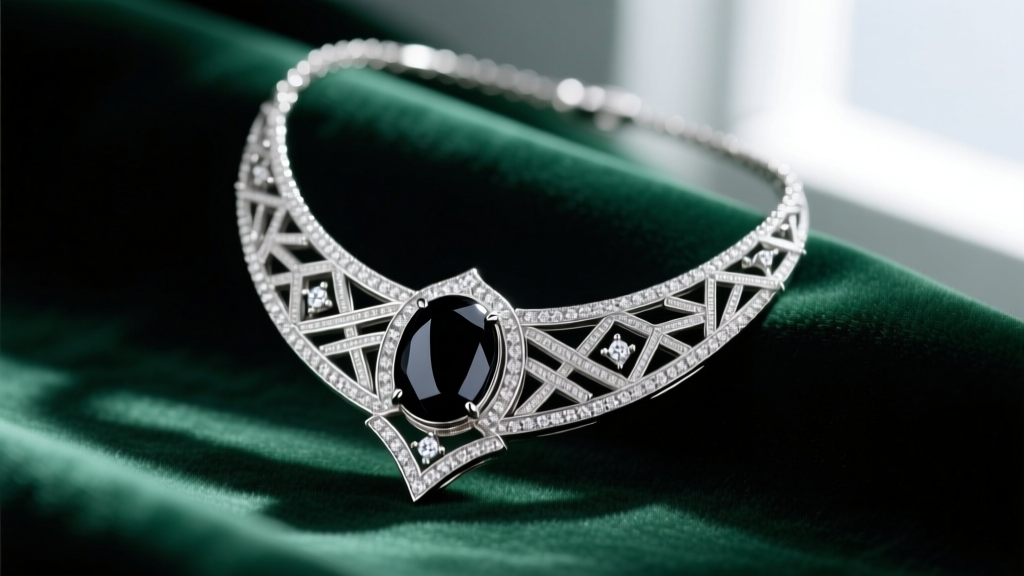
The allure of the 1920s and 1930s is immortalized in the sharp geometric lines, bold color contrasts, and intricate metalwork of the Art Deco era. For collectors and vintage jewelry enthusiasts, acquiring an authentic art deco pendant necklace is a thrilling pursuit. However, the secondary market is currently flooded with high-quality 3D-printed castings and artificially aged reproductions. Furthermore, genuine vintage pieces often arrive with bent filigree, chipped enamel, or historically inaccurate modern chains.
As a jewelry historian and bench jeweler, I see collectors make the same costly mistakes every year. This guide moves past generic styling advice to provide a rigorous, problem-solving framework for authenticating, repairing, and correctly assembling your vintage pendant.
The Authentication Dilemma: Vintage 1920s vs. Modern Reproduction
The most common problem collectors face is distinguishing a genuine 1920s die-struck piece from a modern cast reproduction. During the Art Deco period, the vast majority of fine platinum and white gold jewelry was die-struck, not cast. Die-striking involves stamping sheet metal between two steel dies under immense hydraulic pressure (often exceeding 50 tons). This compresses the metal's molecular structure, resulting in incredibly crisp edges, high density, and superior tensile strength.
Modern reproductions are almost exclusively cast using the lost-wax method. Cast metal is porous, softer, and features slightly rounded, less defined edges. If you examine the underside of the pendant's filigree with a 10x jeweler's loupe and notice a grainy texture or microscopic pitting, you are likely looking at a modern cast reproduction.
The Gemstone Trap: Why Synthetic Doesn't Mean Fake
A major troubleshooting error occurs when a buyer sends a vintage pendant to a gemologist, discovers the rubies or sapphires are synthetic, and assumes the entire piece is a modern fake. According to the Gemological Institute of America (GIA), the Verneuil flame-fusion process was perfected in the early 1900s. By the 1920s, synthetic sapphires and rubies were highly prized, expensive, and widely used in authentic Art Deco jewelry because they offered flawless clarity and vibrant saturation that natural stones rarely possessed. Therefore, synthetic corundum is actually a strong indicator of period-accurate 1920s manufacturing.
| Feature | Authentic 1920s Die-Struck | Modern Cast Reproduction |
|---|---|---|
| Edge Crispness | Razor-sharp, highly defined geometric lines | Slightly rounded, soft edges |
| Metal Density | High density, heavy for its size, no porosity | Lighter, microscopic surface pitting visible under 10x loupe |
| White Gold Color | Warmish gray (nickel/palladium alloys, rarely rhodium plated originally) | Bright, mirror-like white (heavily rhodium plated) |
| Clasp Hardware | Spring ring, barrel clasp, or bolt ring | Modern lobster claw clasp |
Troubleshooting Common Damage: Filigree, Enamel, and Gemstones
Because Art Deco pendants are characterized by delicate, lace-like metalwork, they are highly susceptible to crushing and bending. Repairing them requires specific metallurgical knowledge.
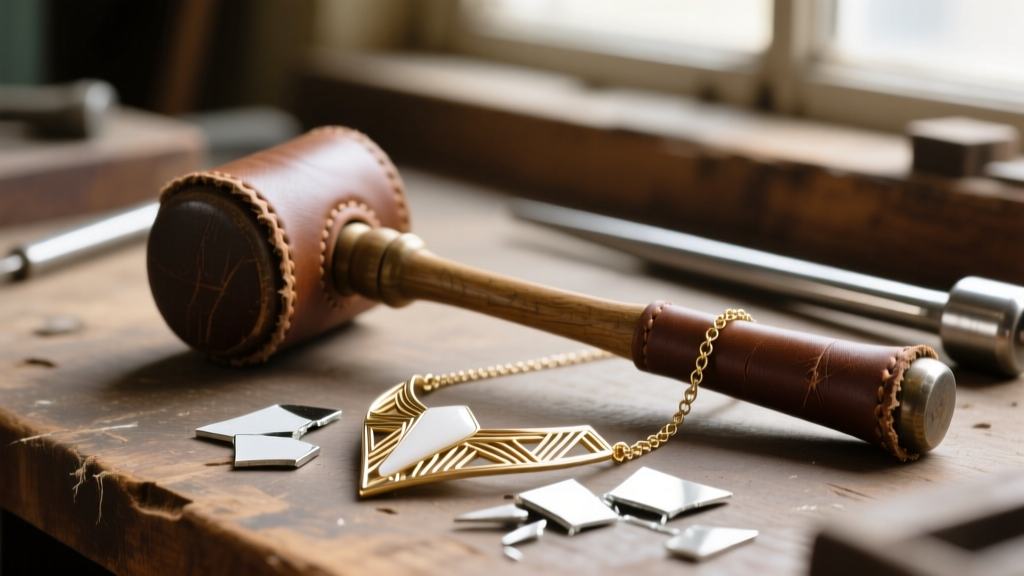
Fixing Bent Platinum and White Gold Filigree
If your platinum (typically 950Pt/Iridium) filigree is bent, a skilled bench jeweler can reshape it using a rawhide mallet and a steel ring mandrel or horn anvil. Platinum is highly malleable and forgiving. However, if your pendant is made of 1920s 18k white gold (usually alloyed with nickel and zinc), you must proceed with extreme caution. Early white gold alloys become incredibly brittle when work-hardened. Attempting to bend a crushed white gold filigree back into place without annealing it first will result in the metal snapping. For white gold repairs, laser welding is mandatory; traditional torch soldering will melt the adjacent intricate wirework due to the high thermal conductivity of the alloy.
Dealing with Chipped Guilloché or Vitreous Enamel
Many high-end Art Deco pendants feature guilloché enamel (translucent glass fused over engine-turned metal). If the vitreous enamel is chipped, traditional kiln-firing repairs are risky, as the heat can shatter the antique glass or damage heat-sensitive gemstones like emeralds. Instead, conservation-grade acrylic resins, such as Paraloid B-72, can be tinted with dry pigments to fill the chip. This stabilizes the damage and mimics the optical depth of the original glass without exposing the century-old metal to destructive heat.
Chain Pairing: Solving the "Wrong Era" Chain Problem
Nothing destroys the visual integrity of an art deco pendant necklace faster than hanging it on a modern, thick, machine-made chain. Pendants from this era were designed to hang from specific, delicate chains that complement their geometric drop.
- The Gauge Rule: Authentic chains from this era are exceptionally fine. Look for a chain width between 1.2mm and 1.5mm. Anything thicker than 2.0mm will visually overpower the pendant and strain the original jump ring.
- Weave Selection: The most historically accurate weaves are the delicate rope chain, the fine cable chain, and the wheat (spiga) chain. Avoid box chains and Figaro chains, which are distinctly modern or Victorian in origin.
- The Clasp Tell: As noted by experts at the Lang Antique Jewelry University, the lobster clasp was not widely used in jewelry until the late 20th century. To restore your necklace properly, you must source a vintage or vintage-style spring ring clasp (complete with the tiny trigger) or a threaded barrel clasp.
Cleaning Hazards: What NOT to Do
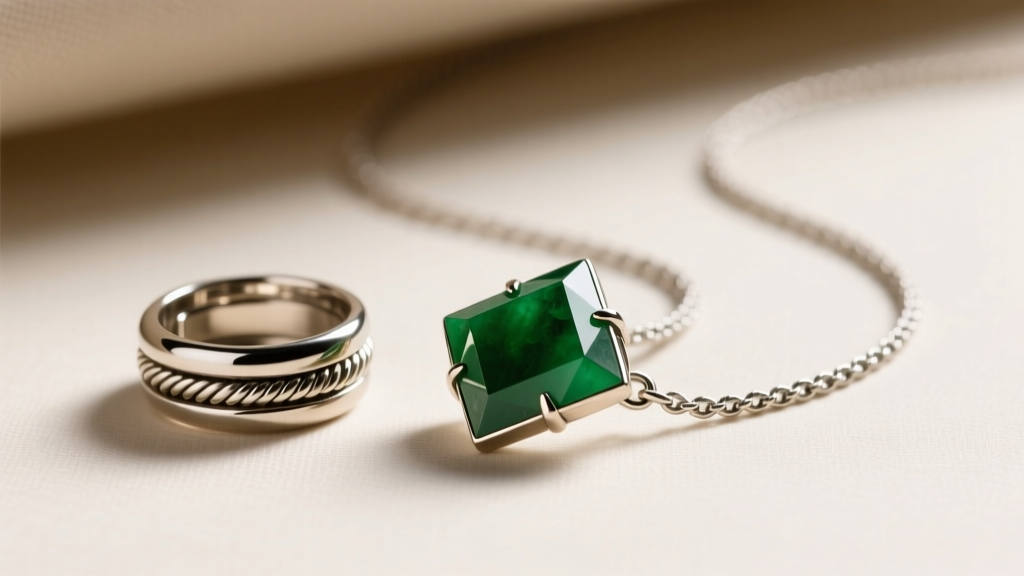
A frequent troubleshooting disaster occurs when a new owner attempts to clean their vintage acquisition using modern ultrasonic or steam cleaners. Art Deco jewelry frequently incorporates calibrated onyx, jade, coral, and fracture-filled emeralds. Ultrasonic vibrations will easily shatter jade and coral, and will strip the oils from emeralds, leaving them opaque and heavily fractured. Furthermore, the vibration can loosen the delicate bezel settings commonly used to hold channel-set baguette diamonds. Always clean your vintage pendant using a soft baby toothbrush, lukewarm water, and a drop of mild, phosphate-free dish soap. Dry it immediately with a microfiber cloth to prevent water spots on the high-polish platinum.
Styling Geometry: Solving Neckline Clashes
The structural design of an Art Deco pendant—often a long, linear lavalier style ending in a geometric tassel or cabochon drop—dictates how it must be worn. The verticality of the piece is designed to elongate the torso, mimicking the dropped waists of 1920s flapper silhouettes.
"The geometry of an Art Deco lavalier demands negative space. When paired with a high crew neck or a complex ruffled blouse, the sharp angles of the pendant fight the fabric, resulting in a cluttered, chaotic aesthetic. The pendant requires the canvas of a V-neck or a draped cowl neck to allow its linear drop to function as intended." — Archives of the Victoria and Albert Museum Jewelry Collection
To troubleshoot styling clashes, ensure your chain length places the top of the pendant bail exactly at the sternum, allowing the drop to fall freely between 24 and 30 inches. If the pendant is heavily weighted with platinum and diamonds, use a chain with a reinforced soldered jump ring at the bail to prevent the chain from kinking under the dynamic weight of the swinging geometric drop.


