The Artisan Sal Necklace: Technical Guide to Botanical Jewelry
Explore the technical craftsmanship of the artisan sal necklace. Learn about Shorea robusta seed preservation, resin encapsulation, and hardware grading.

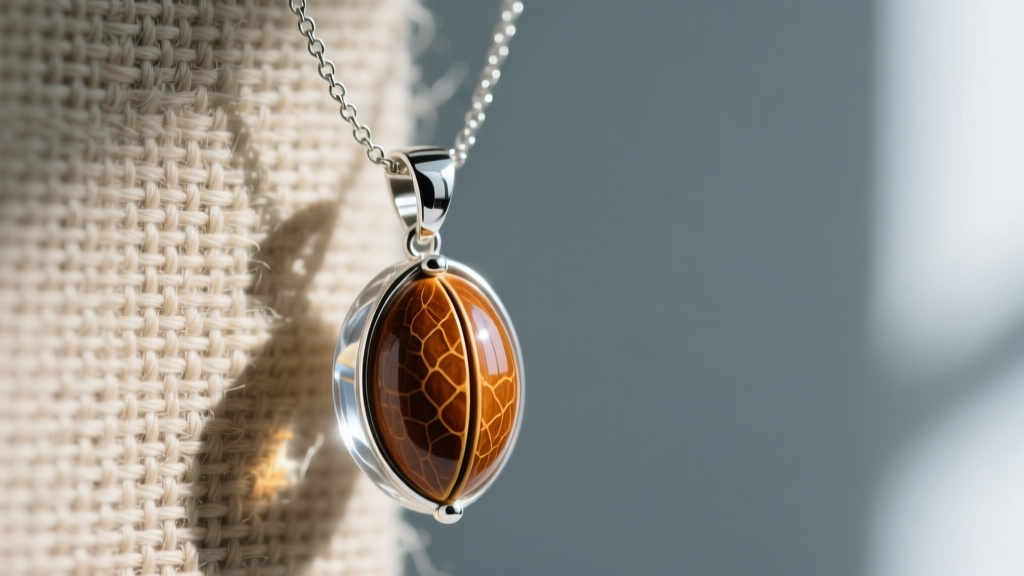
Introduction to Botanical Jewelry and the Sal Necklace
In the evolving landscape of sustainable and artisanal jewelry, the sal necklace has emerged as a masterclass in botanical craftsmanship. Unlike traditional metallurgical jewelry, a sal necklace relies on the organic architecture of the Sal tree (Shorea robusta), utilizing its dense seeds, heartwood, and occasionally its fossilized resin. As we move through 2026, the demand for traceable, non-extractive jewelry has pushed the technical boundaries of how organic materials are preserved, stabilized, and integrated with modern hardware. This guide provides a deep dive into the material science, preservation protocols, and structural engineering required to craft and maintain a high-quality sal necklace.
Botanical Origins and Material Density
The Sal tree is native to the Indian subcontinent and is highly valued in non-wood forest product (NWFP) economies. According to the Food and Agriculture Organization (FAO), the harvesting of Sal seeds and fallen timber provides critical income for indigenous communities without requiring deforestation. From a jeweler's perspective, Shorea robusta offers exceptional physical properties. The heartwood boasts a Janka hardness rating of approximately 1,800 lbf (7,900 N), making it significantly harder than many traditional jewelry woods like ebony or cocobolo. This extreme density allows for intricate carving and high-grit polishing, but it also introduces specific challenges regarding moisture retention and internal stress.
The seeds of the Sal tree, often used as focal beads or pendants in a sal necklace, contain natural oils and complex carbohydrates. If not properly processed, these organic compounds become breeding grounds for fungal degradation or structural warping. Master artisans must navigate the delicate balance between preserving the seed's natural luster and ensuring long-term dimensional stability.
Moisture Content and the Curing Protocol
The most critical point of failure in botanical jewelry is improper moisture management. Before any Sal wood or seed can be sealed, encased, or strung, it must undergo a rigorous desiccation process. Air-drying is insufficient due to the risk of ambient humidity fluctuations. Instead, technical crafters utilize programmable kilns to slowly bring the moisture content (MC) of the Sal materials down to an optimal 6% to 8%.
Bringing the MC below 6% risks cellular collapse and micro-fracturing in the seed structure, while leaving it above 10% guarantees that trapped water will eventually outgas. If the Sal components are encased in resin while outgassing, the resulting vapor pressure creates permanent micro-bubbles and cloudiness within the encapsulation matrix. As detailed in material analyses by The Wood Database, the interlocked grain of Sal wood also means it is highly susceptible to tangential shrinkage; thus, the drying curve must be carefully monitored to prevent checking (splitting along the grain).
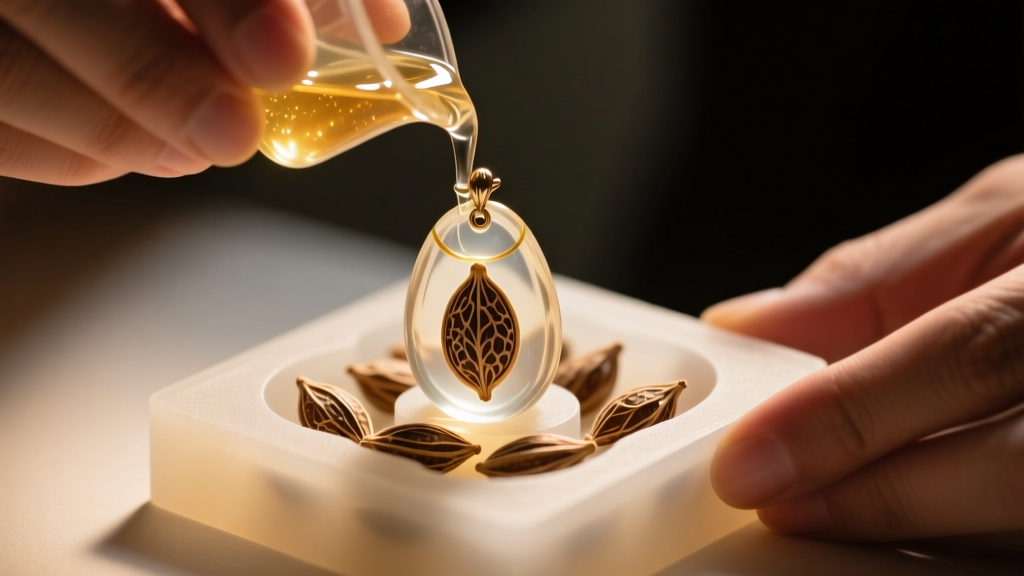
Resin Encapsulation: Chemistry and Exothermic Limits
To protect the porous surface of Sal seeds from skin oils, cosmetics, and environmental moisture, modern artisans frequently employ deep-pour epoxy resins. However, encapsulating organic matter is a volatile chemical process. Standard epoxies generate significant exothermic heat during the cross-linking phase. If a jeweler pours a resin volume that is too thick in a single layer, the core temperature can exceed 150°C (302°F), effectively cooking the Sal seed, scorching its natural oils, and causing catastrophic thermal cracking.
To mitigate this, expert fabricators use a layered pouring technique, restricting each pour to a maximum depth of 6mm (1/4 inch) and allowing the resin to reach its initial gel phase before adding the next layer. Furthermore, the refractive index (RI) of the chosen epoxy must be carefully matched to the natural oils of the Sal seed. An epoxy with an RI of 1.52 to 1.56 will optically 'disappear' into the seed's surface, creating a seamless, glass-like transition that enhances the organic chatoyancy of the material.
Hardware Integration and Galvanic Considerations
Organic materials like Sal wood and seeds contain trace tannins and mild organic acids. When these materials are in direct, prolonged contact with reactive base metals, the resulting chemical exchange causes rapid oxidation and verdigris buildup, which can stain the botanical elements and compromise the structural integrity of the jewelry. Selecting the correct bail, jump rings, and clasp hardware is non-negotiable for a durable sal necklace.
Hardware Alloy Comparison for Botanical Jewelry
| Metal / Alloy | Corrosion Resistance to Tannins | Tensile Strength | Verdict for Sal Necklaces |
|---|---|---|---|
| Grade 2 Titanium | Exceptional (Inert) | 344 MPa | Ideal for permanent, high-end structural bails. |
| 316L Stainless Steel | High (Molybdenum added) | 485 MPa | Excellent for clasps and heavy-duty jump rings. |
| Solid 14k Gold | Very High | Variable (Alloy dependent) | Superb for luxury accents; avoid low-karat alloys. |
| Raw Brass / Copper | Poor (Highly Reactive) | 300-400 MPa | Avoid entirely unless heavily rhodium-plated. |
For the highest tier of artisan sal necklaces, Grade 2 or Grade 4 titanium is the gold standard for hidden structural components. Titanium's passive oxide layer renders it completely inert to the mild acids present in Sal seeds, ensuring zero metallic staining over decades of wear.
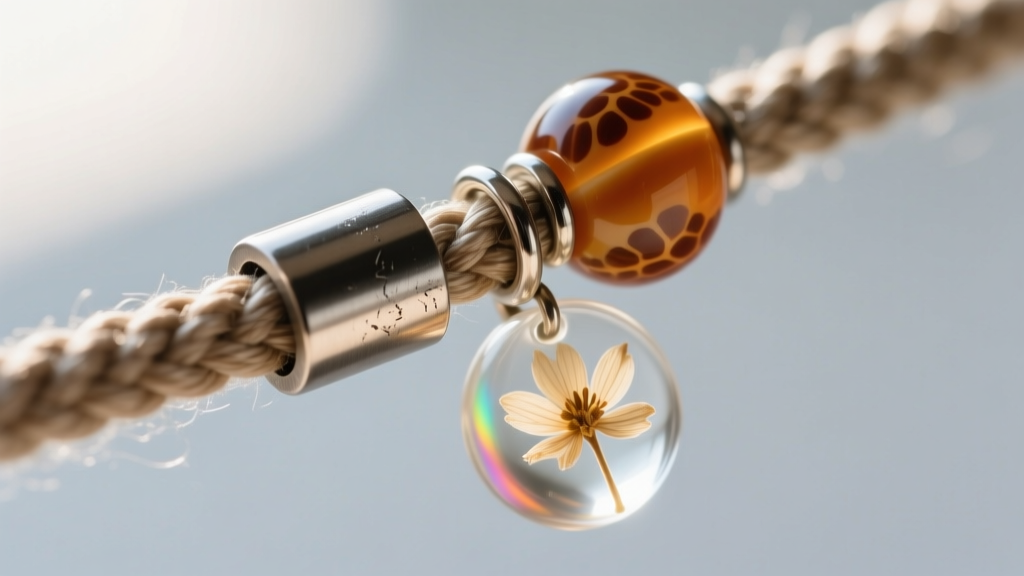
Stringing Materials: Tensile Strength and Degradation
The cordage used in a sal necklace must balance aesthetic warmth with severe tensile requirements. Because Sal pendants can be remarkably dense and heavy—often exceeding 40 grams for large, resin-encased focal pieces—standard silk threads are entirely inadequate. Silk degrades rapidly when exposed to the slightly acidic pH of human sweat and lacks the necessary break-strength for heavy botanical pendants.
Master jewelers opt for heavily waxed Irish linen or braided UHMWPE (Ultra-High-Molecular-Weight Polyethylene) micro-cords. Waxed linen provides a traditional, organic aesthetic that complements the Sal seed, while the beeswax or microcrystalline wax coating repels moisture and prevents the fibers from fraying against the microscopic abrasions of the pendant's drill hole. For maximum security, the linen is finished with a 316L stainless steel tube clasp, crimped using a specialized dual-notch crimping tool to distribute the compression force evenly without severing the natural fibers.
Environmental Vulnerabilities and Long-Term Care
Even when perfectly encapsulated, a sal necklace requires specific environmental awareness. The primary enemy of botanical resin jewelry is ultraviolet (UV) radiation. Standard epoxies will undergo photo-oxidative degradation when exposed to direct sunlight, resulting in a yellowing effect that muddies the natural brown and gold hues of the Sal seed. To combat this, premium fabricators incorporate HALS (Hindered Amine Light Stabilizers) and UV-absorbing benzotriazoles into the resin mixture during the catalyzation phase. These additives act as a molecular sunscreen, extending the optical clarity of the necklace by decades.
Furthermore, while the resin protects against liquid water, extreme fluctuations in ambient humidity can cause the un-encapsulated portions of the Sal wood (such as the back of a cabochon or the edges of a bead) to expand and contract. Owners of a sal necklace should store the piece in a climate-controlled environment, ideally maintaining a relative humidity (RH) between 40% and 50%, and occasionally treat exposed organic surfaces with a microcrystalline conservation wax, such as Renaissance Wax, to seal the cellular structure against atmospheric moisture.
The 2026 Market Landscape
As the jewelry industry continues to pivot toward verifiable sustainability, the sal necklace stands out as a triumph of ethical sourcing and material engineering. By combining ancient botanical elements with aerospace-grade hardware and advanced polymer chemistry, today's artisans are creating heirloom-quality pieces that honor the natural world without sacrificing structural longevity. For collectors and enthusiasts, understanding the technical depth behind these organic treasures only amplifies their profound aesthetic and cultural value.


