The Sea Glass Bead Necklace: 2026 Coastal Styling Trends
Discover 2026 styling trends for the artisan sea glass bead necklace. Learn to identify authentic frosted glass, knotting techniques, and layering tips.

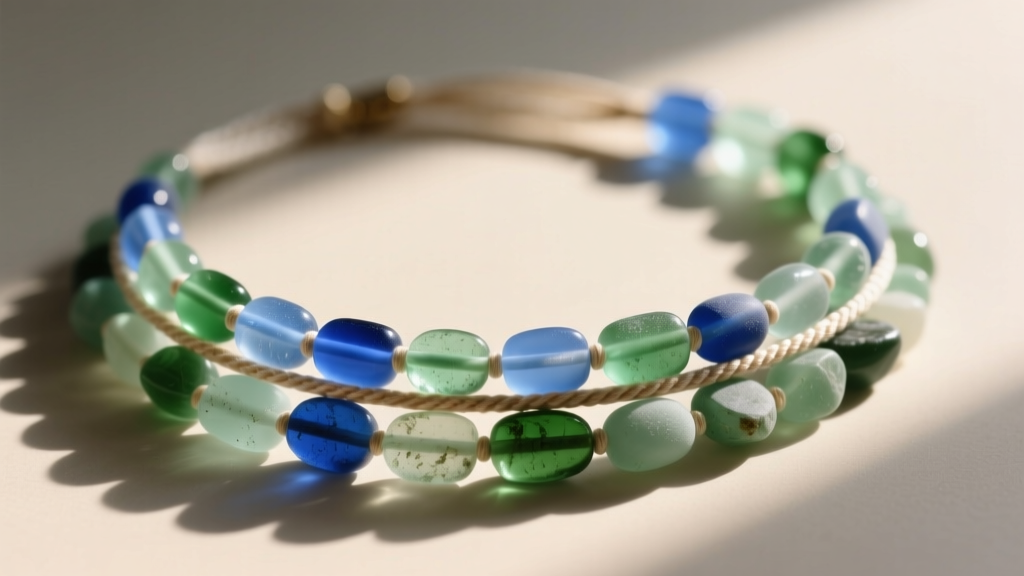
The Shift: From Souvenir to Sartorial Staple
For decades, the sea glass bead necklace was relegated to the realm of beachside gift shops and casual summer souvenirs. However, as we navigate the 2026 jewelry landscape, a profound shift has occurred. Driven by the evolution of the "coastal grandmother" aesthetic into what trend forecasters now call "organic maximalism," sea glass has been reclaimed by high-end artisan jewelers. Today, a meticulously crafted sea glass bead necklace is a statement of sustainable luxury, historical provenance, and bespoke artistry. Collectors and style connoisseurs are no longer just looking for pretty colors; they are demanding authenticated ocean-tumbled gems, masterful knotting techniques, and sophisticated layering profiles that transition seamlessly from a linen-clad beach dinner to a metropolitan gallery opening.
Authentic vs. Machine-Tumbled: A Buyer’s Matrix
The surge in demand for authentic sea glass has inevitably led to a flooded market of machine-tumbled imitations. True sea glass undergoes a decades-long process of hydration and physical tumbling in the ocean, creating a distinct micro-texture that cannot be perfectly replicated in a rock tumbler with grit. According to the North American Sea Glass Association (NASGA), authentic pieces exhibit specific geological markers that separate them from mass-produced faux glass. When investing in a premium sea glass bead necklace, understanding these physical differences is paramount to ensuring you are paying for genuine history rather than factory-made decor.
| Feature | Authentic Ocean-Tumbled Glass | Machine-Tumbled / Faux Glass |
|---|---|---|
| Frost Texture | Uneven, velvety, with microscopic "C-shaped" frost marks | Uniformly frosted, often feeling chalky or overly smooth |
| Edge Smoothness | Rounded but with slight, organic asymmetry | Perfectly rounded, often resembling uniform pebbles |
| Surface Pitting | Natural, randomized pitting and hydration cracks | Lacks deep pitting; surface is mostly flat |
| UV Reaction | Vintage glass (pre-1960s) often glows green/yellow under UV | Modern glass typically shows no UV fluorescence |
| Price per Bead | $5 to $150+ depending on color rarity and size | $0.10 to $1.00 per bead in bulk |
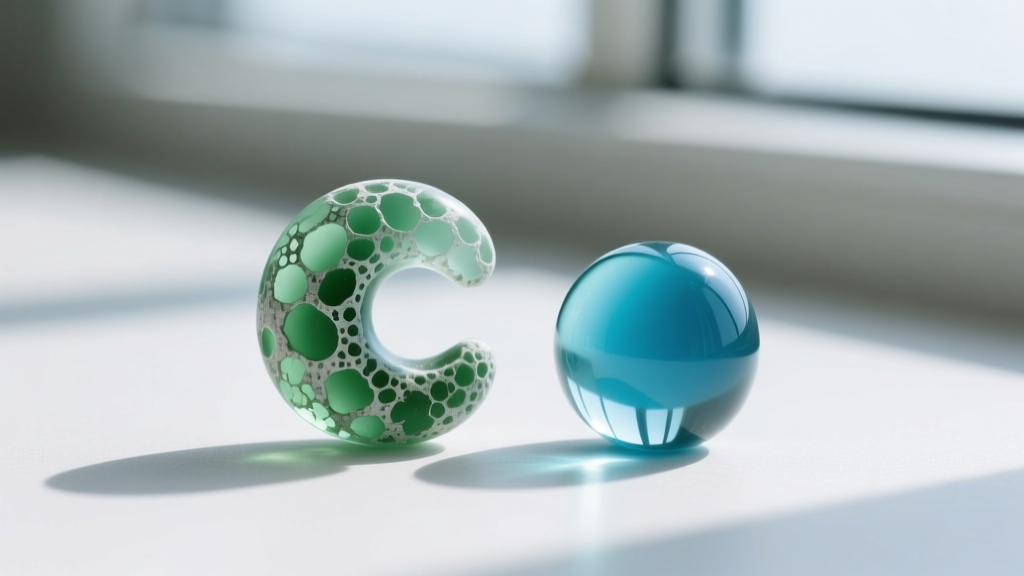
Construction & Durability: What Holds the Beads Together?
A common failure mode in lower-tier sea glass jewelry is bead loss or cord snapping. Because genuine sea glass beads are often irregularly shaped and can feature sharp inner edges from their original bottle necks or handles, the stringing material must be chosen with extreme precision. In 2026, top-tier artisans rely on three primary construction methods, each offering distinct structural and aesthetic benefits.
1. Traditional Silk Knotting
For perfectly rounded, well-tumbled sea glass beads, hand-knotting on pure silk cord remains the gold standard. Artisans typically use Size F (0.35mm) or Size G (0.40mm) silk thread. The critical detail here is the use of French wire (also known as gimp wire) at the clasp connection. This microscopic coiled metal protects the silk from fraying against the metal jump ring. Knots between each glass bead prevent catastrophic loss if the cord snaps and protect the glass from grinding against adjacent beads.
2. 49-Strand Micro-Beading Wire
When dealing with heavier, multi-strand sea glass bead necklaces or beads with sharper, less-tumbled drill holes, silk is insufficient. Master jewelers turn to 49-strand stainless steel micro-wire coated in nylon, specifically in a 0.018-inch or 0.021-inch diameter. This wire offers the drape of silk but the tensile strength of steel, resisting the abrasive cutting action of jagged glass interiors.
3. Wire Wrapping & Linking
For structural pendants or heavy focal beads integrated into a chain necklace, 20-gauge or 22-gauge 14k gold-filled or solid argentium silver wire is used. The wire is threaded through the glass and wrapped into a secure bail or rosette, ensuring the glass never bears the direct weight of the chain.
Color Grading & Historical Provenance
The value of a sea glass bead necklace is intrinsically tied to the historical origin of the glass. As noted by gemological and historical material experts, such as those referenced in the GIA Gem Encyclopedia regarding synthetic and natural glass formations, the chemical composition of vintage glass dictates its color and rarity. Understanding these tiers will help you evaluate pricing and authenticity.
- Tier 1: Common (Kelly Green, Brown, White) - Originating from mass-produced beer bottles, soda bottles, and modern tableware. These are abundant and form the base of most affordable, multi-strand necklaces.
- Tier 2: Rare (Cobalt Blue, Amber, Soft Yellow) - Cobalt blue typically originates from early 20th-century medicine bottles (like Vicks VapoRub or Milk of Magnesia). Amber often comes from vintage insulators or early beverage bottles. These command a premium and are often used as focal beads.
- Tier 3: Ultra-Rare (Red, Orange, Turquoise, Black) - True red and orange sea glass are exceptionally rare, historically stemming from ship lanterns, Art Deco decorative tableware, or automotive tail lights. A necklace featuring even a single, authenticated red sea glass bead is considered a collector's item and can easily exceed $500.
2026 Styling Framework: Necklines & Layering
The way we style organic materials has matured. The 2026 approach to the sea glass bead necklace moves away from single, delicate strands and embraces textured, asymmetrical layering that mimics the natural chaos of the ocean floor.
- The Plunge Neckline Pairing: For deep V-neck silk blouses or wrap dresses, opt for a Y-style sea glass necklace featuring a single, wire-wrapped cobalt blue drop. The sharp geometry of the V-neck contrasts beautifully with the organic, frosted curves of the glass.
- Organic Maximalism Layering: Combine a 16-inch choker-length strand of small white sea glass beads with a 20-inch strand of baroque freshwater pearls and a 24-inch oxidized silver chain featuring a raw diamond pendant. The interplay of frosted glass, lustrous pearl, and dark metal creates a sophisticated, multi-sensory texture.
- The Asymmetrical Boat Neck: When wearing an off-the-shoulder or boat-neck linen top, allow a long, multi-strand sea glass lariat to drape asymmetrically across the collarbone, drawing the eye horizontally and emphasizing the neckline's architectural cut.
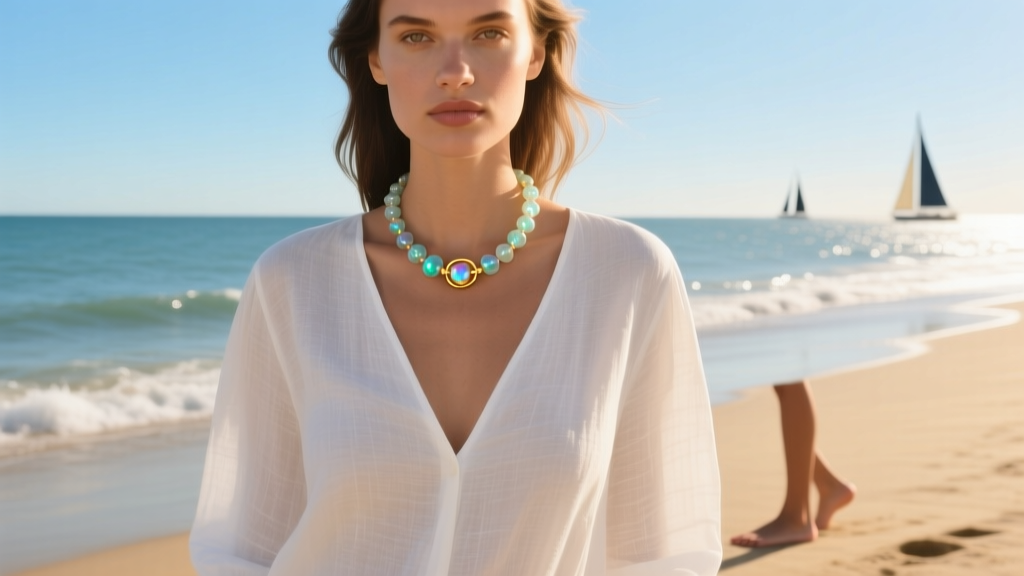
Sourcing & Price Index: What Should You Pay?
Navigating the pricing of artisan sea glass jewelry requires an understanding of labor and material scarcity. A genuine, hand-knotted sea glass bead necklace is a labor-intensive endeavor. Drilling authentic sea glass without shattering it requires specialized diamond-tipped micro-drill bits and water-cooling techniques, resulting in a high breakage rate during production.
Expect to pay between $85 and $150 for a high-quality, single-strand necklace featuring common to semi-rare colors (greens, blues, whites) on silk cord with sterling silver or gold-filled hardware. Multi-strand pieces or those incorporating rare colors (reds, oranges) and precious metal wire-wrapping will reliably sit in the $250 to $800+ range. If you encounter a "rare" multi-strand red sea glass necklace priced under $50, you are almost certainly looking at machine-tumbled, dyed glass.
Care & Maintenance for Frosted Glass
While glass is highly resistant to chemical degradation, the frost layer on sea glass is essentially a hydrated silica patina. Avoid ultrasonic cleaners, which can cause micro-fractures in vintage glass with internal stress lines. Instead, clean your sea glass bead necklace using a soft, lint-free microfiber cloth and a mild solution of distilled water and pH-neutral dish soap. Dry thoroughly before storing in a soft pouch to prevent the glass from scratching softer adjacent materials like pearls or silver clasps. With proper care, the ocean's slow artistry will remain perfectly preserved for generations.


