How to Buy an Authentic Art Deco Diamond Necklace
Discover how to authenticate, evaluate, and buy an art deco diamond necklace. Learn about platinum hallmarks, Old European cuts, and pricing.

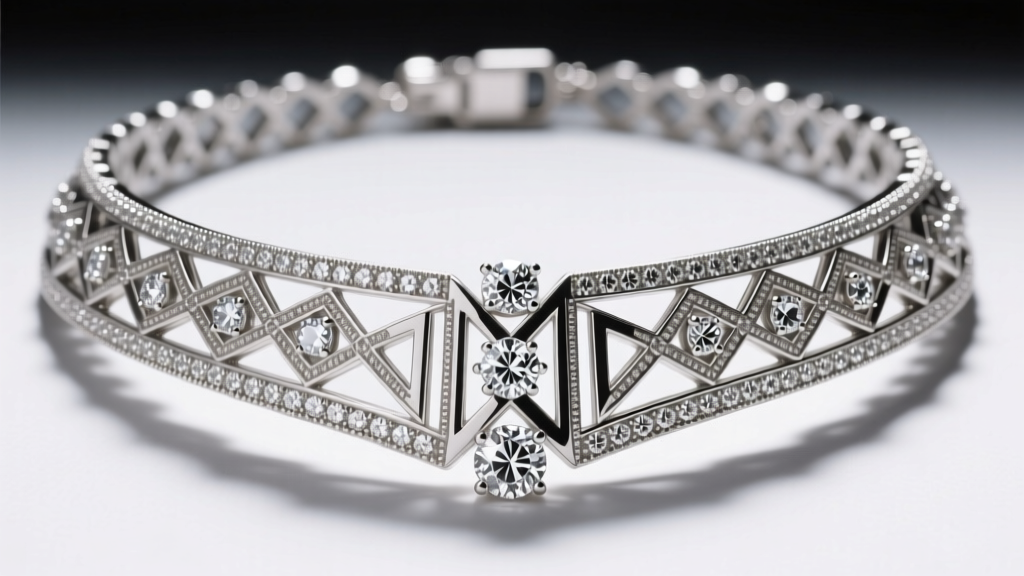
The Art Deco era (roughly 1920 to 1935) remains the most coveted period in antique jewelry history. Characterized by bold geometric symmetry, striking color contrasts, and unprecedented advancements in metalworking, an authentic art deco necklace diamond piece is both a wearable artifact and a highly liquid asset. However, the market is currently flooded with high-quality reproductions, altered pieces, and franken-jewelry (authentic settings with modern replacement stones). As a buyer in 2026, distinguishing a genuine 1920s masterpiece from a modern pastiche requires a trained eye and an understanding of historical manufacturing techniques.
Hallmarks of True Art Deco Design Elements
Authentic Art Deco jewelry was a direct rebellion against the flowing, organic, and asymmetrical lines of the preceding Art Nouveau and Edwardian eras. When evaluating a necklace or pendant, look for these non-negotiable design pillars:
- Geometric Symmetry: Chevrons, sunbursts, stepped motifs, and rigid linear patterns dominate the design. If the piece features swirling vines or floral asymmetry, it is not Art Deco.
- Milgrain Detailing: This technique involves applying tiny, precise beads of metal along the edges of the setting. In the 1920s, milgrain was applied by hand or with specialized knurling tools, resulting in a slightly organic, imperfect texture. Modern laser-applied milgrain looks overly uniform and sterile.
- Calibré-Cut Accents: High-end Art Deco necklaces frequently feature calibré-cut sapphires, rubies, or emeralds. These stones were custom-cut to fit perfectly into geometric channels or outline a central diamond without any gaps or visible prongs.
- High-Contrast Materials: Designers frequently paired diamonds with black onyx, carved coral, jade, or black enamel to create stark, graphic visual contrasts.
The Diamond Cuts: Old European vs. Transitional
The single greatest giveaway of a reproduction or altered Art Deco necklace is the diamond cut. Modern Round Brilliant (MRB) cuts, engineered for maximum light return with 57 or 58 facets, did not exist in their current mathematical form during the 1920s. According to the Gemological Institute of America (GIA), authentic pieces from this era will feature either Old European Cuts (OEC) or early Transitional Cuts.
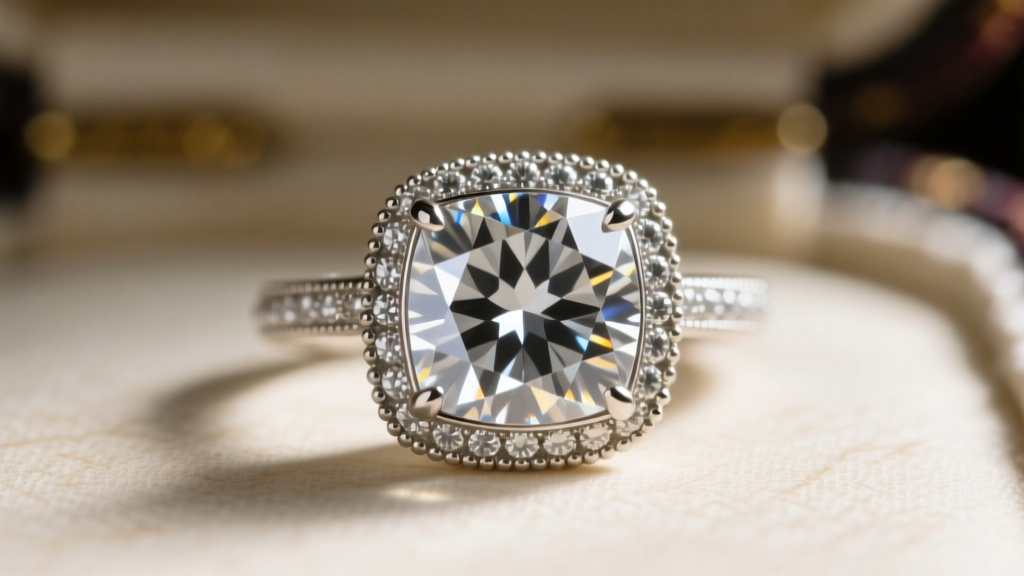
The Old European Cut is characterized by a high crown, a small table (the flat top facet), and a large, open culet (the bottom point of the diamond, which appears as a dark circle in the center when viewed from above). These diamonds were cut by eye to maximize carat weight and candlelight scintillation, resulting in a "chunky," mosaic-like facet pattern. Transitional Cuts emerged in the late 1920s and 1930s, bridging the gap between the OEC and the modern brilliant. They feature slightly larger tables and smaller culets. If a purported 1925 diamond necklace features stones with laser-inscribed girdles or perfect modern symmetry, the stones have been replaced, severely impacting the piece's antique premium.
Metal Matters: Platinum vs. White Gold
The Art Deco era was the golden age of platinum. Platinum's immense tensile strength allowed jewelers to create the era's signature openwork filigree and nearly invisible settings. When examining a necklace, check the hallmarks. Authentic pieces will often be stamped with "PT", "PLAT", or "IRIDPLAT" (indicating an iridium-platinum alloy, standard for the era).
White gold (usually 14k or 18k) was utilized as a more affordable alternative, particularly during the Great Depression years of the early 1930s. However, white gold lacks the structural rigidity of platinum, meaning white gold filigree tends to be thicker, less intricate, and more prone to casting porosity. Beware of pieces that are heavily rhodium-plated; unscrupulous sellers often plate worn yellow gold or low-karat white gold to mimic the bright, white luster of aged platinum.
Evaluating Condition, Clasps, and Alterations
A necklace is only as valuable as its condition and originality. Because necklaces endure significant tension and wear, inspecting the structural integrity is paramount.
The Clasp Test
Original 1920s necklaces typically feature trombone clasps (a push-pull mechanism with a locking ring) or early, rudimentary lobster clasps. If the necklace features a modern, lightweight spring-ring clasp or a bulky modern fold-over clasp, it has likely been repaired or altered. While clasp replacements are common for safety, they must be disclosed and will slightly reduce the collector value.
Solder and Enamel Repairs
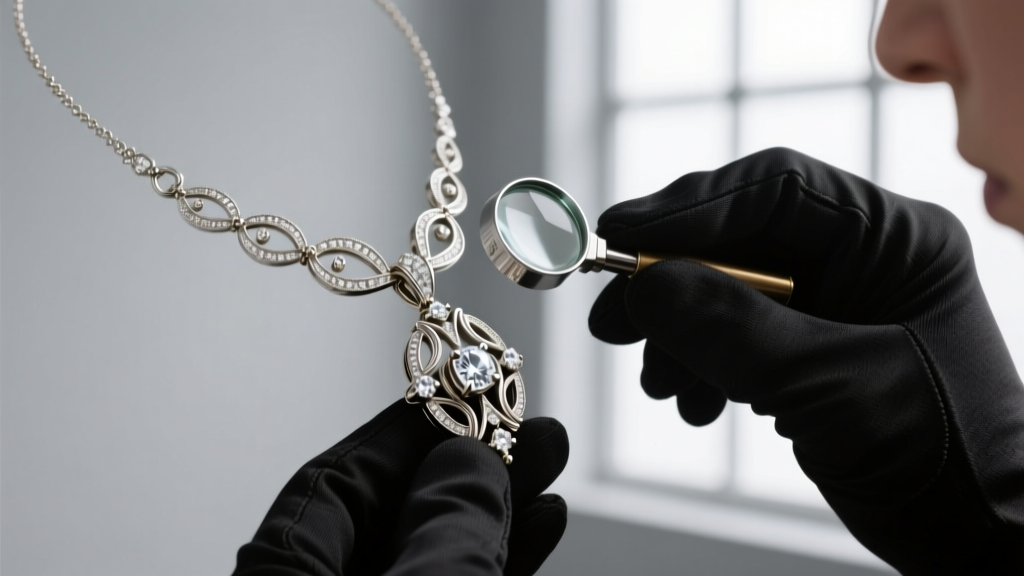
Examine the chain links and pendant bales under a 10x loupe. Look for modern laser welds or heavy, messy lead solder used to repair broken filigree. Furthermore, if the piece features guilloché or champlevé enamel, inspect it for chipping. Enamel repairs are notoriously difficult to hide and often require complete stripping and refiring, which alters the antique patina.
2026 Market Pricing and Valuation Guide
The market for antique jewelry has matured significantly. According to historical auction data from houses like Christie's, signed pieces command massive premiums, while unsigned pieces are valued strictly on craftsmanship, materials, and condition. Below is a realistic pricing framework for authentic Art Deco diamond necklaces and pendants in the current market.
| Category | Metal & Specifications | Diamond Weight & Quality | Estimated Price Range (USD) |
|---|---|---|---|
| Entry-Level Pendants | 14k White Gold or Platinum top | 0.25ct - 0.75ct (OEC, I-K color) | $1,800 - $4,500 |
| Mid-Tier Filigree Necklaces | Solid Platinum, intricate die-striking | 1.00ct - 3.00ct total weight | $6,000 - $18,000 |
| High-End Rivière & Lariats | Platinum with calibré onyx/sapphire | 5.00ct - 15.00ct total weight | $25,000 - $75,000+ |
| Signed Masterworks | Platinum (Cartier, Boucheron, Van Cleef) | Exceptional OEC/Transitional stones | $150,000 - $1,000,000+ |
Sourcing and Authentication Best Practices
When investing in an art deco necklace diamond piece, provenance and expert verification are your best defenses against fraud. Reputable antique dealers, such as those vetted by the Lang Antiques University or members of the Antiquarian Horological and Jewelry societies, will provide detailed condition reports.
Always request a UV fluorescence examination. Modern synthetic diamonds (like CVD or HPHT lab-grown stones) often exhibit specific fluorescence patterns or metallic inclusions that did not exist in the 1920s. Additionally, X-ray imaging can reveal hidden structural weaknesses, modern solder joints, or doublets (stones glued together to mimic larger gems) that are invisible to the naked eye. By prioritizing original diamond cuts, authentic platinum fabrication, and period-correct clasps, you can confidently acquire a genuine piece of 1920s history that will retain its elegance and value for generations.


